Q1.In Luke 23:34, as Roman soldiers drove nails through His hands at Calvary, what first word of divine mercy did Jesus utter?
A) "Father, forgive them, for they know not what they do" ✓
B) "May judgment fall upon Jerusalem"
C) "Why have my disciples abandoned me?"
D) "Call down twelve legions of angels"
Scriptural Explanation: Luke 23:34 - 'And Jesus said, "Father, forgive them, for they know not what they do." And they cast lots to divide his garments.' Fulfilling Isaiah 53:12: 'He made intercession for the transgressors.'
Q2.In Isaiah 53:12, which Old Testament prophecy was directly fulfilled by Jesus' first prayer on the cross for His crucifiers?
A) "He poured out his soul to death... and made intercession for the transgressors" ✓
B) "He ruled with a rod of iron over Rome"
C) "He built an earthly palace in Zion"
D) "He purchased horses from Egypt"
Scriptural Explanation: Isaiah 53:12 - 'He poured out his soul to death and was numbered with the transgressors; yet he bore the sin of many, and makes intercession for the transgressors.'
Q3.In Luke 23:42-43, what desperate petition did the penitent thief make, and what second word did Jesus reply?
A) "Lord, remember me when You come into Your kingdom" — "Truly, I say to you, today you will be with Me in paradise" ✓
B) "Take me down from the cross" — "Escape into Galilee"
C) "Curse the soldiers" — "Vengeance is mine"
D) "Grant me worldly riches" — "Silver is yours"
Scriptural Explanation: Luke 23:42-43 - 'And he said, "Jesus, remember me when you come into your kingdom." And he said to him, "Truly, I say to you, today you will be with me in paradise."' Demonstrating salvation by grace through faith alone.
Q4.In John 19:26-27, what third word did Jesus speak to His mother Mary and the disciple whom He loved?
A) "Woman, behold your son!" and to the disciple, "Behold your mother!" ✓
B) "Weep no more, but flee to Nazareth"
C) "Sell your possessions and give to the poor"
D) "Build a shrine upon Golgotha"
Scriptural Explanation: John 19:26-27 - 'When Jesus saw his mother and the disciple whom he loved standing nearby, he said to his mother, "Woman, behold, your son!" Then he said to the disciple, "Behold, your mother!" And from that hour the disciple took her to his own home.'
Q5.According to Matthew 27:45 and Luke 23:44, what supernatural phenomenon covered the whole land from the sixth hour until the ninth hour (12 noon to 3 PM)?
A) Darkness fell over the whole land, for the sun was darkened ✓
B) A blinding sandstorm blew from the desert
C) A torrential rain flooded the Kidron Valley
D) Locusts covered the city walls of Jerusalem
Scriptural Explanation: Matthew 27:45; Luke 23:44-45 - 'Now from the sixth hour there was darkness over all the land until the ninth hour... while the sun's light failed.' Signifying the wrath of God against sin borne by the Savior.
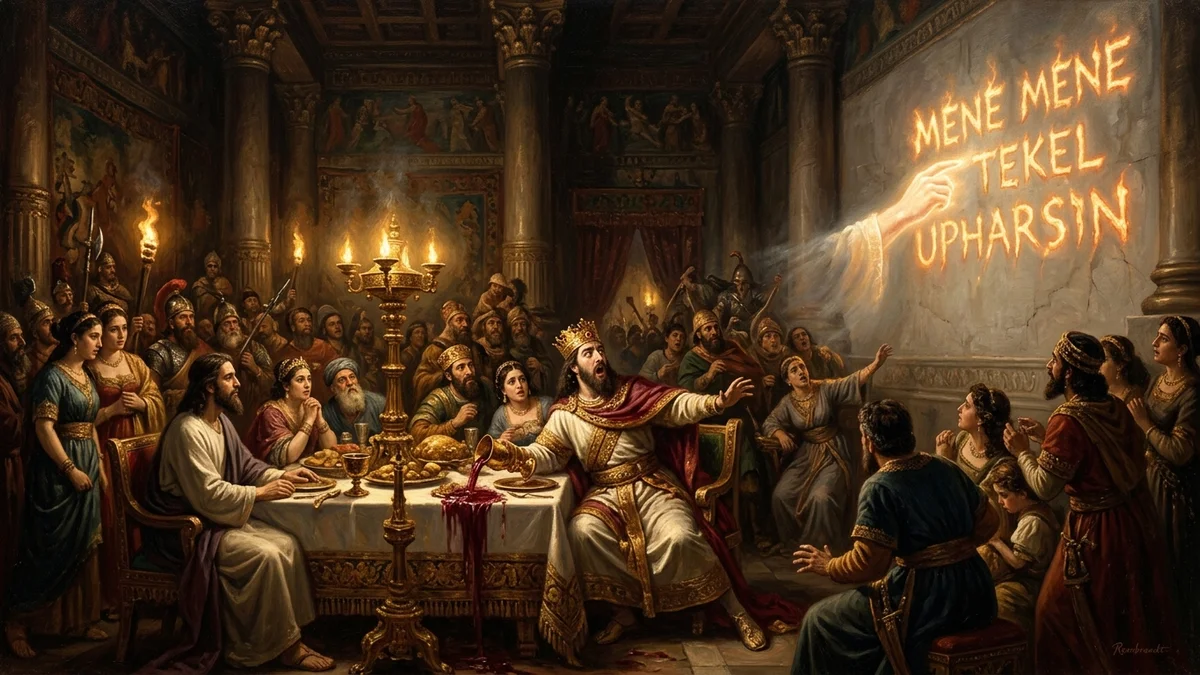
Q6.In Matthew 27:46 and Mark 15:34, around the ninth hour, what fourth word of anguish did Jesus cry in Aramaic?
A) "Eli, Eli, lema sabachthani?" (My God, my God, why have you forsaken me?) ✓
B) "Mene, Mene, Tekel, Upharsin"
C) "Talitha cumi"
D) "Ephphatha, be opened"
Scriptural Explanation: Matthew 27:46 - 'And about the ninth hour Jesus cried out with a loud voice, saying, "Eli, Eli, lema sabachthani?" that is, "My God, my God, why have you forsaken me?"' Quoting Psalm 22:1 as the sin-bearer (2 Cor 5:21).
Q7.In Matthew 27:47, what misunderstanding arose among some of the bystanders when they heard Jesus cry 'Eli, Eli'?
A) "This man is calling Elijah" ✓
B) "He is speaking Roman Latin"
C) "He is summoning King David's army"
D) "He is cursing the high priest"
Scriptural Explanation: Matthew 27:47 - 'And some of the bystanders, hearing it, said, "This man is calling Elijah."' The Hebrew word 'Eli' (My God) sounded similar to 'Eliyahu' (Elijah).
Q8.In John 19:28, what fifth word did Jesus speak that fulfilled Scripture and revealed His genuine physical agony?
A) "I thirst" ✓
B) "I hunger"
C) "I am weary"
D) "I am cold"
Scriptural Explanation: John 19:28 - 'After this, Jesus, knowing that all was now finished, said (to fulfill the Scripture), "I thirst."' Fulfilling Psalm 69:21: 'for my thirst they gave me sour wine to drink.'
Q9.In John 19:29, on what plant branch was a sponge soaked in sour wine lifted up to Jesus' mouth?
A) A hyssop branch ✓
B) An olive reed
C) A cedar bough
D) A palm frond
Scriptural Explanation: John 19:29 - 'A jar full of sour wine stood there, so they put a sponge full of the sour wine on a hyssop branch and held it to his mouth.' Hyssop was the exact plant used to apply Passover blood (Ex 12:22).
Q10.In John 19:30, after receiving the sour wine, what triumphant sixth word did Jesus declare (*Tetelestai* in Greek)?
A) "It is finished!" ✓
B) "I will return"
C) "The battle is lost"
D) "Rome has conquered"
Scriptural Explanation: John 19:30 - 'When Jesus had received the sour wine, he said, "It is finished," and he bowed his head and gave up his spirit.' The Greek term Tetelestai means 'paid in full'—the debt of human sin was settled forever.
Q11.In Luke 23:46, what seventh and final word of complete filial trust did Jesus cry with a loud voice before breathing His last?
A) "Father, into your hands I commit my spirit!" ✓
B) "Death has no power over me"
C) "Angels, take me home"
D) "Remember my works"
Scriptural Explanation: Luke 23:46 - 'Then Jesus, calling out with a loud voice, said, "Father, into your hands I commit my spirit!" And having said this he breathed his last.' Citing Psalm 31:5 in supreme peace.
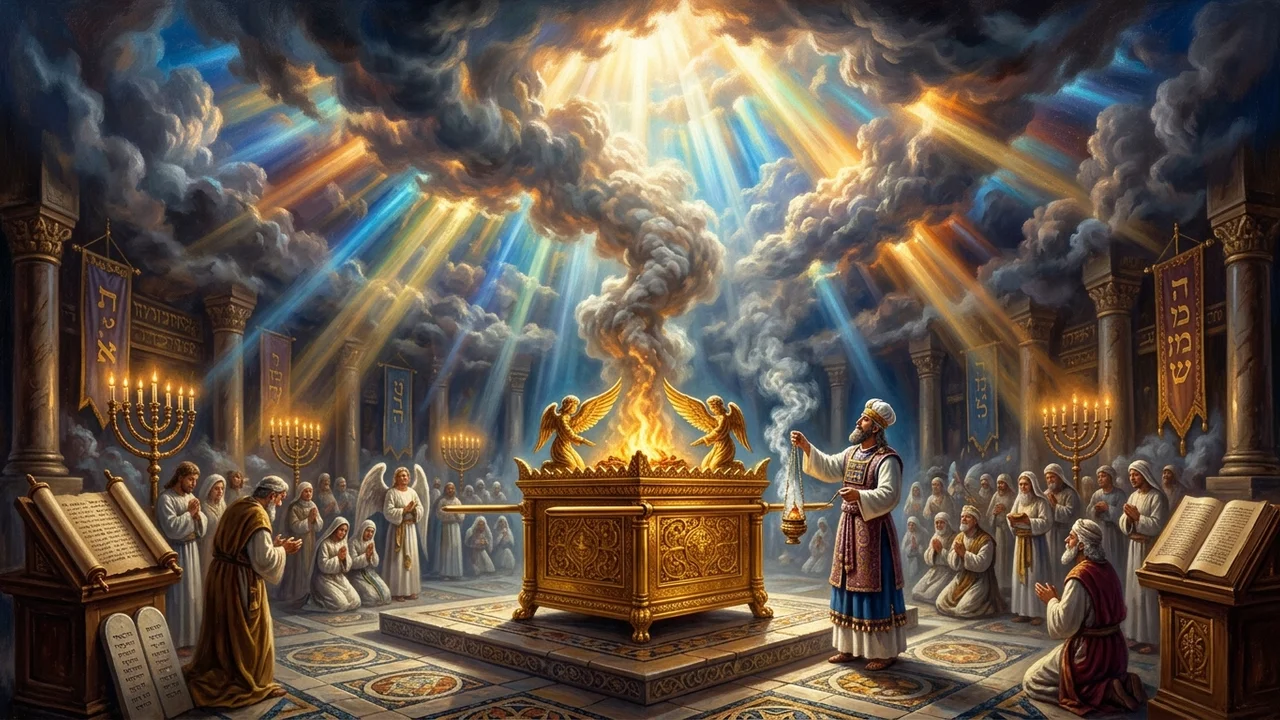
Q12.In Matthew 27:51, what catastrophic event occurred in the Temple at Jerusalem the very moment Jesus yielded up His spirit?
A) The veil of the temple was torn in two from top to bottom, the earth shook, and rocks split ✓
B) The golden altar collapsed into ashes
C) The Roman eagle standard fell off the roof
D) The pool of Siloam dried up completely
Scriptural Explanation: Matthew 27:51 - 'And behold, the curtain of the temple was torn in two, from top to bottom. And the earth shook, and the rocks were split.' Signifying direct access into God's Holy of Holies through Christ (Heb 10:19-20).
Q13.In Matthew 27:54, what confession did the Roman centurion and those guarding Jesus make when they saw the earthquake and events?
A) "Truly this was the Son of God!" ✓
B) "He was an innocent Roman citizen"
C) "The gods of Olympus have intervened"
D) "We must flee back to Caesarea"
Scriptural Explanation: Matthew 27:54 - 'When the centurion and those who were with him, keeping watch over Jesus, saw the earthquake and what took place, they were filled with awe and said, "Truly this was the Son of God!"'
Q14.In John 19:31-33, why did the Roman soldiers break the legs of the two thieves but NOT the legs of Jesus?
A) When they came to Jesus and saw that He was already dead, they did not break His legs ✓
B) Pilate sent an urgent courier forbidding them
C) The soldiers lacked iron mallets
D) Mary pleaded with the centurion for mercy
Scriptural Explanation: John 19:33, 36 - 'But when they came to Jesus and saw that he was already dead, they did not break his legs... For these things took place that the Scripture might be fulfilled: "Not one of his bones will be broken."' (Ex 12:46, Ps 34:20).
Q15.In John 19:34, when a soldier pierced Jesus' side with a spear, what came out immediately?
A) Blood and water ✓
B) Pure oil and myrrh
C) Water only
D) A fragrant white mist
Scriptural Explanation: John 19:34 - 'But one of the soldiers pierced his side with a spear, and at once there came out blood and water.' Symbolizing redemption through His blood and spiritual regeneration through the Spirit (1 John 5:6-8).
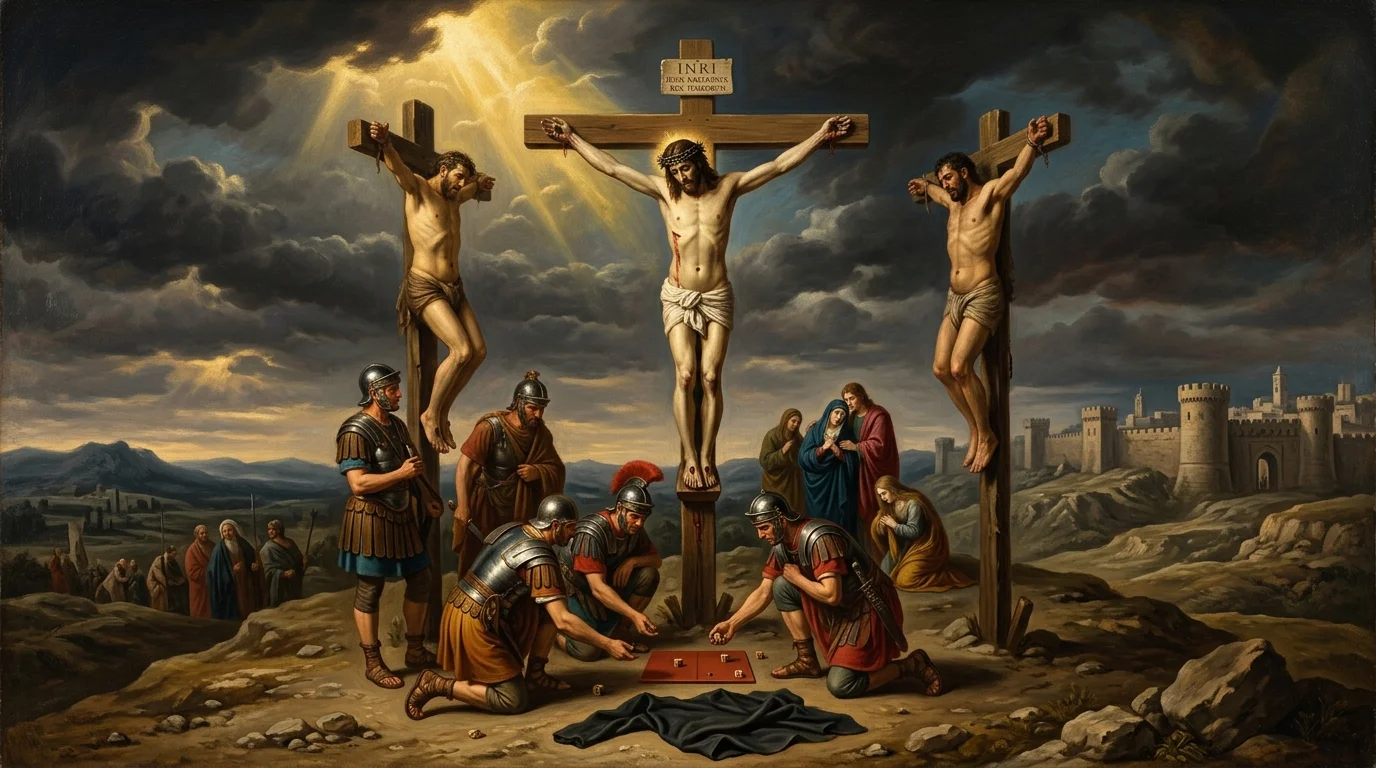
Q16.In Matthew 27:35 and John 19:23-24, what did the four soldiers do with Jesus' seamless tunic woven in one piece?
A) They said, "Let us not tear it, but cast lots for it to see whose it shall be" ✓
B) They cut it into four equal pieces
C) They returned it to Joseph of Arimathea
D) They burned it outside the city gates
Scriptural Explanation: John 19:23-24 - 'Now the tunic was seamless, woven in one piece from top to bottom, so they said to one another, "Let us not tear it, but cast lots for it to see whose it shall be." This was to fulfill the Scripture: "They divided my garments among them, and for my clothing they cast lots."' (Ps 22:18).
Q17.In John 19:19-20, what title did Pilate write and fasten to the cross in Hebrew, Latin, and Greek?
A) "JESUS OF NAZARETH, THE KING OF THE JEWS" ✓
B) "A Blasphemer of the Law"
C) "A Rebel Against Caesar"
D) "The Prophet of Galilee"
Scriptural Explanation: John 19:19 - 'Pilate also wrote an inscription and put it on the cross. It read, "Jesus of Nazareth, the King of the Jews." Many of the Jews read this inscription, for the place where Jesus was crucified was near the city, and it was written in Aramaic, in Latin, and in Greek.'
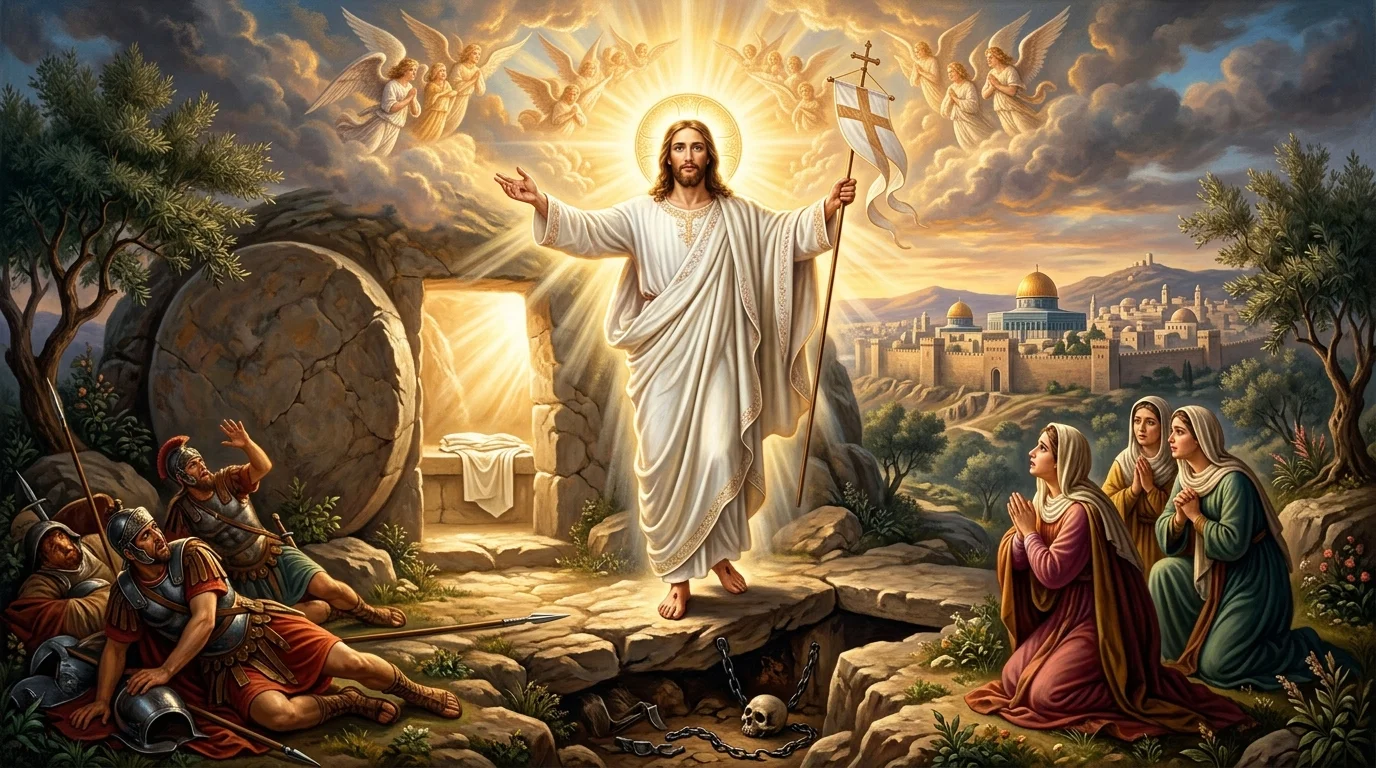
Q18.In Matthew 27:57-60, which wealthy secret disciple asked Pilate for the body of Jesus and laid Him in his own new rock-cut tomb?
A) Joseph of Arimathea ✓
B) Zacchaeus of Jericho
C) Cornelius of Caesarea
D) Gamaliel
Scriptural Explanation: Matthew 27:57-60 - 'When it was evening, there came a rich man from Arimathea, named Joseph, who also was a disciple of Jesus. He went to Pilate and asked for the body of Jesus... And Joseph took the body and wrapped it in a clean linen shroud and laid it in his own new tomb.' Fulfilling Isaiah 53:9.
Q19.In John 19:39, who assisted Joseph of Arimathea by bringing about seventy-five pounds of myrrh and aloes for Jesus' burial?
A) Nicodemus, who had first come to Jesus by night ✓
B) Simon of Cyrene
C) Lazarus of Bethany
D) Matthew the tax collector
Scriptural Explanation: John 19:39-40 - 'Nicodemus also, who earlier had come to Jesus by night, came bringing a mixture of myrrh and aloes, about seventy-five pounds in weight. So they took the body of Jesus and bound it in linen cloths with the spices, as is the burial custom of the Jews.'
Q20.In 1 Corinthians 5:7, what foundational theological title does the Apostle Paul bestow upon Christ crucified on the cross?
A) "Christ, our Passover lamb, has been sacrificed" ✓
B) "The Emperor of Jerusalem"
C) "The Lawgiver of Sinai"
D) "The Builder of the Second Temple"
Scriptural Explanation: 1 Corinthians 5:7 - 'Cleanse out the old leaven that you may be a new lump, as you really are unleavened. For Christ, our Passover lamb, has been sacrificed.'