Before the majestic arc of cosmic galaxies, before the ignition of stellar nurseries, and before the measurement of hours, minutes, and seasons, there existed absolute, uncreated Reality: God Almighty. In eternal, self-sufficient trinitarian fellowship—Father, Son, and Holy Spirit—the Lord dwelled in unapproachable light and boundless love. The universe did not arise through random mechanistic collision or mythological violence; it erupted into being through the deliberate, loving, and sovereign spoken decree of the King of the ages.
1. The Primordial Cosmos and the Hovering Spirit
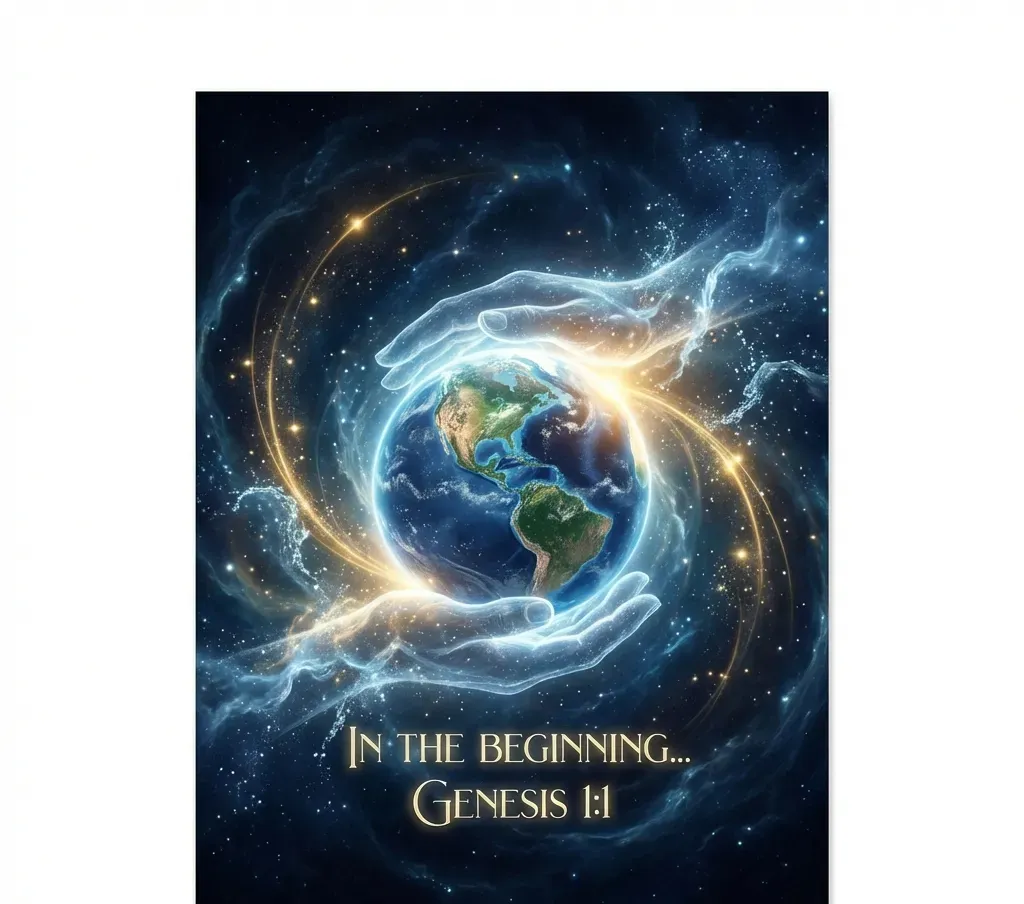
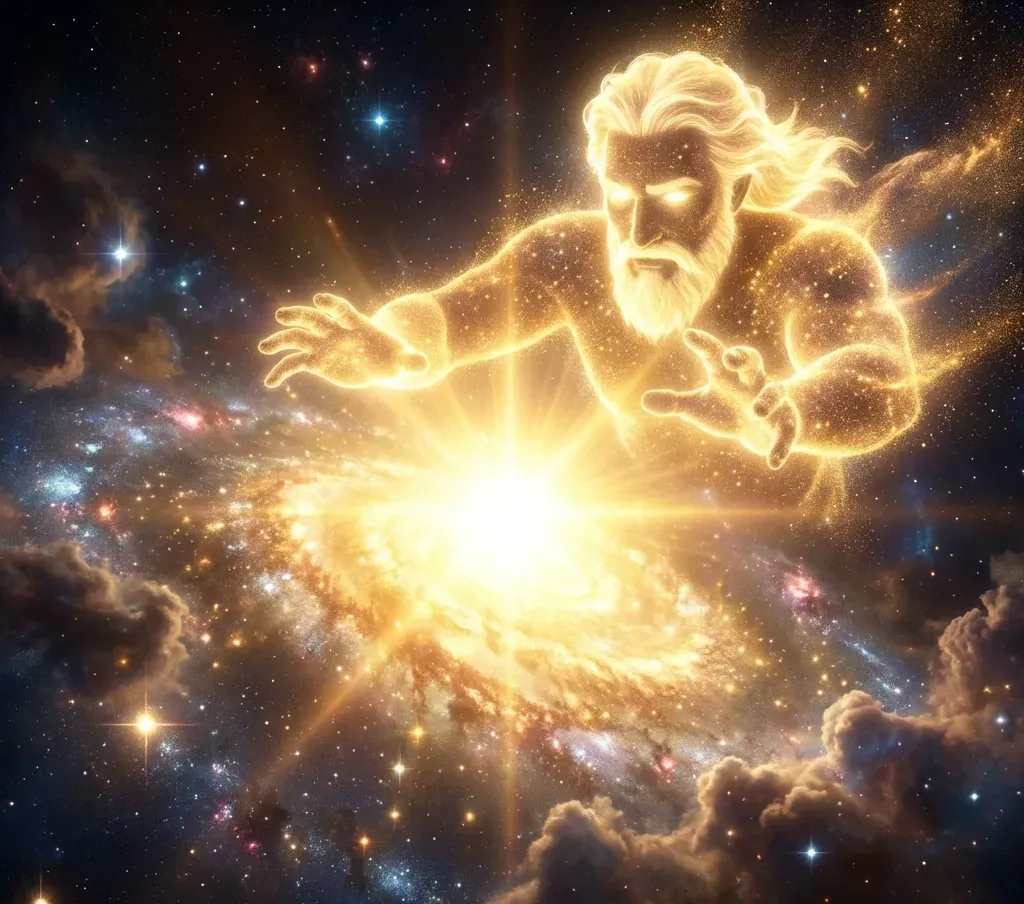 The sovereign voice of Yahweh shatters primeval darkness, inaugurating space and time.
Moses opens the sacred scroll with the immortal declaration: "In the beginning, God created the heavens and the earth" (Genesis 1:1). The Hebrew noun Elohim, though plural in majesty, governs the singular verb Bara, a term reserved exclusively throughout the Hebrew Scriptures for divine activity. God needed no pre-existing cosmic debris, no preexisting chaos, and no assistance. Out of absolute nothingness (creatio ex nihilo), the sovereign architect willed the foundational fabric of reality into existence.
Yet the narrative pauses upon an unformed condition: the earth was tohu wa-bohu—formless and empty—with deep subterranean waters veiled in impenetrable darkness. Into this profound hush stepped the third Person of the Trinity: the Ruach Elohim, the Spirit of God. The Hebrew text employs the tender verb merachefet, depicting the Spirit hovering and brooding over the dark waters as an eagle flutters over its nestlings, poised to impart life, warmth, beauty, and harmonious order to the expectant deep.
2. The Cosmic Fiat: The Power of the Divine Word
Then broke the silence of eternity. God did not employ strenuous manual exertion; He simply released His voice: "Let there be light" (Genesis 1:3). In an instantaneous burst of transcendent splendor, primordial light flooded the abyss. This light preceded the physical solar disk; it was the unadulterated radiance of divine glory illuminating creation. God examined this newborn radiance and pronounced it Tov—fundamentally good, purposeful, and pure. He established the first cosmic boundary, severing day from night and consecrating the fundamental rhythm of time.
The apostolic testimony reveals that this sovereign creative decree was mediated directly through Jesus Christ. The Apostle John writes: "In the beginning was the Word, and the Word was with God, and the Word was God. All things were made through Him, and without Him nothing was made that was made" (John 1:1-3). The cosmos is intrinsically Christocentric; every atom, photon, and planetary orbit exists by His sustaining power and for His eternal glory.
3. The Architecture of Order: Forming and Filling
The six days of creation unfold with magnificent structural symmetry, answering the dual dilemma of tohu (formlessness) and bohu (emptiness):
- Days 1–3: The Forming of Realms: On Day 1, God separates light from darkness (time). On Day 2, He creates the celestial expanse or firmament (raqia), segregating the waters above from the waters below (sky and sea). On Day 3, dry land emerges from the churning oceans, and the earth bursts forth with fertile vegetation, seed-bearing plants, and fruit trees according to their kinds.
- Days 4–6: The Filling of Rulers: With flawless symmetry, God populates the realms established in the first triad. On Day 4, He installs the sun, moon, and stars to rule the day and night as faithful chronological signs. On Day 5, the sky teems with winged birds and the oceanic depths swarm with living creatures. On Day 6, terrestrial animals of every kind appear, crowned finally by the creation of human beings.
4. Demystifying the Heavens: A Polemic of Divine Sovereignty
In ancient Mesopotamia and Egypt, the sun (Shamash, Ra) and the moon (Sin, Thoth) were dread deities demanding frantic placation and human worship. Genesis obliterates this astrological bondage. The narrator deliberately avoids using their proper names, referring to them merely as "the greater light to rule the day" and "the lesser light to rule the night." They are not deities; they are physical clockworks, cosmic lampstands created to demarcate liturgical feasts, days, and years.
Then, with breathtaking pastoral restraint, Scripture adds: "He also made the stars." Countless hundreds of billions of galaxies, each containing hundreds of billions of suns, are mentioned almost as an effortless aside. Yahweh summons each stellar furnace by name (Psalm 147:4), demonstrating that the vastness of the universe does not diminish human significance, but elevates the majesty of the One who holds us in His hand.
5. The Climax of Creation: The Imago Dei
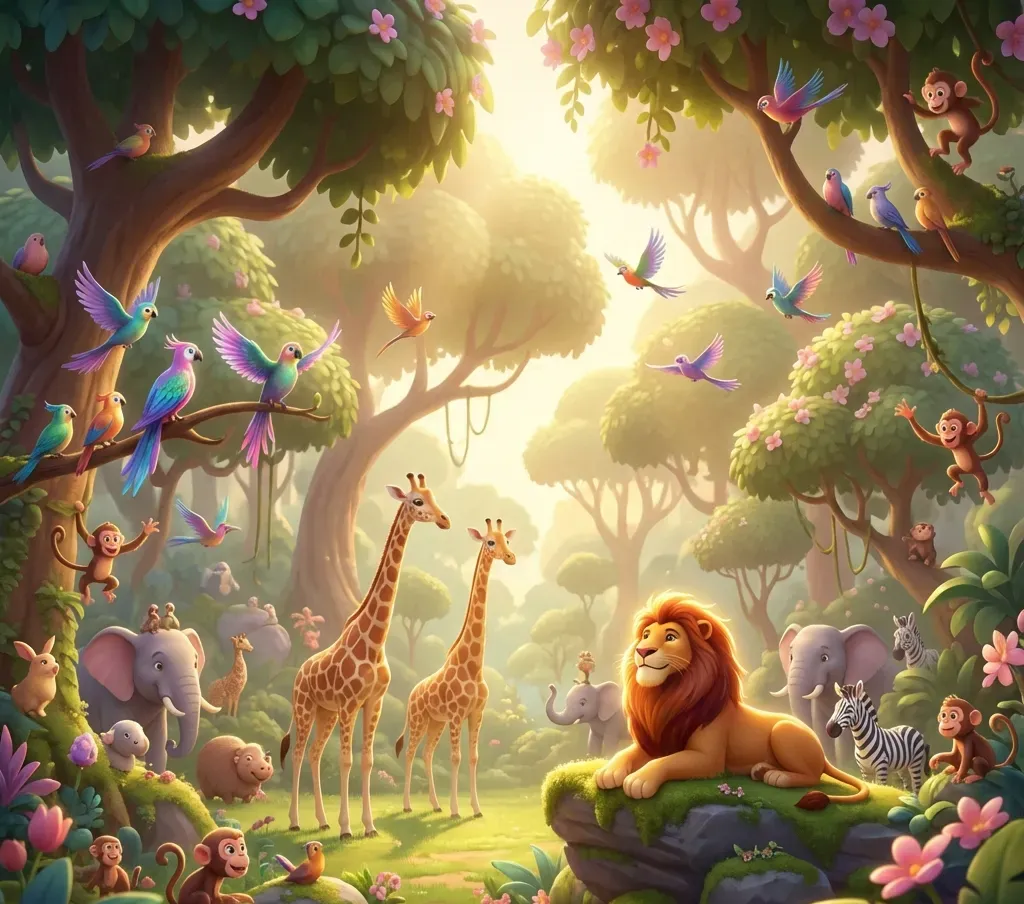 The animal kingdom bursts into life, preparing the earth for its royal stewards.
As Day 6 reached its crescendo, the divine Persons held solemn counsel within the Godhead: "Let Us make mankind in Our image, according to Our likeness" (Genesis 1:26). All prior creatures were summoned forth from the earth or sea; but humanity was formed through intimate, sacred divine craftsmanship.
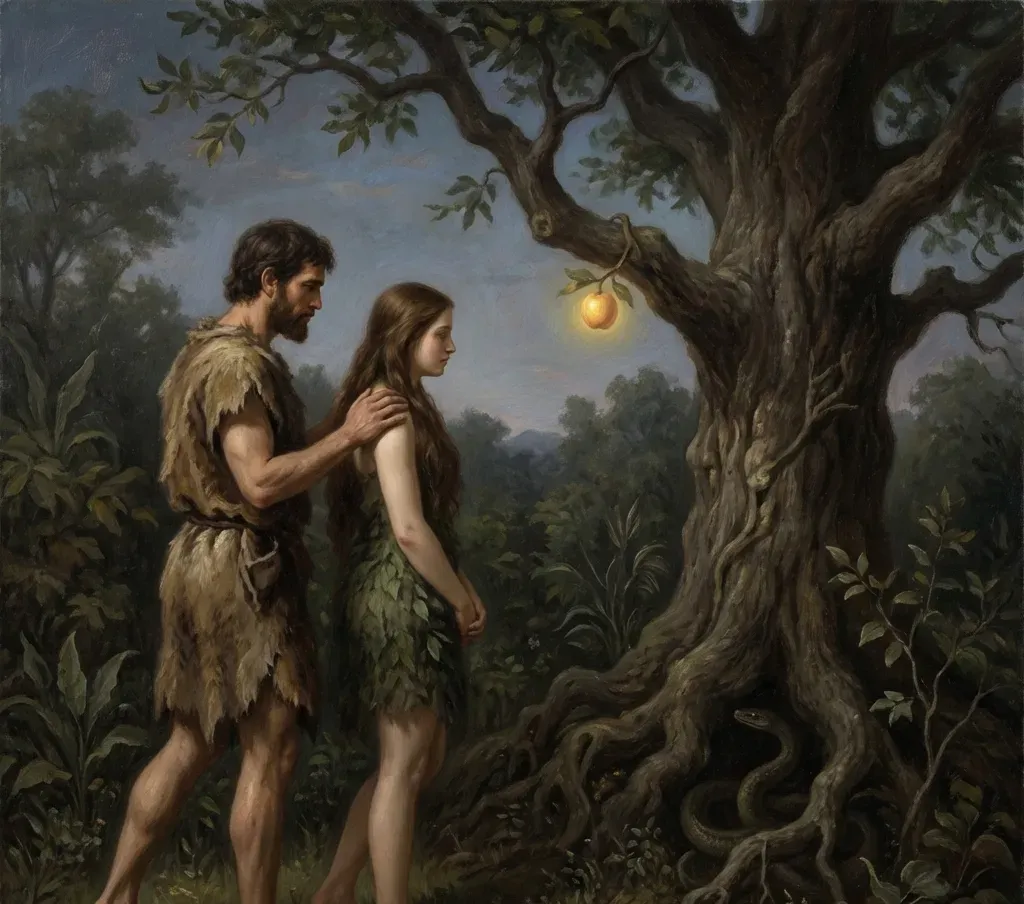
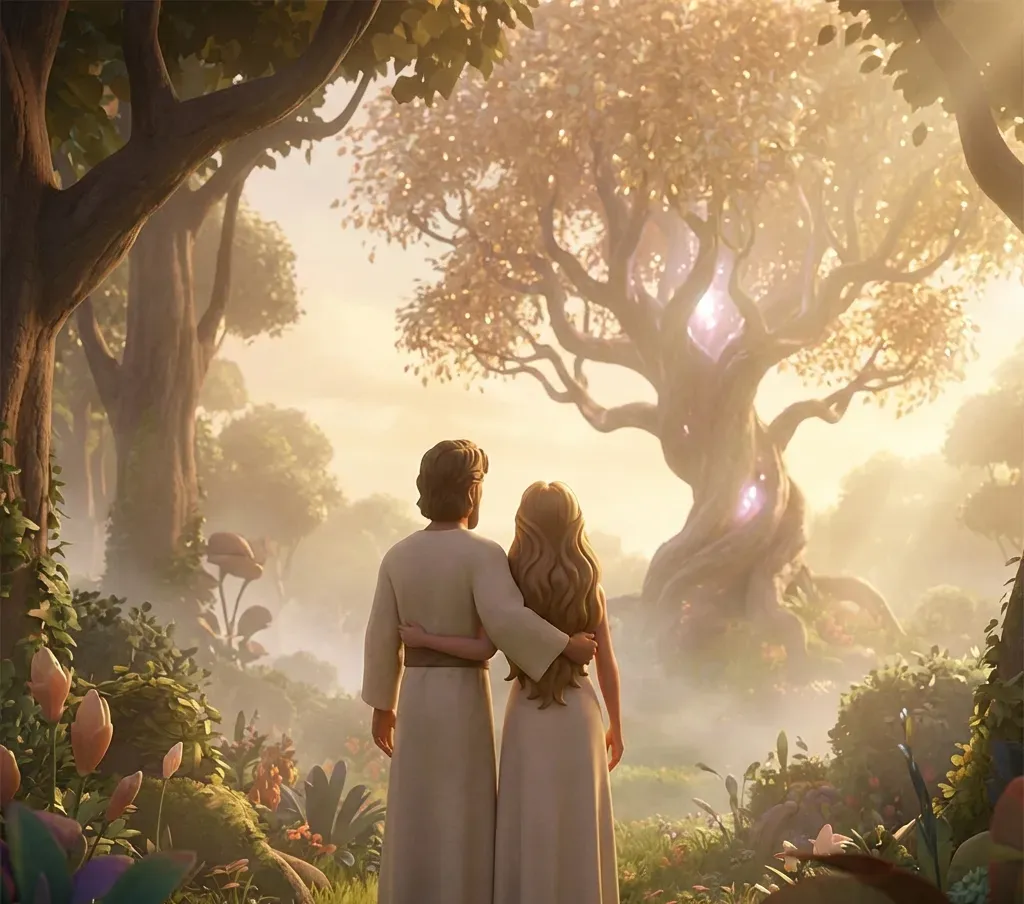 Crowned with dignity: Adam and Eve receive the covenant mandate of royal-priestly stewardship.
The Lord God gathered dust from the earth (adamah), sculpting the physical vessel of Adam, and breathed into his nostrils the breath of life (nishmat chayim). Man became a living soul (nephesh chayah)—a unique fusion of earthly dust and heaven's own breath. Observing that it was not good for man to walk in solitary isolation, God fashioned woman from Adam’s side, establishing egalitarian covenant partnership, complementary companionship, and the sacred bond of marriage.
As bearers of the Imago Dei, humanity was commissioned as royal priests within God's cosmic sanctuary. They were commanded to be fruitful, multiply, fill the earth, and exercise benevolent dominion (radah). This dominion was not a license for ruthless exploitation, but an assignment of sacrificial stewardship, reflecting God's justice, beauty, and wisdom across all creation.
6. The Seventh Day: Holy Rest and Consummation
Surveying the finished cosmos, God declared everything not merely good, but Tov Me'od—exceedingly, supremely good. The work was complete. Nothing lacked; nothing was defective; no shadow of death or alienation marred the pristine sanctuary.
On the seventh day, God ceased from all His creative labor and blessed the Sabbath, sanctifying it as holy ground in time. Divine rest does not imply divine fatigue; the Creator of the ends of the earth neither slumbers nor grows weary (Isaiah 40:28). Rather, God's rest was the joyful enthronement of the King taking delight in His finished masterpiece and welcoming His people into eternal communion.
The creation account points forward to the ultimate rest found in Jesus Christ, our true Sabbath (Hebrews 4:9-10). Through His cross and resurrection, Christ has inaugurated the New Creation, rescuing us from the decay of sin and restoring the divine image within all who trust in Him, until the day when new heavens and a new earth will shine with everlasting glory.
Biblical Keywords & Theological Roots
In the beginning / at the summit of chronological time; denotes the absolute starting point of the space-time universe.
To create ex nihilo (out of nothing); in the Old Testament, this specific Hebrew verb has only God as its grammatical subject.
The Spirit of God / Divine Breath; hovering over the formless deep with tender, life-giving maternal care.
Image of God (Imago Dei); representing royal status, moral reflection, and priestly stewardship on the earth.
Exceedingly good / intrinsically flawless; conveying total cosmic harmony, purpose, and moral perfection.
Ancient Near Eastern & Archaeological Context
Genesis 1-2 serves as an inspired theological counter-narrative against the pagan cosmologies of the ancient Near East, specifically the Mesopotamian Enuma Elish and Egyptian solar worship. In pagan mythologies, the world was born of cosmic violence, parricide, and terror. Pagan gods like Marduk, Tiamat, and Ra were fickle, limited, and bound to natural forces. Humans were spawned merely as domestic slaves to provide sacrifices for hungry deities.
By contrast, Moses reveals Yahweh Elohim as the uncaused First Cause who commands all matter with absolute, effortless sovereignty. Genesis strips the celestial bodies of pagan deity status: rather than being gods to be feared, the sun and moon are functional servants created to demarcate sacred seasons and calendars. Most radically, humanity is not an afterthought born of bloodshed, but the royal climax of creation, dignified with the Imago Dei to govern the earth in righteousness and loving communion with God.
Practical Discipleship & Spiritual Application
- Rooting Identity in the Imago Dei: Every human life possesses sacred dignity, meaning, and inviolable worth because we bear the divine signature of the Creator. We must honor this image in ourselves and in every neighbor.
- Submitting to the Creative Power of God's Word: Just as God spoke order into the dark, formless primeval deep, His living Word can shatter chaos, overcome despair, and spark transformative new life in our troubled hearts.
- Practicing Sabbath Trust: Sabbath rest is an act of spiritual surrender, declaring that the world rests in God's sovereign hands rather than our ceaseless anxiety. We honor God by trusting His finished work and receiving His rest.
- Faithful Stewardship of Creation: As God's appointed stewards, we are commissioned not to plunder the earth, but to tenderly cultivate, conserve, and reflect God's selfless love across every sphere of life.
⚡ Fast Facts
- Creatio Ex Nihilo: God generated the entire universe out of absolute nothingness solely by His sovereign spoken fiat.
- Literary Architecture: Three days of forming cosmic realms (Day 1-3) followed symmetrically by three days of filling them with rulers and inhabitants (Day 4-6).
- Imago Dei Dignity: Human beings were crafted as royal-priestly stewards, reflecting God's righteous character, creative intellect, and moral agency.
- The Sabbath Principle: God ceased His creative work on Day 7 not due to weariness, but to establish an enduring covenant of sacred rest and eternal communion.
❓ Frequently Asked Questions (FAQs)
Unlike the Babylonian Enuma Elish, where creation is a chaotic, accidental byproduct of violent civil war among lustful, warring deities, Genesis depicts one supreme, uncreated Sovereign who creates the cosmos effortlessly without combat, declaring all material reality fundamentally good.
God prepared the entire cosmic habitat first, ensuring that every physical, atmospheric, and nutritional necessity was lavishly supplied before welcoming humanity into His cosmic temple as His honored royal stewards.
Divine rest (Shabbat) signifies the triumphant completion and absolute perfection of God's handiwork. God was not fatigued; rather, He took royal enthronement over His ordered sanctuary, inviting humanity into ongoing covenant fellowship.