Q1.In Ecclesiastes 1:1, how does the inspired author identify himself at the opening of this profound wisdom book?
A) "The words of the Preacher (Qoheleth), the son of David, king in Jerusalem" ✓
B) "The visions of the prophet Samuel"
C) "The chronicles of Nehemiah the cupbearer"
D) "The sayings of Agur son of Jakeh"
Scriptural Explanation: Ecclesiastes 1:1 - 'The words of the Preacher, the son of David, king in Jerusalem.' The Hebrew title Qoheleth denotes one who convenes and addresses an assembly of wisdom seekers.
Q2.In Ecclesiastes 1:2, what famous recurring exclamation sets the existential premise of the entire book?
A) "Vanity of vanities, says the Preacher, vanity of vanities! All is vanity." ✓
B) "Glory to the kingdom of Egypt"
C) "Silver is eternal above all things"
D) "Trust in the strength of human horses"
Scriptural Explanation: Ecclesiastes 1:2 - '"Vanity of vanities, says the Preacher, vanity of vanities! All is vanity."' The Hebrew word hevel signifies a fleeting vapor or breath, pointing out the futility of life lived merely 'under the sun' apart from God.
Q3.In Ecclesiastes 1:9, what timeless observation does the Preacher make concerning the repetitive cycles of human history?
A) "What has been is what will be, and what has been done is what will be done, and there is nothing new under the sun" ✓
B) "Every morning brings a completely new world order"
C) "Man can invent completely uncreated elements"
D) "Earthly kings will never repeat their mistakes"
Scriptural Explanation: Ecclesiastes 1:9 - 'What has been is what will be, and what has been done is what will be done, and there is nothing new under the sun.'
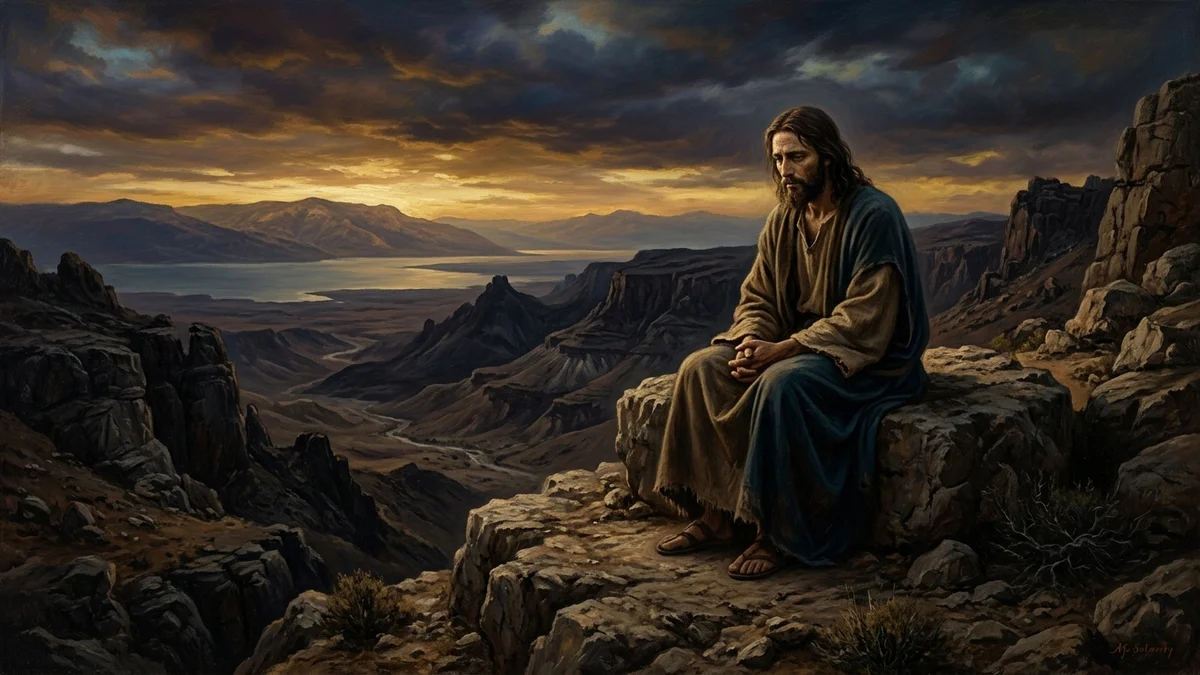
Q4.In Ecclesiastes 2:1-11, after experimenting with immense wealth, palaces, vineyards, music, and pleasures, what was Solomon's verdict?
A) All was vanity and a striving after wind, and there was nothing to be gained under the sun ✓
B) He found permanent satisfaction in accumulating gold
C) He decided to conquer all of Mesopotamia
D) Physical wine provided eternal peace of mind
Scriptural Explanation: Ecclesiastes 2:11 - 'Then I considered all that my hands had done and the toil I had expended in doing it, and behold, all was vanity and a striving after wind, and there was nothing to be gained under the sun.'
Q5.In Ecclesiastes 3:1, what universal truth introduces the renowned poetic catalog of human life seasons?
A) "For everything there is a season, and a time for every matter under heaven" ✓
B) "Life is governed by pure chance and Roman stars"
C) "A wise man can stop the changing of days"
D) "Seasons remain unchanged forever in Jerusalem"
Scriptural Explanation: Ecclesiastes 3:1 - 'For everything there is a season, and a time for every matter under heaven.'
Q6.In Ecclesiastes 3:11, what profound theological capacity has God placed inside the heart of every human being?
A) "He has put eternity into man's heart, yet so that he cannot find out what God has done from the beginning to the end" ✓
B) A desire to accumulate only silver and land
C) The blueprint of Solomon's First Temple
D) An instinct to avoid building cities
Scriptural Explanation: Ecclesiastes 3:11 - 'He has made everything beautiful in its time. Also, he has put eternity into man's heart, yet so that he cannot find out what God has done from the beginning to the end.' Humans have an innate thirst for the infinite that only God can satisfy.
Q7.In Ecclesiastes 4:9-12, what powerful proverb of companionship and unity does the Preacher declare?
A) "Two are better than one... and a threefold cord is not quickly broken" ✓
B) "Solitude alone produces true kings"
C) "A multitude of friends always brings ruin"
D) "Trust only your own right arm in battle"
Scriptural Explanation: Ecclesiastes 4:9, 12 - 'Two are better than one, because they have a good reward for their toil... And though a man might prevail against one who is alone, two will withstand him—a threefold cord is not quickly broken.'
Q8.In Ecclesiastes 5:1-2, what solemn counsel is given when entering the house of God?
A) "Guard your steps when you go to the house of God. To draw near to listen is better than to offer the sacrifice of fools... let your words be few" ✓
B) "Speak continuously with loud shouts so God can hear you"
C) "Bring forty silver shekels for the priests"
D) "Wear royal purple robes only"
Scriptural Explanation: Ecclesiastes 5:1-2 - 'Guard your steps when you go to the house of God. To draw near to listen is better than to offer the sacrifice of fools, for they do not know that they are doing evil. Be not rash with your mouth... for God is in heaven and you are on earth. Therefore let your words be few.'
Q9.In Ecclesiastes 5:10, what profound insight is given concerning the insatiable nature of greed?
A) "He who loves money will not be satisfied with money, nor he who loves wealth with his income; this also is vanity" ✓
B) "Gold cures all anxieties of the soul permanently"
C) "Wealth automatically grants eternal life"
D) "Rich men sleep sounder than weary laborers"
Scriptural Explanation: Ecclesiastes 5:10 - 'He who loves money will not be satisfied with money, nor he who loves wealth with his income; this also is vanity.' Material wealth can never quench a spiritual appetite.
Q10.In Ecclesiastes 7:1, what virtue is declared to be better than precious ointment?
A) "A good name is better than precious ointment, and the day of death than the day of birth" ✓
B) A golden chariot with Syrian horses
C) A royal palace in Lebanon
D) A crown of forty pearls
Scriptural Explanation: Ecclesiastes 7:1 - 'A good name is better than precious ointment, and the day of death than the day of birth.' Moral integrity and reputation outlast earthly luxuries.
Q11.In Ecclesiastes 11:1, what generosity principle encourages giving and faithful labor despite uncertain futures?
A) "Cast your bread upon the waters, for you will find it after many days" ✓
B) "Bury all your silver under the threshold of your door"
C) "Wait until the wind ceases before planting a single seed"
D) "Give only to those who possess royal titles"
Scriptural Explanation: Ecclesiastes 11:1 - 'Cast your bread upon the waters, for you will find it after many days.' An encouragement to open-handed generosity and faith in God's sovereign harvest.
Q12.In Ecclesiastes 12:1, what vital admonition does the Preacher issue to young people before difficult years arrive?
A) "Remember also your Creator in the days of your youth, before the evil days come and the years draw near of which you will say, ‘I have no pleasure in them’" ✓
B) "Pursue only worldly merriment until old age arrives"
C) "Store forty jars of wine in the cellar"
D) "Build ships to trade with Ophir"
Scriptural Explanation: Ecclesiastes 12:1 - 'Remember also your Creator in the days of your youth, before the evil days come and the years draw near of which you will say, "I have no pleasure in them."'
Q13.In Ecclesiastes 12:7, what physical and spiritual destination is described when earthly human life ceases?
A) "The dust returns to the earth as it was, and the spirit returns to God who gave it" ✓
B) "Both soul and body evaporate into the wind forever"
C) "Man reincarnates into birds and beasts"
D) "The spirit wanders the desert of Sin for millennia"
Scriptural Explanation: Ecclesiastes 12:7 - 'And the dust returns to the earth as it was, and the spirit returns to God who gave it.' Affirming both Genesis 3:19 ('to dust you shall return') and the soul's accountability to the Creator.
Q14.In Ecclesiastes 12:13-14, what is the grand, ultimate conclusion of the whole matter spoken by the Preacher?
A) "Fear God and keep his commandments, for this is the whole duty of man. For God will bring every deed into judgment, with every secret thing, whether good or evil." ✓
B) "Eat, drink, and build palaces, for tomorrow Rome may fall"
C) "Trust in the multitude of counselors rather than heaven"
D) "Seek retirement in the garden of Engedi"
Scriptural Explanation: Ecclesiastes 12:13-14 - 'The end of the matter; all has been heard. Fear God and keep his commandments, for this is the whole duty of man. For God will bring every deed into judgment, with every secret thing, whether good or evil.'
Q15.In Song of Solomon 1:2, with what intimate poetic desire does this divine love song open?
A) "Let him kiss me with the kisses of his mouth! For your love is better than wine" ✓
B) "Give me forty chariots from the king's stables"
C) "Show me the crowns of gold in Jerusalem"
D) "Open the gates of Lebanon's forest"
Scriptural Explanation: Song of Solomon 1:2 - 'Let him kiss me with the kisses of his mouth! For your love is better than wine.' A picture of covenant communion, allegorically reflecting Christ and His Bride, the Church.
Q16.In Song of Solomon 2:1, what classic botanical title does the bride proclaim of herself?
A) "I am a rose of Sharon, a lily of the valleys" ✓
B) "I am a cedar of Lebanon, an oak of Bashan"
C) "I am an olive tree planted by Siloam"
D) "I am a vine flourishing in Engedi"
Scriptural Explanation: Song of Solomon 2:1 - 'I am a rose of Sharon, a lily of the valleys.' A timeless poetic expression widely cherished in Christian hymnology concerning Christ's purity and grace.
Q17.In Song of Solomon 2:4, to what glorious dwelling did the Beloved bring her, and what banner was over her?
A) "He brought me to the banqueting house, and his banner over me was love" ✓
B) "He brought me to the armory of Goliath, and his banner was iron"
C) "He brought me to the treasury, and his banner was gold"
D) "He brought me to the council of elders, and his banner was law"
Scriptural Explanation: Song of Solomon 2:4 - 'He brought me to the banqueting house, and his banner over me was love.' God's covenant banner over His redeemed people is unwavering sacrificial love.
Q18.In Song of Solomon 2:15, what subtle danger are believers warned to catch before the vineyard is ruined?
A) "Catch the foxes for us, the little foxes that spoil the vineyards, for our vineyards are in blossom" ✓
B) "Drive out the fierce bears from Mount Hermon"
C) "Kill the serpents under the olive presses"
D) "Cut down the barren wild figs"
Scriptural Explanation: Song of Solomon 2:15 - 'Catch the foxes for us, the little foxes that spoil the vineyards, for our vineyards are in blossom.' A metaphor for small, tolerated compromises that ruin spiritual intimacy and fellowship.
Q19.In Song of Solomon 6:3, what reciprocal confession of covenant belonging does the bride declare?
A) "I am my beloved's and my beloved is mine; he grazes among the lilies" ✓
B) "I am a servant of the king of Tyre"
C) "I belong only to my father's house"
D) "I seek worldly treasures above all else"
Scriptural Explanation: Song of Solomon 6:3 - 'I am my beloved's and my beloved is mine; he browses among the lilies.' Highlighting complete mutual surrender and covenant faithfulness.
Q20.In Song of Solomon 8:6-7, how is the unconquerable power of divine covenant love celebrated?
A) "Love is strong as death... Many waters cannot quench love, neither can floods drown it" ✓
B) "Love can be purchased with thirty silver talents"
C) "Love fades like morning dew in the desert"
D) "Love depends entirely on the king's armies"
Scriptural Explanation: Song of Solomon 8:6-7 - 'Set me as a seal upon your heart, as a seal upon your arm, for love is strong as death, jealousy is fierce as the grave... Many waters cannot quench love, neither can floods drown it. If a man offered for love all the wealth of his house, he would be utterly despised.'