As the curtain slowly descends upon the thirty-nine books of the Old Testament, the voice that echoes across the Judean hills is not a gentle lullaby, but a piercing divine trumpet blast. Roughly a century after the first exiles returned from Babylon, the spiritual fires of Jerusalem had cooled into the gray ashes of cynicism, moral compromise, and formalistic ritualism. The people still went through the motions of worship at the Second Temple, but their hearts were miles away. Into this spiritual winter stepped Malachi, whose name means 'My Messenger.' With fearless, dialectical brilliance, Malachi exposed a nation robbing its Creator, rebuked corrupt priests, and pierced the gathering darkness with the radiant promise of the rising Sun of Righteousness.
1. The Divine Indictment: God's Disputed Love
The book of Malachi is structured around seven fiery courtroom dialogues where God levels a charge, the cynical people insolently object, and God refutes them with devastating evidence.
The book opens with God’s tender yet grieved affirmation: " 'I have loved you,' says the Lord."
Instead of falling on their faces in gratitude, the hardened people snap back: "In what way have You loved us?" (Malachi 1:2).
Because life in post-exilic Judea was economically difficult and politically overshadowed by the Persian Empire, the people doubted God's covenant love. God points to history: while Edom (Esau) had been permanently desolate, God had preserved Jacob’s descendants as His chosen remnant.
2. Contempt at the Altar: Blind and Lame Sacrifices
God turned His righteous fury directly upon the priesthood: "A son honors his father, and a servant his master. If then I am the Father, where is My honor? And if I am a Master, where is My reverence? says the Lord of hosts to you priests who despise My name." (Malachi 1:6).
The priests feigned innocence: "In what way have we despised Your name?"
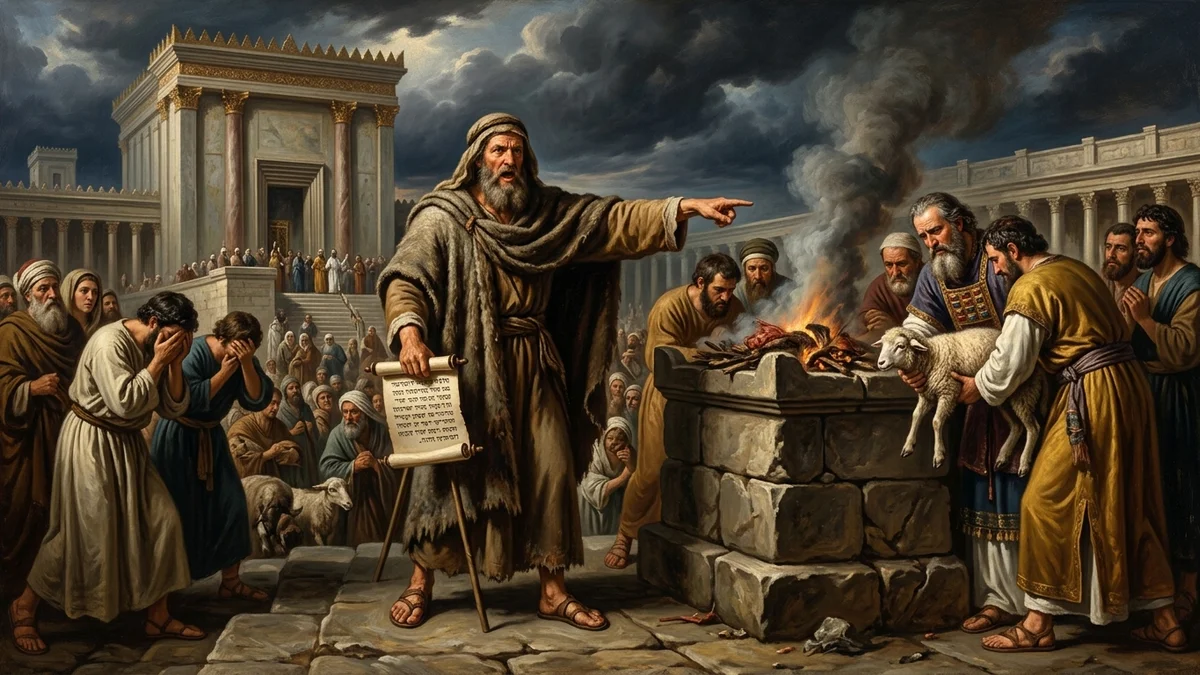
God exposed their scandalous hypocrisy: while Mosaic law demanded unblemished animals for sacrifice, the priests were accepting blind, lame, sick, and stolen animals from their flocks to burn on Yahweh's altar, keeping the healthy animals for their own tables!
"Offer it now to your governor! Would he be pleased with you, or accept you favorably?" says the Lord of hosts. God declared that He would rather have someone shut the Temple doors completely than receive such insulting, half-hearted worship: "For from the rising of the sun even to its going down, My name shall be great among the Gentiles!" (Malachi 1:11).
3. Unfaithfulness in Marriage and Covenant Robbery
Spiritual corruption had poisoned the family unit. Judean men were divorcing the faithful Jewish wives of their youth to marry younger, wealthy pagan women.
God warned that He covered His altar with tears and refused to accept their offerings because: "The Lord has been witness between you and the wife of your youth, with whom you have dealt treacherously; yet she is your companion and your wife by covenant... For the Lord God of Israel says that He hates divorce!" (Malachi 2:14-16).
Then came the most famous financial indictment in the Bible:
"Will a man rob God? Yet you have robbed Me! But you say, 'In what way have we robbed You?' In tithes and offerings. You are cursed with a curse, for you have robbed Me, even this whole nation." (Malachi 3:8-9).
By hoarding their tithes (the biblical ten percent allocated to support the Levites, the Temple, and the poor), the nation demonstrated that they did not trust God to provide. But God offered a breathtaking covenant challenge:
" 'Bring all the tithes into the storehouse, that there may be food in My house, and try Me now in this,' says the Lord of hosts, 'if I will not open for you the windows of heaven and pour out for you such blessing that there will not be room enough to receive it. And I will rebuke the devourer for your sakes!' " (Malachi 3:10-11).
4. The Book of Remembrance for the Faithful Remnant
Amidst widespread cynicism, there remained a holy, praying minority:
"Then those who feared the Lord spoke to one another, and the Lord listened and heard them; so a book of remembrance was written before Him for those who fear the Lord and who meditate on His name." (Malachi 3:16).
God promised that on the day of His appearing, this faithful remnant would be His most treasured possession: " 'They shall be Mine,' says the Lord of hosts, 'on the day that I make them My jewels. And I will spare them as a man spares his own son who serves him.' " (Malachi 3:17).
5. The Sun of Righteousness and the Rising Dawn
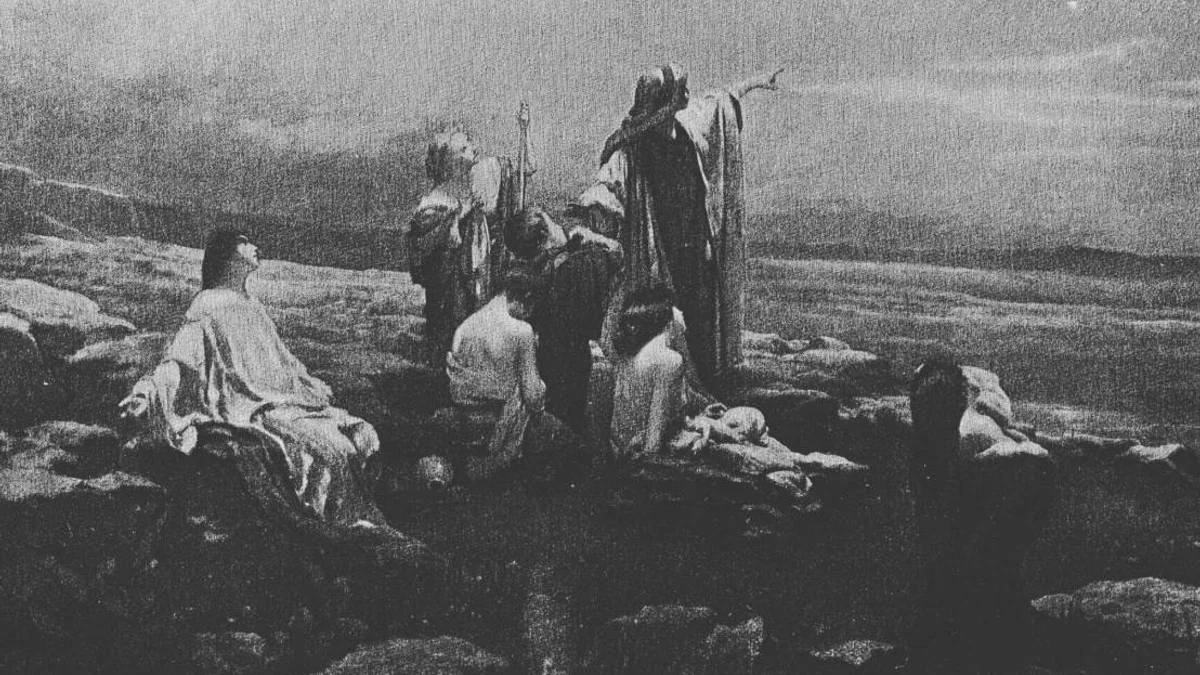 Gustave Doré's classical masterwork depicting Malachi's prophecy of the Messenger preparing the way for the Lord who suddenly comes to His Temple.
The final chapter of Malachi contrasts the terrifying fate of the arrogant with the glorious dawn awaiting those who fear the Lord:
"For behold, the day is coming, burning like an oven, and all the proud, yes, all who do wickedly will be stubble... But to you who fear My name,
THE SUN OF RIGHTEOUSNESS SHALL ARISE WITH HEALING IN HIS WINGS; and you shall go out and grow fat like stall-fed calves!" (Malachi 4:1-2).
What a breathtaking messianic title! Jesus Christ is the Sun of Righteousness. After four centuries of dark silence, Christ would rise over the horizon of human history like a brilliant dawn, scattering the shadows of death, with divine healing in the hem of His garment (His 'wings')!
6. The Closing Words: Elijah Before the Great Day
The Old Testament closes with a solemn prophecy bridging the Testaments:
"Behold, I will send you Elijah the prophet before the coming of the great and dreadful day of the Lord. And he will turn the hearts of the fathers to the children, and the hearts of the children to their fathers, lest I come and strike the earth with a curse." (Malachi 4:5-6).
With the word "curse" (*cherem*), the Hebrew prophetic canon fell silent. For four hundred long years, no prophet would speak, no scripture would be added, and no angel would visit. The world waited in the dark until one day, in the spirit and power of Elijah, a wild prophet named John the Baptist stood by the Jordan River crying: "Behold! The Lamb of God who takes away the sin of the world!" (John 1:29).
Spiritual Reflections & Practical Life Application:
- Give God Your Best, Not Your Leftovers: Are you giving God your prime energy, devotion, and resources, or offering Him the 'blind and lame' scraps of your leftover time? God deserves your very best.
- Trust God in the Tithe: Malachi 3:10 is the only place in the Bible where God invites you to 'test' Him. Honor God with the firstfruits of your income and watch Him rebuke the devourer in your life.
- God Hears the Conversations of the Faithful: When you speak words of faith and encourage fellow believers in dark times, God writes your name in His divine Book of Remembrance!
- Look for the Sun of Righteousness: No matter how dark your circumstances or how long the silence of God may feel, the Sun of Righteousness is rising over your life with healing in His wings. Hope in Christ today!
⚡ Fast Facts
- Malachi (meaning 'My Messenger') was the last Old Testament prophet, ministering around 430 BC
- The book uses a unique dialectical question-and-answer disputation style (God charges, people object, God refutes)
- Famous financial covenant promise: 'Bring all the tithes into the storehouse... and prove Me now' (Malachi 3:10)
- Final prophecy of the Old Testament foretold the coming of Elijah the prophet, fulfilled by John the Baptist
❓ Frequently Asked Questions (FAQs)
Decades had passed since the Temple was rebuilt and the walls completed, yet Jerusalem remained a modest, vassal province under Persian rule. The glorious messianic prophecies of worldwide wealth and dominance hadn't materialized visibly, leading priests and people into cynical, formalistic ritualism: 'It is useless to serve God' (Malachi 3:14).
The Israelites withheld their required 10% agricultural tithes and freewill offerings from the Temple storehouses, which starved the Levites, forced them to abandon ministry to farm for survival, and showed contempt for God's sovereign ownership of their wealth (Malachi 3:8-9).
Jesus explicitly identified John the Baptist as the fulfillment of this prophecy (Matthew 11:14; 17:11-13; Luke 1:17), declaring that John came in the spirit and power of Elijah to prepare the hearts of Israel before the Messiah's arrival.