In October 539 BC, in a single night of staggering geopolitical suddenness, the impregnable double walls of Babylon were breached. The Medo-Persian army under King Cyrus the Great diverted the waters of the Euphrates River, marched beneath the water gates, executed the blasphemous co-regent Belshazzar, and swept the Neo-Babylonian Empire into the dustbin of history. To stabilize the newly conquered territories, the imperial crown appointed a seasoned sixty-two-year-old statesman known in Scripture as Darius the Mede (*Daryavesh*) as ruler over the kingdom of the Chaldeans. Recognizing the immense administrative complexity of governing Mesopotamia, Darius restructured the civil bureaucracy, appointing one hundred and twenty regional governors (*satraps*) across the empire, overseen by a supreme executive triumvirate of three chief commissioners (*sarkhin*), "of whom Daniel was one, that the satraps might give account to them, so that the king would suffer no loss" (Daniel 6:1–2).
Now an octogenarian in his early eighties, having served with distinction through the reigns of multiple Babylonian monarchs across seven decades, Daniel's brilliance was undiminished. Scripture records that "this Daniel distinguished himself above the governors and satraps, because an excellent spirit was in him; and the king gave thought to setting him over the whole realm" (Daniel 6:3). His wisdom, unimpeachable honesty, and sheer administrative mastery made him the monarch's most trusted confidant. Yet in the toxic arena of imperial politics, uncompromising righteousness inevitably provokes the vicious malice of the corrupt.
The Forensic Witch Hunt: Auditing a Blameless Statesman
Consumed by burning ethnic hatred and political envy—mortified that an elderly Jewish exile was poised to be elevated as grand vizier over the native Medo-Persian aristocracy—the other two commissioners and the one hundred and twenty satraps formed a coordinated conspiracy to destroy Daniel. They launched an exhaustive, intrusive forensic investigation into his personal, political, and financial records. They scoured his tax allocations, examined his court judgments, audited his treasury receipts, and interrogated his domestic staff, desperately hunting for a shred of bribery, embezzlement, nepotism, or administrative negligence.
The result of their investigation stands as one of the most magnificent tributes to Christian integrity in the workplace ever recorded: כָּל־עִלָּה וּשְׁחִיתָה לָא יָכְלִין לְהַשְׁכָּחָה כָּל־קֳבֵל דִּי־מְהֵימַן הוּא וְכָל־שָׁלוּ וּשְׁחִיתָה לָא הִשְׁתְּכַחַת עֲלוֹהִי—"They could find no charge or fault, because he was faithful; nor was there any error or fault found in him" (Daniel 6:4). After seventy years in the corridors of absolute imperial power, Daniel was completely clean! Exasperated and frustrated, the conspirators reached an astonishing conclusion: "We shall not find any charge against this Daniel unless we find it against him concerning the law of his God!" (Daniel 6:5).
The Snare of Flattery: The Thirty-Day Irrevocable Decree
Knowing that Daniel's devotion to Yahweh was non-negotiable, the conspirators devised an insidious legal trap weaponizing the king's vanity against his favorite minister. Swarming into the royal presence in a coordinated show of loyalty, they stroked Darius's ego with intoxicating court flattery: "King Darius, live forever! All the governors of the kingdom, the administrators and satraps, the counselors and advisors, have consulted together to establish a royal statute and to make a firm decree, that whoever petitions any god or man for thirty days, except you, O king, shall be cast into the den of lions. Now, O king, establish the decree and sign the writing, so that it cannot be changed, according to the law of the Medes and Persians, which does not pass away!" (Daniel 6:6–8).
The legal trap was fiendishly clever. In ancient Persian statecraft, the monarch was revered as the earthly vicar and living representative of the supreme deity Ahura Mazda. A thirty-day prohibition against petitioning any other god or human served as a political loyalty oath designed to unite the diverse conquered provinces under Darius's new authority. Flattered by their apparent devotion and blind to their sinister agenda, King Darius dipped his royal signet ring in hot wax and pressed it upon the parchment document. The decree was sealed, instantly becoming part of the legendary דָּתָא דִי־מָדַי וּפָרָס דִּי־לָא תֶעְדֵּא (Data di-Madai u-Faras di-La Te'deh)—the immutable, unrepealable "law of the Medes and Persians".
The Open Windows Facing Jerusalem
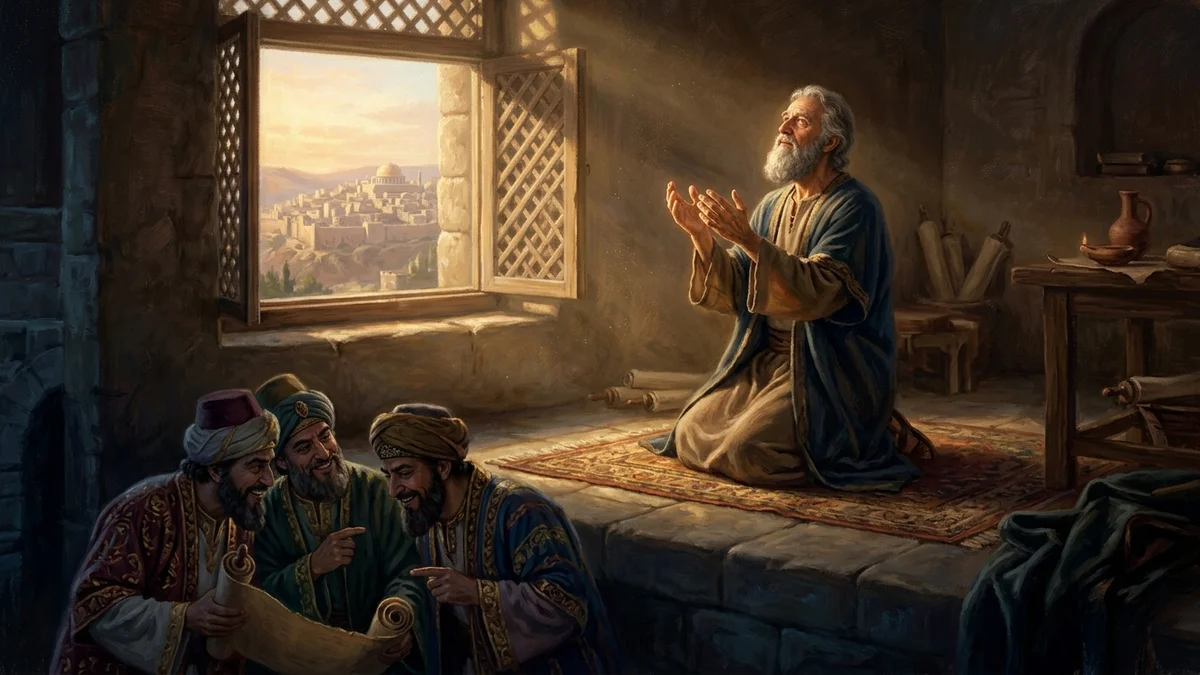
The news of the imperial decree reverberated throughout the marble corridors of Babylon. Daniel was fully aware that the document had been signed, sealed, and published. He understood perfectly that every step he took was being monitored by spies. Human prudence would have counseled pragmatic compromise: pray secretly in bed under the blankets; pray silently with closed lips; take a thirty-day hiatus from prayer; or at the very least, pull the wooden lattice shutters shut to conceal his devotions.
Scripture records Daniel's magnificent, defiant response: וְדָנִיֵּאל כְּדִי יְדַע דִּי־רְשִׁים כְּתָבָא עַל לְבַיְתֵהּ וְכַוִּין פְּתִיחָן לֵהּ בְּעִלִּיתֵהּ נֶגֶד יְרוּשְׁלֶם וְזִמְנִין תְּלָתָה בְיוֹמָא הוּא בָּרֵךְ עַל־בִּרְכוֹהִי וּמְצַלֵּא וּמוֹדֵא קֳדָם אֱלָהֵהּ כָּל־קֳבֵל דִּי־הֲוָא עָבֵד מִן־קַדְמַת דְּנָה—"Now when Daniel knew that the writing was signed, he went home. And in his upper room, with his windows open toward Jerusalem, he knelt down on his knees three times that day, and prayed and gave thanks before his God, as was his custom since early days" (Daniel 6:10).
Notice the spiritual posture: Daniel did not flaunt his piety to start a rebellion, nor did he alter his holy habits out of fear. His windows were already oriented westward toward the ruined Temple Mount on Mount Moriah, fulfilling King Solomon's ancient consecration prayer in 1 Kings 8:46–48. Three times a day—at the morning sacrifice (9:00 AM), the afternoon oblation (3:00 PM), and the evening twilight—the elderly prophet knelt in holy adoration, unyielding in his allegiance to the King of kings.
The Royal Dilemma: Trapped by the Law
The conspirators, lying in ambush outside Daniel's residence, burst into his courtyard and discovered him on his knees, lifting holy hands in prayer to Yahweh. Triumphantly rushing to the palace, they confronted King Darius with their legal snare: "Have you not signed a decree...?" When the king confirmed the statute's unshakeable authority, they dropped their devastating hammer: "That Daniel, who is one of the captives from Judah, does not show regard for you, O king, or for the decree that you have signed, but makes his petition three times a day!" (Daniel 6:12–13).
The realization struck Darius like a physical blow. The monarch saw through the web of flattery: he had been used as an unwitting pawn in a political murder plot against his dearest friend and most capable minister. Scripture records: "And the king, when he heard these words, was greatly displeased with himself, and set his heart on Daniel to deliver him; and he labored till the going down of the sun to rescue him" (Daniel 6:14). For hours, Darius summoned imperial jurists, scouring the constitutional legal codes for loopholes, presidential pardons, or jurisdictional exceptions. But the conspirators stood surrounding the throne, repeating with smug cruelty: "Know, O king, that it is the law of the Medes and Persians that no decree or statute which the king establishes may be changed" (Daniel 6:15).
Into the Pit of Hungry Predators
At sunset, the royal options were exhausted. With a breaking heart, King Darius gave the command. The royal guard seized the elderly prophet and led him to the imperial lion pit (*Gubba di Aryavata*)—a deep, subterranean stone chamber housing a pride of ravenous Asiatic lions. Standing at the edge of the dark abyss, the pagan king uttered an extraordinary confession of faith to the prisoner: אֱלָהָךְ דִּי אַנְתְּ פָּלַח־לֵהּ בִּתְדִירָא הוּא יְשֵׁיזְבִנָּךְ—"Your God, whom you serve continually, He will deliver you!" (Daniel 6:16).
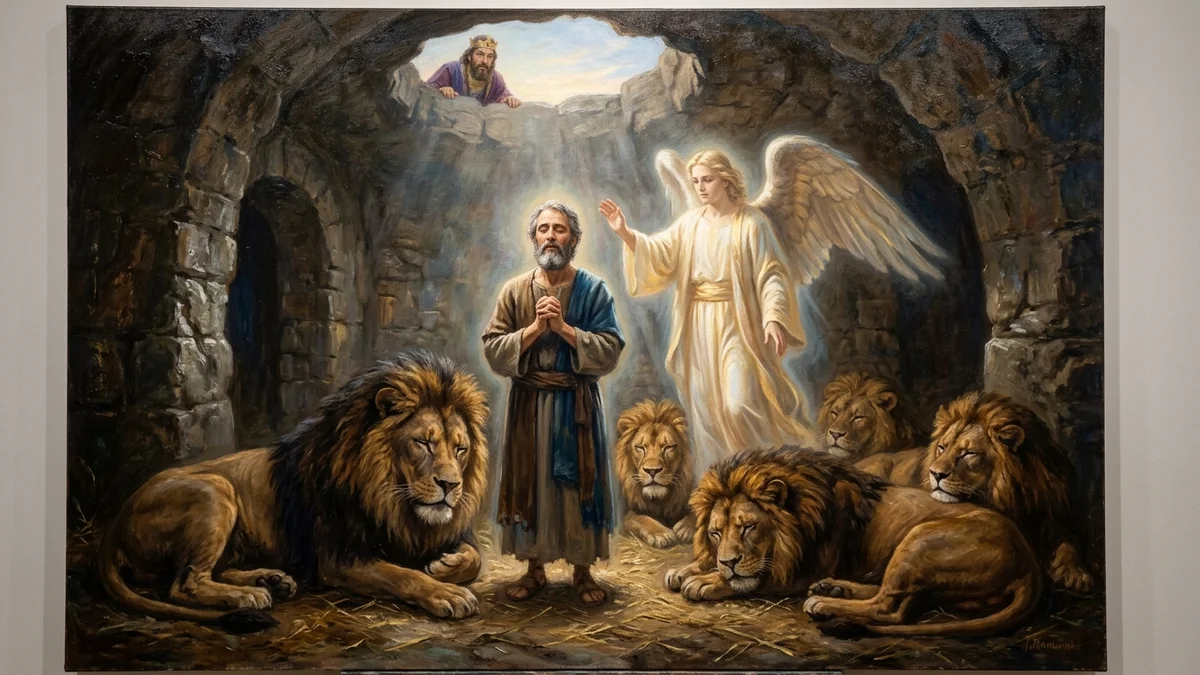
Daniel was cast into the depths of the pit. A massive stone slab was rolled over the mouth of the cavern. To ensure that no human intervention could alter the execution, Darius pressed his own signet ring and the signet rings of his lords into the soft clay over the stone. Sealed by imperial law and surrounded by predatory death, Daniel was left alone in the darkness.
Meanwhile, in the royal palace, Darius experienced an agonizing night of sleepless torment. Refusing food, dismissing his royal musicians, and rejecting his harem concubines, the emperor paced the marble halls in sackcloth and ashes, fasting and weeping for his faithful servant.
The Dawn at the Pit: 'My God Sent His Angel'
At the first glimmer of dawn, before the morning mist had cleared from the Euphrates River, King Darius arose in haste and sprinted to the lion pit. Standing beside the sealed stone, the emperor cried out with a lamentable, grief-stricken voice: דָּנִיֵּאל עֲבֵד אֱלָהָא חַיָּא הַאֱלָהָךְ דִּי אַנְתְּ פָּלַח־לֵהּ בִּתְדִירָא יְכִל לְשֵׁיזָבוּתָךְ מִן־אַרְיָוָתָא—"Daniel, servant of the Living God, has your God, whom you serve continually, been able to deliver you from the lions?" (Daniel 6:20).
From the black depths of the cavern, a calm, serene voice resonated through the stone aperture: מַלְכָּא לְעָלְמִין חֱיִי: אֱלָהִי שְׁלַח מַלְאֲכֵהּ וּסֲגַר פֻּם אַרְיָוָתָא וְלָא חַבְּלוּנִי כָּל־קֳבֵל דִּי קָדָמוֹהִי זָכוּ הִשְׁתְּכַחַת לִי וְאַף קָדָמָךְ מַלְכָּא חֲבוּלָה לָא עַבְדֵת—"O king, live forever! My God sent His angel and shut the lions' mouths, so that they have not hurt me, because I was found innocent before Him; and also toward you, O king, I have done no wrong!" (Daniel 6:21–22).
Scripture records that the king was exceedingly glad. Commanded to be hoisted out immediately by thick ropes, Daniel was pulled into the morning sunlight before the eyes of the astounded imperial court: "So Daniel was taken up out of the den, and no injury whatever was found on him, because he trusted in his God!" (Daniel 6:23). Throughout the long, cold night, while the emperor paced in sleepless terror, Daniel had rested peacefully against the warm fur of docile beasts, guarded by the radiant sword of a heavenly archangel!
The Swift Hand of Divine Justice and the Global Proclamation
The tables of divine justice turned with terrifying speed. Under the king's command, the corrupt conspirators who had maliciously plotted Daniel's destruction—alongside their households in accordance with Persian corporate penalty—were arrested and hurled into the very pit they had prepared. Before they reached the bottom of the cavern, the famished lions overpowered them and broke all their bones in pieces (Daniel 6:24), providing chilling empirical proof that the lions had not been full, sleepy, or tame; their jaws had been supernaturally clamped shut by the authority of Almighty God!
King Darius then issued a magnificent royal decree addressed to all peoples, nations, and languages across the known world:
"Peace be multiplied to you. I make a decree that in every dominion of my kingdom men must tremble and fear before the God of Daniel. For He is the Living God, and steadfast forever; His kingdom is the one which shall not be destroyed, and His dominion shall endure to the end. He delivers and rescues, and He works signs and wonders in heaven and on earth, who has delivered Daniel from the power of the lions!" (Daniel 6:25–27).
Christological Typology: The Stone, the Seal, and the Dawn
The deliverance of Daniel from the lions' den stands as one of the most sublime typological prophecies of the death, burial, and resurrection of Jesus Christ in the entire Old Testament:
- Daniel was innocent, blameless, and righteous, yet condemned through the jealousy and false accusations of religious-political rulers (cf. Matthew 27:18).
- He was cast into a subterranean stone pit, and a massive stone was rolled over the entrance and sealed with an official governmental seal to ensure no escape (cf. Matthew 27:66).
- At the break of dawn on the third watch, a loving seeker ran to the stone tomb expecting death, only to find the stone rolled away and the captive alive through the power of God (cf. Matthew 28:1–6).
- Christ descended into the pit of death and hell, disarmed the roaring lion who stalks the earth seeking whom he may devour (1 Peter 5:8), and burst forth as the triumphant Conqueror whose kingdom shall never pass away!
To every Christian facing workplace persecution, secular censorship, or the roaring predators of spiritual warfare, the testimony of Daniel echoes across the millennia: when you kneel before the Living God in secret, you need never bow before any earthly tyrant. The God who shut the lions' mouths is with you, and His resurrection victory is your eternal shield!
Biblical Keywords & Theological Roots
Ancient Near Eastern & Archaeological Context
Following the capture of Babylon by Cyrus's general Ugbaru in October 539 BC, an interim administrator designated in Scripture as 'Darius the Mede' (often identified by historians with Gubaru/Ugbaru or Cyaxares II) organized regional governance. The Medo-Persian legal system was legendary for its inflexibility: royal edicts issued under the seal of the king became part of the *dâta*—the unalterable 'law of the Medes and Persians' (attested in the Behistun Inscription of Darius the Great). Persian monarchs kept royal lion enclosures (*paradeisoi*) and subterranean pit arenas for keeping Asiatic lions (*Panthera leo persica*), which were used for royal hunts and imperial capital punishment.
Practical Discipleship & Spiritual Application
- Maintain a disciplined, non-negotiable personal prayer life: like Daniel, build an unshakeable daily habit of kneeling before God regardless of schedule demands.
- Live with such transparency that opponents can find fault only with your faith: let your work ethic, financial honesty, and speech be beyond reproach.
- Never allow cultural intimidation or hostile legislation to silence your worship: continue gathering, praying, and witnessing with quiet, bold grace.
- Rest peacefully in your personal 'lions' den': when encircled by slanderers, critics, or fierce trials, remember that Christ has already shut the enemy's mouth.
Support Independent Biblical Research
Did this study bless you? Help support our independent bilingual research and interactive visual Bible tools.
⚡ Fast Facts
- Daniel was approximately 82 to 85 years old when he was thrown into the lions' den, having lived through the entire 70-year Babylonian exile.
- The Persian administrative triumvirate consisted of three commissioners (*sarkhin*) overseeing 120 satraps to prevent loss of imperial tax revenue.
- Daniel prayed facing Jerusalem in accordance with King Solomon's ancient prayer at the dedication of the Temple in 1 Kings 8:44–48.
- The seal placed on the stone was twofold: the king's private signet ring and the signet rings of his nobles, guaranteeing that neither party could tamper with the pit.
❓ Frequently Asked Questions (FAQs)
Who was 'Darius the Mede', and why is his identity debated by secular historians?
Secular cuneiform texts do not use the throne name 'Darius the Mede' for the supreme ruler of 539 BC (Cyrus the Great ruled the empire). However, conservative scholarship and ancient historical records identify Darius the Mede either with Gubaru (Ugbaru), the Mede general whom Cyrus appointed as ruler/governor of Babylon immediately after its capture, or Cyaxares II (son of Astyages and uncle of Cyrus), who held titular royal honors alongside Cyrus. Daniel 5:31 notes he 'received the kingdom' at age 62, matching an appointed co-regency.
Why couldn't King Darius simply repeal the thirty-day prayer decree to save Daniel?
Under ancient Medo-Persian constitutional law, an imperial edict sealed with the king's signet ring became part of the irrevocable *dâta*. The legal fiction held that the Persian monarch spoke as the living representative of the gods of truth, and therefore his decrees could never contain error or be rescinded. To revoke his decree would undermine the legal foundation of the entire empire.
Why were the families of Daniel's accusers also thrown into the lions' den?
Under ancient Near Eastern and Medo-Persian corporate liability laws, when a conspirator committed high treason or false capital accusation (*malicious prosecution*), his entire household was held legally guilty and executed to eradicate any blood vendetta against the crown. While Mosaic law prohibited punishing children for their fathers' sins (Deut 24:16), pagan Persian law practiced ruthless dynastic extermination.