Q1.In Exodus 2:3, when Moses' mother Jochebed could no longer hide him from Pharaoh's decree, where did she place the three-month-old infant?
A) In an ark of bulrushes daubed with pitch, among the reeds by the river Nile ✓
B) In a cave in the wilderness of Sinai
C) Under the altar of the Midianite priests
D) Inside a granary in the land of Goshen
Scriptural Explanation: Exodus 2:3 - 'When she could hide him no longer, she took for him a basket made of bulrushes and daubed it with bitumen and pitch. She put the child in it and placed it among the reeds by the river bank.'
Q2.In Exodus 2:10, what Hebrew meaning is associated with the name 'Moses' given by Pharaoh's daughter?
A) "Because I drew him out of the water" ✓
B) "Mighty prince of Egypt"
C) "Shepherd of the desert"
D) "Voice of thunder"
Scriptural Explanation: Exodus 2:10 - 'She named him Moses, "Because," she said, "I drew him out of the water."' (Hebrew: Mosheh, from mashah, to draw out).
Q3.In Exodus 2:11-15, what action caused Moses to flee from Pharaoh's presence into the land of Midian at age 40?
A) He killed an Egyptian who was striking a Hebrew brother and hid him in the sand ✓
B) He burned down Pharaoh's treasure house
C) He refused to worship the golden calf of Memphis
D) He stole the royal scepter of Egypt
Scriptural Explanation: Exodus 2:11-15; Acts 7:23-29 - Moses saw an Egyptian striking a Hebrew, struck down the Egyptian, and when Pharaoh sought to kill him, Moses fled to Midian where he lived as a shepherd for 40 years.
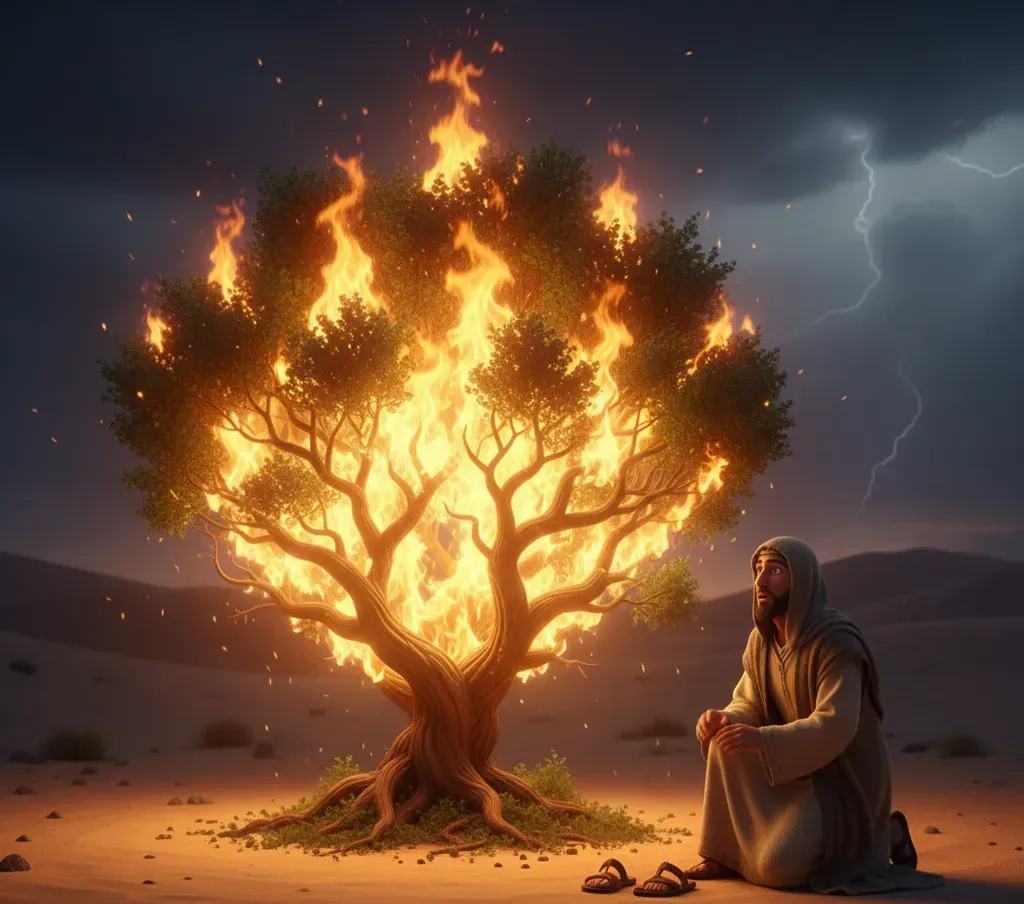
Q4.In Exodus 3:1-4, where was Moses shepherding Jethro's flock when the Lord appeared to him in a burning bush that was not consumed?
A) Mount Horeb, the mountain of God ✓
B) Mount Ararat
C) Mount Carmel
D) The plains of Jericho
Scriptural Explanation: Exodus 3:1-2 - 'Now Moses was keeping the flock of his father-in-law, Jethro, the priest of Midian, and he led his flock to the west side of the wilderness and came to Horeb, the mountain of God. And the angel of the Lord appeared to him in a flame of fire out of the midst of a bush.'
Q5.In Exodus 4:2-4, what was the first miraculous sign God gave Moses using his shepherd's staff?
A) When cast on the ground it became a serpent, and when caught by the tail it became a staff again ✓
B) It blossomed with sweet almond flowers instantly
C) It turned into a sword of pure silver
D) It burst into flames without burning wood
Scriptural Explanation: Exodus 4:2-4 - 'He said, "Throw it on the ground." So he threw it on the ground, and it became a serpent, and Moses ran from it. But the Lord said to Moses, "Put out your hand and catch it by the tail"—so he reached out his hand and caught it, and it became a staff in his hand.'
Q6.In Exodus 4:10-14, when Moses objected that he was 'slow of speech and of a slow tongue', whom did God appoint to speak for him?
A) His brother Aaron the Levite ✓
B) Joshua son of Nun
C) Caleb son of Jephunneh
D) Hur of Judah
Scriptural Explanation: Exodus 4:14 - 'Then the anger of the Lord was kindled against Moses and he said, "Is there not Aaron, your brother, the Levite? I know that he can speak well. Behold, he is coming out to meet you... and he shall be your mouth, and you shall be as God to him."'
Q7.In Exodus 7:20, what was the first plague poured out upon Egypt when Moses and Aaron struck the river Nile?
A) All the waters of the Nile turned into blood, killing the fish and fouling the water ✓
B) Swarms of frogs covered every bedchamber
C) A thick darkness covered Egypt for three days
D) Giant locusts devoured every tree and field
Scriptural Explanation: Exodus 7:20-21 - 'He lifted up the staff and struck the water in the Nile in the sight of Pharaoh and in the sight of his servants, and all the water in the Nile turned into blood. And the fish in the Nile died, and the Nile stank, so that the Egyptians could not drink water.'
Q8.In Exodus 12:7 and 12:13, how did God command Israel to protect their households from the tenth plague (death of the firstborn)?
A) Apply the blood of an unblemished yearling lamb on the two doorposts and lintel ✓
B) Hang a white linen banner outside the front gate
C) Pour consecrated olive oil into the street corners
D) Keep seven torches lit throughout the night
Scriptural Explanation: Exodus 12:7, 13 - 'Then they shall take some of the blood and put it on the two doorposts and the lintel of the houses in which they eat it... The blood shall be a sign for you... and when I see the blood, I will pass over you.'
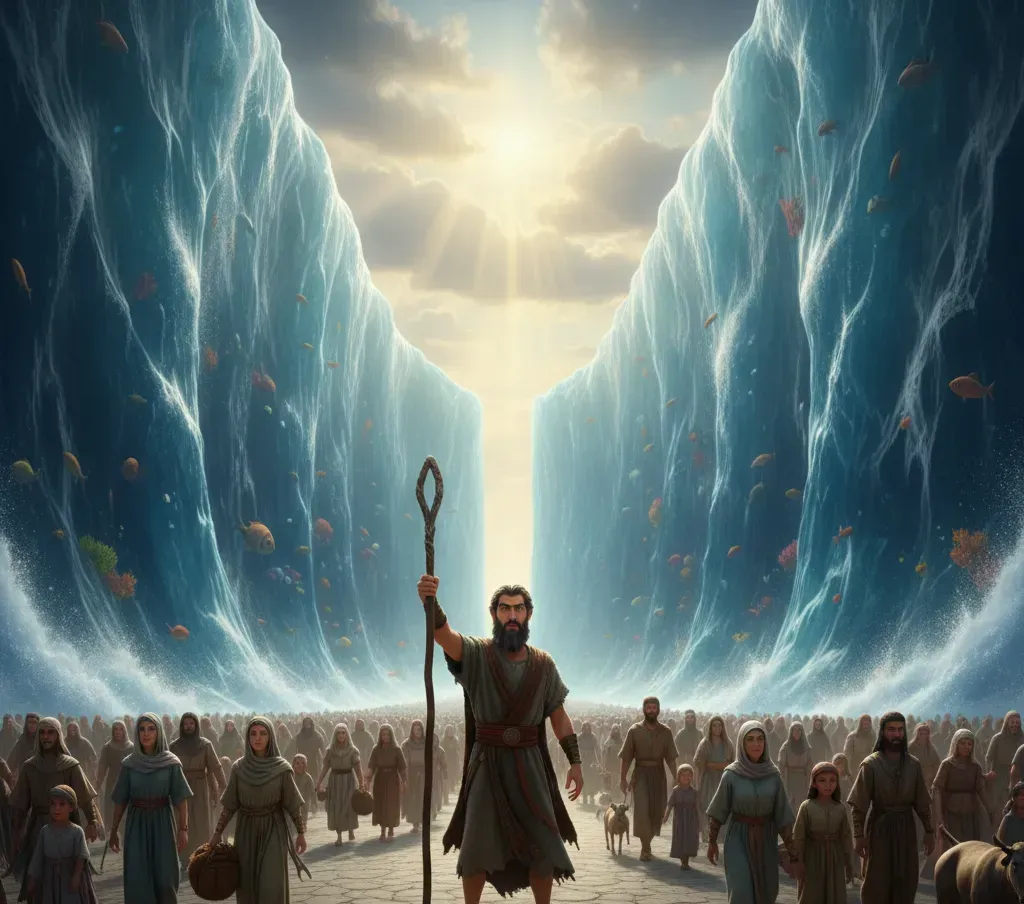
Q9.In Exodus 14:21-22, how did Moses lead the children of Israel across the Red Sea on dry ground?
A) Moses stretched out his hand over the sea, and the Lord drove back the waters by a strong east wind all night ✓
B) The priests built a timber bridge across the gulf
C) A severe drought evaporated the northern lake
D) The Israelites sailed in Egyptian barges
Scriptural Explanation: Exodus 14:21-22 - 'Then Moses stretched out his hand over the sea, and the Lord drove the sea back by a strong east wind all night and made the sea dry land, and the waters were divided. And the people of Israel went into the midst of the sea on dry ground.'
Q10.In Exodus 17:11-12, during the battle against Amalek at Rephidim, what ensured Israel's prevailing victory?
A) Whenever Moses held up his hands Israel prevailed, so Aaron and Hur supported his hands until sunset ✓
B) Joshua had three times more chariots than Amalek
C) The sun stood still for twenty-four hours over Rephidim
D) An earthquake collapsed the camp of Amalek
Scriptural Explanation: Exodus 17:11-12 - 'Whenever Moses held up his hand, Israel prevailed, and whenever he lowered his hand, Amalek prevailed. But Moses' hands grew weary... and Aaron and Hur held up his hands, one on one side, and the other on the other side, so his hands were steady until the going down of the sun.'
Q11.In Exodus 24:18, how long did Moses remain on Mount Sinai enveloped in the cloud of God's glory receiving the commandments and blueprints?
A) Forty days and forty nights ✓
B) Seven days only
C) Twelve days and nights
D) One hundred days
Scriptural Explanation: Exodus 24:18 - 'Moses entered the cloud and went up on the mountain. And Moses was on the mountain forty days and forty nights.'
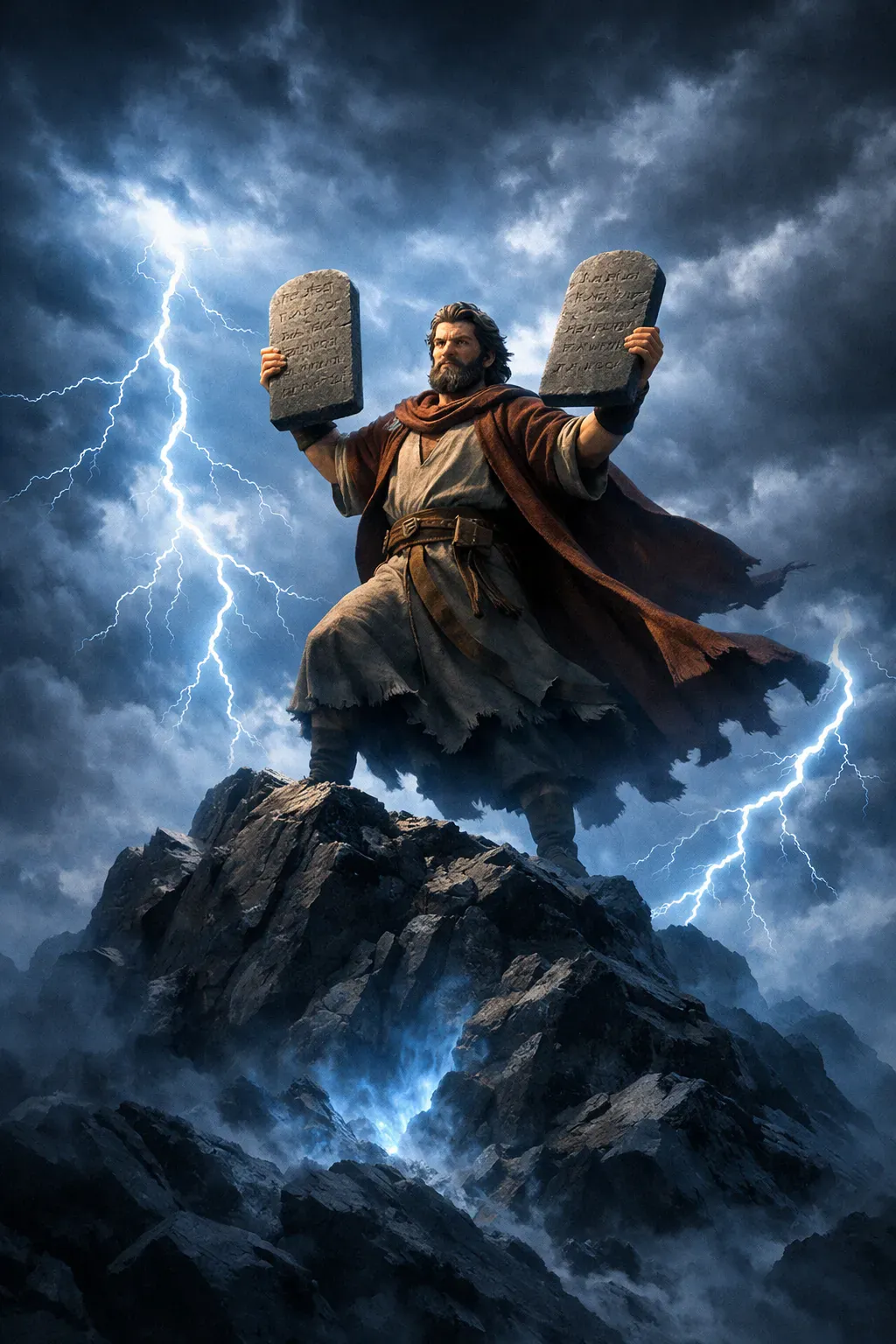
Q12.In Exodus 32:19, what did Moses do when he descended Mount Sinai and saw the golden calf and dancing in the camp?
A) His anger burned hot, and he threw the tablets out of his hands and broke them at the foot of the mountain ✓
B) He returned the tablets to heaven immediately
C) He placed the golden calf inside the Holy of Holies
D) He appointed Aaron king over Israel
Scriptural Explanation: Exodus 32:19 - 'And as soon as he came near the camp and saw the calf and the dancing, Moses' anger burned hot, and he threw the tablets out of his hands and broke them at the foot of the mountain.'
Q13.In Exodus 32:32, what extraordinary intercessory prayer did Moses utter to God on behalf of the sinning Israelites?
A) "Alas, this people has sinned... But now, if you will forgive their sin—but if not, please blot me out of your book that you have written" ✓
B) "Destroy this entire generation and make of me a king in Egypt"
C) "Send them back to Pharaoh's brickyards forever"
D) "Double their wilderness wandering to eighty years"
Scriptural Explanation: Exodus 32:32 - '"But now, if you will forgive their sin—but if not, please blot me out of your book that you have written." But the Lord said to Moses, "Whoever has sinned against me, those I will blot out of my book."'
Q14.In Exodus 34:29-35, why did Moses have to put a veil over his face when speaking with the people of Israel?
A) The skin of his face shone with divine glory from speaking with God, and the people were afraid to come near him ✓
B) He suffered severe burns from the volcanic dust
C) It was an ancient Egyptian mourning tradition
D) To hide his advanced age from the seventy elders
Scriptural Explanation: Exodus 34:29-30 - 'When Moses came down from Mount Sinai... Moses did not know that the skin of his face shone because he had been talking with God. Aaron and all the people of Israel saw Moses, and behold, the skin of his face shone, and they were afraid to come near him.' (2 Cor 3:7-18).
Q15.In Numbers 12:3, what supreme character trait did Scripture record concerning Moses above all people on earth?
A) He was very meek, more than all people who were on the face of the earth ✓
B) He was the wealthiest merchant in Midian
C) He was the swiftest warrior in battle
D) He wrote with flawless Egyptian calligraphy
Scriptural Explanation: Numbers 12:3 - 'Now the man Moses was very meek, more than all people who were on the face of the earth.' Even when criticized by Miriam and Aaron, Moses remained humble and interceded for Miriam's healing.
Q16.In Numbers 20:8-12, what critical failure of faith and obedience prevented Moses from leading Israel into the Promised Land?
A) God commanded him to speak to the rock, but Moses struck the rock twice with his staff in anger and spoke rashly ✓
B) He refused to erect the Bronze Serpent
C) He permitted the people to worship Baal-peor
D) He lost the stone tablets inside the Jordan
Scriptural Explanation: Numbers 20:11-12 - 'And Moses lifted up his hand and struck the rock with his staff twice... And the Lord said to Moses and Aaron, "Because you did not believe in me, to uphold me as holy in the eyes of the people of Israel, therefore you shall not bring this assembly into the land that I have given them."'
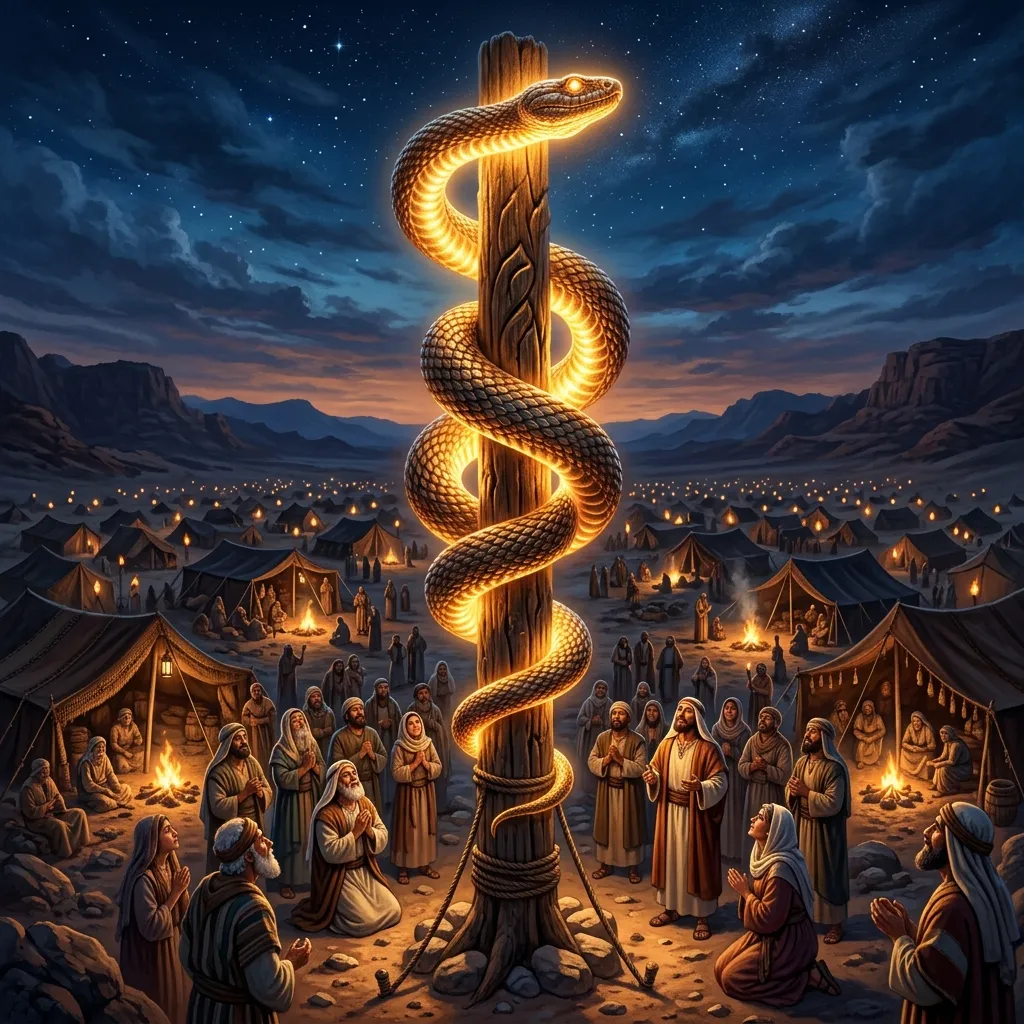
Q17.In Numbers 21:8-9, what remedy did Moses construct at God's command to save those bitten by fiery serpents in the wilderness?
A) He made a bronze serpent and set it on a pole, so that anyone who looked at it lived ✓
B) He washed their wounds in the waters of Marah
C) He administered crushed almond oil
D) He sounded the golden trumpet forty times
Scriptural Explanation: Numbers 21:8-9 - 'And the Lord said to Moses, "Make a fiery serpent and set it on a pole, and everyone who is bitten, when he sees it, shall live." So Moses made a bronze serpent and set it on a pole.' A type of Christ on the cross (John 3:14-15).
Q18.In Deuteronomy 34:1-4, which mountain summit did Moses ascend to view the entirety of the Promised Land before his death?
A) Mount Nebo, the top of Pisgah opposite Jericho ✓
B) Mount Hermon
C) Mount Moriah
D) Mount Tabor
Scriptural Explanation: Deuteronomy 34:1 - 'Then Moses went up from the plains of Moab to Mount Nebo, to the top of Pisgah, which is opposite Jericho. And the Lord showed him all the land.'
Q19.In Deuteronomy 34:5-7, at what age did Moses die, and what unique physical condition marked his end?
A) He was 120 years old; his eye was undimmed, and his vigor unabated ✓
B) He was 80 years old and confined to bed
C) He was 100 years old and blind in both eyes
D) He was 70 years old and fell in battle
Scriptural Explanation: Deuteronomy 34:7 - 'Moses was 120 years old when he died. His eye was undimmed, and his natural vigor unabated.' And God Himself buried him in the valley in the land of Moab.
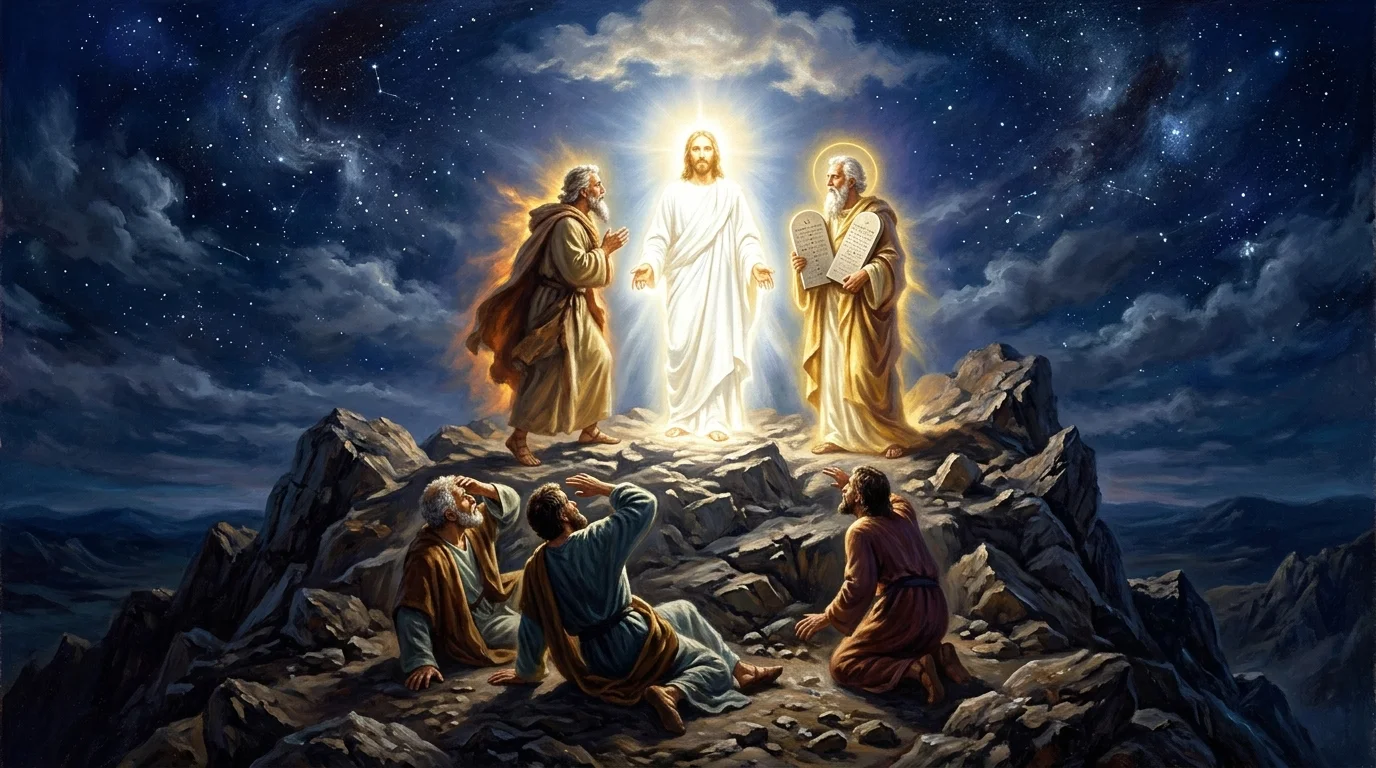
Q20.In Matthew 17:1-3, at the Transfiguration of Jesus on the holy mountain, who appeared in glory conversing with Christ alongside Elijah?
A) Moses (representing the Law) ✓
B) King David
C) Abraham
D) Samuel
Scriptural Explanation: Matthew 17:3 - 'And behold, there appeared to them Moses and Elijah, talking with him.' Moses (representing the Law) and Elijah (representing the Prophets) testified to Christ as the fulfillment of both (Luke 9:30-31).