Among all the matriarchs of the Old Testament, none holds so foundational a position in covenant history as Sarah. Walking alongside Abraham from the cosmopolitan metropolis of Ur to the nomadic hills of Canaan, Sarah experienced the crushing grief of prolonged barrenness, the peril of royal harems in Egypt and Gerar, and the agony of waiting decades for God’s promise. Yet, when human strength was completely dead, God visited Sarah at age ninety, turning her cynical laughter into everlasting joy through the birth of Isaac and establishing her as the mother of nations and kings.
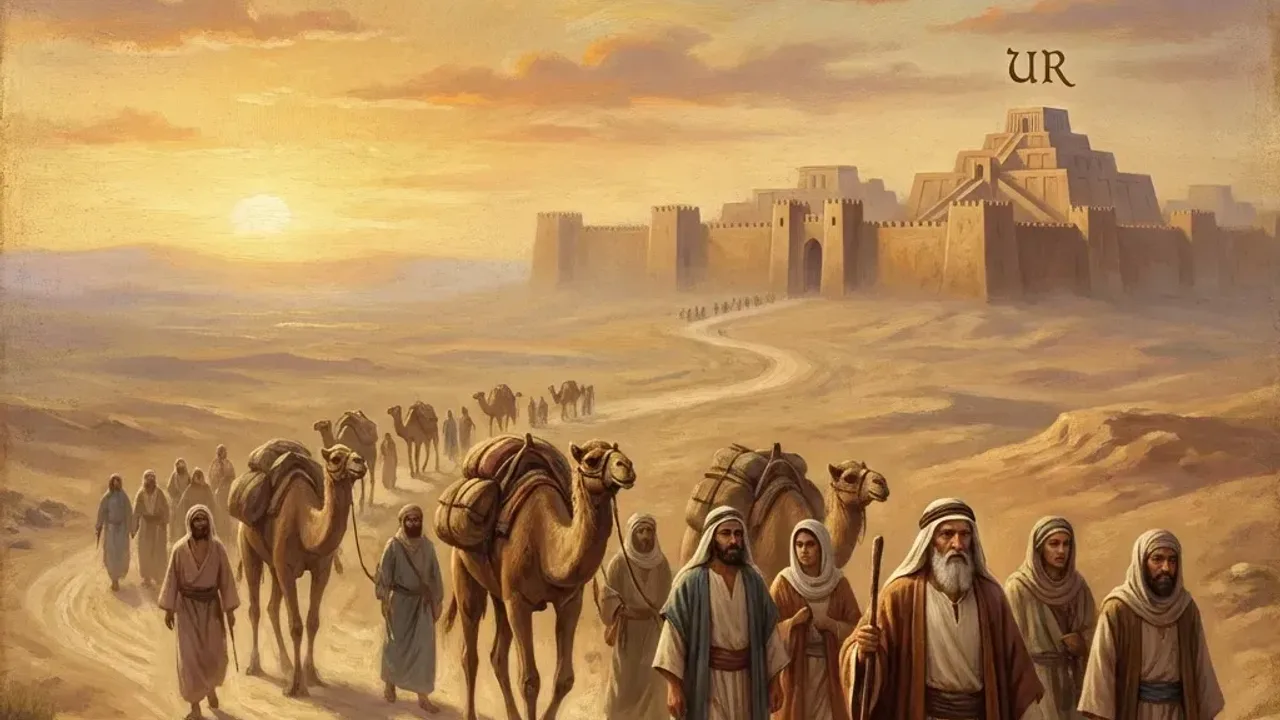
1. Leaving Ur and the Agony of Barrenness (Genesis 11:29–12:5)
Sarah (originally named Sarai) was a woman of striking physical beauty, born into a wealthy Mesopotamian culture in Ur of the Chaldeans. However, her life was marked from the outset by a defining tragedy: Scripture notes with stark simplicity: "Now Sarai was barren; she had no child" (Genesis 11:30).
When God commanded Abram to leave his country, kindred, and father's house, Sarai packed her life into nomadic tents and embarked on a perilous trek across hundreds of miles into the unknown hill country of Canaan.
Throughout years of nomadic dwelling, living in temporary goatskin tents and building stone altars, Sarai carried the silent, heavy ache of barrenness. In the ancient Near East, an heir was essential for lineage, legal inheritance, and family honor. Year after year, while neighboring pagan tribes multiplied, Sarai’s womb remained closed.
 The Laughter of Covenant Fulfillment: Sarah embracing young Isaac beside Abraham, celebrating the miraculous promise under the starry desert sky.
2. The Perils of Egypt and the Hagar Crisis (Genesis 12, 16)
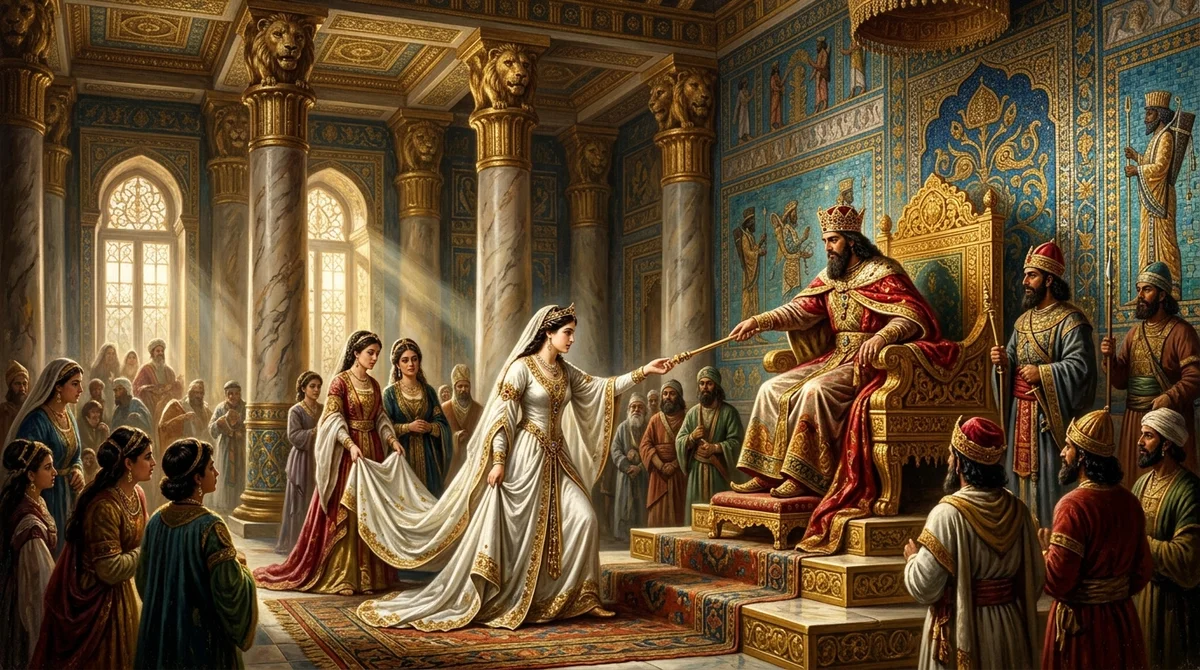
During severe famines, the family sought refuge in Egypt and later Gerar. Fearing that Pharaoh would kill him to seize his strikingly beautiful wife, Abraham asked Sarah to identify as his sister. God intervened supernaturally, plaguing Pharaoh's household to preserve Sarah's purity and covenant destiny.
After ten years in Canaan, with hope waning and biological clocks expired, Sarai attempted to solve God's delay through human cultural convention. In accordance with Mesopotamian adoption customs (such as the Nuzi tablets), Sarai offered her Egyptian maidservant Hagar to Abram as a surrogate concubine.
When Hagar conceived, domestic peace dissolved into bitter contempt. Hagar despised her mistress, leading to deep relational pain and resentment. When Ishmael was born, Abraham assumed he was the promised heir—but God’s eternal covenant cannot be birthed through human manipulation.
3. The Name Change and the Visit of the Three Angels (Genesis 17–18)
When Abraham was ninety-nine years old and Sarai eighty-nine, Yahweh appeared and reaffirmed the covenant, instituting circumcision. In a dramatic moment of divine renaming, God declared:
"As for Sarai your wife, you shall not call her name Sarai, but Sarah shall be her name. And I will bless her and also give you a son by her; then I will bless her, and she shall be a mother of nations; kings of peoples shall be from her." (Genesis 17:15–16)
Soon after, three divine visitors (the LORD and two angels) arrived at the oaks of Mamre during the heat of the day. As Sarah listened from behind the entrance of the tent, the Lord announced: "I will certainly return to you according to the time of life, and behold, Sarah your wife shall have a son."
Hearing this, Sarah laughed to herself, thinking: "After I have grown old, shall I have pleasure, my lord being old also?"
The Lord challenged Abraham with the eternal theological truth that echoes across every generation:
"Why did Sarah laugh, saying, 'Shall I surely bear a child, since I am old?' Is anything too hard for the Lord? At the appointed time I will return to you, according to the time of life, and Sarah shall have a son." (Genesis 18:13–14)
4. The Birth of Isaac: Turning Cynicism into Joy (Genesis 21)
Scripture records the glorious climax of covenant faithfulness: "And the Lord visited Sarah as He had said, and the Lord did for Sarah as He had spoken. For Sarah conceived and bore Abraham a son in his old age, at the set time of which God had spoken to him" (Genesis 21:1–2).
At ninety years old, Sarah gave birth to a healthy son, naming him Isaac (Hebrew: Yitzchak, meaning "Laughter"). Sarah declared with radiant, overflowing joy:
"God has made me laugh, and all who hear will laugh with me... Who would have said to Abraham that Sarah would nurse children? For I have borne him a son in his old age." (Genesis 21:6–7)
The cynical laugh of doubt had been transformed by the Almighty into the holy laughter of worship and fulfilled promise.
5. Machpelah: The Final Resting Place (Genesis 23)
Sarah lived to the age of 127 years, dying at Kiriath-arba (Hebron). In deep mourning, Abraham wept for his lifelong covenant partner.
Abraham purchased the Cave of Machpelah and its surrounding field from Ephron the Hittite for 400 shekels of silver. This burial cave became the sacred resting place of the patriarchs and matriarchs—Sarah, Abraham, Isaac, Rebekah, Leah, and Jacob—anchoring Israel’s eternal claim in the Promised Land.
In the New Testament, Sarah is celebrated in Hebrews 11:11 as a hero of faith and in 1 Peter 3:6 as the mother of all women who trust God without fear.
6. Five Spiritual Lessons from Sarah
- God's Timing Transcends Biology: When human circumstances are utterly impossible, God reveals His glory so that no flesh can boast in His presence.
- Human Shortcuts Bring Long-Term Heartache: Trying to fulfill God's promises through fleshly schemes (the Hagar crisis) creates division; we must patiently wait on God’s method and timetable.
- Nothing is Too Hard for the Lord: God’s rebuke to Sarah’s laughter—"Is anything too hard for the Lord?"—stands as an anchor of hope for every impossible situation.
- Faith Grows in the Crucible of Waiting: Sarah struggled, doubted, and laughed, yet she persevered in faith, judging Him faithful who had promised (Hebrews 11:11).
- Joy Replaces Shame: God took six decades of barrenness, mockery, and tears and replaced them with the eternal laughter of Isaac, blessing the entire world through her seed, Jesus Christ.
⚡ Fast Facts
- Name Change from Sarai to Sarah: In Genesis 17:15, God changed her name from 'Sarai' ('Contentious' or 'My Princess') to 'Sarah' ('Princess of Multitudes' / 'Mother of Nations'), declaring: 'Kings of peoples shall be from her.'
- Only Woman Whose Age, Death, and Burial are Detailed in Torah: Sarah is the only woman in the entire Pentateuch whose exact lifespan (127 years), death, and formal burial negotiations are recorded in complete detail (Genesis 23).
- Canonized in Hebrews 11 Hall of Faith: Hebrews 11:11 honors her enduring faith: 'By faith Sarah herself also received strength to conceive seed, and she bore a child when she was past the age, because she judged Him faithful who had promised.'
- First Purchase of Land in the Promised Land: Abraham purchased the Cave of Machpelah in Hebron from Ephron the Hittite specifically as a burial site for Sarah, marking Israel's very first legal land deed in the Promised Land.
❓ Frequently Asked Questions (FAQs)
At eighty-nine years old, Sarah laughed internally (Genesis 18:12) out of natural human cynicism and rational impossibility, having suffered six decades of infertility. God gently challenged her laughter with the profound theological rebuke: 'Is anything too hard for the Lord?'
Attempting to fulfill God's promise through human surrogacy, Sarah gave her Egyptian maidservant Hagar to Abraham, producing Ishmael. This human shortcut generated intense household strife, rivalry, and enduring historical tensions between the descendants of Ishmael and Isaac.
The Apostle Peter highlights Sarah as the ultimate prototype of holy women who trusted in God, adorning herself with an imperishable gentle and quiet spirit, and trusting God through difficult domestic and nomadic trials alongside Abraham.