Among all the faithful followers of Jesus of Nazareth, few characters shine with such fierce, unbroken loyalty as Mary Magdalene (Mary of Magdala). Rescued from the darkest pit of demonic torment, she poured out her life, heart, and financial resources in grateful devotion to Christ. When the cross cast its horrifying shadow over Golgotha and the male disciples fled into hiding, Mary Magdalene stood unyielding at the crucifixion, watched the tomb being sealed, and on the third morning, was honored by God to become the very first human being to witness the Risen Lord Jesus Christ and proclaim the Resurrection to the world.
1. Deliverance from Seven Demons: The Transformation (Luke 8:1–3)
Mary originated from Magdala (historically known as Tarichaea), a prosperous fishing and commercial fish-salting city on the western shore of the Sea of Galilee. Before she encountered Jesus, her life was an agonizing nightmare: Scripture explicitly records that she was afflicted and possessed by seven demons (Luke 8:2; Mark 16:9).
In biblical numerology, the number seven signifies totality; Mary was in complete, severe spiritual bondage—tormented in mind, body, emotions, and soul. When Jesus encountered her during His Galilean ministry, He spoke with sovereign divine authority, casting out the demonic host and restoring her to complete sanity, peace, wholeness, and spiritual freedom.
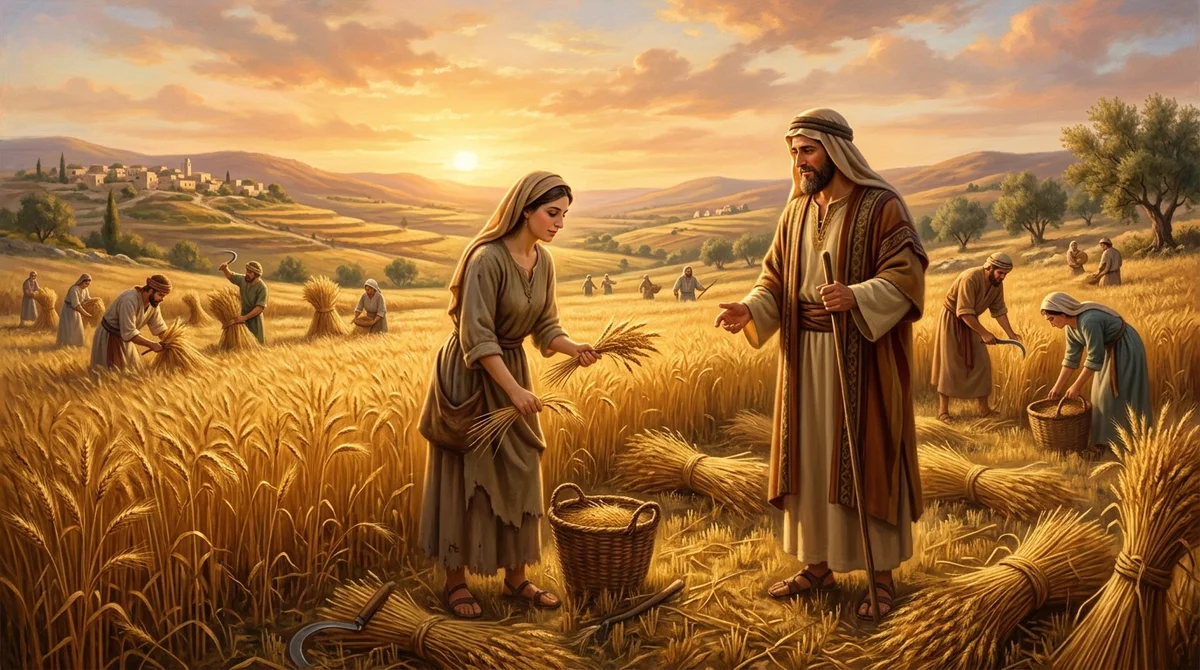
Having been forgiven and delivered much, Mary loved much. She did not return to a comfortable, private life. Together with other prominent Galilean women—including Joanna (the wife of Chuza, King Herod Antipas’ household manager) and Susanna—Mary utilized her personal financial wealth to support Jesus and the twelve apostles, traveling alongside the ministry and providing for their daily logistical needs.
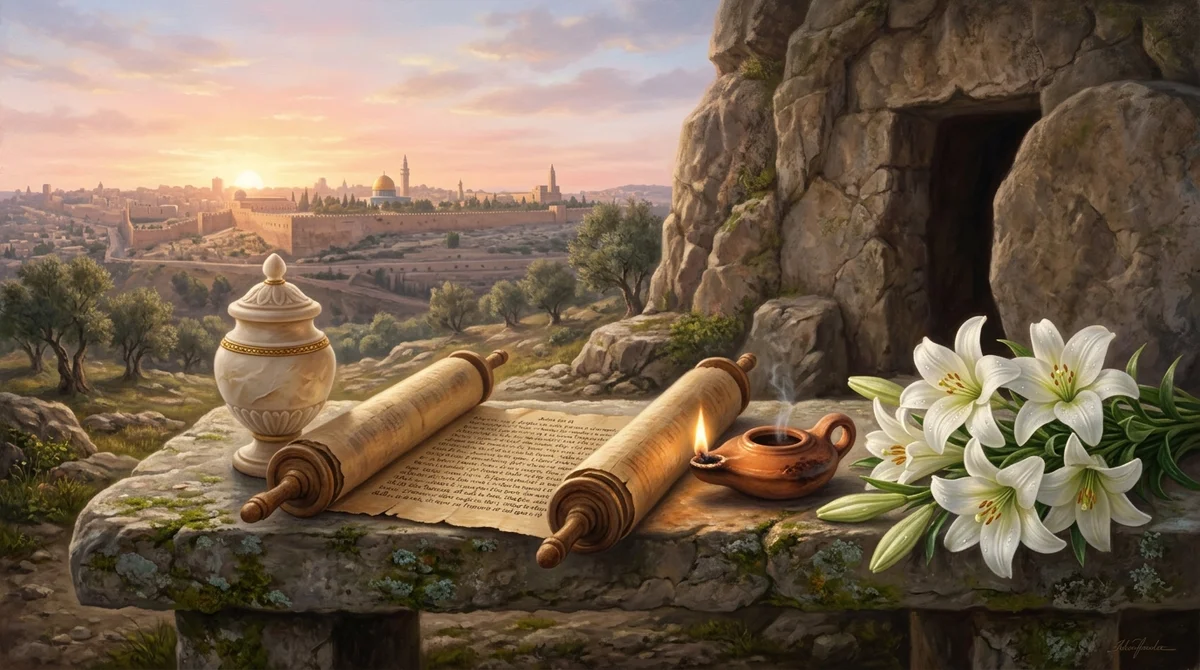 The Morning of Victory: An alabaster jar of aromatic spices beside the open scroll of John 20, commemorating Mary Magdalene's devotion at the empty tomb.
2. Unwavering at the Foot of the Cross (John 19:25; Matthew 27:55–61)
The true test of discipleship does not occur when crowds shout "Hosanna!" in the sunshine, but when darkness and death fall upon Calvary.
When Jesus was arrested in the Garden of Gethsemane, His male disciples panicked and scattered into the night. Peter denied Him three times with oaths, and the rest locked themselves in upper rooms for fear of the Jewish authorities and Roman soldiers. Yet, through the bloody scourging, the mocking crown of thorns, the agonizing road to Golgotha, and the horrific six hours on the cross, Mary Magdalene remained steadfast.
Scripture records with solemn reverence: "Now there stood by the cross of Jesus His mother, and His mother’s sister, Mary the wife of Clopas, and Mary Magdalene" (John 19:25). She heard His dying cries of victory, watched the Roman soldier pierce His side with a spear, and followed Joseph of Arimathea and Nicodemus to the nearby garden tomb, sitting opposite the sepulcher watching precisely how His holy body was wrapped in linen and sealed behind the great rolling stone (Matthew 27:61).
3. The Pre-Dawn Journey to the Garden Tomb (John 20:1–10)
Because the Sabbath began at sunset on Friday, Jesus' burial had been hurried. As soon as the Sabbath passed, while it was still dark on the first day of the week (Sunday morning), Mary Magdalene took freshly prepared, costly aromatic spices and walked through the dim, silent streets of Jerusalem toward the garden tomb to complete the proper anointing of Jesus' body.
Arriving at the garden, she was stunned to find that the massive multi-ton circular stone had already been rolled away from the entrance! Peering into the shadows, she saw the tomb was completely empty. Panic-stricken that graverobbers had desecrated the body of her Lord, she sprinted back to the city to find Peter and John, crying: "They have taken away the Lord out of the tomb, and we do not know where they have laid Him!"
Peter and John ran to the tomb, saw the linen grave cloths lying folded and the face cloth rolled up by itself, and returned home perplexed. But Mary Magdalene remained outside the tomb, weeping uncontrollably in deep devotion.
4. "Mary!" — The Encounter with the Risen King (John 20:11–18)
Stooping to look into the tomb through her tears, Mary saw two angels in radiant white garments seated where Jesus’ body had lain, one at the head and one at the feet. They asked: "Woman, why are you weeping?" She replied: "Because they have taken away my Lord, and I do not know where they have laid Him."
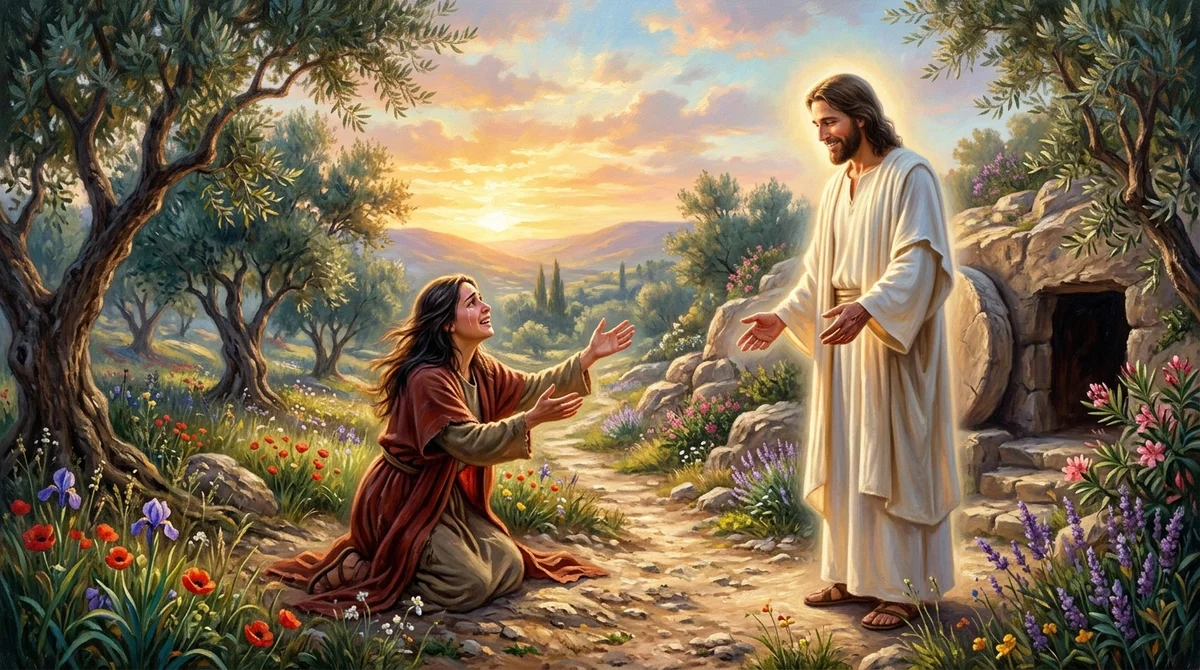
Turning around, she saw a figure standing in the morning mist, whom she assumed to be the garden caretaker. The man spoke with gentle power: "Woman, why are you weeping? Whom are you seeking?" Thinking He could solve the mystery, she pleaded: "Sir, if You have carried Him away, tell me where You have laid Him, and I will take Him away."
Then, the Risen Christ spoke a single word that shattered the silence of death and echoed across eternity:
"Jesus said to her, 'Mary!' She turned and said to Him, 'Rabboni!' (which is to say, Teacher)." (John 20:16)
Instantly, the familiar voice of the Good Shepherd calling His sheep by name (John 10:3) opened her spiritual eyes. The tears of devastating grief turned into boundless resurrection joy. She fell at His feet, grasping Him in overwhelming adoration.
Jesus gave her an extraordinary commission: "Do not cling to Me, for I have not yet ascended to My Father; but go to My brethren and say to them, 'I am ascending to My Father and your Father, and to My God and your God.'" Mary Magdalene ran with breathless joy to the locked room of the disciples, declaring the historic sentence that launched the Christian faith: "I HAVE SEEN THE LORD!"
5. Four Transformational Life Lessons from Mary Magdalene
- No Past is Beyond Divine Redemption: If Jesus could transform a woman afflicted by seven demons into the premier witness of His resurrection, there is no brokenness, addiction, or guilt that His grace cannot redeem and sanctify.
- Loyalty When It Costs Everything: Mary loved Jesus not only during His miracles and popular acclaim, but when He was hated, condemned, and crucified. Authentic faith stays steadfast at the cross.
- The Good Shepherd Knows Your Name: In your deepest sorrow and confusion, Jesus does not speak generic philosophical lectures; He calls you personally by name, turning your weeping into dancing.
- Commissioned as Witnesses of the Resurrection: Just as Mary was sent to proclaim the Risen Christ to the Apostles, every believer is called to be a bold messenger carrying the reality of the living Jesus into a hopeless world.
⚡ Fast Facts
- Seven Demons Cast Out: Luke 8:2 explicitly identifies Mary Magdalene as the woman from whom Jesus cast out 'seven demons'—transforming her from demonic torment into radical spiritual freedom.
- Financial Patron of Jesus' Ministry: Far from being destitute, Mary Magdalene, Joanna (wife of Herod's steward Chuza), and Susanna were wealthy patrons who financially supported Jesus and the Twelve out of their own resources (Luke 8:3).
- Faithful at the Cross: When the male disciples (except John) fled in fear during the crucifixion, Mary Magdalene stood steadfastly at the foot of the cross and watched where Jesus' body was laid in the tomb.
- The Title 'Apostle to the Apostles': Early Church Father Augustine called Mary Magdalene 'Apostolorum Apostola' because Jesus commissioned her to announce the Resurrection to the eleven apostles.
❓ Frequently Asked Questions (FAQs)
No. The Bible never describes Mary Magdalene as a prostitute or as the unnamed sinful woman in Luke 7. This popular misconception originated in a sermon by Pope Gregory I in AD 591, which conflated Mary Magdalene, Mary of Bethany, and the unnamed sinner. Scripture consistently presents her as a dignified, faithful patron and disciple whom Jesus delivered from demonic oppression.
When Mary recognized Jesus and joyfully grabbed hold of Him, Jesus was not rejecting her affection; He was explaining that His earthly relationship with His disciples had transformed. He had not yet ascended to the Father, and she must go immediately on mission to proclaim His resurrection rather than holding on to His physical presence.
In first-century Greco-Roman and Jewish legal courts, a woman's testimony was considered legally invalid and untrustworthy. If the early Christians had fabricated the Resurrection narrative, they would have made Peter or John the primary first witnesses. The fact that all four Gospels unanimously record Mary Magdalene as the first witness is powerful historical proof of the authentic truth of the empty tomb.