In the obscure, dust-swept village of Nazareth in Galilee, far from the halls of imperial Rome or the grand Temple of Jerusalem, lived a young Jewish maiden whose humble surrender altered the trajectory of human history: Mary of Nazareth (Hebrew: Miryam). Chosen by God to be the human mother of the Incarnate Son of God, Mary walked a pathway that intertwined transcendent heavenly favor with profound earthly sacrifice, embodying the ultimate model of quiet faith, steadfast endurance, and worshipful obedience.
1. The Annunciation: The Call to Radical Surrender (Luke 1:26–38)
Mary was a young peasant girl, likely between fourteen and sixteen years old, betrothed to a righteous carpenter named Joseph, a descendant of the royal house of David. In the first century, betrothal (*kiddushin*) was a legally binding covenant that could only be broken by formal divorce.
Into her modest home appeared the Archangel Gabriel with a greeting that shattered the quiet of the Galilean hills:
"Rejoice, highly favored one, the Lord is with you; blessed are you among women!... Do not be afraid, Mary, for you have found favor with God. And behold, you will conceive in your womb and bring forth a Son, and shall call His name JESUS. He will be great, and will be called the Son of the Highest." (Luke 1:28–32)
When Mary asked with innocent wonder, "How can this be, since I do not know a man?" Gabriel explained that the Holy Spirit would come upon her and the power of the Highest would overshadow her.
Mary knew the terrifying social risks: an unexplained pregnancy invited societal ostracization, divorce, shame, and potential death by stoning under Mosaic law (Deuteronomy 22:20–21). Yet, without hesitation or self-protection, she uttered the immortal words of supreme faith:
"Behold the maidservant of the Lord! Let it be to me according to your word." (Luke 1:38)
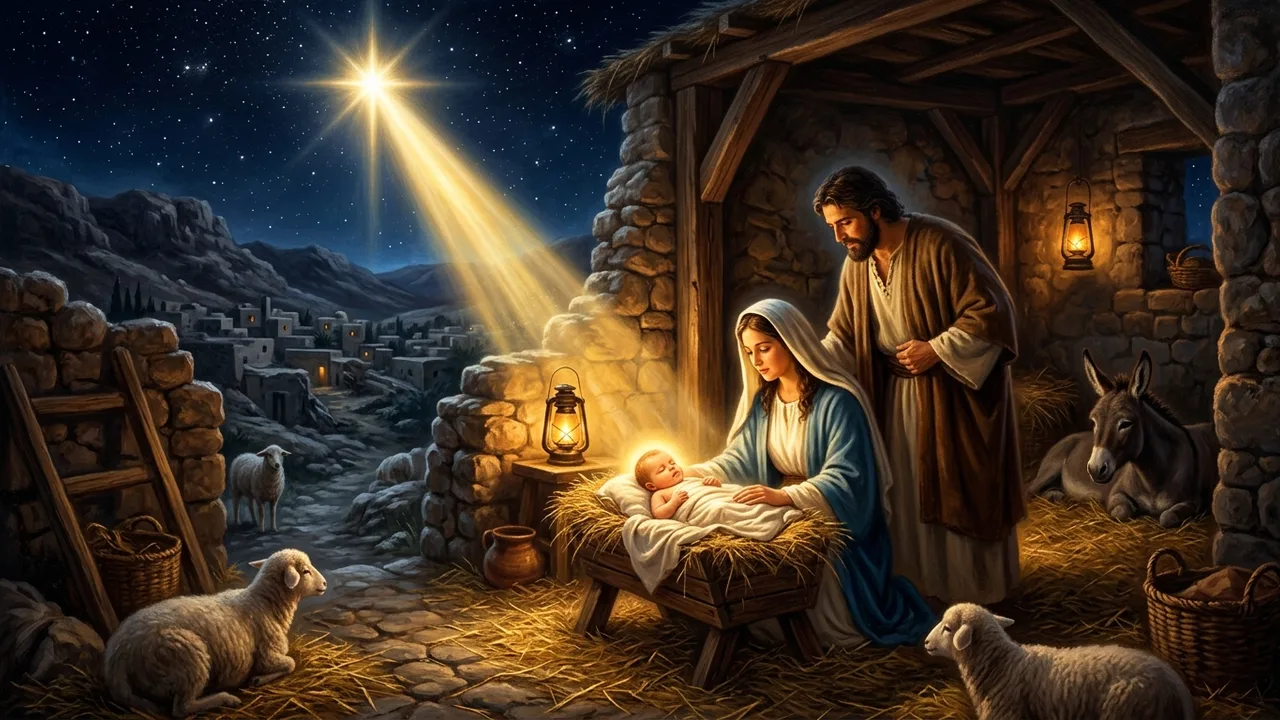
 The Incarnation of Grace: Mary holding the newborn Christ in the quiet sanctuary of Bethlehem, contemplating the mystery of God with us.
2. The Magnificat and the Nativity in Bethlehem (Luke 1:39–56; 2:1–20)
Traveling south into the Judean hill country to visit her elderly relative Elizabeth (who was pregnant with John the Baptist), Mary was greeted with Elizabeth's Spirit-filled cry: "Blessed are you among women, and blessed is the fruit of your womb!"
In response, Mary erupted in the Magnificat (Luke 1:46–55), one of the most sublime prophetic hymns in human history. Rooted deeply in the Song of Hannah (1 Samuel 2) and the Psalms, Mary celebrated the God who scatters the proud, pulls down rulers from their thrones, fills the hungry with good things, and remembers His eternal covenant with Abraham.
Months later, under Caesar Augustus' imperial census decree, heavily pregnant Mary and Joseph traveled ninety grueling miles over rugged terrain to Bethlehem. Finding no room in the traveler's lodge (*katalyma*), Mary gave birth to Jesus in a humble stone cave or stable, wrapped Him in swaddling cloths, and laid the King of Glory in an animal feed-trough (manger).
When poor shepherds rushed from the fields declaring angelic choirs, Scripture records with profound intimacy: "But Mary kept all these things and pondered them in her heart" (Luke 2:19).
3. The Piercing Sword and the Years of Obscurity (Luke 2:21–52)
When presenting baby Jesus at the Temple in Jerusalem on the fortieth day, the aged prophet Simeon took the child in his arms and prophesied:
"Behold, this Child is destined for the fall and rising of many in Israel... (yes, a sword will pierce through your own soul also), that the thoughts of many hearts may be revealed." (Luke 2:34–35)
That piercing sword cast a lifelong shadow over Mary's motherly heart. Soon after, the family fled to Egypt by night to escape King Herod's slaughter of the innocents, living as refugees in a foreign land before returning quietly to Nazareth.
For thirty hidden years, Mary raised Jesus, watching Him grow in wisdom, stature, and favor with God and men. When twelve-year-old Jesus remained in the Temple discussing the scriptures with teachers, Mary discovered the tension between earthly parenting and His eternal mission: "Did you not know that I must be about My Father's business?"
4. Cana, Calvary, and the Upper Room (John 2, 19; Acts 1:14)
At the wedding in Cana of Galilee, when the wine ran out, Mary demonstrated absolute confidence in her Son's divine authority, giving the servants the universal formula for Christian obedience:
"Whatever He says to you, do it." (John 2:5)
Three years later, the ultimate test of Simeon's sword arrived at Golgotha. While the crowds mocked and the disciples hid, Mary stood directly beneath the Cross, watching her beloved firstborn Son bleed and suffocate for the sins of the world.
In His dying agony, Jesus looked down upon His grieving mother and the Apostle John, ensuring her lifelong care: "Woman, behold your son!" and to John, "Behold your mother!" (John 19:26–27).
After the glory of the Resurrection and Ascension, Mary did not claim special worldly status. In Acts 1:14, she is found kneeling in humble, fervent prayer alongside the 120 disciples in the Upper Room in Jerusalem, eagerly awaiting the baptism of the Holy Spirit on the Day of Pentecost.
5. Five Spiritual Lessons from Mary of Nazareth
- Surrendered Availability: God does not search for worldly prestige or wealth; He seeks humble hearts willing to say, "Behold the servant of the Lord; let it be to me according to Your word."
- The Heart of Contemplation: In a world of noise and distraction, Mary "pondered all these things in her heart," processing God’s workings through quiet prayer and meditation.
- The Golden Rule of Obedience: Mary's timeless counsel at Cana remains the heartbeat of true discipleship: "Whatever He says to you, do it."
- Enduring Love at the Cross: Authentic faith stands firm in seasons of heartbreak, grief, and suffering, trusting God when all human hope seems shattered.
- Persevering in Prayer: From the stable in Bethlehem to the Upper Room at Pentecost, Mary’s entire life was anchored in a posture of continuous, dependent prayer.
⚡ Fast Facts
- The Meaning of 'Miriam' (Mary): Mary is the Greek form of the Hebrew name Miriam (Miryam), which carries rich biblical resonances of 'Exalted', 'Beloved', or 'Bitterness turned to Strength'.
- The 'Fiat' of Faith: Mary's response to Gabriel in Luke 1:38—'Behold the maidservant of the Lord! Let it be to me according to your word'—is known historically in Christian theology as the 'Fiat', representing the supreme model of human surrender to divine will.
- The Prophetic Sword (Simeon's Prophecy): When baby Jesus was dedicated at the Temple, aged prophet Simeon foretold Mary's future sorrow: 'Yes, a sword will pierce through your own soul also' (Luke 2:35), foreshadowing her grief at the Cross.
- Present in the Upper Room at Pentecost: Mary is explicitly named among the 120 disciples in Acts 1:14 who were continually united in prayer in the Upper Room awaiting the outpouring of the Holy Spirit on Pentecost.
❓ Frequently Asked Questions (FAQs)
In first-century Jewish culture, an unwed pregnancy carried devastating consequences under the Law of Moses (Deuteronomy 22:20–21)—including public humiliation, permanent societal disgrace, the dissolution of her betrothal, and potential execution by stoning.
The Magnificat (Luke 1:46–55) is Mary's prophetic hymn of praise when visiting Elizabeth. Deeply saturated with Old Testament scripture (especially Hannah's prayer in 1 Samuel 2), it proclaims God's great reversal: scattering the proud, exalting the lowly, and fulfilling the covenant made with Abraham.
As Mary stood weeping at the foot of the Cross, Jesus fulfilled the fifth commandment by providing for His mother in His dying moments, entrusting Mary into the filial care of the Apostle John: 'Woman, behold your son!' and to John, 'Behold your mother!' (John 19:26–27).