From the muddy banks of the Nile River in Egypt to the thunderous waters of the Red Sea and the vast wilderness of Sinai, one woman’s voice resonated at every pivotal crossroads of the Exodus: Miriam the Prophetess. As the elder sister of Moses and Aaron, Miriam was a pioneer of courageous faith, the premier worship leader of Israel, and a recognized leader of the redeemed nation. Her life is an inspiring testament to visionary leadership, triumphant worship, and the vital necessity of maintaining humility before the Lord.
1. Vigil by the Nile: Saving the Deliverer (Exodus 2:1–10)
Miriam grew up under the brutal oppression of Egyptian slavery. When Pharaoh issued a genocidal decree commanding every newborn Hebrew boy to be drowned in the Nile River, Miriam’s mother, Jochebed, hid infant Moses for three months.
When she could hide him no longer, Jochebed coated a papyrus ark with pitch and placed the baby among the reeds along the bank of the Nile. Young Miriam, possessing remarkable courage and quick wit, stood vigil at a distance to see what would happen to her baby brother.
When Pharaoh’s daughter came down to bathe and discovered the weeping Hebrew infant, compassion moved the princess. Seizing the exact divine moment, Miriam stepped out of the shadows and respectfully asked:
"Shall I go and call a nurse for you from the Hebrew women, that she may nurse the child for you?" (Exodus 2:7)
The princess agreed, and Miriam sprinted home to fetch Jochebed. Through Miriam’s courageous initiative, Moses was raised in his own mother's arms, paid by the royal treasury of Egypt, and grounded in the covenant faith of Abraham before entering Pharaoh's palace.
 The Watchful Sister: Young Miriam watching over baby Moses in the papyrus basket along the reeds of the Nile River.
2. The Tambourine at the Red Sea: The First Prophetess (Exodus 15:20–21)
Eighty years later, God delivered Israel out of Egypt with a mighty hand and an outstretched arm. When Pharaoh’s army pursued them to the shores of the Red Sea, God split the waters, allowing two million Israelites to cross on dry ground before crashing the sea over the Egyptian chariots.
Standing on the eastern shore of liberation, Miriam stepped forward into her divine calling as the Prophetess (the first woman in Scripture given this title):
"Then Miriam the prophetess, the sister of Aaron, took the timbrel in her hand; and all the women went out after her with timbrels and with dances. And Miriam answered them: 'Sing to the Lord, for He has triumphed gloriously! The horse and its rider He has thrown into the sea!'" (Exodus 15:20–21)
Miriam transformed a national military deliverance into an ecstatic, antiphonal liturgy of praise. Her prophetic worship galvanized the faith of the entire nation, sealing the memory of God’s supremacy forever into Israel’s soul.
3. Leadership in the Wilderness (Micah 6:4)
Throughout the wilderness journey, Miriam served alongside Moses and Aaron as a recognized leadership triad. Centuries later, the Prophet Micah recorded God’s own reflection on the Exodus leadership:
"For I brought you up from the land of Egypt, I redeemed you from the house of bondage; and I sent before you Moses, Aaron, and Miriam." (Micah 6:4)
Jewish historical tradition recalls that God provided the miraculous rolling well of water (*Be'er Miriam*) in honor of her righteousness, sustaining the wandering tribes in the parched desert.
4. The Crisis at Hazeroth: The Danger of Spiritual Pride (Numbers 12)
At Hazeroth, spiritual leadership was severely tested. Miriam and Aaron began speaking against Moses because of his Cushite (Ethiopian) wife. But beneath the racial critique lay a deeper root of spiritual jealousy and power struggle:
"Has the Lord indeed spoken only through Moses? Has He not spoken through us also?" (Numbers 12:2)
The Lord heard it immediately. Summoning Moses, Aaron, and Miriam to the Tent of Meeting, God descended in a pillar of cloud and sternly vindicated Moses:
"If there is a prophet among you, I, the Lord, make Myself known to him in a vision; I speak to him in a dream. Not so with My servant Moses; he is faithful in all My house. I speak with him face to face, even plainly, and not in dark sayings... Why then were you not afraid to speak against My servant Moses?" (Numbers 12:6–8)
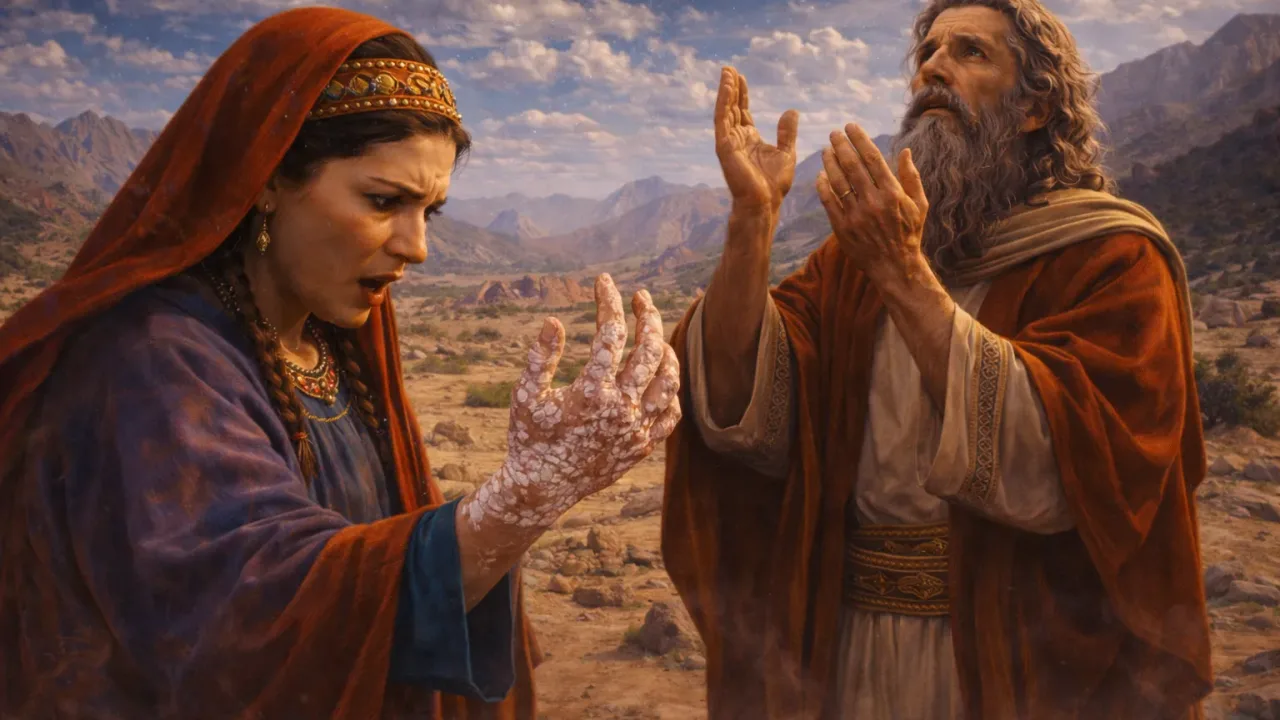
When the cloud departed, Miriam’s skin was struck with snow-white leprosy. Aaron turned in horror, confessing their foolish sin and pleading with Moses.
Demonstrating Christ-like meekness, Moses cried out in intercession: "Please heal her, O God, I pray!" God commanded that Miriam be quarantined outside the camp for seven days.
In a touching display of national loyalty, the people did not journey until Miriam was brought in again (Numbers 12:15). Two million people halted in the desert, honoring their beloved prophetess until her restoration.
5. Kadesh: The Death of a Prophetess (Numbers 20:1)
In the first month of the fortieth year, the children of Israel arrived at Kadesh in the Wilderness of Zin. There, Miriam completed her earthly pilgrimage and was buried with honor.
Her legacy remains an enduring pillar of Old Testament history: a courageous girl who protected the deliverer, a prophetess who taught a liberated nation how to sing, and a leader whose restoration displayed the depth of God's sanctifying grace.
6. Five Spiritual Lessons from Miriam
- Watchful Courage in Small Beginnings: Miriam’s vigilance by the Nile protected baby Moses; God uses our small, faithful initiatives to birth generational deliverances.
- The High Calling of Prophetic Worship: Worship is not passive entertainment; like Miriam's timbrel, it is a spiritual weapon that proclaims God’s victory and lifts a nation’s spirit.
- Guard Against Spiritual Envy: Being used by God in the past does not give us the right to challenge God-ordained authorities or seek equal status out of pride.
- God Defends the Humble: Moses did not defend himself; God stepped down to defend His meek servant. True leaders leave their vindication in God's hands.
- Restoring Grace: Though disciplined for seven days, Miriam was fully healed, forgiven, and restored to her rightful place among God’s people.
⚡ Fast Facts
- The First Named Prophetess in Scripture: Miriam is the very first woman in the entire Bible to be explicitly designated with the sacred title 'the Prophetess' (Hebrew: *ha-nebi'ah*) in Exodus 15:20.
- Recognized as a Triumvirate Leader by God: In Micah 6:4, God Himself looks back upon the Exodus and names Miriam alongside her brothers as the three leaders sent before Israel: 'For I brought you up from the land of Egypt... and I sent before you Moses, Aaron, and Miriam.'
- The Seven-Day Camp Delay: When Miriam was struck with leprosy for challenging Moses' unique authority, God required her to be shut outside the camp for seven days; out of deep love and respect for her, the entire nation of two million people halted their journey until she was restored (Numbers 12:15).
- The Miraculous 'Well of Miriam': Jewish historical tradition (the Talmud) records that throughout the 40 years in the wilderness, God provided a miraculous rolling rock well of fresh water for Israel in honor of Miriam's faith and righteousness.
❓ Frequently Asked Questions (FAQs)
When Pharaoh decreed all Hebrew baby boys drowned in the Nile, Jochebed placed infant Moses in a papyrus basket among the reeds. Young Miriam stood vigil from a distance. When Pharaoh's daughter discovered the baby, Miriam bravely stepped forward and arranged for Moses' own mother to be hired as his wet-nurse.
After the miraculous parting of the Red Sea and the destruction of Pharaoh's army (Exodus 15:20–21), Miriam took a tambourine in her hand, led all the women in rhythmic dancing, and sang the triumphant refrain: 'Sing to the Lord, for He has triumphed gloriously! The horse and its rider He has thrown into the sea!'
Miriam and Aaron spoke against Moses because of his Cushite wife, masking a deeper spirit of spiritual jealousy: 'Has the Lord indeed spoken only through Moses? Has He not spoken through us also?' God directly intervened, defending Moses' meekness and striking Miriam with leprosy for seven days.