Outside the colonial stone gates of Philippi, beside the rushing waters of the Gangites River in northern Greece, occurred one of the most consequential spiritual breakthroughs in world history: the conversion of Lydia of Thyatira. A prosperous, independent businesswoman trading in elite purple textiles, Lydia became the very first documented convert to Christianity on the European continent. Her open heart, generous hospitality, and household faith established the foundation for the beloved Philippian church, demonstrating how God sanctifies marketplace influence and hospitality for global Gospel advancement.
1. The Macedonian Call and the Riverside Prayer Meeting (Acts 16:6–13)
During his second missionary journey, the Apostle Paul and his companions (Silas, Timothy, and Luke) found their path mysteriously blocked by divine intervention. The Holy Spirit expressly forbade them from speaking the word in Asia, and when they attempted to go into Bithynia, the Spirit of Jesus did not permit them.
Arriving at the coastal port of Troas on the edge of the Aegean Sea, Paul received a dramatic supernatural night vision: a man of Macedonia stood pleading, "Come over to Macedonia and help us!" Recognizing this as a direct divine summons to launch the Gospel into Europe, the apostolic team immediately sailed across the northern Aegean, landing at Neapolis and traveling ten miles inland along the paved Via Egnatia to Philippi.
Philippi was a prestigious Roman colony (*colonia*) governed directly by Roman law, populated largely by retired Roman soldiers, veterans of the Battle of Philippi (42 BC), and Roman citizens exempt from imperial taxation. Because Philippi had a negligible Jewish population, it lacked the minimum quorum of ten adult Jewish men (*minyan*) required to establish a formal municipal synagogue.
Consequently, on the Sabbath day, Paul and his companions walked outside the city gate to the banks of the Gangites River, where they suspected a place of prayer (*proseuche*) was located. There, they found a small, devoted circle of God-fearing women gathered in prayer. Sitting down among them, Paul began preaching the good news of Jesus Christ.
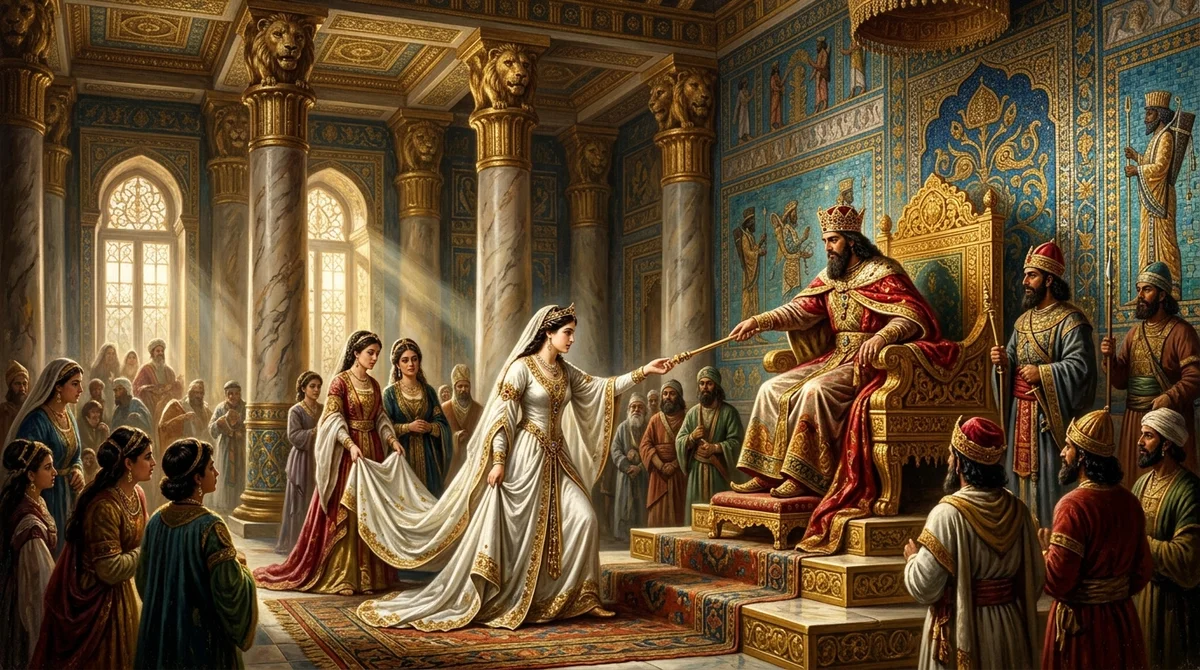
 The Open Heart by the River: Lydia listening to the Apostle Paul beside the Gangites River, with bolts of Thyatiran purple textiles.
2. "The Lord Opened Her Heart": The Theology of Regeneration (Acts 16:14–15)
Among the attentive women listening to Paul was a prominent merchant named Lydia, originally from the city of Thyatira in the region of Lydia (modern-day Akhisar, western Turkey). Thyatira was internationally renowned in the ancient Greco-Roman world for its guild of dyers, skilled in extracting rich purple and crimson pigments from madder root (*rubia tinctorum*) and murex marine mollusks.
As a "seller of purple" (*porphyropōlis*), Lydia traded in high-end luxury textiles that were the exclusive wardrobe of emperors, Roman senators, magistrates, and aristocratic elites. She was a woman of substantial financial means, executive independence, and social standing, maintaining her own spacious villa and overseeing a large domestic household in Philippi.
Lydia was already a "worshiper of God" (*sebomenē ton Theon*)—a Gentile who had abandoned pagan polytheism and embraced Jewish monotheism and moral ethics. Yet she had not yet heard the saving Gospel of Jesus the Messiah.
Scripture records her divine moment of conversion with profound theological clarity:
"Now a certain woman named Lydia heard us. She was a seller of purple from the city of Thyatira, who worshiped God. The Lord opened her heart to heed the things spoken by Paul." (Acts 16:14)
Salvation was not a triumph of human oratory or intellectual striving; it was a sovereign miracle of divine regeneration. The Holy Spirit gently unlocked Lydia's spiritual eyes, enabling her to embrace Christ. Immediately upon believing, Lydia and her entire household—family, servants, and employees—were baptized in the waters of the Gangites River.
3. Constraining Hospitality and the Birth of the Philippian Church (Acts 16:15, 40)
True biblical conversion immediately translates into sacrificial stewardship and joyful generosity. Having received eternal life through Christ, Lydia felt a compelling duty to honor the messengers of the Gospel:
"And when she and her household were baptized, she begged us, saying, 'If you have judged me to be faithful to the Lord, come to my house and stay.' So she persuaded us." (Acts 16:15)
The Greek word translated "persuaded" (*parebiasato*) literally means "constrained" or "strongly urged with holy insistence." Lydia placed her wealth, her staff, and her spacious Roman estate at the disposal of the Kingdom of God.
Soon after, when Paul and Silas cast out a demon of divination from a slave girl, her owners dragged the apostles before the Roman magistrates. Stripped, severely beaten with wooden rods, and locked in maximum-security stocks in the inner prison, Paul and Silas sang hymns at midnight until a violent earthquake shattered the foundations and converted the Philippian jailer.
Upon their official release from custody the following morning, where did Paul and Silas go to find comfort and safety? Scripture records: "So they went out of the prison and entered the house of Lydia; and when they had seen the brethren, they encouraged them and departed" (Acts 16:40).
Lydia’s villa had become the headquarters and sanctuary of the newly born Philippian church. This congregation grew to become the most affectionate, joyful, and financially generous partnership church in the entire Pauline mission, repeatedly sending financial support to Paul in Thessalonica, Corinth, and Rome (Philippians 1:3–5; 4:14–18).
4. Four Transformative Spiritual Lessons from Lydia
- Divine Appointments in Quiet Places: God did not launch the European mission in the Roman forum or amphitheater, but by a quiet riverbank with a handful of praying women. Never despise small, faithful beginnings.
- Salvation is God’s Sovereign Work: "The Lord opened her heart." We are called to faithfully proclaim the Gospel, but only the Holy Spirit can remove spiritual blindness and bring new life.
- Sanctifying Wealth for the Gospel: Lydia demonstrated how a successful businesswoman can use her commercial influence, professional acumen, and financial resources to bankroll and shelter God's kingdom work.
- Hospitality as a Missional Engine: Opening her home transformed Lydia from a textile merchant into a founding mother of European Christianity, showing that our dining tables and living rooms are sacred platforms for discipleship and church growth.
⚡ Fast Facts
- First Documented Christian Convert in Europe: Lydia’s conversion in Philippi (Acts 16:14–15) marks the historic gateway of the Gospel into the European continent, fulfilling Paul's supernatural vision of the Macedonian call.
- The Precious Purple Dye of Thyatira: Thyatira (in modern-day Turkey) was internationally famous in antiquity for its rare madder-root and murex-snail purple dyes (*porphyra*), reserved exclusively for royalty, senators, and wealthy elites.
- 'The Lord Opened Her Heart': Acts 16:14 contains one of the New Testament's most profound theological statements on divine sovereignty in salvation: 'The Lord opened her heart to heed the things spoken by Paul.'
- Sanctuary for Imprisoned Apostles: After Paul and Silas were brutally beaten and imprisoned in the Philippian jail, their first destination upon miraculous release was Lydia's home, where they comforted the assembled believers before departing (Acts 16:40).
❓ Frequently Asked Questions (FAQs)
Under Jewish rabbinic law, establishing a formal synagogue required a minimum quorum of ten adult Jewish men (*minyan*). Because Philippi was a Roman military colony with very few Jewish residents, the small group of God-fearing women gathered on the Sabbath outside the city gate by the Gangites river for prayer.
In the Book of Acts, 'worshiper of God' (Greek: *sebomenē ton Theon*) designates a gentile 'God-fearer'—someone who had renounced pagan polytheism and embraced Jewish monotheism and moral ethics, but had not yet heard the Gospel of Jesus Christ.
Immediately following her baptism, Lydia constrained Paul, Silas, Luke, and Timothy with holy persistence: 'If you have judged me to be faithful to the Lord, come to my house and stay' (Acts 16:15), transforming her spacious merchant villa into the base of the Philippian church.