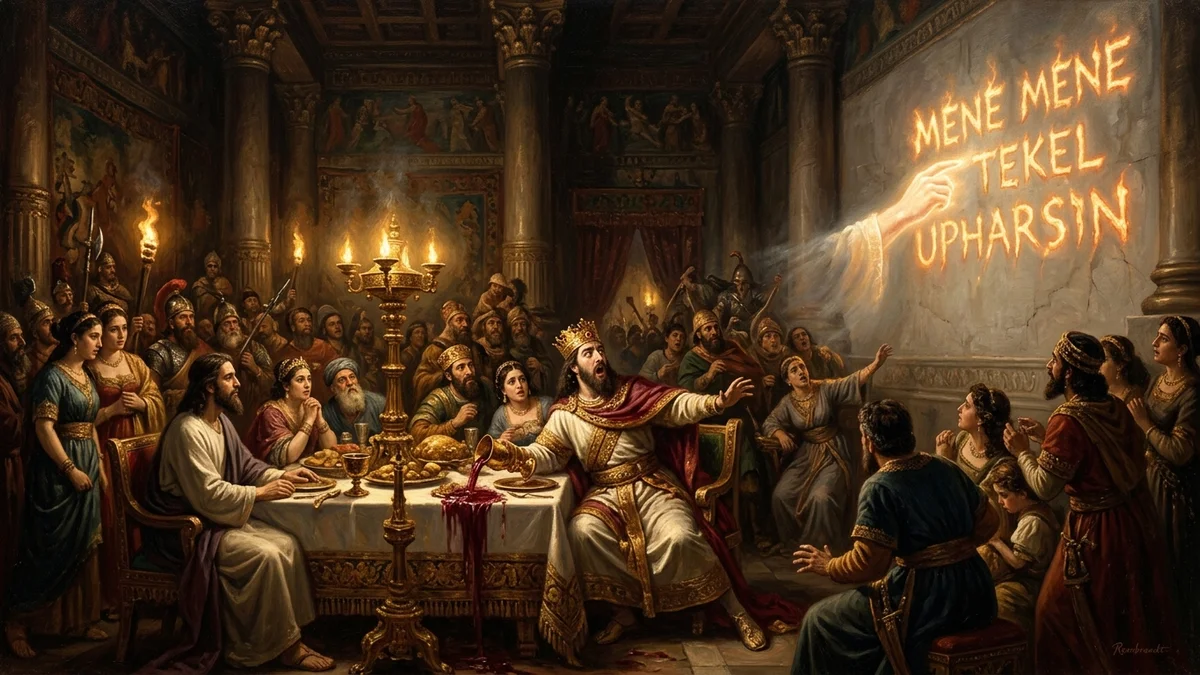
On the fateful night of October 11/12, 539 BC, within the colossal palace of Babylon, an event occurred that would permanently brand human history with the absolute reality of divine judgment. Outside the city's towering double ramparts, the combined armies of the Medo-Persian Empire under the command of General Ugbaru (serving under King Cyrus the Great) had completely enveloped the capital. Inside the city, however, the atmosphere was one of contemptuous mockery. The co-regent monarch, King Belshazzar (*Bêl-šarru-uṣur*—eldest son and regent of King Nabonidus), felt completely invincible. Babylon's outer walls rose over three hundred feet into the sky and were wide enough for four-horse chariots to pass each other on top; the Euphrates River flowed directly beneath the water gates, providing an inexhaustible water supply; and the royal storehouses bulged with a twenty-year stockpile of wheat, barley, oil, and dates. To the arrogant young monarch, the foreign army outside was nothing more than an irrelevant nuisance.
To demonstrate his utter disdain for the besieging enemy, Belshazzar threw a titanic, lavish state banquet for a thousand of his highest military officers, regional governors, noblewomen, and royal concubines in the grand Throne Room of the Southern Palace (excavated by Robert Koldewey as an immense hall measuring 170 feet long by 56 feet wide). Under the flickering light of monumental bronze chandeliers, vintage wine flowed like water as the royal court indulged in drunken debauchery, celebrating their supposed imperial invulnerability.
The Sacrilege of the Consecrated Chalices
As the hours passed and the king became thoroughly intoxicated with wine, his carnal hubris surged into active blasphemy. Belshazzar was not content merely with worldly luxury; he craved to mock the God of heaven. He issued an imperious command to his royal chamberlains: go into the palace vaults and bring out the sacred gold and silver vessels that his predecessor Nebuchadnezzar had plundered from Solomon's Temple in Jerusalem sixty-six years earlier (Daniel 5:2).
These were not ordinary drinking cups; these were the holy, sanctified instruments of the Tabernacle and Temple—chalices, basins, and flagons that had been anointed with holy oil and sprinkled with sacrificial blood on the Day of Atonement, dedicated exclusively to the worship of Yahweh the Creator. In an act of staggering sacrilege, the holy vessels were carried into the noisy banquet hall. Servants filled the sacred temple chalices with intoxicating wine, and Belshazzar, his princes, his wives, and his concubines drank from them. As they tipped the consecrated vessels to their drunken lips, they raised a thunderous chorus of praise to their pagan idols: שַׁבַּחוּ לֵאלָהֵי דַהֲבָא וְכַסְפָּא נְחָשָׁא פַרְזְלָא אָעָא וְאַבְנָא—"They drank wine, and praised the gods of gold and silver, bronze and iron, wood and stone!" (Daniel 5:4).
This was an open, cosmic declaration of spiritual warfare. Belshazzar was essentially boasting: "Your God was helpless to defend His temple; your sacred vessels are now our drinking cups; and our lifeless idols of metal and rock are greater than the Lord of Hosts!"
The Spectral Hand on the Plaster Wall
In the very instant that the royal court reached the climax of their drunken mockery, the universe answered. The music froze; the laughter died in the throats of a thousand lords; golden goblets slipped from trembling hands and clattered onto the stone floor. A supernatural stillness, heavy with terrifying holiness, suffocated the immense hall.
Scripture records the visual shock: בַּהּ־שַׁעֲתָה נְפַקוּ אֶצְבְּעָן דִּי יַד־אֱנָשׁ וְכָתְבָן לָקֳבֵל נֶבְרַשְׁתָּא עַל־גִּירָא דִּי־כְתַל הֵיכְלָא דִי מַלְכָּא וּמַלְכָּא חָזֵה פַּס יְדָא דִּי כָתְבָה—"In the same hour the fingers of a man's hand appeared and wrote opposite the lampstand on the plaster of the wall of the king's palace; and the king saw the part of the hand that wrote!" (Daniel 5:5).
Directly opposite the great royal candelabrum, where the brilliant lamplight fell upon the white gypsum plaster of the palace wall, a disembodied human hand materialized out of thin air. With slow, terrifying deliberation, the glowing fingers etched four mysterious Aramaic words into the stone surface, leaving burning, indelible furrows in the plaster!
The effect upon the blasphemous monarch was instantaneous and total. Scripture provides an unsparing clinical diagnosis of absolute terror: אֱדַיִן מַלְכָּא זִיוֹהִי שְׁנוֹהִי וְרַעְיֹנֹהִי יְבַהֲלוּנֵּהּ וְקִטְרֵי חַרְצֵהּ מִשְׁתָּרַיִן וְאַרְכֻבָּתֵהּ דָּא לְדָא נָקְשָׁן—"Then the king's countenance changed, and his thoughts troubled him, so that the joints of his hips were loosed and his knees knocked against each other!" (Daniel 5:6). The blood drained from Belshazzar's face, his digestive system failed, his knees shook uncontrollably, and he slumped against his throne in paralyzing panic.
The Baffled Astrologers and the Queen Mother's Memory
Screaming in hysterics, Belshazzar ordered the imperial guild of astrologers, Chaldeans, and soothsayers brought in. Pointing to the glowing script, the emperor offered a desperate bribe: "Whoever reads this writing, and shows me its interpretation, shall be clothed with purple and have a chain of gold around his neck, and shall be the third ruler in the kingdom!" (Daniel 5:7). (Notice the historical precision: Belshazzar could only offer the position of third ruler, because his father Nabonidus was first, and Belshazzar was second!).
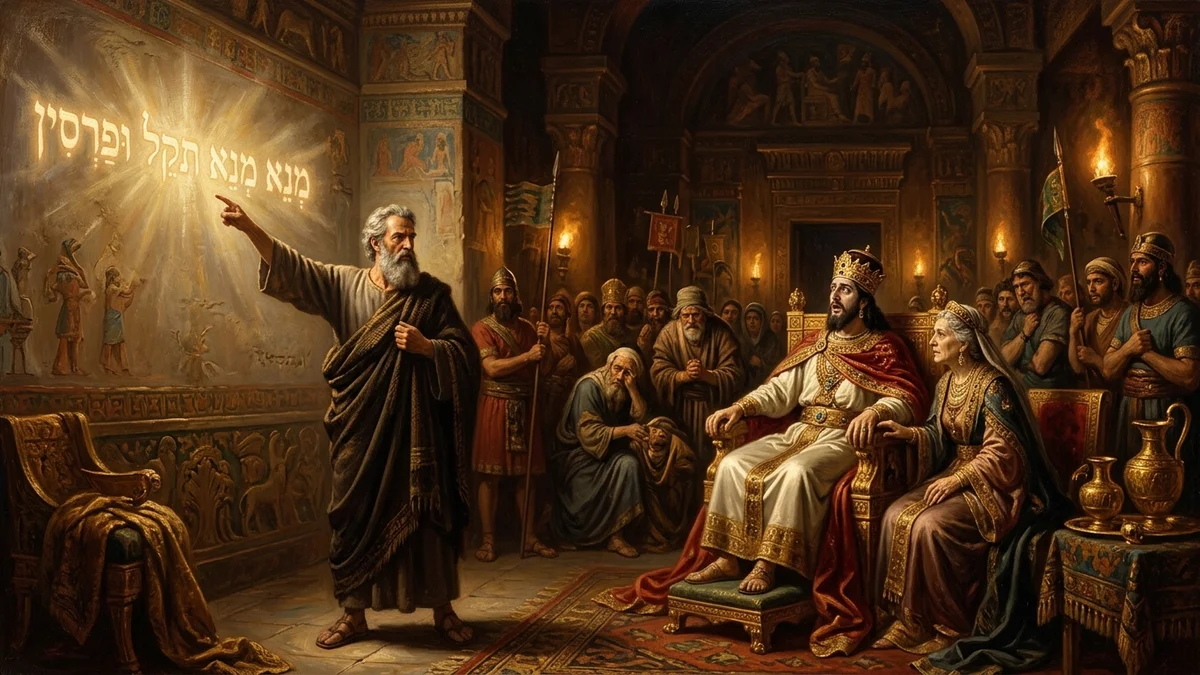
The imperial sages crowded around the wall, but they stood utterly dumbfounded. The text was written in ancient Aramaic consonants without vowels or word breaks (מנא מנא תקל ופרסין), but more importantly, their spiritual blindness prevented them from discerning the counsel of God. The mystery remained unread, deepening the monarch's terror.
Hearing the chaotic commotion, the Queen Mother entered the banquet hall. Identified by historians as Nitocris (the daughter of Nebuchadnezzar and wife of Nabonidus), she spoke with royal dignity and authority to her trembling son: "O king, live forever! Do not let your thoughts trouble you... There is a man in your kingdom in whom is the Spirit of the Holy God. And in the days of your father, light and understanding and wisdom, like the wisdom of the gods, were found in him... Now let Daniel be called, and he will give the interpretation!" (Daniel 5:10–12).
The Prophet's Scorching Indictment
Now an elderly statesman in his eighties, having outlived the glory days of Babylon, Daniel was escorted into the decadent hall. He stood in simple garments amidst the drunken wreckage of the banquet, looking with pure holy eyes upon the terrified young co-regent. Belshazzar repeated his lavish offer of purple robes, gold jewelry, and political power.
Daniel's response was magnificent in its holy disdain for worldly bribes: מַתְּנָתָךְ לָךְ לֶהֶוְיָן וּנְבָזְבְּיָתָךְ לְאָחֳרָן הַב—"Let your gifts be for yourself, and give your rewards to another; yet I will read the writing to the king, and make known to him the interpretation!" (Daniel 5:17). Daniel was not a hireling prophet who sold divine words for silver.
Before reading the glowing inscription, Daniel delivered a blistering theological indictment. He recounted the history of King Nebuchadnezzar: how the Most High God had given him glory, majesty, and dominion, but when his heart was lifted up in pride, God stripped him of his royal throne and drove him into the wilderness to eat grass like an ox until he acknowledged that the Most High rules in the kingdoms of men. Then Daniel leveled the fatal accusation directly at Belshazzar:
"But you his son, Belshazzar, have not humbled your heart, although you knew all this! And you have lifted yourself up against the Lord of heaven; they have brought the vessels of His house before you, and you and your lords, your wives and your concubines, have drunk wine from them. And you have praised the gods of silver and gold, bronze and iron, wood and stone, which do not see or hear or know; and the God who holds your breath in His hand and owns all your ways, you have not glorified! Then the fingers of the hand were sent from Him, and this writing was written!" (Daniel 5:22–24).
The Cosmic Verdict: Mene, Mene, Tekel, Upharsin
Turning toward the white plaster, Daniel pointed to the fiery glowing characters and read the divine verdict:
מְנֵא מְנֵא תְּקֵל וּפַרְסִין (MENE, MENE, TEKEL, UPHARSIN)
- מְנֵא (MENE): "Numbered" — God has numbered your kingdom, and finished it! The days of your dynasty have reached their divinely appointed terminal count.
- תְּקֵל (TEKEL): "Weighed" — You have been weighed in the moral balances of heaven, and found wanting! In God's holy scales of justice, all your gold, armies, and pride weigh less than a feather of true righteousness.
- פְּרֵס / וּפַרְסִין (PERES / UPHARSIN): "Divided / Persians" — Your kingdom has been divided, and given to the Medes and Persians! (A prophetic pun: Peres means both 'divided' and 'Persian').
The Fall of Babylon in a Single Night
Belshazzar, bound by his royal word, commanded the purple robe placed on Daniel and the gold chain draped around his neck, issuing a proclamation making him the third ruler in the kingdom. But the honours of a doomed empire were utterly meaningless.
Even as the proclamation was being drafted, the prophecy was being executed outside. General Ugbaru's engineers had successfully completed the diversion of the Euphrates River into the marshlands of the canal basin. The water level dropped to mid-thigh. While the Babylonian guards inside were paralyzed by wine and revelry, elite Persian shock troops waded quietly beneath the bronze river gates into the heart of the capital without encountering resistance.
Scripture concludes the history with chilling, understated brevity: בֵּהּ בְּלֵילְיָא קְטִיל בֵּלְשַׁאצַּר מַלְכָּא כַשְׂדָּאָה: וְדָרְיָוֶשׁ מָדָיָא קַבֵּל מַלְכוּתָא כְּבַר שְׁנִין שִׁתִּין וְתַרְתֵּין—"That very night Belshazzar king of the Chaldeans was slain. And Darius the Mede received the kingdom, being about sixty-two years old!" (Daniel 5:30–31). The colossal Neo-Babylonian Empire—the golden head of Daniel's statue, the empire that had conquered nations and torched Jerusalem—vanished from the earth in a single night!
The Eternal Warning for Every Generation
The feast of Belshazzar stands as a permanent, thunderous warning to every secular empire, arrogant ruler, and rebellious soul across human history. Societies may imagine that their technological prowess, financial wealth, and military supremacy make them immune to divine accountability. They may scoff at the Word of God and proudly desecrate what is holy. But in heaven's throne room, every empire is on a countdown; every heartbeat is numbered; and every soul will be weighed in the absolute balances of God's holy law.
In ourselves, we are all Tekel—weighed in God's balances and found utterly deficient, falling short of His glory (Romans 3:23). But thanks be to God for the Gospel of Jesus Christ! At Calvary, Christ was weighed in the balance for us, bearing the full weight of divine justice against our sin and clothing all who repent in His perfect righteousness. When we stand in Christ, the writing on the wall is not a sentence of doom, but an eternal title deed to a kingdom that can never be shaken!
Biblical Keywords & Theological Roots
Ancient Near Eastern & Archaeological Context
Nineteenth-century critics frequently questioned the historicity of Belshazzar because secular Greek historians (Herodotus and Xenophon) named Nabonidus as the last king of Babylon. However, in 1854, J.G. Taylor excavated the cuneiform 'Nabonidus Cylinder' at Ur, which explicitly mentions 'Bêl-šarru-uṣur, my eldest son, the offspring of my heart.' Furthermore, the 'Nabonidus Chronicle' (British Museum BM 35382) revealed that Nabonidus spent ten years in religious self-exile at the oasis of Tayma in Arabia, leaving crown prince Belshazzar as de facto co-regent in Babylon. This explains why Belshazzar could only offer Daniel the position of 'third ruler' in the kingdom (Daniel 5:7, 29). German archaeologist Robert Koldewey excavated the South Palace of Babylon, uncovering the great Throne Room measuring 52 meters long by 17 meters wide, featuring white gypsum-plastered walls directly opposite a large central niche where the royal throne stood.
Practical Discipleship & Spiritual Application
- Remember that God holds your very breath in His hand: every pulse of your heart is a loan from the Creator; surrender your life daily in grateful worship.
- Guard the sanctity of your temple: your body is the vessel of the Holy Spirit (1 Cor 6:19); never defile it with worldly addictions, sexual immorality, or vulgar speech.
- Learn from the spiritual shipwrecks of history: examine Scripture and the failures of past leaders so that pride does not blind you to impending judgment.
- Cultivate the fearless integrity of Daniel: when offered the applause, promotions, and riches of this world, declare truth without flattering power.
Support Independent Biblical Research
Did this study bless you? Help support our independent bilingual research and interactive visual Bible tools.
⚡ Fast Facts
- Belshazzar's banquet was held while Babylon was actively besieged by Persian general Ugbaru, reflecting the king's supreme confidence in Babylon's 300-foot walls and massive food reserves.
- The terms 'Mene, Tekel, Peres' were ancient Aramaic monetary weight units: a *Mina* (60 shekels), a *Tekel* (Shekel), and a *Peres* (Half-mina), which Daniel prophetically interpreted as active verbs of judgment.
- Herodotus, the Greek historian, records that the Persians entered Babylon through the riverbed while the city was celebrating an annual festival of drunken revelry.
- Daniel was roughly 80 to 82 years old during this feast, having retired from daily public office until recalled by the Queen Mother.
❓ Frequently Asked Questions (FAQs)
Why couldn't the wise men of Babylon read or interpret the inscription on the wall?
The writing was written in cryptic, vowelless Aramaic script (consonants *M-N-Y, T-Q-L, P-R-S*), likely written vertically or as an anagram without word breaks. Furthermore, even if the secular astrologers recognized the weight units (Mina, Shekel, Half-Mina), only the Holy Spirit could reveal the prophetic puns and divine sentence hidden within the words: *Mene* (numbered/finished), *Tekel* (weighed/deficient), and *Peres* (divided/Persians).
Who was the Queen Mother who remembered Daniel in verse 10?
She was not one of Belshazzar's wives (who were already present at the feast, v. 2), but the Dowager Queen Mother (*Gebirah*), widely identified by historians as Nitocris, the daughter of Nebuchadnezzar and wife of Nabonidus. Having personally witnessed Daniel's supernatural wisdom under her father's reign forty years earlier, she commanded the terrified young co-regent to summon the neglected prophet.
How did the Persian army capture the impregnable city of Babylon in a single night?
The Greek historians Herodotus and Xenophon, alongside the cuneiform Cyrus Cylinder, record that Cyrus's general Ugbaru diverted the waters of the Euphrates River into an artificial marsh basin upstream. This dropped the water level to thigh-height, allowing Persian soldiers to wade under the submerged river gates into the heart of the city while the Babylonian guards were intoxicated at the feast, capturing the citadel without a protracted siege.