For seventy agonizing years, the harp of Israel hung silent on the weeping willows of Babylon. The Holy City of Jerusalem lay in blackened ash, Solomon’s magnificent Temple was a pile of charred stone, and the covenant people of God were dispersed across the Euphrates as sorrowful exiles. But human empires with all their chariots and armies cannot void the sovereign calendar of Almighty God. In 539 BC, in a single night, the Babylonian Empire fell to the Medo-Persians. In the very first year of his reign over Babylon, King Cyrus the Great issued a stunning royal decree that sent shockwaves across the ancient Near East: the God of heaven had stirred his spirit to release the Jewish exiles and finance the rebuilding of Yahweh’s dwelling place on Mount Moriah.
1. The Prophetic Stirring of King Cyrus
The opening words of the book of Ezra stand as an immortal testament to divine sovereignty over pagan kings: "Now in the first year of Cyrus king of Persia, that the word of the Lord by the mouth of Jeremiah might be fulfilled, the Lord stirred up the spirit of Cyrus king of Persia, so that he made a proclamation throughout all his kingdom, and also put it in writing." (Ezra 1:1).
Over a century and a half before Cyrus was even born, the prophet Isaiah recorded a staggering, supernatural prophecy naming Cyrus by his exact royal name: "Who says of Cyrus, 'He is My shepherd, and he shall perform all My pleasure, saying to Jerusalem, "You shall be built," and to the temple, "Your foundation shall be laid."' " (Isaiah 44:28; 45:1).
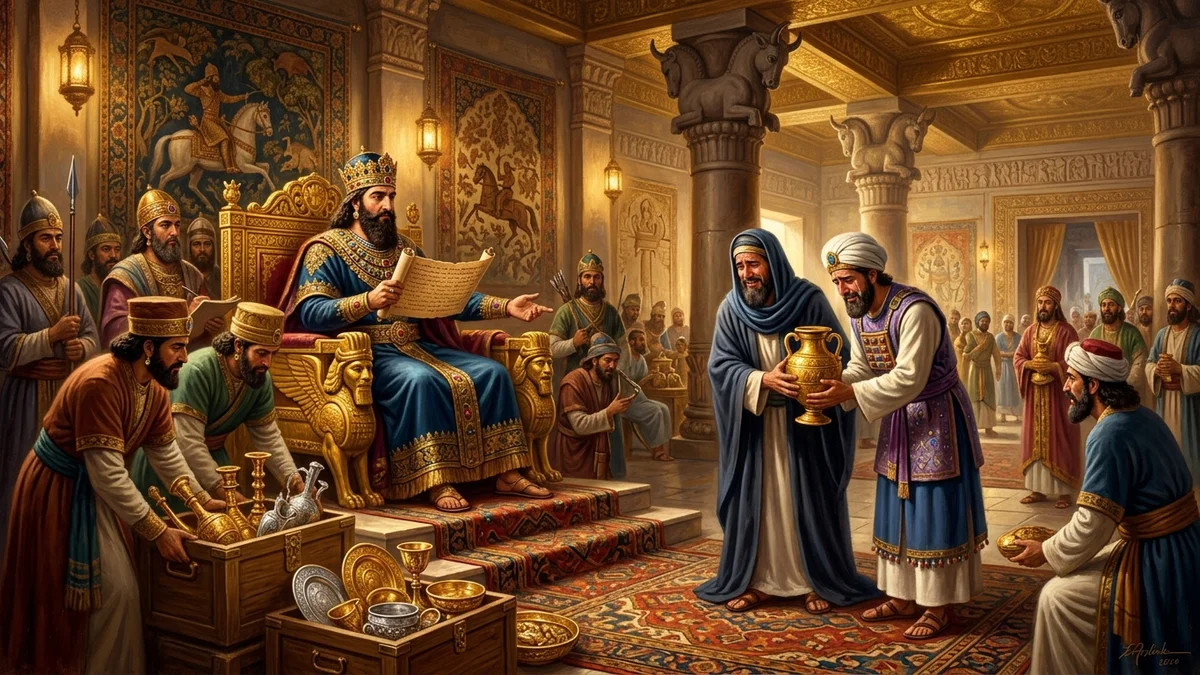
Historians believe that the aged prophet Daniel, who served in the Persian court during Cyrus's conquest, presented these ancient Hebrew scrolls of Isaiah to the Persian emperor. Deeply awed by the reality that the God of Israel had named him centuries prior, Cyrus issued his imperial edict:
"Thus says Cyrus king of Persia: All the kingdoms of the earth the Lord God of heaven has given me. And He has commanded me to build Him a house at Jerusalem which is in Judah. Who is among you of all His people? May his God be with him, and let him go up to Jerusalem which is in Judah, and build the house of the Lord God of Israel (He is God), which is in Jerusalem." (Ezra 1:2-3).
2. The Return of the Sacred Temple Vessels
King Cyrus did not merely permit the exiles to depart; he actively restored the holy heritage that Nebuchadnezzar had plundered in 586 BC. Cyrus brought out the sacred treasures of Solomon’s Temple from the pagan treasure house of Marduk and counted them out to Sheshbazzar (Zerubbabel), the prince of Judah.
A total of 5,400 gold and silver vessels—including gold basins, silver censers, sacrificial bowls, chalices, and sacred instruments—were carefully packed, sealed, and entrusted to the returning remnant. The very vessels that drunken Belshazzar had desecrated on the night of Babylon’s fall were now reverently returned by royal Persian order to be restored to Mount Zion!
3. The Caravan of Faith Across the Desert
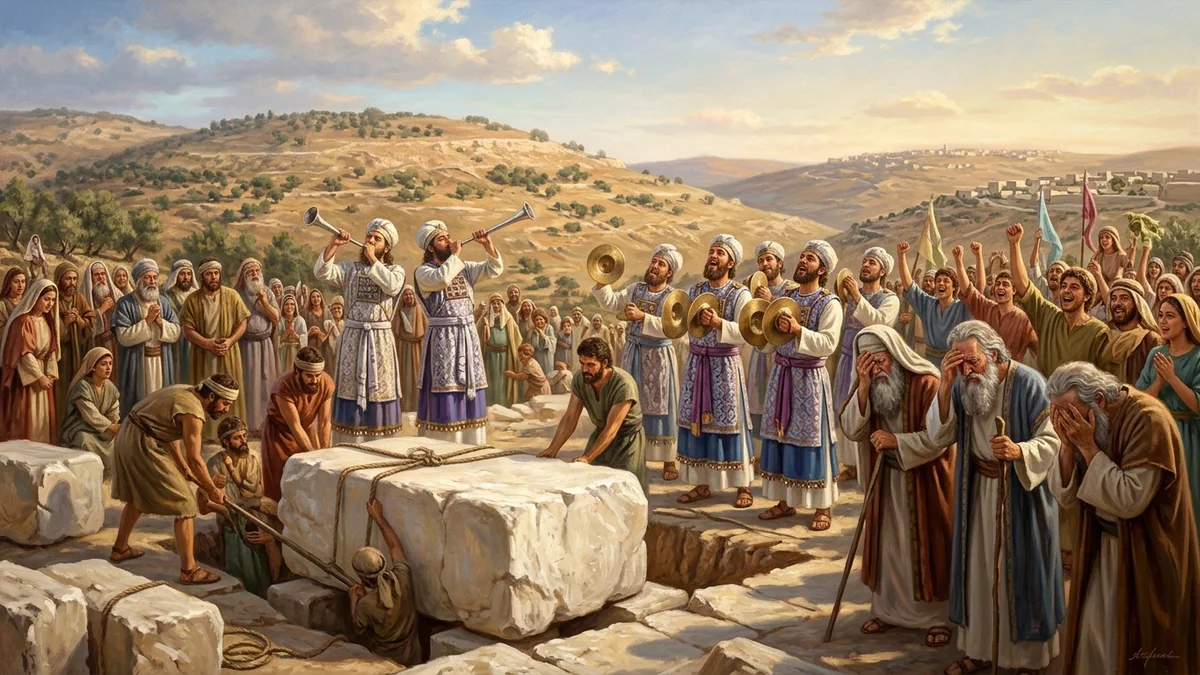 Priests in linen vestments sounded silver trumpets and Levites clashed cymbals as the foundation of the Second Temple was laid amidst tears and triumphant shouts.
The journey from the lush canals of Babylon across the Syrian desert to the rugged ruins of Judea was an arduous, four-month expedition spanning over 900 miles. Not every Jew chose to return; many had grown wealthy, comfortable, and settled in Mesopotamia. But God stirred the hearts of a consecrated remnant:
Led by Zerubbabel son of Shealtiel (a royal descendant of King David) and Joshua son of Jehozadak (the rightful high priest), the first wave numbered 42,360 Israelites, along with 7,337 male and female servants, 200 singing men and women, 736 horses, 245 mules, 435 camels, and 6,720 donkeys (Ezra 2:64-67).
Upon arriving in the scorched ruins of Jerusalem, the families gave freewill offerings of gold darics and silver minas according to their ability for the treasury of the temple reconstruction.
4. Rebuilding the Altar: Worship Before Construction
In the seventh month of Tishri (the sacred festival month of Yom Kippur and Tabernacles), the people gathered together as one man to Jerusalem. Surrounding local tribes and pagan settlers watched them with hostile eyes, creating intense fear among the returning remnant.
Yet Zerubbabel and Joshua knew where Israel’s true defense lay. Before building a single stone wall or private house, they rebuilt the bronze Altar of the God of Israel upon its ancient bedrock foundation:
"Though fear had come upon them because of the people of the countries, they set the altar on its bases; and they offered burnt offerings on it to the Lord, both the morning and evening burnt offerings." (Ezra 3:3).
Blood flowed once again on Mount Moriah. Morning and evening lambs were offered in accordance with the Law of Moses. They celebrated the Feast of Tabernacles with great joy, declaring that reconciliation with God through sacrifice was the indispensable prerequisite for any lasting rebuilding.
5. Laying the Foundation: Tears of the Old, Shouts of the Young
In the second month of their second year in Jerusalem (536 BC), Zerubbabel, Joshua, and the Levites commenced the actual building of the house of the Lord. They hired stonemasons and carpenters, and traded grain, wine, and olive oil with the Sidonians and Tyrians to float great cedar logs from Lebanon by sea to Joppa, just as Solomon had done five centuries earlier.
When the builders laid the cornerstone and foundation blocks of the Second Temple, an unforgettable emotional scene unfolded across the heights of Jerusalem:
The priests stood in their beautiful blue, purple, and scarlet linen vestments with silver trumpets, and the Levites, the sons of Asaph, with bronze cymbals, singing responsively in praise and thanksgiving: "For He is good, for His mercy endures forever toward Israel!"
Then all the people shouted with a great shout of praise. But amidst the deafening roar of joy, another sound pierced the air:
"But many of the priests and Levites and heads of the fathers' houses, old men who had seen the first temple, wept with a loud voice when the foundation of this temple was laid before their eyes, yet many shouted aloud for joy, so that the people could not discern the noise of the shout of joy from the noise of the weeping of the people, for the people shouted with a loud shout, and the sound was heard afar off." (Ezra 3:12-13).
The octogenarian elders wept because they remembered the gold-covered majesty of Solomon's Temple, the Ark of the Covenant, the Shekinah cloud of glory, and the holy fire, none of which were present in this humble post-exilic structure. Yet the young generation shouted for joy because God had brought them home from exile and was dwelling in their midst once again!
6. Archaeological Confirmation: The Cyrus Cylinder
For centuries, secular skeptics questioned the biblical claim that a pagan Persian king would generously finance the restoration of foreign temples and repatriate displaced exiles. However, in 1879, archaeologist Hormuzd Rassam discovered the famous **Cyrus Cylinder** in the ruins of Babylon, now housed in the British Museum in London.
This barrel-shaped clay cylinder, inscribed in Babylonian cuneiform, records Cyrus’s official imperial policy: "I gathered all their inhabitants and returned to them their dwellings... the gods who used to live in them, I established permanent sanctuaries for them." The Cyrus Cylinder provides direct, world-renowned secular confirmation of the historical reality recorded in Ezra 1.
7. Christological Typology: The Greater Zerubbabel
Zerubbabel’s leadership in bringing the exiles home points directly to Jesus Christ:
- The Royal Seed of David: Zerubbabel is uniquely included in both royal genealogies of Jesus (Matthew 1:12; Luke 3:27), preserving the Davidic messianic bloodline through the exile.
- The Rebuilder of the Living Temple: Zerubbabel laid the foundation of an earthly stone sanctuary, but Jesus Christ laid down His own life to build the living spiritual Temple—the Church—with Himself as the chief cornerstone (Ephesians 2:19-22).
- Deliverance from Sin's Captivity: Just as Cyrus and Zerubbabel released the captives from physical Babylon, Jesus proclaimed: "The Spirit of the Lord is upon Me... to proclaim liberty to the captives" (Luke 4:18), delivering believers from the bondage of sin and death.
Spiritual Reflections & Practical Life Application:
- God Controls the Heart of Rulers: Proverbs 21:1 reminds us that the king's heart is in the hand of the Lord; like rivers of water, He turns it wherever He wishes. Trust God when political leaders and earthly systems seem overwhelming.
- Build the Altar First: Before you launch a new business, build a home, or make major life decisions, build your altar of prayer and worship before God. Seek first His Kingdom and righteousness.
- Do Not Despise Small Beginnings: Zechariah later challenged the weeping elders: "For who has despised the day of small things?" (Zechariah 4:10). What starts small in God's hands will culminate in eternal glory.
- Return to Covenant Purity: When God opens a door of restoration, leave the comfortable compromises of Babylon behind and run toward the presence of God!
⚡ Fast Facts
- King Cyrus issued his decree in 538 BC, exactly 70 years after the first deportation of 605 BC
- Cyrus returned 5,400 gold and silver vessels plundered by Nebuchadnezzar from Solomon's Temple
- 42,360 Jewish exiles returned in the first wave, along with 7,337 servants and 200 singers
- The foundation of the Second Temple was laid in the second year of their return (536 BC)
❓ Frequently Asked Questions (FAQs)
Isaiah prophesied Cyrus by name over 150 years before his birth (Isaiah 44:28; 45:1), calling him God's 'shepherd' and 'anointed' who would rebuild Jerusalem. Jeremiah also prophesied that the Babylonian captivity would last exactly 70 years (Jeremiah 25:11-12; 29:10).
The elderly priests, Levites, and family heads who had seen the grandeur of Solomon's original Temple wept aloud because this new foundation was much smaller and lacked the former royal splendor, whereas the younger generation who had only known captivity rejoiced at having a Temple at all (Ezra 3:12-13).
Before laying a single stone for the Temple building or city walls, Zerubbabel and Joshua rebuilt the bronze Altar of the God of Israel upon its ancient foundations to offer morning and evening burnt sacrifices, demonstrating that reconciliation and worship take priority over physical construction.