Concluding the Sermon on the Mount in Matthew 7:24-27 and Luke 6:46-49, Jesus delivered one of the most vivid and unforgettable architectural parables in history: the Two Builders. Having unveiled the radical ethics of the Kingdom—loving enemies, fasting in secret, seeking first God's righteousness—Jesus brought His listeners to an unavoidable fork in the road: hearing His words is useless unless they are put into active practice.
1. The Deceptive Ease of the Sand
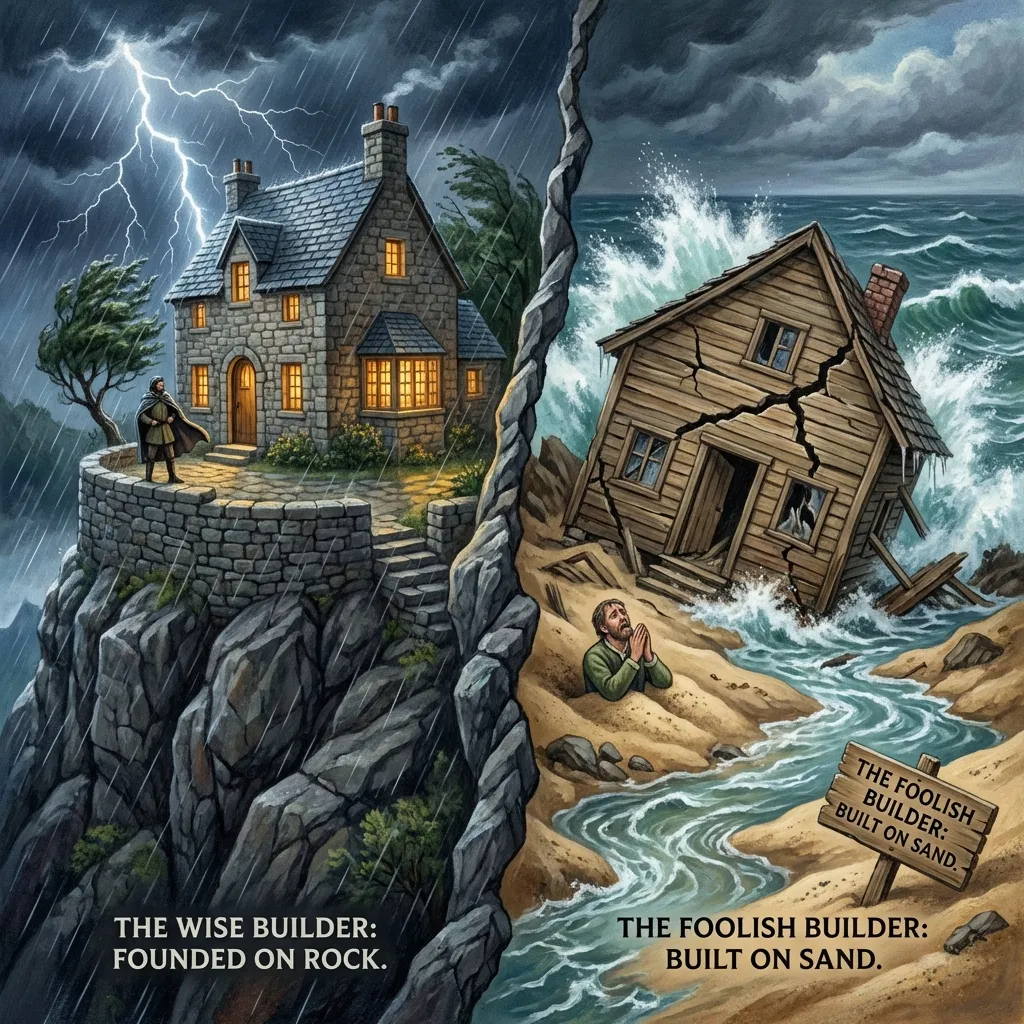
In the arid landscape of Galilee, dried riverbeds (wadis) look broad, level, and sandy in the summer. A builder seeking quick results could easily lay stones directly on the sand without breaking his back digging foundations. The foolish man built his house quickly and cheaply on the sand. On a sunny afternoon, his house looked just as imposing, stylish, and comfortable as the house built on the rock. Outward appearance can easily deceive.
2. Digging Deep to the Bedrock
Luke 6:48 provides crucial engineering insight regarding the wise builder: "He is like a man building a house, who dug down deep and laid the foundation on rock." Digging down to bedrock through hard clay, gravel, and boulders required backbreaking labor, sweat, and time. Nobody admires the foundation of a finished house; it is buried out of sight. True spiritual maturity consists in the hidden, unglamorous disciplines of daily repentance, prayer, and costly obedience to Christ's commands.
3. The Inevitable Triple Tempest
Both builders faced the exact same storm: the torrential rains poured down from the sky, the flash floods surged up from the dry wadi beds, and the howling gale-force winds slammed against the walls. Notice that Jesus never promised that believers would be exempt from storms! Living for Christ does not insulate you from cancer, financial crisis, bereavement, or persecution. The storm hits both the wise and the foolish alike.
4. The Unshakeable House
When the storm assaulted the house on the rock, the walls trembled, but the structure stood firm: "Yet it did not fall, because it had its foundation on the rock" (Matthew 7:25). The strength of a life is determined not by the size of its roof, but by the quality of its foundation. When your soul is anchored in active, trusting obedience to Jesus, no earthly or demonic tempest can destroy you.
5. Great Was the Fall of It
Tragically, the house built on sand met sudden, catastrophic collapse. As the flash flood saturated the sand, the ground liquefied beneath the walls, the stones cracked, and with a thunderous roar, the entire structure washed away into the sea. Jesus concluded with chilling solemnity: "And great was its fall." To hear the words of Jesus on Sunday and fail to obey them on Monday is to construct your eternity on a sandbank of self-deception.
Biblical Keywords & Theological Roots
Solid rock, bedrock, massive continuous bedrock cliff; the unshakeable foundation of obeying the words of Jesus Christ.
Sand, dry gravelly desert wash (wadi bed); unstable, shifting ground that liquefies and collapses during flash floods.
'Great was the fall of it'; the absolute, catastrophic, irreversible destruction of the house built on hearing without doing.
Ancient Near Eastern & Archaeological Context
Delivered as the architectural climax of the Sermon on the Mount (Matthew 7:24-27; Luke 6:47-49). In the arid topography of lower Galilee and the Jordan rift valley, dry seasonal riverbeds called *wadis* appear flat, broad, and invitingly easy to build upon during dry summer months. However, when violent winter storms (*cheimōn*) strike the northern mountains, torrential cloudbursts funnel down the gorges, creating roaring flash floods that tear away soft sand, clay, and topsoil with pulverizing hydraulic force. The wise builder spent grueling weeks chiseling through surface dirt to anchor foundation blocks directly into underlying limestone bedrock (*petra*), ensuring survival against the unavoidable tempest.
🔑 Key Spiritual Takeaways
- Hearing is Not Enough: Both builders heard the words of Christ; the sole difference between wisdom and foolishness is obedience (putting them into practice).
- Storms are Inevitable: Following Christ does not exempt us from suffering; trials, bereavement, sickness, and temptations batter both believers and unbelievers.
- Foundations are Tested by Pressure: In calm sunshine, both houses looked beautiful; only the violent storm proved what lay hidden beneath the surface.
- Unshakeable Security in Christ: A life anchored in active obedience to Jesus will stand unmovable through the storms of life and the final judgment of eternity.
Support Independent Biblical Research
Did this study bless you? Help support our independent bilingual research and interactive visual Bible tools.
⚡ Fast Facts
- Sermon on the Mount Climax: This parable serves as the dramatic concluding finale to the Sermon on the Mount (Matthew 7:24-27; Luke 6:46-49).
- Galilean Wadi Environment: In Palestine, dry riverbeds (wadis) look level, dry, and ideal for easy building in the summer, but become raging flash-flood torrents during winter rains.
- Identical Storms: Both builders faced the exact same three tests: the torrential rain fell, the floodwaters rose, and the fierce winds beat against the house.
- Digging Deep: Luke 6:48 emphasizes that the wise builder 'dug down deep' through layers of sand and clay until he hit bedrock before laying foundation stones.
❓ Frequently Asked Questions (FAQs)
What is the 'rock' in this parable?
In Matthew 7:24, Jesus says: 'Everyone who hears these words of mine and puts them into practice is like a wise man who built his house on the rock.' The rock is Christ Himself and active, persevering obedience to His teachings.
Why was building on the sand foolish if it was easier and faster?
Building on sand offered short-term convenience without hard labor; it avoided the back-breaking toil of digging through dirt to find bedrock. However, it ignored future reality. Foolishness always prioritizes present comfort over future durability.
What do the rain, floods, and winds represent?
They represent the triple assault of adversity: personal crises (rain from above), cultural and moral pressures (floods from below), and spiritual/demonic attacks (winds beating from all sides), culminating in the final judgment of God.