Seated in a fishing boat gently rocking offshore near Capernaum, Jesus looked out at a vast multitude gathered on the natural amphitheater of the hillside. Across the rolling landscape, farmers could be seen walking through fields scattering seed by hand. Pointing to this everyday agrarian scene, Christ delivered the foundational masterwork of His teaching: the Parable of the Sower (Matthew 13:1-23; Mark 4:1-20; Luke 8:4-15).
1. The Careless Sower and the Varied Terrain
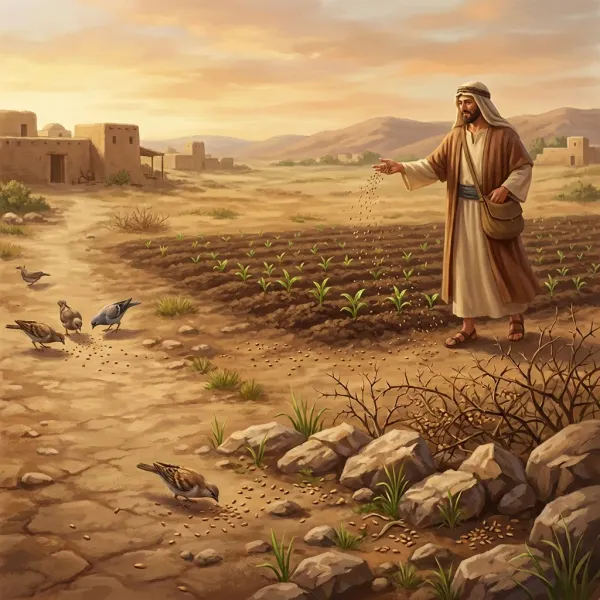
In first-century Jewish agriculture, farmers sowed seed broadcast across the field before plowing it into the soil. As the sower slung grain across the land, the seed inevitably landed on four completely distinct soil conditions: the hard-packed walking path, shallow soil over limestone bedrock, ground infested with dormant thorn roots, and deep, fertile loam. The seed was identical, rich with genetic life; the sole variable determining life or death was the soil.
2. The Hard Path and the Birds of the Air
The first seed fell along the footpath—the compacted dirt trail trodden flat by thousands of travelers. The seed could not penetrate even a fraction of an inch. Almost immediately, flocks of birds descended and devoured it. Jesus interpreted: "When anyone hears the message about the kingdom and does not understand it, the evil one comes and snatches away what was sown in their heart" (Matthew 13:19). A hardened, cynical heart allows the Gospel to bounce off the surface, where demonic powers swiftly remove it.
3. Rocky Ground and Scorching Heat
The second seed landed on soil covering limestone slabs with only a thin layer of topsoil. Warm rock caused the seed to germinate with astonishing speed, shooting up green blades. But when the summer sun arose, the shallow root system could tap into no deep moisture, and the seedlings withered to ash. This represents emotional converts who respond to the Gospel with tears of joy, but possess no deep repentance. When persecution, family tension, or financial hardship arises for Christ's sake, they instantly fall away.
4. Thorny Weeds and Choked Fruitfulness
The third seed fell among thorny soil that looked clean on the surface, but held dormant underground root networks. As the wheat grew, the thorns grew faster, stealing sunlight, water, and nutrients. The plant survived, but never produced a single head of grain. Jesus explained: "The seed falling among the thorns refers to someone who hears the word, but the worries of this life and the deceitfulness of wealth choke the word, making it unfruitful" (Matthew 13:22). This is the tragedy of a divided heart: not open apostasy, but spiritual strangulation through worldly ambition.
5. The Bumper Harvest of the Good Soil
Finally, seed fell on good soil—plowed, weeded, and deep. It put down deep roots, absorbed the rain, and yielded an astonishing harvest: thirty, sixty, and a hundred times what was sown. In an ancient world where a ten-fold return was considered a success, a hundred-fold harvest was miraculous. The good soil represents those who hear the Word, understand it, hold it fast with honest perseverance, and produce lasting spiritual fruit for the glory of God.
Biblical Keywords & Theological Roots
Parable, placing side-by-side for comparison; an earthly story conveying a profound heavenly spiritual reality.
Seed; Luke 8:11 explicitly identifies: 'The seed is the word of God' (ho sporos estin ho logos tou theou).
Steadfast endurance, patient perseverance; bearing fruit in the good soil through patient, unwavering faithfulness.
Ancient Near Eastern & Archaeological Context
In the 1st century agricultural economy of the Sea of Galilee, farming methods followed traditional Near Eastern dryland broadcasting techniques. Galilean farmers walked across unplowed terrace plots hand-casting wheat and barley grains from a seed sack slung over the shoulder before plowing the soil. Inevitably, grains scattered upon hardened public footpaths crisscrossing the fields, shallow limestone shelves covered by mere inches of topsoil, thornbrush thickets, and deep alluvial loam. Archaeological excavations around Capernaum reveal steep basaltic slopes interspersed with fertile red terra rossa soils, perfectly matching the four distinct soil conditions described by Christ.
🔑 Key Spiritual Takeaways
- The Seed is Infallible: The problem in the parable is never the seed (the Word of God), but the receptive condition of the human heart.
- Satan Snatching the Word: The wayside heart represents those who hear the Gospel without understanding, allowing the enemy to steal it away instantly.
- Superficial Emotionalism: The rocky soil depicts emotional, shallow converts who rejoice initially but fall away when persecution or trouble arises.
- Choked by Worldly Wealth: Thorns represent the deceitfulness of wealth and anxieties of life that suffocate spiritual fruitfulness.
- The Fruit of True Discipleship: The good soil produces a supernatural harvest—yielding thirty, sixty, and a hundredfold return.
Support Independent Biblical Research
Did this study bless you? Help support our independent bilingual research and interactive visual Bible tools.
⚡ Fast Facts
- Inaugural Kingdom Parable: The Parable of the Sower introduces Christ's major parabolic discourses in Matthew 13, Mark 4, and Luke 8.
- Boat Pulpit: Jesus taught this parable sitting in a fishing boat slightly offshore while the massive crowd stood along the natural amphitheater of the Galilean beach.
- Ancient Sowing Method: Galilean farmers sowed seed broadcast by hand before plowing the soil, ensuring seed fell on varied footpaths, rocks, thorns, and loam.
- Four Soil Types: The four soils represent four distinct conditions of the human heart: hardened path, shallow rock, distracted thorns, and fertile fruit-bearing soil.
❓ Frequently Asked Questions (FAQs)
Why did Jesus speak to the crowds in parables instead of plain speech?
In Matthew 13:10-15, Jesus explained that parables serve a dual purpose: they reveal truth to humble, seeking hearts while veiling truth from proud, hardened critics who hear without wanting to obey, fulfilling Isaiah 6:9-10.
What do the birds represent in the Parable of the Sower?
Jesus explicitly interpreted the birds as 'the evil one' (Satan) in Matthew 13:19. Just as birds swoop down on packed footpaths to steal exposed grain before it germinates, the devil snatches the Word of God from inattentive, hardened hearts.
What does it mean to bear fruit thirty, sixty, or a hundredfold?
In first-century Galilean agriculture, an average grain harvest yielded an eight to ten-fold return. A thirty, sixty, or hundredfold harvest was an astonishing, supernatural bumper crop representing the transformative abundance of the Spirit in an obedient disciple.