Recorded in Matthew 13:24-30 and personally interpreted by Christ in verses 36-43, the Parable of the Wheat and the Weeds provides a masterwork of divine theodicy. It explains the perplexing coexistence of virulent evil alongside genuine spiritual life in the present age, while declaring the absolute certainty of Christ's ultimate, unsparing harvest judgment.
1. The Good Sower and the Midnight Infiltration
Jesus presented another kingdom parable: "The kingdom of heaven is like a man who sowed good seed in his field. But while everyone was sleeping, his enemy came and sowed weeds among the wheat, and went away" (Matthew 13:24-25). Sowing good seed demands investment, plowing, and sweat. The enemy, by contrast, operates under the veil of nocturnal secrecy, scattering the treacherous seeds of darnel (*zizanion*) across the tilled earth before slinking into the shadows. True spiritual work builds; satanic sabotage subverts.
2. The Deception of Darnel: The Botanical Counterfeit
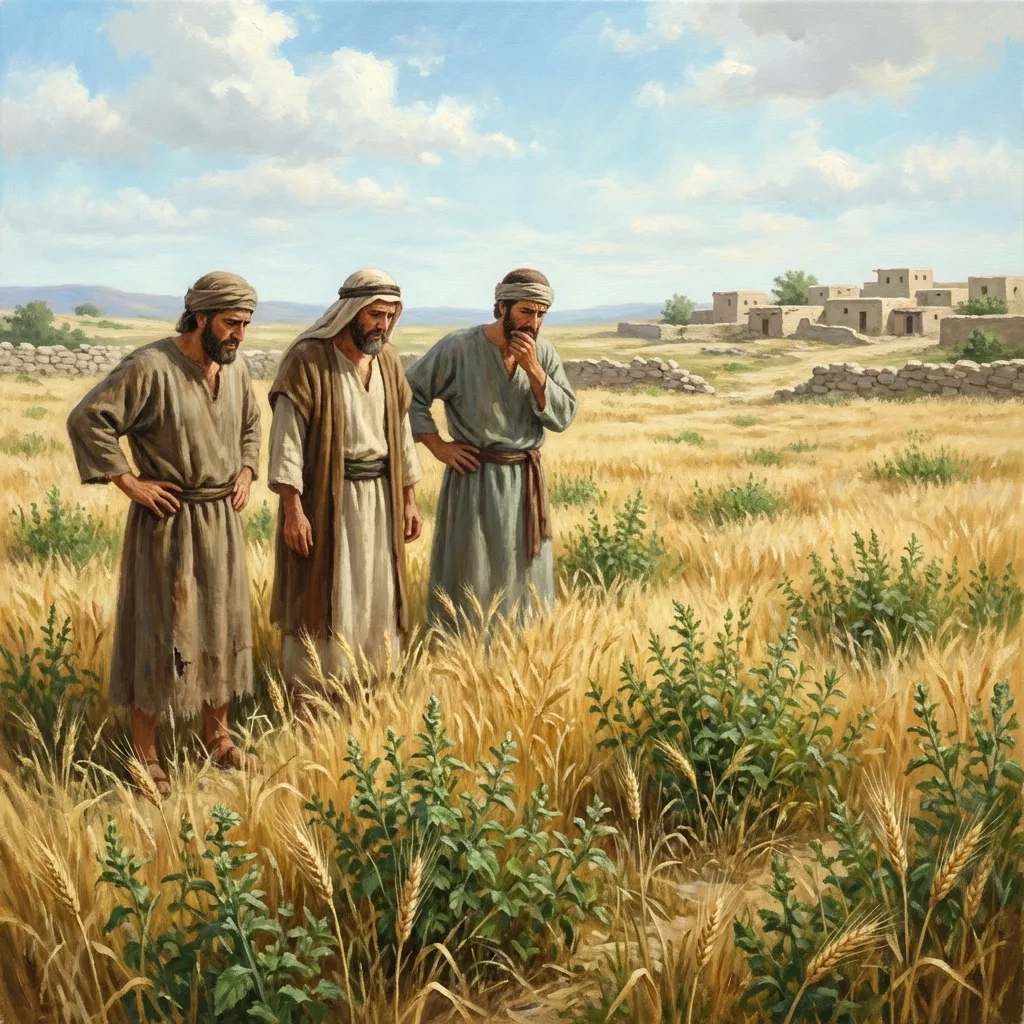
For months, the field appeared completely uniform. As green shoots pierced the soil, wheat and darnel looked virtually indistinguishable. It was only when the wheat sprouted, headed, and began to form grain that the malicious deception became evident: "When the wheat sprouted and formed heads, then the weeds also appeared" (Matthew 13:26). True darnel (*Lolium temulentum*) produces slender dark kernels loaded with narcotic poison. The counterfeit was unmasked not by its early foliage, but by its ultimate fruit.
3. The Servants' Zeal and the Master's Restraint
The owner's servants approached him in distress: "Sir, didn't you sow good seed in your field? Where then did the weeds come from?" The master immediately recognized the signature of malice: "An enemy did this." Zealously, the servants volunteered: "Do you want us to go and pull them up?" But the master exercised profound restraint: "No, because while you are pulling the weeds, you may uproot the wheat with them. Let both grow together until the harvest" (Matthew 13:28-30). Inexperienced human inquisitors, blinded by self-righteous zeal, lack the discernment to eradicate evil without maiming the tender wheat.
4. The Mystery of Coexistence in the World
In explaining the parable privately to His disciples, Jesus unlocked the prophetic allegory: "The one who sowed the good seed is the Son of Man. The field is the world, and the good seed stands for the people of the kingdom. The weeds are the people of the evil one, and the enemy who sows them is the devil" (Matthew 13:37-39). The presence of wickedness in the world does not signal divine incompetence or indifference. God sovereignly permits evil to mature alongside righteousness so that the character of both may be fully demonstrated before the cosmos.
5. The Final Separation at the Eschatological Threshing Floor
The cohabitation of righteousness and evil is strictly temporary. At the harvest (synteleia tou aiōnos), the Son of Man will dispatch His holy angels: "They will weed out of his kingdom everything that causes sin and all who do evil. They will throw them into the blazing furnace, where there will be weeping and gnashing of teeth" (Matthew 13:41-42). In dramatic contrast, the gathered wheat will enter the Father's barn: "Then the righteous will shine like the sun in the kingdom of their Father. Whoever has ears, let them hear" (Matthew 13:43). Divine justice may tarry, but it never fails.
Biblical Keywords & Theological Roots
Darnel, tares (Lolium temulentum); a noxious weed that deceptively mimics wheat during growth but produces black, poisonous seeds.
Consummation, completion, culmination of an era; denoting the final harvest and judgment at the close of the age.
Enemy, adversary, hostile foe; applied directly to the devil who surreptitiously sows corruption into God's kingdom field.
Ancient Near Eastern & Archaeological Context
In the fertile agrarian valleys of Galilee and the Jezreel Plain, wheat was the staple food of life. Farmers guarded their fields diligently during germination. However, bitter land disputes, family feuds, and economic rivalries occasionally drove malicious adversaries to commit agricultural sabotage. Under cover of darkness, saboteurs would scatter darnel (*zizanion*) across freshly plowed and sown soil. The ancient Roman legal code *Digesta* includes specific judicial precedents dealing with perpetrators who contaminated another's field with poisonous weeds. Furthermore, threshers used specialized sieves to separate darnel from wheat grains prior to milling to prevent whole villages from suffering paralysis and toxic delirium from contaminated flour.
🔑 Key Spiritual Takeaways
- Coexistence in the Present Age: True believers and deceptive counterfeiters must coexist in the world until Christ's designated harvest at the end of the age.
- Dangers of Zealous Purges: Human attempts to forcibly purge all hypocrites from the earthly community invariably damage sincere, vulnerable believers.
- The Reality of Demonic Sabotage: The devil does not merely attack openly; he works through clandestine, spiritual counterfeits that closely mirror truth.
- Unerring Eschatological Justice: God's angelic reapers will execute an infallible, permanent separation—the wicked to fiery judgment, the righteous shining like the sun.
Support Independent Biblical Research
Did this study bless you? Help support our independent bilingual research and interactive visual Bible tools.
⚡ Fast Facts
- Botanical Mimicry: Darnel (*Lolium temulentum*) is indistinguishable from true wheat in its early stages; only at the heading stage, when wheat ears turn golden and darnel turns dark grey, can they be identified.
- Roman Legal Precedent: Sowing darnel in an enemy's field was a recognized act of vengeance in antiquity; Roman law (*Digesta* 9.2.27.14) explicitly prescribed severe penalties for this agricultural sabotage.
- Toxic Temuline: Darnel grains are frequently infected with an endophytic fungus (*Stromatinia temulenta*) producing temuline, a potent neurotoxin causing dizziness, nausea, blindness, and convulsions if baked into bread.
- Intertwined Roots: The servants were forbidden to weed prematurely because the root systems of wheat and darnel become hopelessly entangled beneath the soil surface.
❓ Frequently Asked Questions (FAQs)
Why did the landowner forbid the servants from pulling up the weeds immediately?
The landowner explained in Matthew 13:29: 'No, because while you are pulling the weeds, you may uproot the wheat with them.' The root systems of darnel and wheat entwine tightly beneath the topsoil; ripping out the robust weed inevitably rips out the fragile wheat stalk alongside it. God patiently tolerates the presence of evil to protect and mature the righteous.
What does the field represent in Christ's interpretation?
Jesus explicitly clarified in Matthew 13:38: 'The field is the world.' While commonly applied to the church, the primary scope is the cosmos—Christ has sown His kingdom people across the earth, where they live in the midst of spiritual opposition until the consummation.
What is the ultimate fate of the wheat and the weeds at the harvest?
At the end of the age (synteleia tou aiōnos), angelic reapers will gather the weeds first to be bundled and burned in the fiery furnace (eschatological judgment), while the wheat is gathered into the heavenly barn—and the righteous will shine forth as the sun in the kingdom of their Father (Matthew 13:40-43).