In Luke 14:15-24, Jesus presents the magnificent Parable of the Great Banquet, exposing the perilous tragedy of spiritual presumption. Delivered at a tense Sabbath dinner surrounded by watching Pharisees, Christ reveals that God has prepared an eschatological feast of grace, yet those boasting of their religious pedigree will find themselves shut out while the broken and despised feast at the King's table.
1. The Sabbath Gathering and the Pious Exclamation
The stage was set in the lavish residence of a prominent Pharisaic ruler where Jesus had observed guests jockeying for seats of honor. As He spoke of the resurrection of the righteous, a guest blurted out a pious platitude: "Blessed is the one who will eat at the feast in the kingdom of God!" (Luke 14:15). The speaker complacently assumed that his own seat at the Messianic Banquet was guaranteed by virtue of his ethnic pedigree and religious observance. Jesus immediately countered this self-righteous daydream with a sobering reality check through a vivid parable.
2. The Double Invitation and the Insult of the Excuses
A certain nobleman arranged a great banquet (mega deipnon) and invited many prominent citizens. In accordance with ancient Near Eastern protocol, an initial notification had secured their commitment weeks in advance. When the livestock were slaughtered, the bread baked, and the wine decanted, the host sent his servant with the customary proclamation: "Come, for everything is now ready" (Luke 14:17). Shockingly, a coordinated wave of disdain erupted as "they all alike began to make excuses" (Luke 14:18). Each excuse was a transparent veneer for utter indifference to the host's generosity.
3. Anatomy of Apathy: Fields, Oxen, and Marriage
The first guest demurred: "I have just bought a field, and I must go and see it. Please excuse me." In the ancient world, real estate transactions were protracted affairs involving meticulous inspections; nobody bought land blind. The second excuse was equally contrived: "I have just bought five yoke of oxen, and I'm on my way to try them out. Please excuse me." Ten working oxen represented substantial capital; no farmer would finalize a purchase without testing their pulling capacity. The third curtly replied: "I just got married, so I cannot come." Under Mosaic Law (Deuteronomy 24:5), a newlywed was exempt from military conscription, not from celebrating a feast! Possessions, commerce, and domestic comforts had superseded the summons of the king.
4. Turning to the Streets: The Outcasts Welcomed
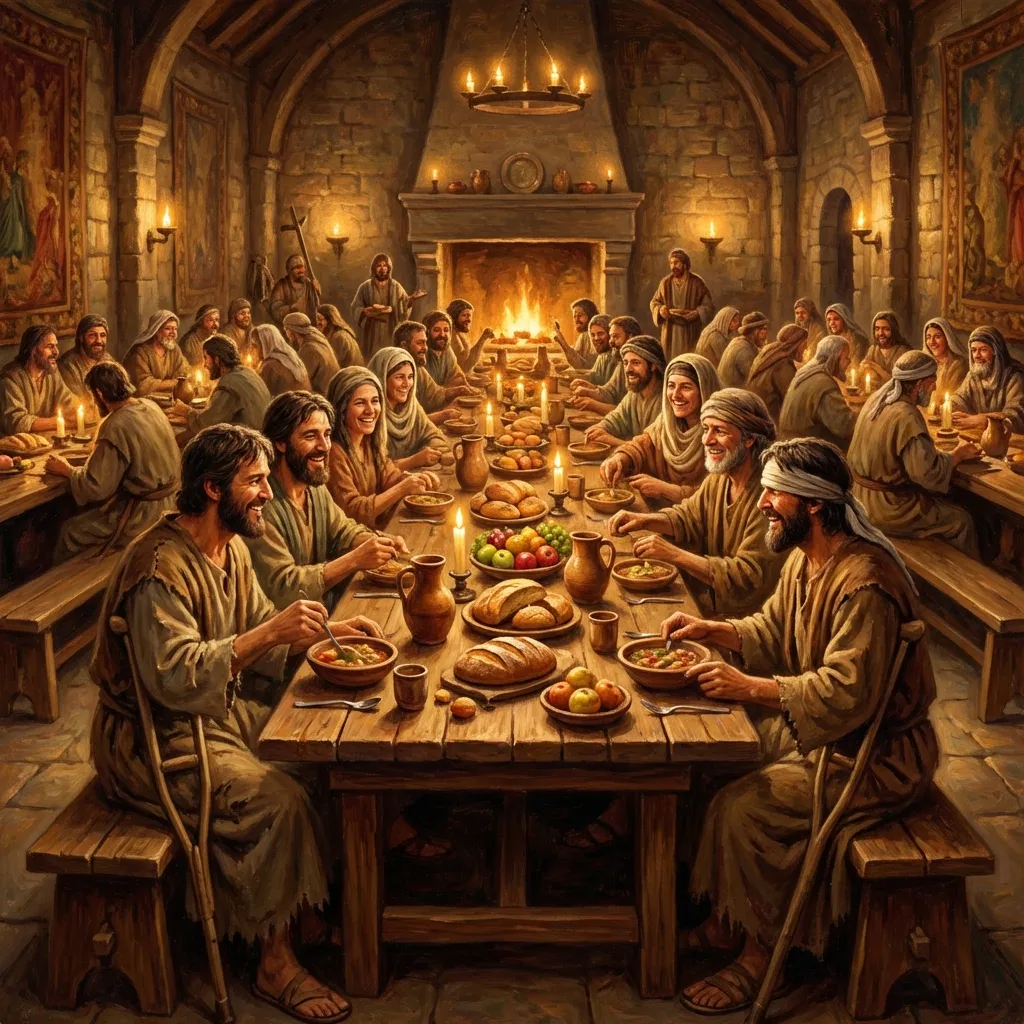
When the servant reported these insults, the master was moved with righteous indignation. Refusing to let his prepared feast spoil, he commanded: "Go out quickly into the streets and alleys of the town and bring in the poor, the crippled, the blind and the lame" (Luke 14:21). These were the very individuals whom Pharisaic tradition deemed ceremonially impure and cursed by God. Yet they gladly poured into the banquet hall, astonished to find themselves seated at the high table. Even so, the servant announced: "Sir, what you ordered has been done, but there is still room." God's heart of grace possesses a holy restlessness until every chair is occupied.
5. Highways, Hedges, and the Sovereign Verdict
The master issued his final directive: "Go out to the roads and country lanes and compel them to come in, so that my house will be full" (Luke 14:23). The servant was sent beyond the city gates to travelers, Gentiles, and outcasts cowering in the hedgerows, lovingly constraining them to cross the threshold. Jesus concluded with a thunderous warning to the original guests: "I tell you, not one of those who were invited will get a taste of my banquet" (Luke 14:24). Grace is entirely free, but rejecting it carries eternal, irreversible consequences.
Biblical Keywords & Theological Roots
Banquet, formal evening feast, the main meal of the day; representing the eschatological Messianic feast of the Kingdom.
To compel, urgently constrain by loving persuasion and moral insistence; pressing guests to enter the feast.
Utterly destitute, begging poor, cowering in helplessness; spiritually bankrupt souls who welcome God's mercy.
Ancient Near Eastern & Archaeological Context
In Greco-Roman antiquity, banquets (*symposia* or *deipna*) were rigid reflections of class hierarchy and honor. When a prominent host planned an extravagant banquet, butchering fatted calves and preparing aged wines, etiquette required an initial save-the-date RSVP. When the feast was physically cooked, the host's personal servant (*doulos*) was dispatched to guide guests. To fabricate excuses at this final hour was not merely an inconvenience—it was a severe, intentional insult calculated to shame the host publicly. Furthermore, religious elites of Second Temple Judaism believed that the maimed, lame, and blind were disqualified from full messianic fellowship (as reflected in the Qumran War Scroll); Jesus shattered this exclusionary dogma by placing those very outcasts at the head of the banquet table.
🔑 Key Spiritual Takeaways
- Grace is Fully Prepared: Salvation is not a human culinary effort; God has fully prepared the feast through the finished sacrifice of His Son.
- Pretexts for Indifference: Legitimate temporal responsibilities (property, livestock, family) become idols when they crowd out eternal invitations.
- The Transferred Inheritance: Those who take their covenant privileges for granted will see their seats occupied by humble, hungry outcasts.
- The Compelling Urgency of Evangelism: The Master desires His house to be full, commanding His ambassadors to urgently pursue souls in every dark alley.
Support Independent Biblical Research
Did this study bless you? Help support our independent bilingual research and interactive visual Bible tools.
⚡ Fast Facts
- Sabbath Feast Setting: Jesus delivered this parable while reclining at the house of a prominent ruler of the Pharisees on the Sabbath day (Luke 14:1).
- Two-Tier Invitation Etiquette: In ancient high society, a preliminary invitation was sent months ahead, followed by a servant sent on the day of the feast announcing: 'Come, for everything is now ready.'
- Insult of Last-Minute Excuses: Accepting the first invitation and rejecting the second was an egregious social breach tantamount to declaring public hostility.
- Highways and Hedges: The master's command to compel outsiders from the lanes and hedgerows foreshadowed the welcoming of Gentiles and marginalized outcasts into God's covenant.
❓ Frequently Asked Questions (FAQs)
What were the three excuses offered by the invited guests, and why were they hollow?
The first bought a field and claimed he must inspect it (nobody buys land unseen; it was already his); the second bought five yoke of oxen and claimed he needed to test them (oxen were thoroughly tested prior to purchase); the third married a wife and claimed he could not come (banquet notices were given long before, and marriage did not bar social interaction). All three unmasked profound apathy masquerading as urgent busyness.
What does 'compel them to come in' (anankason eiselthein) mean in evangelism?
It does not justify physical coercion or forced conversion (as tragically misapplied in medieval inquisitions). Rather, in ancient Near Eastern honor culture, destitute outcasts on the roads would naturally deem themselves unworthy to enter a nobleman's mansion; the servant had to physically take them by the arm, reassure them, and earnestly urge them until their feelings of shame were overcome by the host's lavish mercy.
Who do the original invited guests represent versus the people from the streets?
The original invited guests represent the Jewish religious authorities (Pharisees, scribes, rulers) who possessed the Scriptures and prophets but rejected the Messiah when He arrived. The poor, blind, and those from the highways represent Jewish societal outcasts (tax collectors, sinners) and the Gentile nations who eagerly embraced the Gospel.