In Matthew 22:1-14, Jesus delivers the Parable of the Wedding Banquet, portraying salvation as a magnificent royal celebration orchestrated by God the Father in honor of His Son. Moving from lavish invitations to violent insurrection, military retribution, and a chilling examination of banquet attire, this parable stands as an unforgettable warning against treating the grace of God with contempt.
1. The Royal Feast for the King's Son
Jesus painted an imperial scene: "The kingdom of heaven is like a king who prepared a wedding banquet for his son" (Matthew 22:2). In the biblical narrative, the ultimate end of all creation is the marriage supper of the Lamb (Revelation 19:7-9). God the Father did not prepare an ordinary meal; He prepared an eschatological feast of uncontainable joy to glorify His beloved Son. Oxen and fattened cattle were butchered, choice wines decanted, and the invitation of the ages was sent out to the covenant people of Israel.
2. Violent Rebellion and the Torched City
When the King sent his servants to announce that the feast was ready, the invited guests displayed astonishing contempt: "They paid no attention and went off—one to his field, another to his business. The rest seized his servants, mistreated them and killed them" (Matthew 22:5-6). Apathy rapidly metastasized into violent treason. The King responded with fierce, righteous judgment: "The king was enraged. He sent his army and destroyed those murderers and burned their city" (Matthew 22:7). This was a literal prophetic preview of the Roman legions under Titus who besieged, slaughtered, and burned Jerusalem to the ground in AD 70.
3. Filling the Royal Hall from the Street Corners
Refusing to let His Son's wedding hall stand empty, the King turned to his servants: "The wedding banquet is ready, but those I invited did not deserve to come. So go to the street corners and invite to the banquet anyone you find" (Matthew 22:8-9). The servants fanned out into the thoroughfares, gathering everyone they encountered, "both bad and good, and the wedding hall was filled with guests." This is the breathtaking scope of the global Gospel: moral outcasts, Gentiles, tax collectors, and beggars flooded into the royal presence, astonishingly elevated to banquet status by pure grace.
4. The Man Without a Wedding Garment
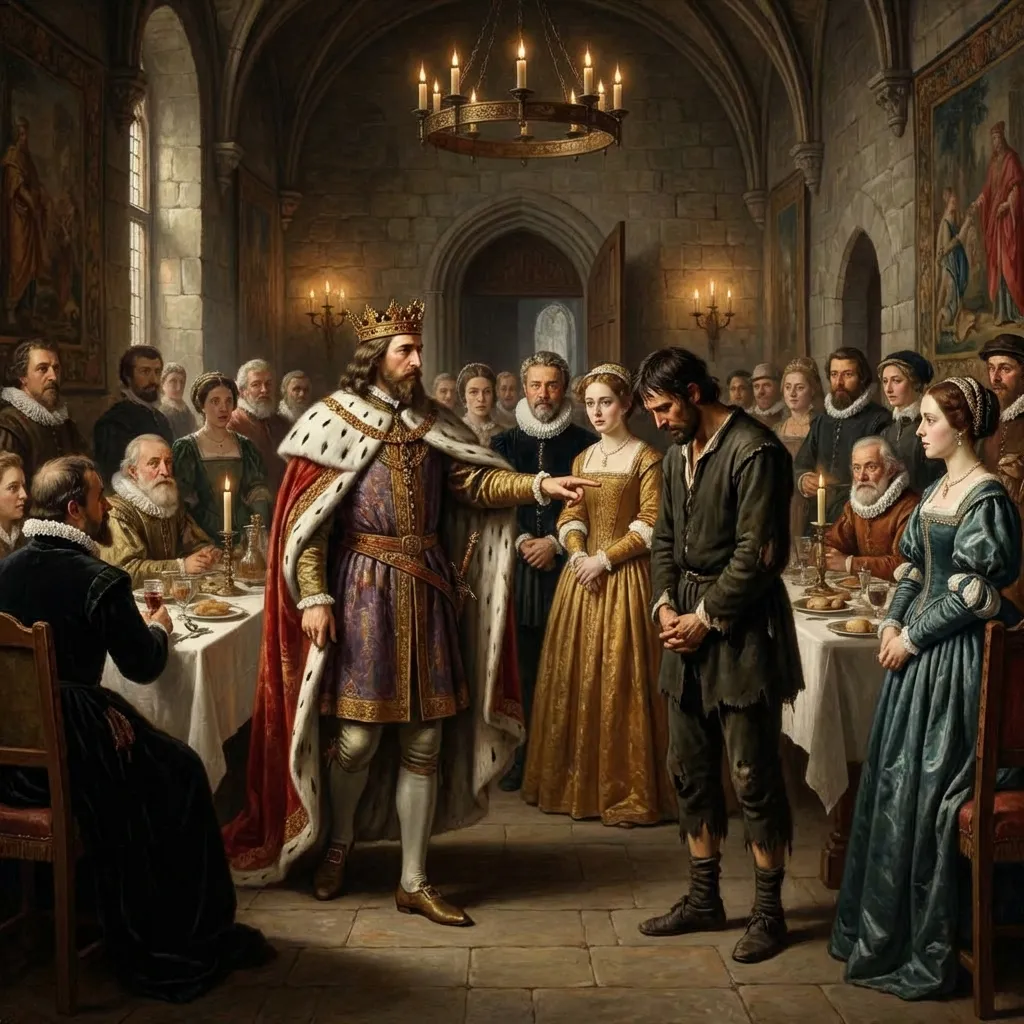
As the King entered the festive hall to inspect the guests, his eyes locked onto an alarming anomaly: "He noticed a man there who was not wearing wedding clothes" (Matthew 22:11). In ancient royal courts, clean festive tunics (*endymata*) were freely provided at the entrance. To sit in the King's presence wearing one's own soiled, street-stained garments was an act of arrogant, insolent defiance. The King asked him tenderly yet firmly: "Friend, how did you get in here without wedding clothes?" The man was struck dumb (ephimōthē). He had no defense, no excuse, and no appeal.
5. Cast into Outer Darkness: Many Called, Few Chosen
The King issued an absolute, terrifying command: "Tie him hand and foot, and throw him outside, into the darkness, where there will be weeping and gnashing of teeth" (Matthew 22:13). Christ concluded with the penetrating axiom: "For many are invited, but few are chosen" (Matthew 22:14). It is not enough to physically associate with the church or respond to the outward call of the Gospel. We must be clothed in the imputed righteousness of Jesus Christ. Self-righteous pride will find no quarter at the banquet of the Lamb; only those wrapped in the spotless robe of Calvary will feast in the light of the King forever.
Biblical Keywords & Theological Roots
Wedding feast, marriage celebration; the supreme biblical metaphor for the joyful, covenantal union of Christ and His redeemed bride.
Wedding garment; spotless celebratory attire provided by the royal host, representing the imputed righteousness of Jesus Christ.
Called vs Chosen; contrasting the broad, universal external invitation of the Gospel against the authentic inward response of saving faith.
Ancient Near Eastern & Archaeological Context
In ancient Near Eastern monarchies, a royal wedding celebration lasted seven to fourteen days and was a mandatory state event displaying imperial majesty. Defying a royal summons was legally recognized as open insurrection and treason against the crown. Furthermore, ancient monarchs routinely maintained royal vestries containing hundreds of festive tunics (*endymata*), which were bestowed as royal gifts upon guests as they crossed the palace threshold. Wearing the provided garment leveled all socio-economic distinctions, ensuring that destitute beggars and wealthy nobles sat together in uniform royal dignity. Refusing the provided garment was a deliberate, arrogant insult signaling contempt for the king's provision.
🔑 Key Spiritual Takeaways
- Salvation Honors the Son: The Father orchestrates redemptive history to celebrate and glorify His beloved Son Jesus Christ.
- Outrage of Rejecting Grace: Spurning God's Gospel is not a harmless personal preference; it is high treason against the Sovereign of the universe.
- The Garment of Righteousness: No one can sit at the King's table clothed in the filthy rags of human self-righteousness; we must be clothed in Christ.
- Many Called, Few Chosen: While the Gospel invitation is broadcast freely to all mankind, only those who receive Christ on His terms will partake in eternal life.
Support Independent Biblical Research
Did this study bless you? Help support our independent bilingual research and interactive visual Bible tools.
⚡ Fast Facts
- Royal Sovereign Context: Unlike Luke 14's Great Banquet held by a private nobleman, Matthew 22 portrays a King preparing a grand wedding feast for His royal Son.
- Violent Rebellion: The invited guests did not merely offer trivial excuses; they mistreated, humiliated, and slaughtered the King's royal messengers.
- Destruction of the City: Matthew 22:7 prophesied the King dispatching his troops to destroy those murderers and burn their city—fulfilled literally in the Roman siege and destruction of Jerusalem in AD 70.
- The Speechless Intruder: When confronted for lacking a wedding garment, the intruder was speechless (*ephimōthē*), lacking any defense for spurning the King's free royal provision.
❓ Frequently Asked Questions (FAQs)
What does the wedding garment symbolize in Christian theology?
The wedding garment represents the imputed righteousness of Jesus Christ (Isaiah 61:10; Revelation 19:8). We cannot enter heaven clothed in our own moral achievements or self-righteousness ('filthy rags', Isaiah 64:6); we must be clothed with Christ Himself through faith in His finished work.
Why was the man without a wedding garment severely punished?
The man was not punished for poverty; royal hosts provided festive garments freely at the palace door. He was punished for willful, arrogant defiance. He presumed that his own ordinary clothing was good enough for the King's presence, despising the King's royal provision.
How does Matthew 22 differ from the Great Banquet in Luke 14?
While sharing the banquet motif, Luke 14 focuses on social hospitality and excuses regarding wealth, while Matthew 22 is explicitly royal and eschatological: the host is a King, the occasion is His Son's wedding, the rejection escalates to state murder, the King destroys the rebellious city with armies, and it includes the critical second movement regarding the wedding garment.