Recorded in Matthew 21:28-32, the Parable of the Two Sons is a razor-sharp indictment of religious hypocrisy. Delivered in the courts of the Jerusalem Temple during Passion Week, Jesus strips away the polished facade of formal piety to demonstrate that the Kingdom of God belongs not to those who recite orthodox creeds, but to those who actively do the Father's will.
1. The Temple Showdown and the Father's Command
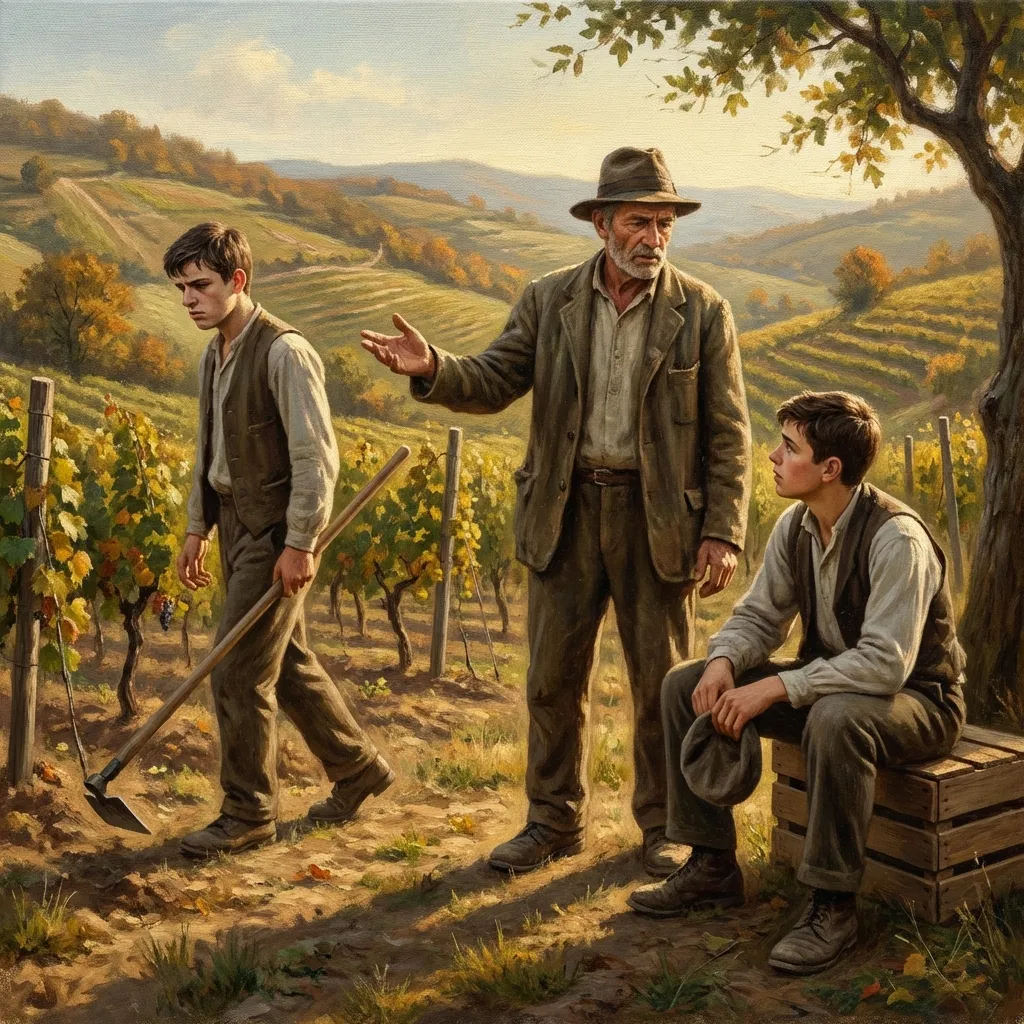
The chief priests and elders had just ambushed Jesus, demanding: "By what authority are you doing these things? And who gave you this authority?" (Matthew 21:23). Having exposed their cowardice regarding John the Baptist, Jesus pressed His advantage with a simple family drama: "What do you think? There was a man who had two sons. He went to the first and said, 'Son, go and work today in the vineyard'" (Matthew 21:28). In the economy of the ancient household, the father's word was absolute. Labor in the terraced family vineyard was not an optional favor; it was a fundamental filial duty.
2. The First Son: Defiant Words, Penitent Feet
The first son's response was shockingly abrupt and disrespectful: "'I will not,' he answered, but later he changed his mind and went" (Matthew 21:29). In Mediterranean honor culture, such an insolent refusal was a public slap in the father's face. Yet as the day wore on, conviction seized his conscience. The Greek text records that he metamelētheis—he experienced deep, agonizing regret over his rebellion. Swallowing his pride, he quietly picked up his pruning hook, walked into the vineyard, and poured out his sweat in faithful labor.
3. The Second Son: Courteous Lip Service, Paralyzed Feet
The father then approached the second son with the identical command: "The son answered, 'I will, sir,' but he did not go" (Matthew 21:30). The second son's language was impeccably polite, addressing his father as kyrie ('lord' or 'sir'). He projected the flawless image of an obedient, devoted son. Yet behind this deferential exterior lurked total apathy. He never lifted a finger, never set foot on the terrace, and never pruned a single vine. His polite words were a hollow camouflage for calculated disobedience.
4. The Inescapable Verdict: Who Did the Will of the Father?
Jesus pinned His interrogators with a straightforward question: "Which of the two did what his father wanted?" The religious leaders had no escape; they answered: "The first." With that single admission, they pronounced their own eternal condemnation. Jesus looked into their eyes and dropped a theological thunderbolt: "Truly I tell you, the tax collectors and the prostitutes are entering the kingdom of God ahead of you" (Matthew 21:31). The most despised moral outcasts in Judea were crossing the threshold of salvation while the temple aristocracy remained stranded outside.
5. John the Baptist as the Dividing Line
Jesus concluded by exposing their chronic spiritual blindness: "For John came to you to show you the way of righteousness, and you did not believe him, but the tax collectors and the prostitutes did. And even after you saw this, you did not repent and believe him" (Matthew 21:32). Tax collectors and harlots had lived in open defiance (saying 'I will not'), but at John's preaching, they broke in repentance and bore the fruit of righteousness. The priests boasted in their religious titles (saying 'I will, sir'), yet when confronted with divine truth, they clung to their self-righteous pride. God is not impressed by pious professions; He honors the broken heart that turns from sin and walks in obedience.
Biblical Keywords & Theological Roots
To repent, regret deeply, experience a change of mind and purpose resulting in altered action.
Child, son; an affectionate term used by the father appealing tenderly for filial obedience in the family vineyard.
To go, depart; actively walking out the command rather than merely professing verbal agreement.
Ancient Near Eastern & Archaeological Context
In ancient Mediterranean patriarchal culture, family honour was paramount. A father possessed absolute authority (*patria potestas*) over his household. For a son to publicly say 'I will not' (*ou thelō*) to his father's direct command was an explosive breach of the Fifth Commandment, bringing public disgrace upon the family in the village square. Conversely, addressing one's father as 'Sir' (*kyrie*) was standard filial piety. Yet in Jesus' assessment, the social scandal of the first son's initial insolence was completely eclipsed and redeemed by his subsequent repentance and sweaty toil, whereas the polished etiquette of the second son masked treacherous, hypocritical disobedience.
🔑 Key Spiritual Takeaways
- Obedience is Measured by Action: True obedience is never validated by polite, pious words, but exclusively by actual, submissive deeds.
- The Miracle of Genuine Repentance: Even the most stubborn, defiant past can be redeemed when a soul genuinely repents (*metamelētheis*) and obeys God.
- The Hypocrisy of Religious Profession: Enthusiastic verbal agreement without personal obedience is an insult to the Father.
- Grace Welcomes the Broken: Those who know their moral failure are far quicker to repent than respectable religionists blinded by self-righteousness.
Support Independent Biblical Research
Did this study bless you? Help support our independent bilingual research and interactive visual Bible tools.
⚡ Fast Facts
- Temple Authority Dispute: Jesus delivered this parable immediately after the chief priests and elders challenged His authority to cleanse the temple (Matthew 21:23-27).
- The Defiant First Son: The first son openly disrespected his father with a blunt 'I will not' (*ou thelō*), but later experienced agonizing regret and went to work.
- The Pious Second Son: The second son replied with polished, honorific respect: 'I go, sir' (*egō, kyrie*), yet never set foot in the vineyard.
- The Scandalous Precedence: Jesus declared that tax collectors and prostitutes (*hoi telōnai kai hai pornai*) were entering the Kingdom of God ahead of the chief priests.
❓ Frequently Asked Questions (FAQs)
Why did Jesus address this parable to the chief priests and elders?
The religious leaders claimed to be God's faithful servants while rejecting John the Baptist's call to repentance and Jesus' divine authority. They were the second son—professing 'Yes, Lord' with their lips while refusing to do the Father's will.
How did tax collectors and prostitutes represent the first son?
Tax collectors and prostitutes initially lived in open, blatant rebellion against God's Law (saying 'I will not' by their sinful lifestyle). However, when John the Baptist preached, they wept, repented, and walked in the path of righteousness, entering the Kingdom ahead of the self-righteous elite.
What is the difference between regret and genuine biblical repentance here?
The Greek term *metamelētheis* here led directly to fruitful action: he changed his mind and went (*apēlthen*). Biblical repentance is not merely an emotional sorrow or intellectual regret; it is a decisive change of direction evidenced by obedience.