Appearing across Matthew 5:14-16, Mark 4:21-25, and Luke 8:16-18, the Parable of the Lamp on a Stand is one of Christ's most foundational visual metaphors. Through the familiar warmth of a humble peasant oil lamp, Jesus defines the essential nature and public responsibility of Christian discipleship, commanding His followers to let the transformative light of the Gospel blaze without shame before a watching world.
1. The Reality of Darkness and the Commission to Shine
In the opening movements of the Sermon on the Mount, Jesus declared to His ragtag band of Galilean disciples: "You are the light of the world. A town built on a hill cannot be hidden" (Matthew 5:14). He did not say 'you ought to be' or 'try your best to be'; He declared that disciples are the light of the world by virtue of their union with Him. The cosmos lies in moral and spiritual darkness, paralyzed by sin, deception, and despair. Believers do not generate native light; like the moon reflecting the sun, we reflect the incandescent glory of Jesus Christ into the dark corners of the earth.
2. The Architecture of the Ancient Galilean Home
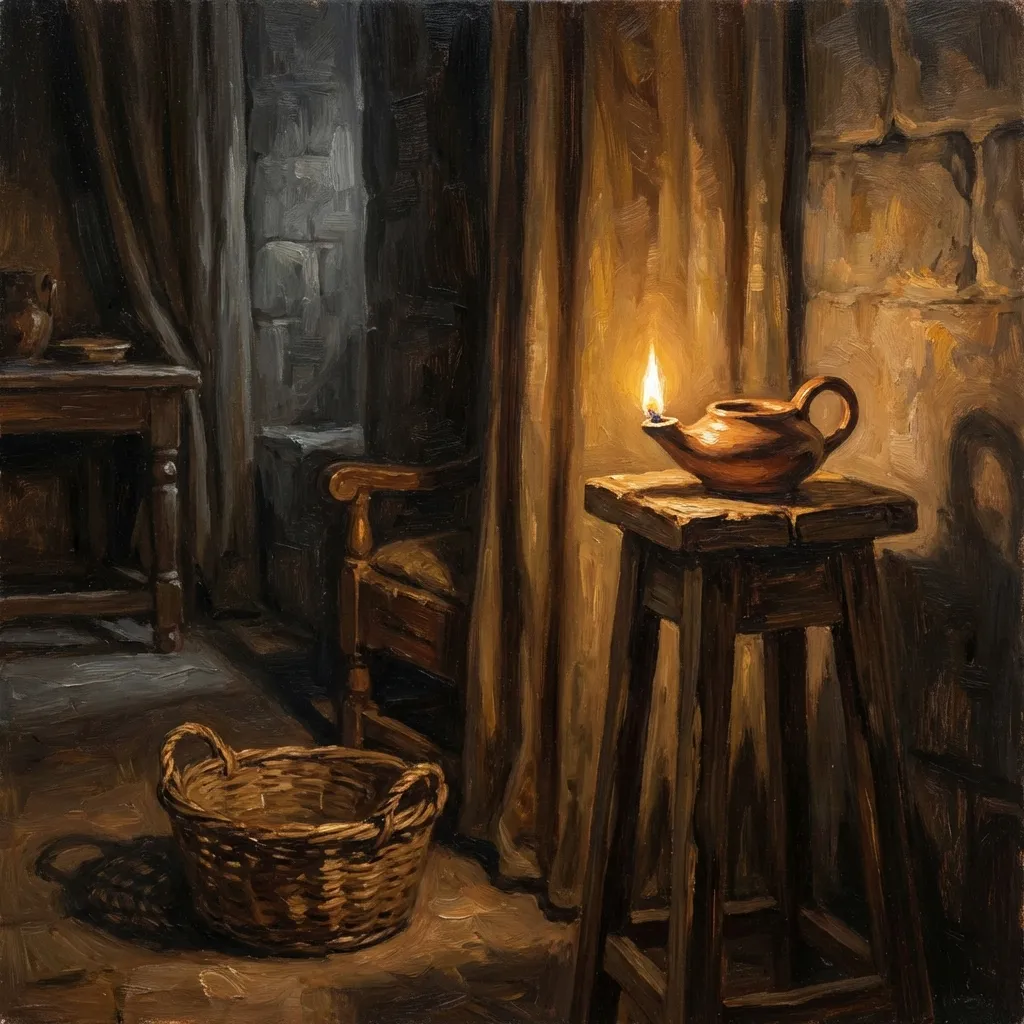
To ground His teaching, Jesus pointed to the domestic realities of His listeners: "Neither do people light a lamp and put it under a bowl. Instead they put it on its stand, and it gives light to everyone in the house" (Matthew 5:15). In 1st century Palestine, village homes were constructed of dark, unhewn basalt stones with packed-earth roofs. Windows were minimal—mere slits beneath the eaves—to keep out dust and desert heat. The interior was shrouded in perpetual twilight. A small terracotta saucer holding olive oil and a flax wick was the sole source of illumination, placed carefully upon a raised stone niche or iron lampstand (lychnia) to illuminate the entire household.
3. The Absurdity of the Concealing Bushel
Jesus exposed the sheer irrationality of spiritual cowardice: Who would light an oil lamp only to immediately cover it with a grain-measuring tub (modios) or shove it beneath a sleeping cot? A wooden bushel tub not only blocked the radiance, but the lack of oxygen quickly smothered the burning flax wick in greasy, choking smoke. Yet millions of professing Christians do precisely this: ignited by the saving grace of God, they promptly conceal their convictions beneath the bushels of social anxiety, professional fear, peer pressure, and worldly compromise, living in functional anonymity.
4. Good Deeds as a Visible Doxology
Christ commanded: "In the same way, let your light shine before others, that they may see your good deeds and glorify your Father in heaven" (Matthew 5:16). The purpose of Christian visibility is radically distinct from Pharisaic exhibitionism. Pharisees performed religious rituals on street corners to be seen and praised by men (Matthew 6:1-5). True Christian light, by contrast, consists of sacrificial, compassionate good deeds that point attention away from the human vessel and direct all praise to the Heavenly Father. Authentic holiness compels even an unbelieving world to acknowledge the beauty of God.
5. The Unveiling of All Secrets
In Luke 8:16-17, Jesus linked the lampstand to eschatological truth: "For there is nothing hidden that will not be disclosed, and nothing concealed that will not be known or brought out into the open." Light has an unstoppable revelatory power. Those who attempt to hide their sins in the dark will find them broadcast before the cosmic throne of God. But those who walk in the light have fellowship with the Father and each other, their lives serving as beacons that guide shipwrecked souls into the safe harbor of eternal grace.
Biblical Keywords & Theological Roots
Lamp, portable oil wick; an earthenware vessel burning olive oil to pierce physical and spiritual darkness.
Lampstand, elevated pedestal; a designated high place allowing light to radiate freely throughout an entire house.
Bushel, peck-measure, grain tub; a wooden or clay tub holding about a peck (8.7 liters), suffocating any flame placed under it.
Ancient Near Eastern & Archaeological Context
In 1st century Galilee, the domestic lamp (*lychnos*) was a small, palm-sized, pinched terracotta saucer filled with olive oil, using a twisted flax wick. Because peasant houses were constructed of dark volcanic basalt or unplastered limestone, the interior was perpetually dim. An elevated central pillar, wooden peg, or stone shelf (*lychnia*) was built into the wall to hold the lamp so its modest glow could illuminate the single room where the family lived and worked. The *modios* was an everyday dry measure tub used for wheat and barley. Hiding a lamp under a bushel or under a sleeping pallet was considered preposterous by every listener.
🔑 Key Spiritual Takeaways
- Light is Designed to Shine: Believers are not called to live in monastic secrecy; the Christian life is intrinsically public, visible, and transformative.
- The Absurdity of Hiding Truth: Suppressing the Gospel beneath the bushels of fear, worldly compromise, or shame violates the very purpose of redemption.
- Reflected Radiance: We possess no native light of our own; we reflect the radiant, uncreated light of Jesus Christ, the True Light of the world.
- Good Works Glorify God: Authentic holiness and compassionate deeds cause even skeptical observers to acknowledge and praise the Heavenly Father.
Support Independent Biblical Research
Did this study bless you? Help support our independent bilingual research and interactive visual Bible tools.
⚡ Fast Facts
- Sermon on the Mount Theme: Jesus introduced this parable in Matthew 5:14-16 immediately after declaring: 'You are the light of the world. A town built on a hill cannot be hidden.'
- Galilean Peasant Architecture: Peasant dwellings in Palestine had no glass windows, only small ventilation slits; keeping an oil lamp burning on a central stone niche was essential for daily life.
- Oxygen Deprivation: Covering a burning terracotta oil lamp with a wooden grain bushel (*modios*) was doubly absurd—it concealed the light and quickly smothered the flame due to lack of oxygen.
- Doxological Purpose: The objective of letting light shine is not human self-promotion, but that observers 'may see your good deeds and glorify your Father in heaven' (Matthew 5:16).
❓ Frequently Asked Questions (FAQs)
What does the 'lamp' and 'light' represent in Jesus' teaching?
The lamp represents both the divine revelation of the Gospel and the believer indwelt by the Holy Spirit. Jesus Himself is the ultimate Light of the World (John 8:12), and believers shine as secondary reflectors of His truth and righteousness in a dark generation (Philippians 2:15).
What are the modern 'bushels' that threaten to conceal Christian witness?
The bushel represents anything that suffocates bold Christian witness: fear of man, cultural intimidation, peer pressure, shame regarding biblical truth, love of comfort, and worldly compromise. When Christians conceal their faith to avoid friction, they place their lamp under a bushel.
How does Luke 8:17 relate to the parable of the lampstand?
In Luke 8:16-17, Jesus adds: 'For there is nothing hidden that will not be disclosed, and nothing concealed that will not be known or brought out into the open.' Light not only illuminates the way of salvation; it will also expose every secret hypocrisy on the Day of Judgment.