The scorching Judean sun was climbing toward mid-morning over the limestone rooftops of Jerusalem. Battered, bruised, and bleeding profusely from the Roman flagellation, Jesus was led out of the Praetorium by a detachment of four execution legionaries under the command of a seasoned Roman centurion. Stripping off the mocking purple robe, the soldiers threw His own coarse wool tunic back over His raw, lacerated shoulders. Across His bleeding neck, they laid the heavy transverse crossbeam—the wooden patibulum, rough-hewn from oak and weighing nearly one hundred pounds. A wooden placard (titulus), coated in white gypsum with letters carved in black detailing His alleged crime, was hung about His neck: 'Jesus of Nazareth, the King of the Jews.'
The grim procession wound through the suffocating, stepped alleyways of the city along the path that history would forever remember as the Via Dolorosa—the Sorrowful Way. Crowds of Passover pilgrims, merchants, and hostile onlookers packed the balconies and doorsteps. Under the crushing physical burden of the crossbeam, having lost massive quantities of blood and having spent the previous night in sleepless agony, Christ's knees buckled. He collapsed onto the jagged stone paving. The soldiers whipped Him to stand, but His human physical strength was completely spent. Fearing that the prisoner might die on the road before the public spectacle of crucifixion could be executed, the centurion grabbed a muscular bystander standing at the city gate: Simon of Cyrene, a North African Jewish pilgrim who had traveled thousands of miles across the Mediterranean to celebrate Passover with his sons Alexander and Rufus. Laying heavy hands on the pilgrim, the legionaries compelled him to take up the heavy wooden beam and carry it behind Jesus.
Large crowds followed, including women who beat their breasts and wailed in vocal mourning. Halting His staggering steps, Jesus turned His bloodstained face toward the weeping daughters of Jerusalem, uttering a solemn prophetic warning: 'Daughters of Jerusalem, do not weep for Me, but weep for yourselves and for your children. For indeed the days are coming in which they will say, 'Blessed are the barren, wombs that never bore, and breasts which never nursed!' Then they will begin to say to the mountains, 'Fall on us!' and to the hills, 'Cover us!' For if they do these things in the green wood, what will be done in the dry?' Christ saw forty years into the future, weeping over the catastrophic Roman siege of AD 70 when Jerusalem would be utterly leveled and her children crushed within her walls.
The Agony of the Nails at Golgotha
Exiting the Gennath Gate through the city wall, the execution squad reached a barren limestone knoll shaped eerily like a human cranium, known in Aramaic as Golgotha—the Place of the Skull (Latin: Calvaria). Adjacent to a bustling trade highway, this prominent rocky platform ensured that every dying criminal was displayed as an object of universal terror and public mockery. Reaching the summit, compassionate Jewish women from a Jerusalem guild offered Jesus a cup of sour wine mingled with bitter myrrh and gall—a merciful narcotic designed to dull the senses. But when Christ tasted it, He refused to drink; He resolved to bear the full, unmitigated weight of divine wrath and physical agony with an undimmed consciousness.
Stripping Him naked to inflict maximum humiliation, the soldiers forced Jesus flat upon His lacerated back against the wood. Two executioners pinned His arms against the crossbeam. Placing a heavy, seven-inch square iron spike over the flexor retinaculum of His wrist—between the radial and carpal bones—a soldier swung a heavy iron hammer. With a sickening, metallic crunch, the spike crushed through flesh, cartilage, and the sensitive median nerve, anchoring the King of Glory to the oak. A searing explosion of lightning pain shot through His arms and chest. Then, stretching the other arm, they drove the second spike. Hoisting the patibulum with ropes, they dropped the crossbeam into the notch of the permanent vertical post (stipes). Placing His feet together over the lower wood, they drove a massive spike through both heels into the timber. It was the third hour—nine o'clock in the morning.
As the iron spikes tore His flesh, Jesus did not curse His tormentors. Instead, from His parched, bleeding lips came the first of His Seven Last Words: 'Father, forgive them, for they do not know what they do.' He was actively fulfilling Isaiah's ancient oracle: 'He bore the sin of many, and made intercession for the transgressors.' Beside Him, two violent insurrectionists were crucified, one on His right hand and the other on His left, with Jesus in the center like the king of criminals.
The Seven Sayings and the Penitent Thief
Below the crosses, the four Roman executioners sat upon the rocky ground, dividing Christ's earthly garments into four shares. When they reached His seamless inner tunic (chitōn), woven in one continuous piece from the top, they agreed not to tear it, but cast lots for it with dice—fulfilling Psalm 22:18 word for word: 'They divide My garments among them, and for My clothing they cast lots.' Meanwhile, the members of the Sanhedrin, priests, and passersby shook their heads in gloating mockery: 'You who destroy the temple and build it in three days, save Yourself! If You are the Son of God, come down from the cross!' The chief priests sneered: 'He saved others; Himself He cannot save! If He is the King of Israel, let Him now come down from the cross, and we will believe Him!' They did not understand the divine paradox: precisely because He was saving others, He could not save Himself.
Even the two crucified brigands hurled insults at Him. But as the agonizing hours dragged on, one of the thieves watched the majesty, silence, and prayer of the dying Messiah. Conviction shattered his hardened heart. Rebuking his fellow criminal, the repentant thief cried: 'Do you not even fear God, seeing you are under the same condemnation? And we indeed justly, for we receive the due reward of our deeds; but this Man has done nothing wrong!' Turning his tortured head toward Christ, he uttered the humble prayer of pure faith: 'Lord, remember me when You come into Your kingdom.' Jesus turned His eyes upon the dying outcast and spoke the second word—the glorious promise of instant salvation: 'Truly I say to you, today you will be with Me in Paradise.'
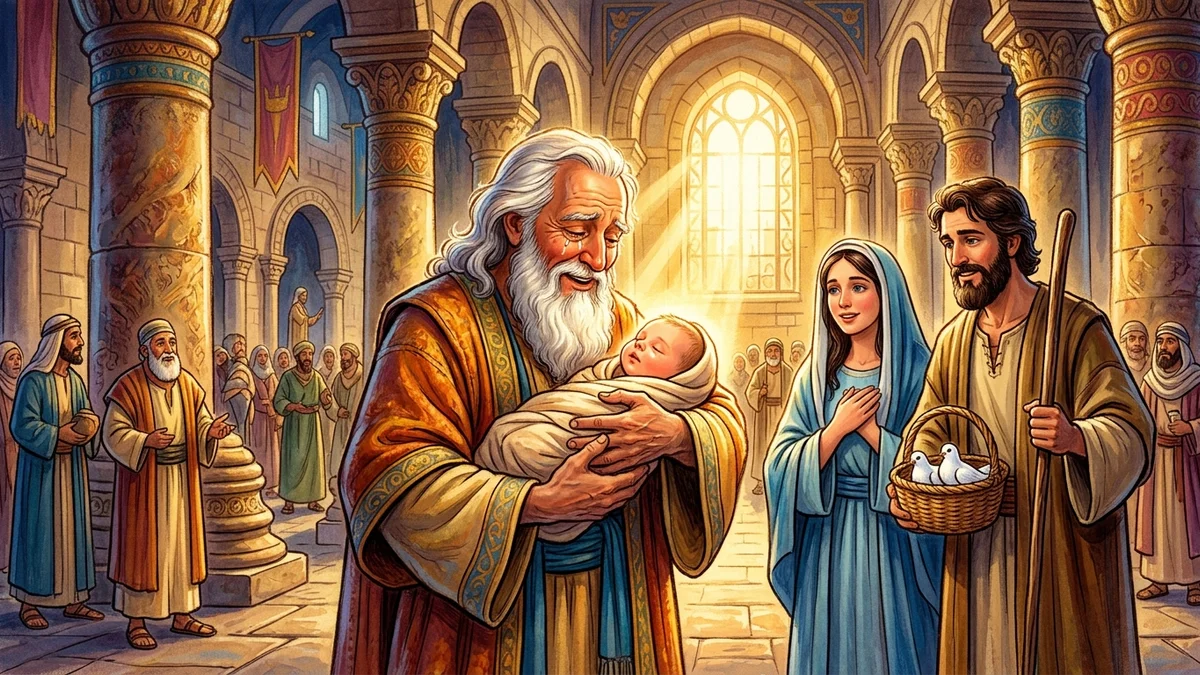
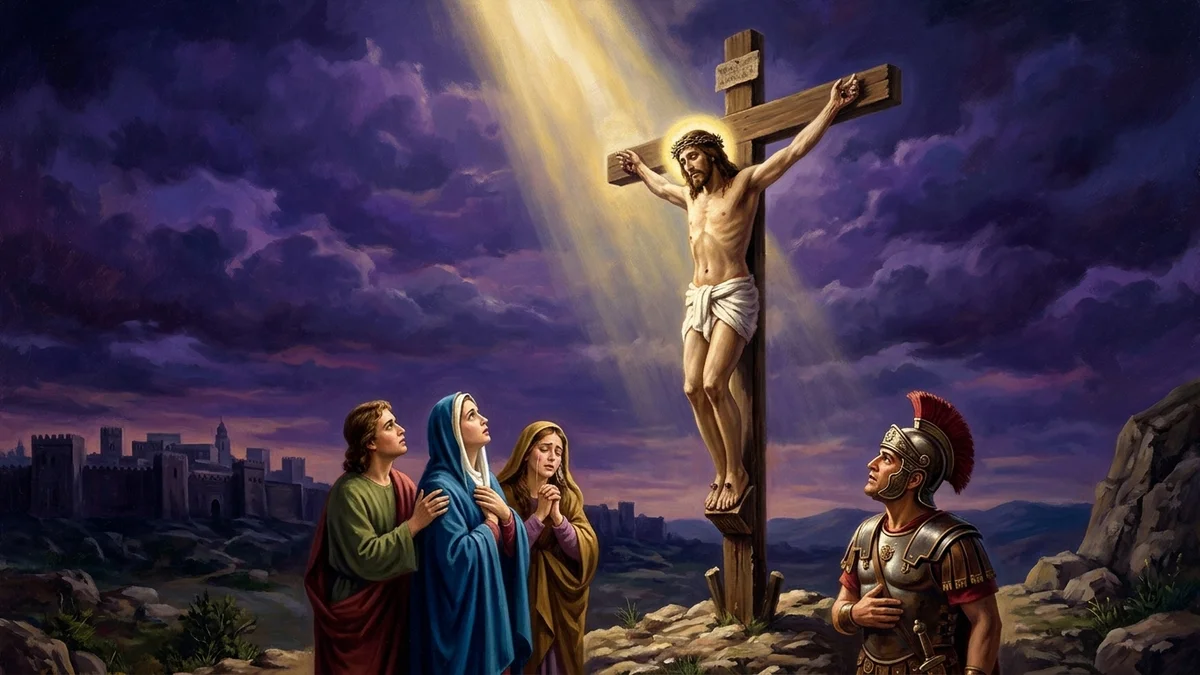
Standing near the foot of the cross in silent, heart-shattering grief were Mary the mother of Jesus, her sister, Mary the wife of Clopas, Mary Magdalene, and the young Apostle John. Seeing His mother weeping in the dust, the sword foretold by aged Simeon thirty-three years earlier pierced Mary's soul. In tender filial devotion, Jesus spoke His third word, uniting His mother with His beloved disciple: 'Woman, behold your son!' Then to John: 'Behold your mother!' From that hour, John took Mary into his own home.
The Cosmic Darkness and the Cry of Dereliction
At the sixth hour—high noon, when the sun was normally at its zenith—a terrifying, unnatural darkness fell over the entire land. The sky turned from azure blue to deep, pitch-black midnight, as though the cosmos were donning mourning sackcloth. Secular historians Thallus and Phlegon recorded that across the eastern Mediterranean, stars were visible in the sky and great earthquakes struck. For three suffocating hours, from noon until three o'clock, absolute, supernatural silence gripped Calvary. In that pitch-black darkness, the eternal Son of God hung between heaven and earth as the lightning rod of divine justice, drinking the terrifying cup of wrath down to the bitter dregs.
At the ninth hour (three o'clock in the afternoon), the exact hour when the evening sacrifice was being slaughtered in the Temple, Jesus shattered the oppressive silence with a piercing, thunderous cry in His native Aramaic: 'Eloi, Eloi, lama sabachthani?' which translates: 'My God, My God, why have You forsaken Me?' It was the fourth word—the cry of absolute dereliction. In that cosmic abyss, the spotless Lamb of God was made sin for us (2 Cor 5:21). The holy Father, who cannot look upon iniquity, turned His face away. Christ endured the full, concentrated horror of hell—absolute separation from the warmth of divine communion—so that fallen humanity might never be forsaken.
Knowing that all things were now accomplished, and that the Scripture might be fulfilled (Psalm 69:21), Jesus uttered the fifth word: 'I thirst.' A Roman soldier filled a sponge with sour wine (oxos), put it on a stalk of hyssop, and held it to His parched, cracked lips. Tasting the vinegar, the divine work of redemption was complete. Drawing a deep breath into His tortured lungs, Christ raised His head toward heaven. With a loud, triumphant roar that shook the rocky hillside, He shouted the sixth word: 'TETELESTAI!'—'It is finished!' In first-century commercial life, tetelestai was stamped across debt certificates to declare 'Paid in full!' The cosmic debt of human sin was wiped out forever. Then, bowing His head in calm majesty, Jesus spoke His seventh and final word: 'Father, into Your hands I commit My spirit.' Having said this, He voluntarily breathed His last.
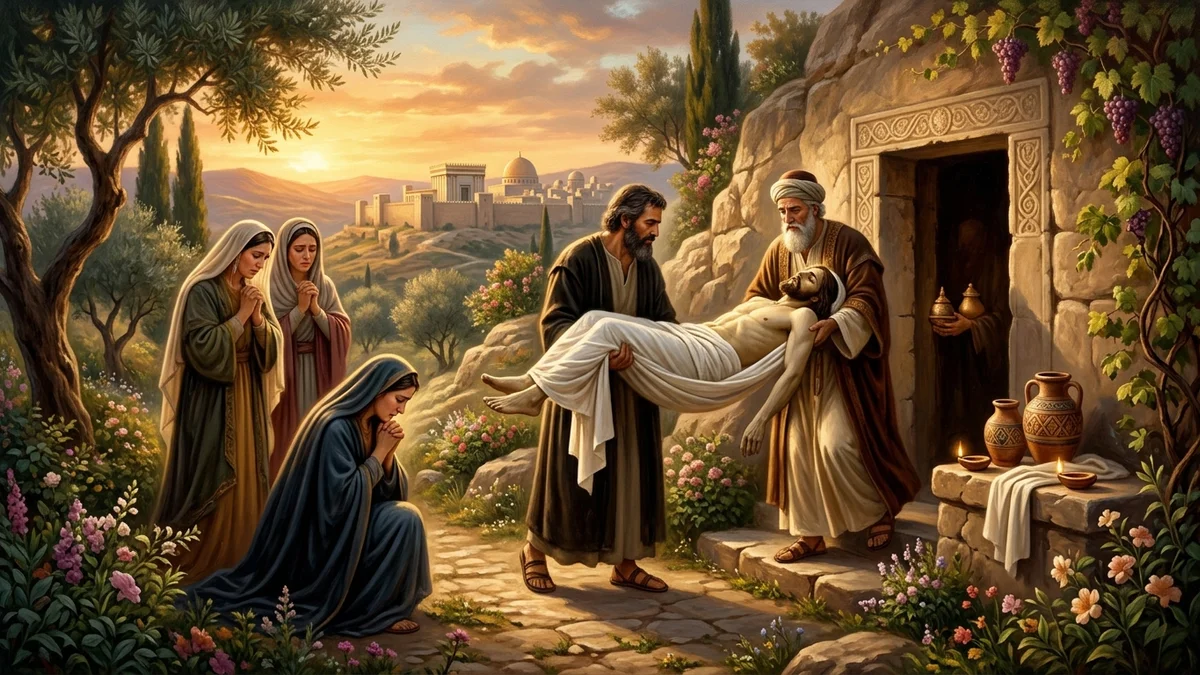
The Torn Veil and the Royal Garden Tomb
At the very instant Christ expired, the earth convulsed violently. A massive earthquake tore through Jerusalem, splitting granite boulders and opening ancient limestone burial sepulchers. In the Temple, two miles away, where priests were conducting the evening oblation, the colossal sixty-foot-high, handbreadth-thick sacred veil separating the Holy Place from the Holy of Holies was violently torn in two from top to bottom by invisible, omnipotent hands. The cosmic barrier was demolished; through the broken body of Christ, the way into the very presence of God was forever opened to all believers. Standing directly opposite the cross, watching how Christ cried out and breathed His last, the battle-hardened Roman centurion fell to his knees in sacred dread, confessing: 'Truly this was the Son of God!'
Because the Jewish Sabbath began at sunset (6:00 PM), and the law of Deuteronomy 21:23 forbade corpses remaining on a tree overnight, Jewish leaders asked Pilate to break the legs of the crucified men (crurifragium) to prevent them from pushing up to breathe, inducing rapid suffocation. Roman soldiers smashed the legs of the two thieves with iron clubs. But coming to Jesus, they saw that He was already dead. In fulfillment of the Passover Scripture—'Not a bone of Him shall be broken'—they left His legs untouched. However, one of the soldiers thrust a broad iron lance (lonchē) deep into His thoracic cavity, piercing His pericardium and heart. Immediately, a separated stream of dark blood and clear pericardial serum ('water') gushed forth, establishing irreproachable biological confirmation of death.
As the shadows of evening lengthened, Joseph of Arimathea, a wealthy and respected member of the Sanhedrin who had secretly followed Christ, cast aside all fear. Boldly entering the Praetorium, he asked Pilate for the body of Jesus. Astonished that He was already dead, Pilate summoned the centurion to verify the fact, then granted the corpse to Joseph. Nicodemus, the Pharisee who had first visited Jesus by night, joined Joseph, bringing an extravagant royal gift: one hundred Roman pounds (approx. 75 lbs / 34 kg) of costly myrrh and aloes.
With tender, weeping reverence, the two noble counselors gently pulled the iron spikes from His hands and feet, lowering the limp, sacred body from the timber. Carrying Him into an adjacent private garden belonging to Joseph, they washed the blood, sweat, and spit from His battered flesh. They wrapped Him in clean, wide strips of fine linen (sindōn), layering the fabric with the fragrant spices according to Jewish royal burial customs. They laid Him in Joseph's newly carved family tomb—a fresh sepulcher hewn out of solid limestone bedrock wherein no man had ever lain. Rolling a massive circular stone across the mouth of the tomb, the two counselors departed into the gathering dusk. Sitting opposite the tomb in the twilight, Mary Magdalene and Mary the mother of Joses kept silent, weeping vigil. The following morning, fearful that the disciples might steal the body and fabricate a resurrection, the Sanhedrin secured Pilate's permission to post a Roman military guard and affix the official imperial seal upon the stone. The Son of God was dead, buried, and guarded by the might of Rome; yet inside the cold stone tomb, the stage was set for the greatest dawn in human history.
Ancient Near Eastern & Archaeological Context
Crucifixion was the most excruciating, shameful form of execution ever devised in human history. Perfected by the Romans, it was reserved exclusively for slaves, insurgents, and the lowest criminals, designed to maximize agony while prolonging death over days. Roman citizens were legally exempt from crucifixion by the Lex Julia. The execution site of Golgotha sat immediately outside the Gennath Gate, adjacent to a major commercial thoroughfare so that passersby could mock the victims and witness the ruthless Pax Romana. Condemned victims were forced to carry the patibulum (the horizontal crossbeam weighing 75 to 100 pounds) through crowded streets. Upon reaching the site, victims were stripped naked to inflict maximum humiliation. Square iron spikes seven to nine inches long were driven through the wrists—between the radius and carpals, severing the median nerve—and through the calcaneus (heel bones). Death occurred primarily through progressive asphyxiation: to inhale, the victim was forced to push upward on the spiked feet and pull with lacerated wrists, sending searing lightning bolts of pain through the nervous system. When exhaustion set in, carbon dioxide built up in the bloodstream, triggering suffocation, hypovolemic shock, and cardiac arrest. Deuteronomy 21:23 pronounced an irrevocable theological curse: 'Cursed is everyone who hangs on a tree.' On Calvary, Christ absorbed the total weight of this curse to redeem fallen humanity.
Practical Discipleship & Spiritual Application
- The Cosmic Collision of Divine Justice and Boundless Mercy: At Golgotha, God did not overlook human sin nor abandon His holy law; rather, Christ willingly stood in our place, absorbing the full weight of judgment so that we might receive unconditional grace.
- Grace for the Dying and Care for the Broken: Even amidst agonizing physical suffocation, Jesus' thoughts remained outward—praying forgiveness for His crucifiers, granting immediate paradise to the repentant thief, and securing tender shelter for His grieving mother.
- The Finality of the Finished Work: In shouting 'Tetelestai!' ('It is finished!'), Christ declared that the ledger of human guilt was wiped completely clean; no human ritual or merit can add to the all-sufficient, perfect atonement of Calvary.
- Bold Discipleship in Darkest Seasons: While the prominent disciples scattered in hiding, secret disciples like Joseph of Arimathea and Nicodemus openly staked their lives and reputations to honor the crucified King; faith shines most brightly when cultural hostility is at its zenith.
Support Independent Biblical Research
Did this study bless you? Help support our independent bilingual research and interactive visual Bible tools.
⚡ Fast Facts
- The Supernatural Three-Hour Darkness: The darkness from 12:00 PM to 3:00 PM could not have been an astronomical solar eclipse, because Passover always falls on a full moon when the moon is opposite the sun; early secular historians Thallus and Phlegon recorded this cosmic darkness and concurrent earthquakes across the Mediterranean basin
- The Engineering of the Temple Veil: Early Jewish rabbinic records (Shekalim VIII) attest that the veil separating the Holy Place from the Holy of Holies was sixty feet high, thirty feet wide, and woven of seventy-two twisted plaits of Babylonian purple, scarlet, and blue wool—so thick that two teams of horses pulling in opposite directions could not tear it; its tearing from top to bottom signaled divine, omnipotent destruction of the barrier between God and man
- The Royal Hundred Pounds of Spices: Nicodemus provided 'a mixture of myrrh and aloes, about a hundred pounds' (John 19:39)—roughly 75 modern pounds (34 kg) of rare, exorbitant Himalayan spices, an extravagant quantity fit exclusively for the burial of royalty, fulfilling Isaiah 53:9 that He would be with the rich in His death
- The Significance of 'Tetelestai' (It Is Finished): In first-century Greco-Roman commerce, the Greek verb *tetelestai* (perfect passive of teleō) was stamped across commercial receipts and tax debt certificates to signify 'Paid in full'; on the cross, Christ declared the cosmic debt of human sin completely and permanently eradicated
❓ Frequently Asked Questions (FAQs)
What did Jesus mean when He cried out: 'Eli, Eli, lama sabachthani'?
In Matthew 27:46, Jesus cried out in Aramaic the opening verse of Psalm 22: 'My God, My God, why have You forsaken Me?' This was not a cry of theological despair or a failure of faith; it was the raw, agonizing reality of the cross. For the only time in the Gospels, Jesus addressed the Father as 'My God' rather than 'Father' (Abba), because at that cosmic moment, the sin of the world was imputed to Him (2 Cor 5:21), and the holy Father turned His face away as divine justice fell upon the sacrificial Lamb. Furthermore, by citing Psalm 22, Jesus pointed observers to the entire prophetic psalm, which graphically foretold the piercing of His hands and feet, the dividing of His garments, and culminated in the final proclamation of global salvation to all nations.
Why did blood and water flow from Jesus' side when the Roman soldier pierced Him?
John 19:34 records that when a soldier pierced Christ's thoracic cavity with a lance (lonchē), 'immediately blood and water came out.' Medically, intense physical trauma, asphyxiation, and profound psychological distress can cause hypovolemic shock, cardiac rupture, or congestive heart failure, resulting in pericardial effusion (fluid accumulating around the heart) and hemothorax (blood pooling in the pleural cavity). When the spear pierced the heart, the separated clear pericardial serum ('water') and concentrated red blood cells gushed forth, confirming undeniable biological death. Theologically, as the Apostle John later reflected (1 John 5:6), the blood represents our judicial atonement and redemption, while the water symbolizes our spiritual cleansing and regeneration.
Who were Joseph of Arimathea and Nicodemus, and why was their intervention so significant?
Joseph of Arimathea and Nicodemus were prominent, wealthy members of the Great Sanhedrin who had secretly believed in Jesus but hid their allegiance for fear of social and political ostracization. Following Christ's public execution, while the eleven apostles remained in hiding behind locked doors, these two aristocratic leaders experienced radical courage. Joseph boldly entered Pilate's praetorium to demand the body of Jesus—a dangerous request that could associate him with a condemned rebel. Together, they tenderly washed Christ's lacerated flesh, embalmed Him with 100 pounds of royal spices, and laid Him in Joseph's own unused rock-cut family tomb, ensuring the Savior received an honorable, royal burial in direct fulfillment of Isaiah 53:9.