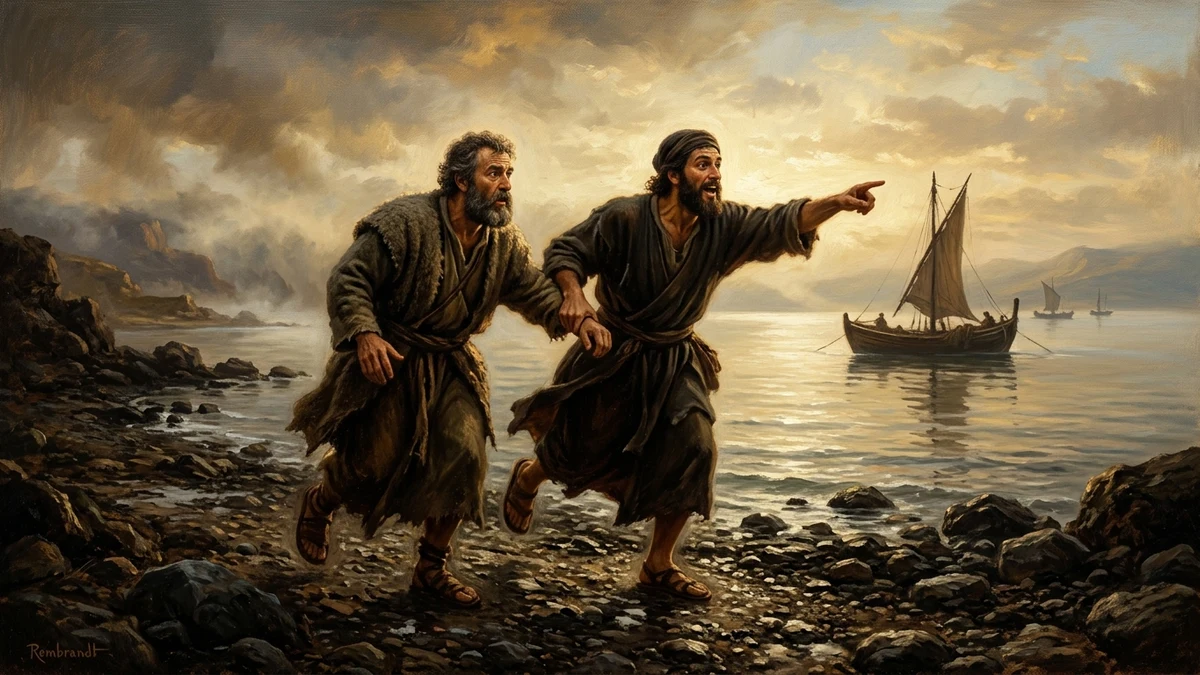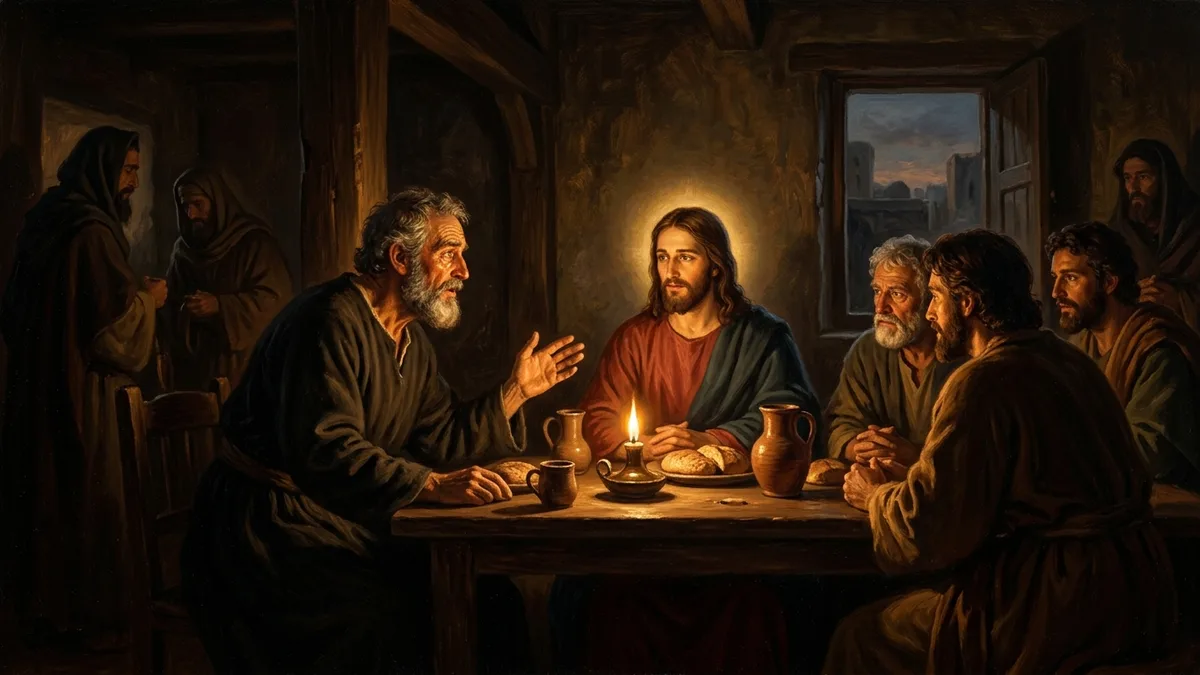
Among the twelve men handpicked by Jesus Christ to turn the ancient world upside down, few have been more thoroughly shrouded in historical obscurity—yet more radiantly faithful in apostolic duty—than the disciple known to Scripture as Thaddaeus, Lebbaeus, and Judas the son of James. In every apostolic catalog preserved in the New Testament, his name appears in the final quartet of disciples (Matthew 10:3; Mark 3:18; Luke 6:16; Acts 1:13). While secular historians frequently overlook those who do not command empires or author vast libraries, heaven weighs greatness by steadfast devotion. Thaddaeus was a man of courageous tenderness, a seeker of Christ's inward revelation, and a tireless pioneer who carried the torch of the Gospel past the borders of the Roman Empire into the ancient kingdoms of Mesopotamia, Armenia, and Persia.
1. The Mystery of the Triple Name: Thaddaeus, Lebbaeus, and Judas
A careful reading of the four New Testament lists of the Twelve Apostles reveals what seems at first glance to be a textual discrepancy, but is in reality an exquisite reflection of first-century Semitic naming customs:
- Matthew 10:3: "Lebbaeus, whose surname was Thaddaeus" (in early Byzantine text-types) or simply "Thaddaeus".
- Mark 3:18: "Thaddaeus".
- Luke 6:16: "Judas the brother [or son] of James" (Greek: Ioudas Iakobou).
- Acts 1:13: "Judas the brother [or son] of James".
Why did this single apostle possess three distinct names? In first-century Judea and Galilee, Jewish men commonly bore a formal Hebrew birth name, a patronymic linking them to their father, and an informal Aramaic surname or nickname describing their character.
His birth name was Judas (Hebrew: Yehudah, meaning "Praise" or "Jehovah is praised"). It was one of the most noble, beloved names in Israelite history, commemorating the royal tribe of King David and the Maccabean freedom fighters. However, after the dreadful night in Gethsemane when Judas Iscariot betrayed the Son of God with a deceitful kiss, the name "Judas" became permanently associated with treachery, greed, and perdition. To shield this righteous apostle from perpetual confusion with the traitor, the Evangelists Matthew and Mark deliberately referred to him by his affectionate family surnames: Thaddaeus and Lebbaeus.
The name Thaddaeus is derived from the Aramaic root thad, which refers to the maternal breast or chest, signifying a cherished "child of the heart" or "nursing child." It connotes deep affection, tender warmth, and gentle devotion. The alternate surname Lebbaeus derives directly from the Hebrew word lev, meaning "heart." Thus, both nicknames converge upon the very same moral quality: Thaddaeus was known across the apostolic band as "the man of heart"—a disciple characterized by courage, compassionate warmth, and unshakeable loyalty.
2. The Upper Room: Probing the Mystery of Divine Manifestation (John 14:22)
While Thaddaeus walked quietly beside the Master through the dusty roads of Judea, Galilee, and Perea for three full years, the Holy Spirit selected one monumental moment during the Last Supper to unveil the theological heart of this apostle. In John 14, in the shadow of the cross, Jesus was preparing His disciples for His departure, promising the gift of the Holy Spirit and declaring that anyone who loves Him will be loved by the Father.
Then, in John 14:22, Scripture records his singular, historic voice:
"Judas saith unto him, not Iscariot, Lord, how is it that thou wilt manifest thyself unto us, and not unto the world?" — John 14:22
Notice how the Evangelist John carefully inserts the parenthetical clarification: "not Iscariot." Even decades later when John penned his Gospel in Ephesus, the horror of Iscariot's betrayal remained so fresh that John took meticulous pains to ensure the church would never mistake this holy seeker for the son of perdition.
Thaddaeus' question was profound and thoroughly Jewish. Like the rest of the Twelve, Thaddaeus had grown up under the heavy boot of Roman oppression. He anticipated the day when the promised Messiah would pull back the veil of heaven, descend in public imperial majesty, shatter the legions of Rome, and establish a visible worldwide kingdom from David's throne in Jerusalem. He could not comprehend how the King of kings could manifest Himself privately to a handful of uneducated Galilean fishermen while keeping His glory concealed from the ruling empires of the earth.
Jesus responded with one of the most sublime theological revelations in all of Scripture:
"Jesus answered and said unto him, If a man love me, he will keep my words: and my Father will love him, and we will come unto him, and make our abode with him." — John 14:23
The Lord gently elevated Thaddaeus from a political paradigm to a spiritual reality. The Kingdom of God does not advance through military parades, geopolitical conquest, or earthly spectacle. The world in its spiritual blindness cannot receive or comprehend divine glory because it lacks love and obedience. True manifestation (Greek: emphanizo) is an interior communion: the Triune God makes His permanent spiritual sanctuary inside the surrendered human heart that loves Christ and obeys His Word. Thaddaeus became the recipient of this foundational Christian doctrine of the indwelling presence of God.
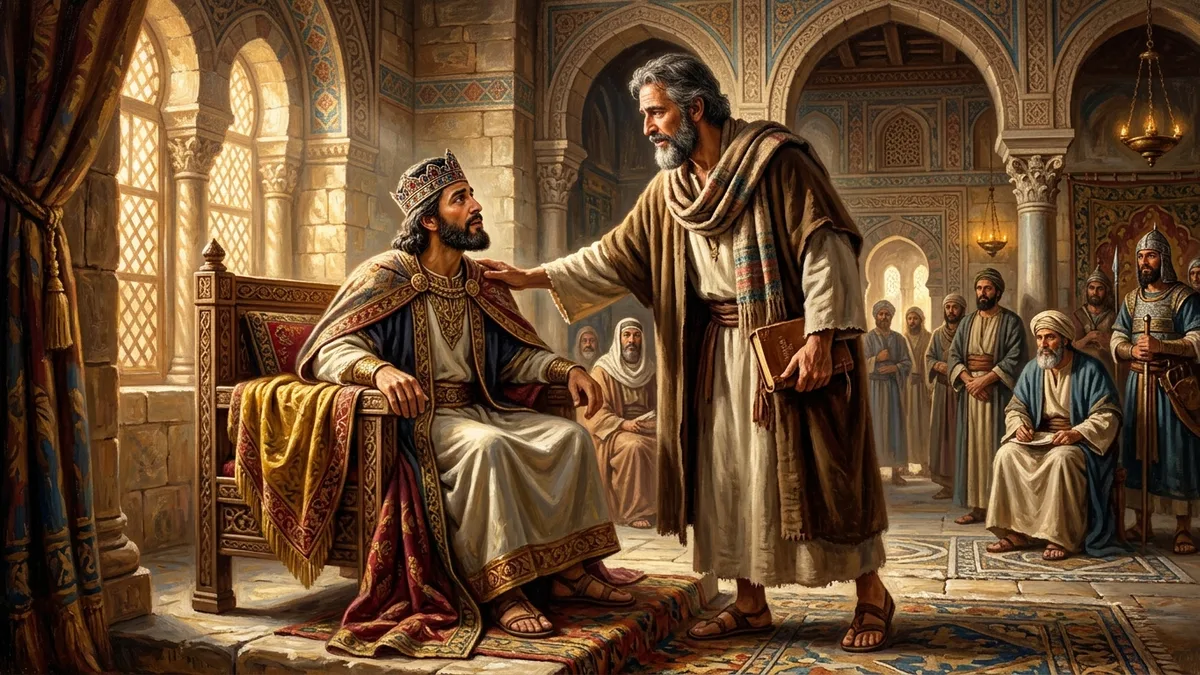
Apostolic Pioneer of the East: Apostle Thaddaeus proclaiming the resurrected Christ in the ancient Kingdom of Edessa and the vast territories of Mesopotamia.
3. Beyond Rome's Borders: The Mission to Edessa and the Kingdom of Osroene
Following the Day of Pentecost, when the Holy Spirit descended like rushing wind and tongues of fire (Acts 2), Thaddaeus was transformed from a quiet inquirer into a bold missionary herald. While Peter and Paul laboured extensively within the Roman Empire, ancient church tradition uniformly associates Thaddaeus with the great eastward expansion of the Christian faith.
One of the most remarkable historical records regarding Thaddaeus is preserved by the fourth-century church historian Eusebius of Caesarea in his monumental Ecclesiastical History (Book 1, Chapter 13). Eusebius discovered and translated official public archives written in Syriac from the royal library of Edessa (modern Şanlıurfa, Turkey), the capital of the kingdom of Osroene situated along the Upper Euphrates River.
According to these ancient archives, King Abgar V of Edessa was afflicted with an incurable, debilitating disease. Having heard reports of the wondrous miracles performed by Jesus of Nazareth in Judea, Abgar sent an imperial courier bearing a letter to Jesus, imploring Him to visit Edessa and heal him. Jesus sent back a reply promising that after His ascension into heaven, He would send one of His disciples to bring healing and eternal life to the king and his household.
Following the resurrection, the apostle Thomas dispatched Thaddaeus (known in Syriac records as Mar Addai) to the city of Edessa. Arriving in humility, Thaddaeus stayed at the home of a Jewish merchant named Tobias. As reports of miraculous healings spread throughout the city, King Abgar summoned the apostle to the royal palace.
When Thaddaeus entered the throne room, the king beheld a supernatural, heavenly radiance upon the apostle's countenance. Thaddaeus placed his hands upon the suffering monarch in the name of Jesus Christ, and instantly the disease vanished completely from Abgar's flesh. King Abgar cried out in faith, asking to know the God who possessed such power.
Thaddaeus seized the moment not to accept earthly rewards or gold, but to preach the glorious Gospel of Jesus Christ: His incarnation, His crucifixion, His descent into Hades, His triumphant resurrection, and His ascension to the right hand of the Father. King Abgar, his royal household, and vast multitudes of the citizens of Edessa renounced their pagan idols and were baptized in the name of the Father, the Son, and the Holy Spirit. Edessa became celebrated in early Christian antiquity as one of the first sovereign territories beyond Roman jurisdiction to embrace the Christian faith, laying the bedrock for the ancient Syriac Church of the East.
4. Missionary Labours in Mesopotamia, Armenia, and Persia
Thaddaeus did not remain in the comfortable security of a friendly palace. Compelled by the Great Commission (Matthew 28:19–20), he pressed further east into the dangerous pagan wilderness. Alongside Bartholomew, Thaddaeus is revered as one of the twin patron apostles of Armenia. Historical traditions preserved by Moses of Chorene record that Thaddaeus preached throughout the mountainous valleys of Armenia, establishing Christian assemblies and suffering intense persecution from Zoroastrian and pagan rulers.
In his later missionary journeys, Thaddaeus formed an apostolic partnership with his fellow disciple, Simon the Zealot. Together, this unlikely pair—one a former Jewish freedom fighter and the other a gentle man of the heart—traversed the rugged plateaus of Mesopotamia and the vast expanses of the Parthian (Persian) Empire, including regions comprising modern-day Iraq and Iran.
In territory dominated by Persian magi, sun-worshippers, and occult priesthoods, Simon and Thaddaeus confronted demonic bondage with the miraculous power of the Holy Spirit. Blind eyes were opened, lepers were cleansed, and thousands of pagan worshippers abandoned their sacred fires to bow before the crucified and risen Lord Jesus Christ.
5. Martyrdom and Eternal Legacy
The fierce success of the Gospel provoked violent resistance from the entrenched pagan priesthood. Ancient martyrologies record that while ministering in the Persian city of Suanir (or, according to other Eastern accounts, in the coastal Phoenician territory of Beirut), local sorcerers and idolaters incited a mob against the apostles.
Arrested and dragged before pagan altars, Simon and Thaddaeus were commanded to offer sacrifice to idols of the sun and moon. Both apostles boldly refused, declaring that their lives belonged entirely to Jesus Christ, the Creator of the heavens and the earth.
The frenzied mob fell upon them with savage brutality. While Simon the Zealot was sawn asunder, Thaddaeus was beaten relentlessly with wooden clubs and cleaved with a halberd (a heavy battle-axe mounted on a pole). Bloodied, bruised, and broken, the gentle apostle fell to his knees, praying forgiveness over his executioners before breathing his last breath.
Thaddaeus finished his earthly race as a triumphant martyr. He had lived in the shadow of a notorious name, yet he redeemed it through pure, sacrificial love. Today, across centuries of church history, Thaddaeus is remembered as a patron of those who face desperate, difficult situations—a reminder that no servant is too obscure, no frontier is too distant, and no heart is too small to be filled with the everlasting glory of Jesus Christ!
Biblical Keywords & Theological Roots
Thaddaeus; derived from Aramaic 'tad' (breast, nursing child) or Hebrew 'todah' (praise), signifying a warm-hearted, beloved son.
Lebbaeus; derived from Hebrew 'lev' (heart), signifying a man of courage, deep compassion, and earnest fidelity.
Judas of James; meaning 'Jehovah leads' or 'praise to God', distinguished from Iscariot by his father's name.
To manifest, disclose clearly, reveal inwardly and intimately, make visible to spiritual sight.
Unutterable, hidden from the profane world, sacred mysteries revealed only to consecrated hearts.
Ancient Near Eastern & Archaeological Context
Thaddaeus hailed from Galilee, possessing deep familial ties within the covenant community of Israel. While early Roman society evaluated leaders through public oratory and military triumph, the early apostolic band contained men of quiet interior depth who guarded the oral teachings of Christ. Historical traditions preserved by Eusebius of Caesarea and the Syrian Doctrine of Addai record that following the dispersion of the apostles after Pentecost, Thaddaeus traversed northern Syria into Mesopotamia. He arrived in the ancient Kingdom of Osroene at its capital Edessa (modern-day Urfa in southeast Turkey), bringing the gospel to King Abgar V. Through miraculous healings and Christ-centered proclamation, Edessa became one of the very first kingdoms to welcome the Christian faith. From Edessa, Thaddaeus pressed eastward into the Parthian Empire, ministering alongside Simon the Zealot across modern Iraq and Iran until their martyrdom under pagan priests.
Practical Discipleship & Spiritual Application
- Transcending a Tainted Name: Though sharing the name Judas with history's most infamous traitor, Thaddaeus remained unswervingly pure. Your identity is defined by your personal walk with Christ, not by the failures of others who bear your name.
- Seeking Inward Communion Over Public Spectacle: Like Thaddaeus at the Last Supper, learn to cherish Christ's personal, quiet inward manifestation in your heart rather than seeking worldly recognition.
- Faithfulness in Difficult Mission Fields: Leaving behind the familiar towns of Galilee, Thaddaeus ventured into pagan Mesopotamia and Persia. True disciples follow the Lord into hostile frontiers without counting the earthly cost.
- Partnership in Kingdom Labor: Ministering faithfully alongside Simon the Zealot, Thaddaeus demonstrated the power of humble brotherhood. God accomplishes great eternal victories when servants labor in unified, unselfish fellowship.
Support Independent Biblical Research
Did this study bless you? Help support our independent bilingual research and interactive visual Bible tools.
⚡ Fast Facts
- The Triple Name: Known as 'Thaddaeus' ('courageous heart' or 'breast child') in Matthew and Mark, 'Lebbaeus' ('man of heart') in early manuscripts, and 'Judas of James' in Luke and Acts to protect him from confusion with Judas Iscariot.
- The Crucial Upper Room Question: In John 14:22, Thaddaeus uttered the famous theological inquiry: 'Lord, how is it that you will manifest yourself to us, and not unto the world?'
- The Apostolic Mission to Edessa: Early Syriac and patristic records (Eusebius, Ecclesiastical History 1.13) document that Thaddaeus (Addai) was sent to King Abgar V of Edessa, establishing the earliest Christian church beyond the Roman border.
- Martyred with Simon the Zealot: Ancient martyrologies record that Thaddaeus joined Simon the Zealot in evangelizing Persia and Mesopotamia, where he was martyred by being beaten to death with halberds or clubs in Beirut (or Suanir).
❓ Frequently Asked Questions (FAQs)
First-century Semitic culture frequently employed multiple names: a formal Hebrew patronymic ('Judas son of James'), a familiar Aramaic surname ('Thaddaeus', derived from 'thad' meaning breast or beloved child), and a Latinized or Greek epithet ('Lebbaeus', derived from the Hebrew 'lev' meaning heart). Additionally, gospel writers like Matthew and Mark purposely emphasized the names Thaddaeus and Lebbaeus to spare this faithful disciple the infamy of being confused with Judas Iscariot, the traitor.
Thaddaeus still harbored the prevailing Jewish expectation of a political, visible Messiah who would unveil His imperial glory before the entire cosmos to shatter Caesar's legions. Jesus answered him by defining the true nature of the Kingdom of God: the Messiah does not manifest Himself through political theatrics to a rebellious world, but through the Holy Spirit's indwelling presence in the hearts of those who love Him and obey His word (John 14:23).
Biblical scholars differentiate between Jude the Apostle (Judas son of James, Luke 6:16) and Jude the brother of the Lord (Jude 1:1; Matthew 13:55). The author of the canonical Epistle of Jude specifically identifies himself as 'the servant of Jesus Christ, and brother of James' (Jude 1:1) and distinguishes himself from the company of the Twelve Apostles in Jude 1:17. Thus, the Epistle was authored by Jesus' half-brother, while Thaddaeus laboured as the apostolic missionary of the Twelve.