Along the freshwater shores of the Sea of Galilee, where fierce downdraft winds suddenly whip the tranquil surface into white-crested tempests, lived an energetic, outspoken fisherman named Simon bar-Jonah. With sun-bleached linen tunics, calloused hands hardened by hemp nets, and a volatile temperament quick to speak before thinking, Simon seemed an improbable candidate to spearhead a global spiritual revolution. Yet Jesus of Nazareth, looking beneath the impulsive surface, perceived the bedrock beneath the shifting sand: "You are Simon the son of Jonah. You shall be called Cephas" (John 1:42). The pilgrimage of Apostle Peter remains the definitive biblical narrative of transforming grace—tracing the raw material of human weakness reshaped into an unshakable pillar of the New Covenant Church.
1. The Waters of Gennesaret: The First Catch and Radical Call (Luke 5:1–11)
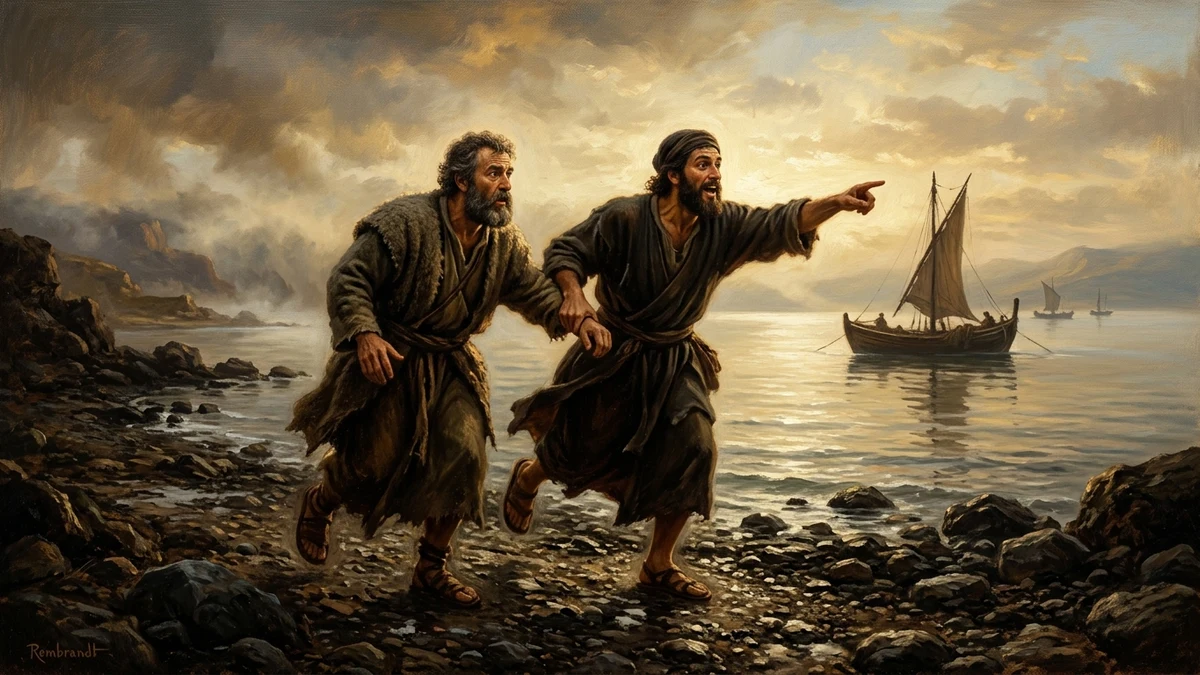
Before he walked on water or preached to thousands, Simon was a commercial fisherman entangled in the exhausting rhythms of night work on Lake Gennesaret. Commercial fishing in the first century was arduous labor. Crews cast heavy weighted circular nets (*amphiblestron*) from wooden rowing boats or pulled large dragnets (*sagene*) between vessels, hauling their catch to shore for sorting, drying, and taxation by local customs officials.
Following an entire night of fruitless toil, Simon and his partners were washing their salt-encrusted nets on the gravel beach when Jesus stepped into Simon's boat, requesting him to push out a little from the shore to teach the crowding multitude. When He had finished speaking, the Rabbi issued a bewildering command to the professional seaman:
"Launch out into the deep and let down your nets for a catch." (Luke 5:4)
Every human instinct argued against it. Fish fed on the surface during the cool night, seeking deep shadows during the hot daylight. Simon voiced the practical exhaustion: "Master, we have toiled all night and caught nothing." Yet against all vocational wisdom, he uttered the hinge phrase of true discipleship: "Nevertheless at Your word I will let down the net."
The obedience yielded a miraculous haul so massive that the linen ropes began snapping, and the boats of Simon, James, and John began to sink under the weight. In that instant of supernatural abundance, Simon did not count his sudden financial windfall. Beholding the raw majesty and divine authority of Christ, an overwhelming sense of moral unworthiness fell upon him. Falling on his knees amidst splashing fish, Simon cried:
"Depart from me, for I am a sinful man, O Lord!" (Luke 5:8)
Jesus did not depart. Instead, He answered the confession of sin with an eternal vocation: "Do not be afraid. From now on you will catch men." Leaving their boats, nets, and families behind, Simon and his companions followed Christ into the unknown.
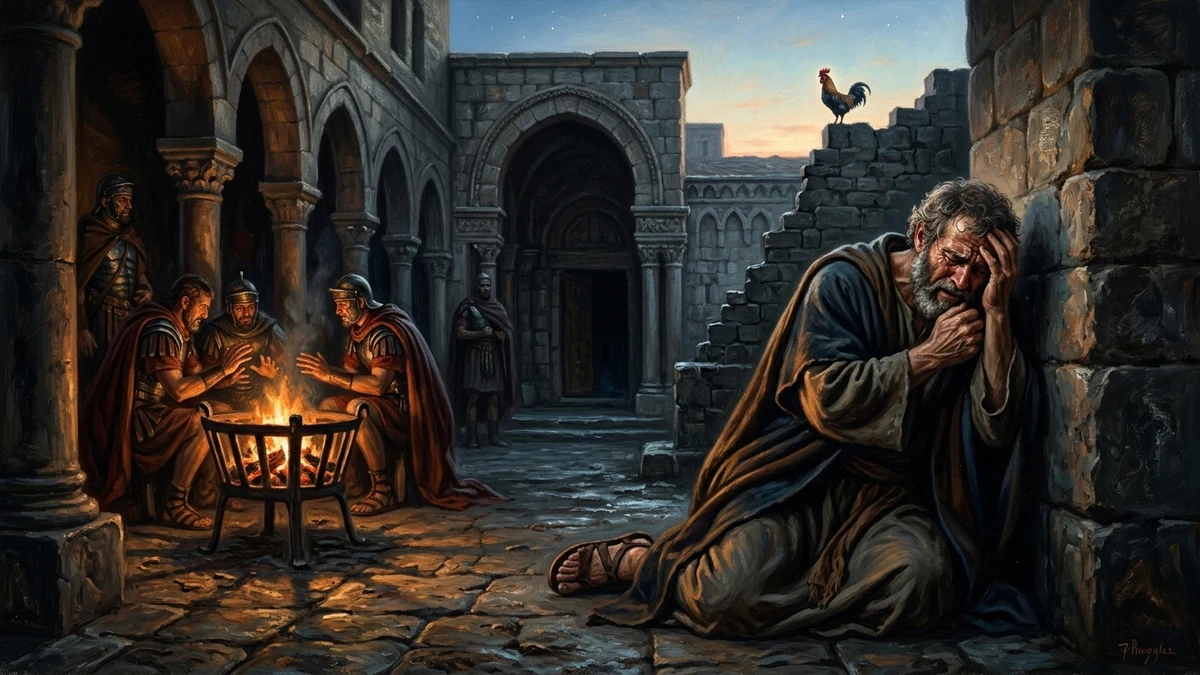 The Tears of Repentance: Simon Peter weeping bitterly in the dark courtyard of Caiaphas, hearing the rooster crow at dawn and beholding the gaze of Christ.
2. Caesarea Philippi and the Bedrock Revelation (Matthew 16:13–20)
As the disciples accompanied Jesus across Galilee, Decapolis, and Judea, Simon emerged as the natural spokesman of the Twelve. His fiery zeal, outspoken candor, and raw courage frequently placed him at the center of critical revelations.
In the shadow of Mount Hermon, near the pagan shrines of Pan and the temples of Caesar in Caesarea Philippi, Jesus confronted His followers with the ultimate existential question: "Who do people say that I, the Son of Man, am?" The disciples rattled off contemporary rumors—John the Baptist resurrected, Elijah, Jeremiah, or one of the ancient prophets. Then came the piercing personal challenge: "But who do you say that I am?"
While others hesitated, Simon burst forth with the eternal, Spirit-breathed confession:
"Simon Peter answered and said, 'You are the Christ, the Son of the living God.'" (Matthew 16:16)
Jesus blessed him, affirming that human intellect had not unlocked this mystery: "Flesh and blood has not revealed this to you, but My Father who is in heaven." Here Jesus bestowed the historic promise: "You are Peter (Petros), and on this rock (petra) I will build My church, and the gates of Hades shall not prevail against it." The Church would not be erected upon fragile human personality, but upon the rock of the divine truth Peter articulated: Jesus is the Messiah, the Son of the Living God.
3. Walking on the Waves and Sinking in Doubt (Matthew 14:22–33)
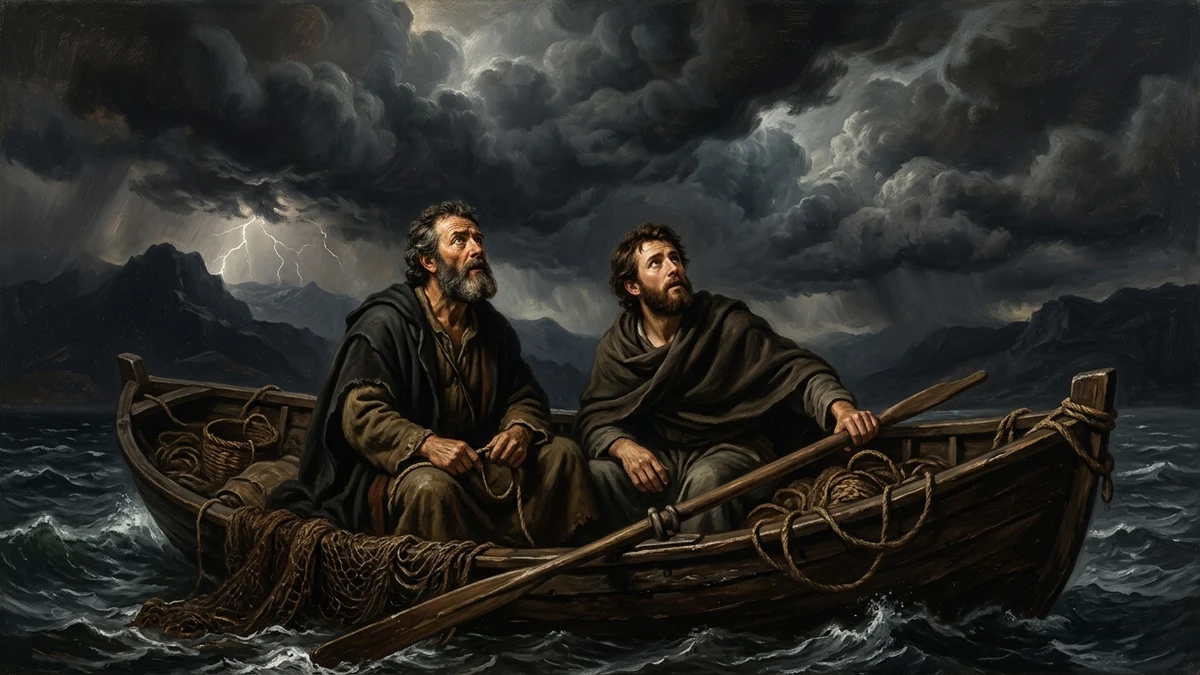
Peter's discipleship was never a clinical academic exercise; it was visceral, experiential, and fraught with extreme peaks and sudden valleys. Following the feeding of the five thousand, the disciples found themselves trapped in the middle of the lake in the fourth watch of the night (between 3:00 and 6:00 AM), battling contrary winds and violent waves.
When Jesus walked toward them upon the storm, the terrified men cried out, thinking it was a phantom. Above the howling gale came the calm voice of Christ: "Be of good cheer! It is I; do not be afraid."
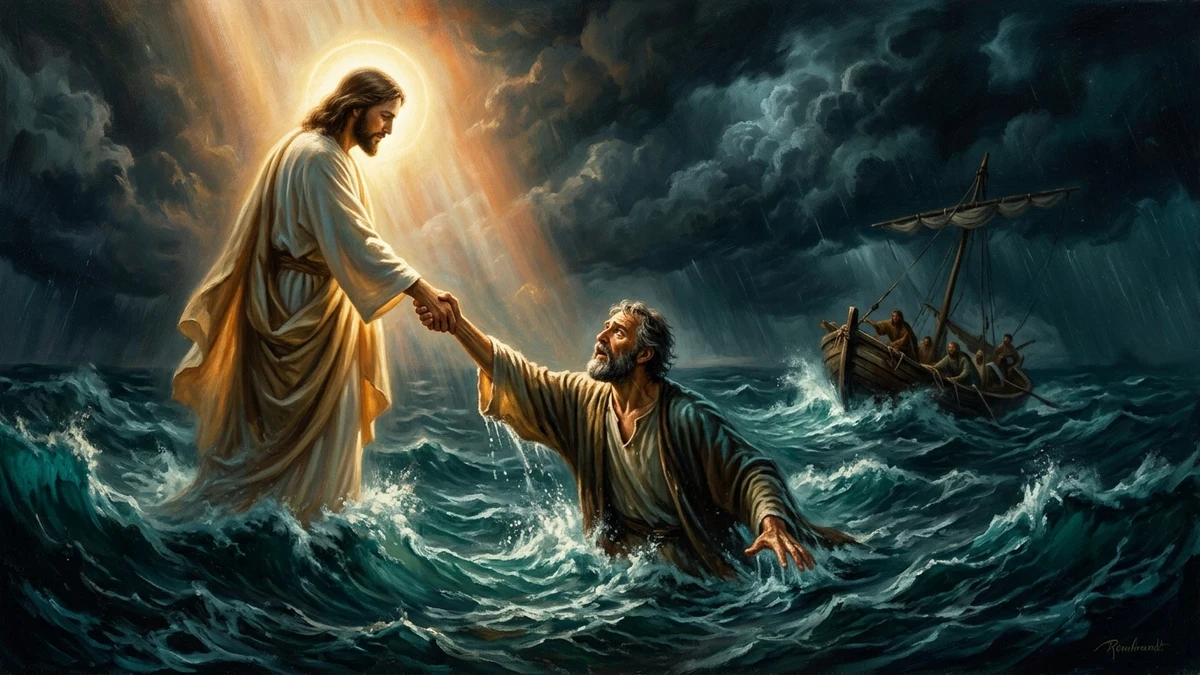
Characteristically, Peter did not wait for consensus. His heart leaped toward his Master: "Lord, if it is You, command me to come to You on the water." Jesus spoke a single word: "Come." Swinging his legs over the gunwale of the wooden boat, Peter planted his bare feet upon liquid surface. For a few glorious moments, supported by faith in the word of Christ, Simon Peter walked on water.
Yet the moment Peter shifted his gaze from the eyes of Jesus to the boisterous wind and foaming crests, panic seized his chest. Weight returned to his limbs, and he began to sink into the dark abyss. In that desperate second, Peter uttered the shortest, most urgent prayer in Scripture:
"Lord, save me!" (Matthew 14:30)
Immediately, Jesus stretched out His hand and caught him, asking with tender rebuke: "O you of little faith, why did you doubt?" Jesus did not leave Peter to drown in the storm of his doubt; He lifted him, walked with him back to the boat, and the wind ceased.
4. The Charcoal Fire: Presumption, Denial, and Bitter Weeping (Luke 22; John 18)
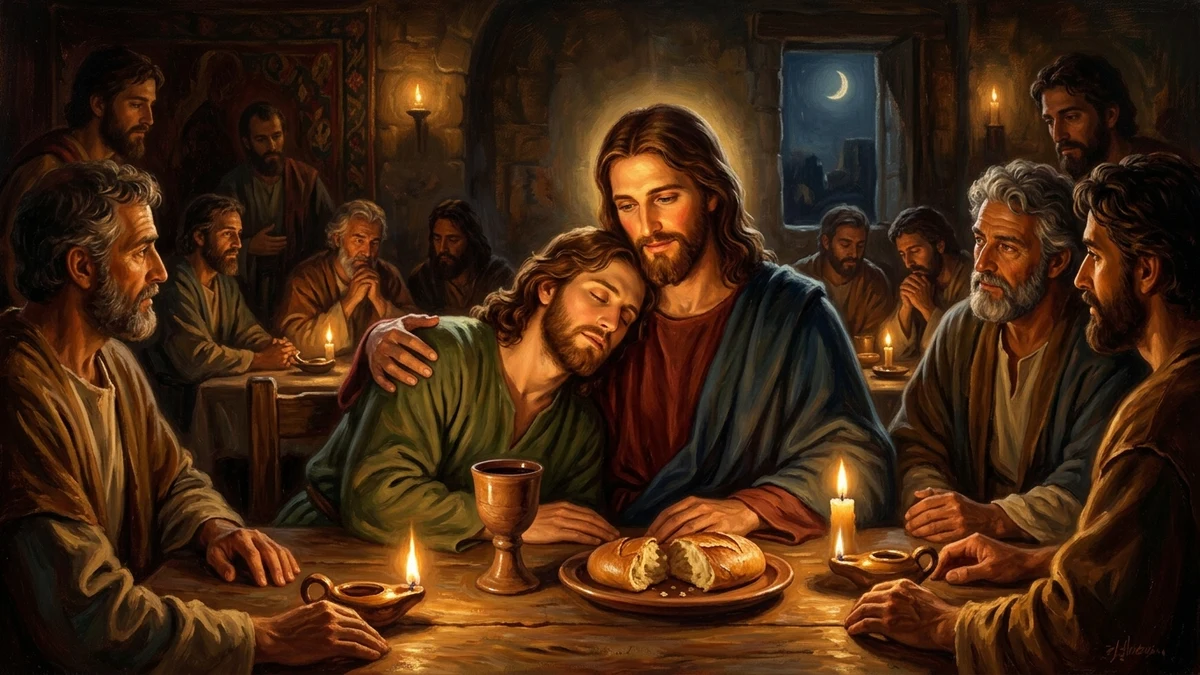
Peter's greatest crisis did not come from Roman legions or Jewish magistrates, but from the deceit of his own self-confidence. In the Upper Room during the Passover meal, when Jesus warned that all the disciples would stumble on account of Him, Peter brazenly protested: "Even if all are made to stumble because of You, I will never be made to stumble... Even if I have to die with You, I will not deny You!" (Matthew 26:33, 35).
Jesus knew the fragility of flesh: "Simon, Simon! Indeed, Satan has asked for you, that he may sift you as wheat. But I have prayed for you, that your faith should not fail; and when you have returned to Me, strengthen your brethren" (Luke 22:31–32).
Within hours, Peter's carnal bravery collapsed. In Gethsemane, when temple guards arrested Jesus, Peter swung his short sword, cutting off the ear of Malchus, the high priest's servant. Jesus rebuked him, healed the servant's ear, and surrendered to His captors. Peter followed at a distance into the courtyard of the High Priest Caiaphas.
Huddled beside a charcoal fire to ward off the night chill, Peter was confronted three times—first by a servant girl, then by bystanders noting his thick Galilean accent. Under the mounting terror of arrest, Peter shattered. He cursed and swore with oaths: "I do not know the Man!"
At that exact instant, across the darkened courtyard, a rooster crowed. Luke records the most heartbreaking moment in the Gospels:
"And the Lord turned and looked at Peter. Then Peter remembered the word of the Lord, how He had said to him, 'Before the rooster crows, you will deny Me three times.' So Peter went out and wept bitterly." (Luke 22:61–62)
The gaze of Christ was not one of disdain or condemnation, but of wounded love and prophetic pity. Shattered by his own cowardice, Peter broke into agonizing sobs, fleeing into the night.
5. Restoration by the Sea and the Fire of Pentecost (John 21; Acts 2)
Satan desired Peter's despair to mirror Judas Iscariot's suicide, but Jesus' intercession held firm. On resurrection morning, the angel instructed the women at the empty tomb: "Go, tell His disciples—and Peter—that He is going before you into Galilee" (Mark 16:7). That explicit inclusion was a lifeline to a broken soul.
By the Sea of Galilee, beside another glowing charcoal fire, Jesus met His fishing disciples with bread and broiled fish. Three times Jesus asked: "Simon, son of Jonah, do you love Me?" Peter grieved at the third repetition, stripped of all boasting: "Lord, You know all things; You know that I love You." Jesus reinstated him with three apostolic commissions: "Feed My lambs... Tend My sheep... Feed My sheep." The denier was reborn as the chief shepherd.
Fifty days later, when the sound of a rushing mighty wind and tongues of holy fire filled the Upper Room in Jerusalem, Peter stepped out before thousands of Jewish pilgrims gathered for Pentecost. The man who had trembled before a teenage servant girl stood like a bronze fortress before Jerusalem, preaching the inaugural gospel sermon:
"Therefore let all the house of Israel know assuredly that God has made this Jesus, whom you crucified, both Lord and Christ!" (Acts 2:36)
Pierced to the heart, three thousand souls were baptized that day, launching the Church of Jesus Christ into world history.
6. Apostolic Ministry, Writings, and the Inverted Cross
Throughout the book of Acts, Peter's leadership anchors the infant church. He heals the lame man at the Beautiful Gate (Acts 3), confronts corruption in Ananias and Sapphira (Acts 5), brings down racial walls at Cornelius' home in Caesarea (Acts 10), and champions salvation by grace without Mosaic legalism at the Jerusalem Council (Acts 15).
In his canonical epistles (1 and 2 Peter), dictated from Rome ("Babylon"), Peter writes to scattered believers enduring fiery persecution, offering comfort rooted in a living hope, the precious blood of the Lamb, and the unfading inheritance reserved in heaven.
According to unanimous early church testimony—attested by Clement of Rome, Tertullian, and Eusebius—Peter was martyred in Rome under Emperor Nero following the Great Fire of AD 64. When condemned to crucifixion in the Circus of Nero on the Vatican Hill, Peter deemed himself unworthy to suffer in the exact manner of Jesus Christ. At his own humble petition, he was fastened to the cross head downward, sealing his lifelong confession with his blood. Simon the fisherman departed this earth as Peter the Rock, beholding face-to-face the Chief Shepherd who had once called him by the waters of Galilee.
Biblical Keywords & Theological Roots
Aramaic 'Kepha' meaning a stone or detached boulder; Greek 'Petros', distinguishing from 'petra' (massive living bedrock).
An official messenger sent with full legal authority, representing the sender with diplomatic embassy powers.
To shepherd, tend, guide, nourish, and protect the flock of God with pastoral vigilance.
To deny utterly, disown, disavow connection with someone, or renounce self-sovereignty.
To fix firmly, establish, strengthen, or make resolute after a period of shaking and sifting.
Ancient Near Eastern & Archaeological Context
First-century Capernaum was a thriving Galilean hub on the Via Maris trade highway, bustling with customs booths, Roman military cohorts, and lucrative commercial fishing syndicates. Peter operated an established fishing partnership with his brother Andrew and Zebedee's sons James and John. The fishing industry on Lake Gennesaret was tightly regulated and heavily taxed by Herod Antipas through licensing leases and salt monopolies. Amidst political unrest and Messianic expectation, Peter possessed an earnest longing for the redemption of Israel, making him immediately receptive to the preaching of John the Baptist and the subsequent personal summons of Jesus of Nazareth.
Practical Discipleship & Spiritual Application
- Failure is Not Final with Christ: Peter's shameful denial did not disqualify him from ministry; divine repentance and the restorative grace of Jesus forged his deepest pastoral tenderness.
- Walking on Water Requires Stepping Over the Boat Rail: Extraordinary faith demands stepping out of comfortable earthly securities in direct obedience to Christ's simple invitation: 'Come.'
- Boldness Flowing from the Holy Spirit: The same man who trembled before a servant girl in Caiaphas' courtyard stood fearless before the Sanhedrin after Pentecost, proving that spiritual power originates solely from the indwelling Spirit.
- Shepherding Through Suffering: True Christian leadership rejects authoritarian domination, leading the flock through humble example, sacrificial love, and readiness to share in the sufferings of Christ.
Support Independent Biblical Research
Did this study bless you? Help support our independent bilingual research and interactive visual Bible tools.
⚡ Fast Facts
- Aramaic to Greek Name Change: Jesus renamed Simon bar-Jonah to 'Cephas' (Aramaic) and 'Petros' (Greek), signifying a detached boulder or rock, pointing to his future role in the Church.
- Crucified Inverted in Rome: According to early patristic tradition recorded by Origen and Eusebius, Peter was sentenced to crucifixion under Emperor Nero around AD 64–67, requesting to be hung upside down as unworthy to die in the same posture as his Lord.
- Home in Capernaum: Archaeological excavations at Capernaum have uncovered a first-century residential insula identified as Peter's house, preserved under an octagonal Byzantine church.
- Source for Mark's Gospel: Early Church Father Papias (c. AD 130) testified that Mark served as Peter's interpreter, accurately writing down Peter's eyewitness memoirs as the Gospel of Mark.
❓ Frequently Asked Questions (FAQs)
In Matthew 16:18, Jesus made a linguistic distinction between 'Petros' (a smaller boulder or stone) and 'petra' (a massive bedrock). Jesus was declaring that His Church would be established upon the foundational bedrock truth of Peter's divinely revealed confession: 'You are the Christ, the Son of the living God.' Peter himself later affirmed this in 1 Peter 2:4–8, identifying Christ as the chief cornerstone upon whom all living stones are built.
Peter had publicly denied Jesus three times around a charcoal fire in the High Priest's courtyard (John 18:18). By the Sea of Tiberias, Jesus met Peter beside another charcoal fire (John 21:9), graciously offering him three distinct opportunities to confess his love: 'Lord, You know all things; You know that I love You.' Each confession corresponded to an apostolic pastoral charge: 'Feed My lambs,' 'Tend My sheep,' and 'Feed My sheep,' completely restoring Peter from guilt into ministry.
As an orthodox Jew, Peter maintained strict ritual separation from non-Jews. Through the rooftop vision of the great sheet in Joppa and his divine assignment to the Roman centurion Cornelius in Caesarea, God shattered Peter's ethnocentric barriers. Witnessing the Holy Spirit fall upon Gentiles without circumcision, Peter declared: 'In truth I perceive that God shows no partiality' (Acts 10:34), paving the way for the Jerusalem Council in Acts 15.