Among the twelve men who walked the sunlit hills of Judea with the Son of God, James the son of Zebedee (historically distinguished as James the Greater to distinguish him from James the son of Alphaeus) stands as a monumental figure of transformed zeal. Fiery, aristocratic, and fiercely ambitious, James earned from Christ the evocative Aramaic surname Boanerges—the Son of Thunder. Yet divine grace took the stormy gale of this Galilean fisherman and refined it into a steady, immovable flame, making him the very first of the twelve apostles to drink the cup of martyrdom and seal his apostolic witness with his life.
1. Leaving the Hired Men: The Call from Zebedee's Boat (Mark 1:19–20)
James was not an impoverished peasant. His father, Zebedee, was an influential Galilean fishing magnate who operated an extensive fleet on the Sea of Galilee, maintaining hired servants (*misthioi*) and established commercial contracts extending as far south as Jerusalem.
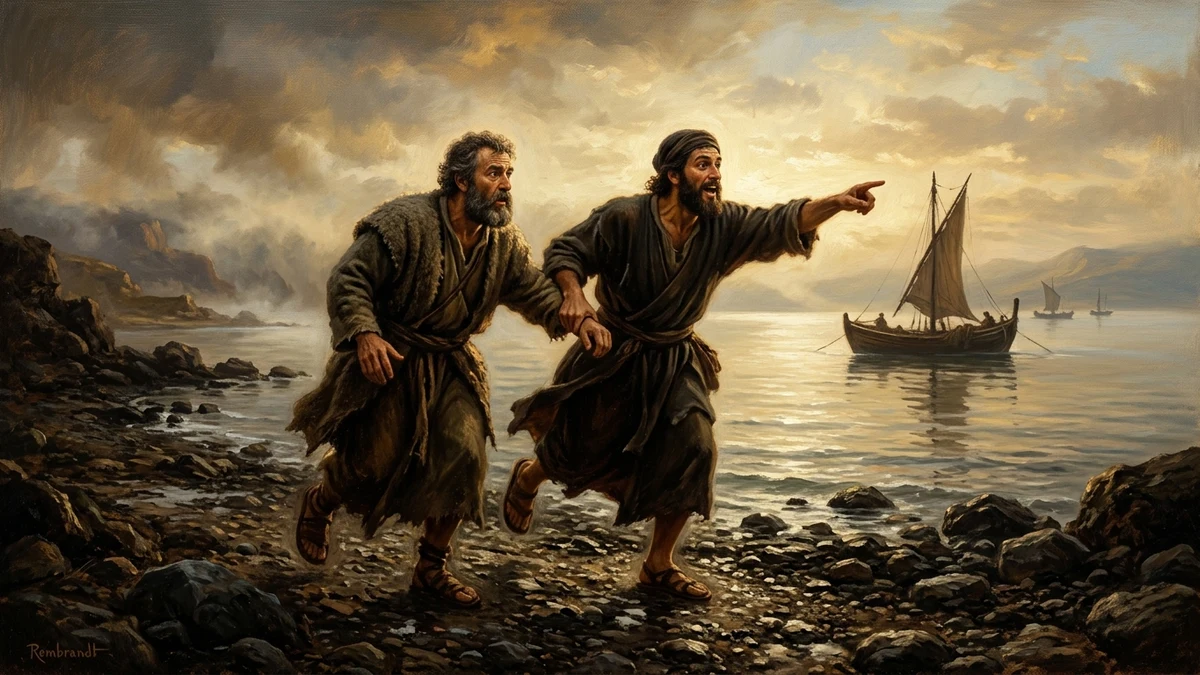
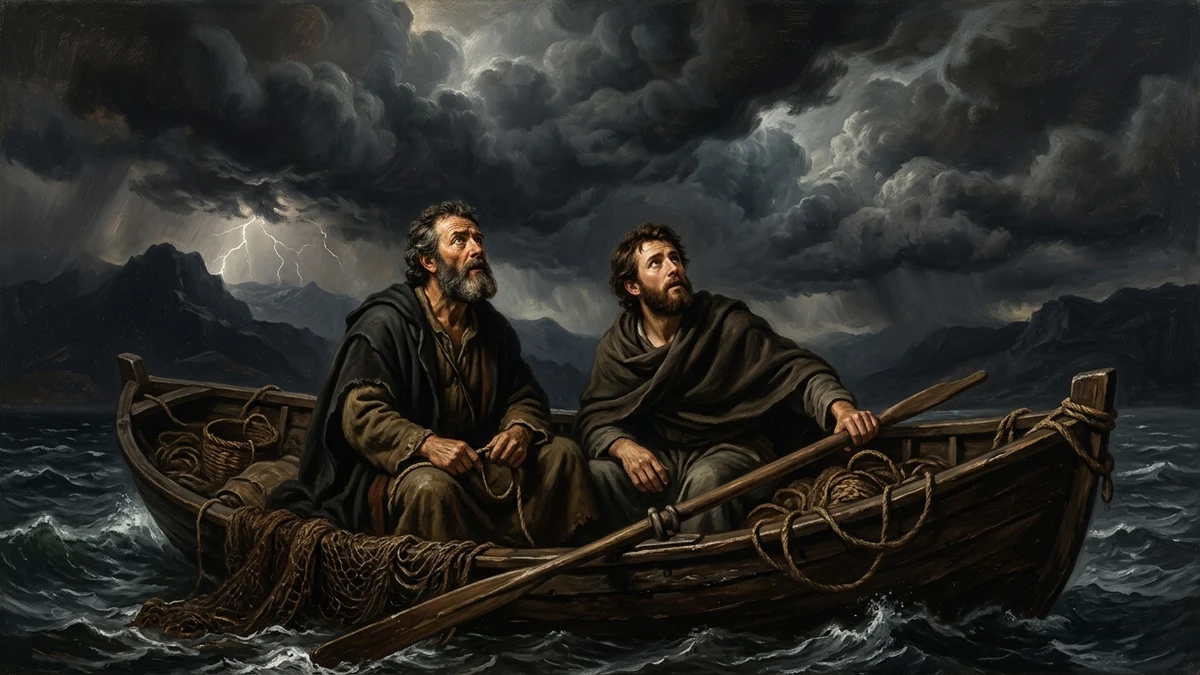
One morning, shortly after calling Peter and Andrew, Jesus walked further along the shoreline and observed James and his younger brother John seated in their vessel with their father, mending their heavy linen nets. The Master spoke two words: "Follow Me."
Mark's Gospel highlights the radical speed of their obedience: "And immediately He called them, and they left their father Zebedee in the boat with the hired servants, and went after Him" (Mark 1:20). James walked away not only from fishing nets, but from a lucrative family inheritance, social security, and comfortable regional status, entrusting his entire future to an itinerant prophet.
2. Within the Inner Circle: Eye of the Holy Mysteries
Throughout the Gospels, Jesus maintained concentric circles of intimacy: the multitude, the seventy disciples, the Twelve, and an exclusive triumvirate consisting of Peter, James, and John. Only these three were permitted to witness the three most staggering revelations of Christ's earthly journey:
- The Resurrection of Jairus' Daughter (Mark 5:37): In the hushed bedchamber of the synagogue ruler, while mourning flutes wailed outside, James stood beside Christ as He took the dead child by the hand, speaking: "Talitha, cumi" (Little girl, arise!). James beheld Jesus sovereign over physical death.
- The Holy Transfiguration on the Mount (Matthew 17:1–9): Ascending a high mountain (likely Mount Hermon), James witnessed Jesus transfigured: His face radiant as the noonday sun, His garments dazzling white, conversing with Moses and Elijah enveloped in the luminous Shekinah cloud of God.
- The Agony in Gethsemane (Matthew 26:37): Beneath ancient, gnarled olive trees, while the rest of the disciples waited near the gate, Jesus drew Peter, James, and John deeper into the garden, crying: "My soul is exceedingly sorrowful, even to death. Stay here and watch with Me." James witnessed the bloody sweat and the agony of Calvary's threshold.
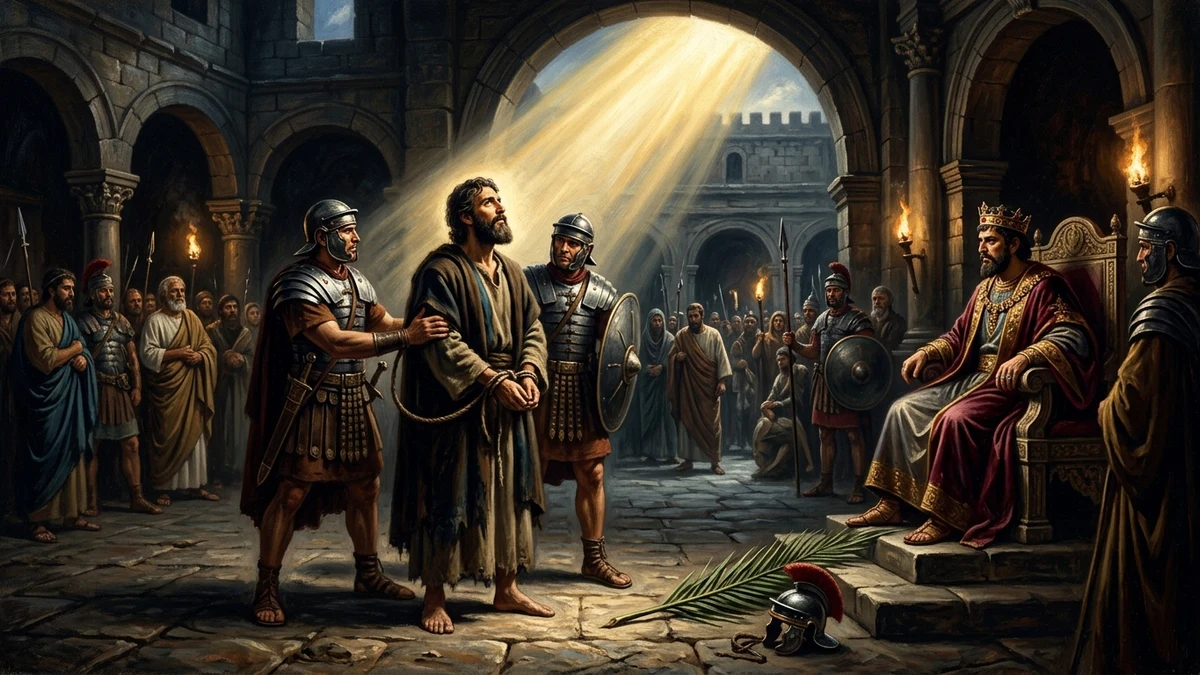 The First Apostolic Martyr: James the Greater standing bound before Herod Agrippa I in Jerusalem, crowned with the celestial ray of martyrdom and the palm branch of victory.
3. Fire from Heaven: The Raw Thunder of the Flesh (Luke 9:51–56)
Why did Jesus surname James and John Boanerges? The answer is unveiled in Luke 9. As Jesus set His face resolutely toward Jerusalem to be crucified, He sent messengers ahead into a Samaritan village to prepare lodging. The Samaritans, recognizing that He was journeying toward Jerusalem rather than Mount Gerizim, flatly refused hospitality.
Incensed by this insult to their Master, James and John erupted in furious indignation:
"Lord, do You want us to command fire to come down from heaven and consume them, just as Elijah did?" (Luke 9:54)
Their theology was accurate—God had indeed sent fire from heaven at Carmel and against the captains of Ahaziah through Elijah (2 Kings 1). But their spirit was demonic. Jesus turned and sharply rebuked them: "You do not know what manner of spirit you are of. For the Son of Man did not come to destroy men's lives but to save them." James had to learn that the Kingdom of God does not advance through apocalyptic slaughter, but through self-sacrificing love.
4. The Ambitious Request and the Cup of Suffering (Matthew 20:20–28)
Even after months of spiritual tuition, the carnal craving for supremacy lingered in James' heart. Believing that Jesus was marching to Jerusalem to violently overthrow the Roman legions and establish an earthly political empire, James and John brought their mother Salome to make a bold dynastic request:
"Grant that these two sons of mine may sit, one on Your right hand and the other on the left, in Your kingdom." (Matthew 20:21)
The remaining ten disciples were filled with indignant fury, largely because James and John had beaten them to the punch. Jesus gathered the ambitious Twelve and laid down the Magna Carta of Christian leadership:
"You know that the rulers of the Gentiles lord it over them, and those who are great exercise authority over them. Yet it shall not be so among you; but whoever desires to become great among you, let him be your servant. And whoever desires to be first among you, let him be your slave—just as the Son of Man did not come to be served, but to serve, and to give His life a ransom for many." (Matthew 20:25–28)
Jesus asked the brothers the fateful question: "Are you able to drink the cup that I am about to drink?" They replied: "We are able." Jesus solemnized their boast into a prophetic decree: "You will indeed drink My cup." James would be the first apostle to drink it; John would drink it through decades of lonely exile.
5. The Sword of Herod Agrippa I: The First Apostolic Martyr (Acts 12:1–2)
Following Pentecost, while Peter and John were frequently arrested in the Temple courts, James emerged as one of the most formidable, outspoken leaders of the Jerusalem assembly. His fiery thunder, now filled with the Holy Spirit, preached the resurrection of Christ with such unyielding boldness that he drew the direct hostility of the civil authorities.
In AD 44, King Herod Agrippa I (the grandson of Herod the Great and nephew of Herod Antipas who had mocked Jesus) sought to consolidate his popularity among the fanatical religious factions of Jerusalem. Luke records the tragic milestone with solemn brevity:
"Now about that time Herod the king stretched out his hand to harass some from the church. Then he killed James the brother of John with the sword." (Acts 12:1–2)
James was arrested, brought before the royal tribunal, and condemned to Roman beheading by the executioner's broadsword (*machaira*).
The early church historian Eusebius of Caesarea, citing the lost memoirs of Clement of Alexandria (c. AD 190), records an extraordinary, deeply moving detail concerning James' final moments:
The Roman guard who had led James to the judgment seat was so overwhelmed by the apostle's radiant courage, total lack of fear, and supernatural peace that he was converted on the spot. Falling at James' feet, the soldier confessed Jesus Christ as Lord. As they were led out together to the execution grounds, the guard begged James for forgiveness. James paused, embraced the soldier, kissed his cheek, and whispered: 'Peace be to you, my brother.' Both men were beheaded together by the executioner's sword.
At approximately forty-four years of age, James the son of Zebedee became the first of the apostolic band to join the noble army of martyrs, having drank to the dregs the cup of his Lord and King.
Biblical Keywords & Theological Roots
Aramaic transliteration of 'Bene-Regesh': sons of thunder, commotion, or violent tumult.
A drinking cup; metonym for an appointed destiny, divine wrath, or cup of martyrdom and suffering.
A short sword, saber, or curved executioner's blade used in Roman judicial beheadings.
A servant, waiter, or attendant who serves tables; the New Testament standard of true apostolic greatness.
A legal eyewitness who bears testimony, especially one who seals their witness with their own life.
Ancient Near Eastern & Archaeological Context
James and John were the sons of Zebedee, a prosperous Galilean fishing magnate operating multiple commercial vessels on Lake Tiberias. Their mother Salome was likely the sister of Mary of Nazareth (John 19:25; Matthew 27:56), making James and John first cousins of Jesus according to the flesh. The Zebedee family was affluent enough to employ hired laborers (*misthioi*, Mark 1:20) and possessed social connections extending into the high-priestly household in Jerusalem (John 18:15). Raised with social status, fierce Galilean pride, and messianic nationalism, James was unaccustomed to playing a secondary role. His calling demanded the painful crucifying of natural entitlement and human aggression.
Practical Discipleship & Spiritual Application
- Sanctifying Misdirected Passion: God does not extinguish our natural passion; He sanctifies it. The same thunder that once sought to call down destructive fire upon Samaritans was redirected to courageously pour out his life for Christ.
- The Cup Precedes the Crown: We cannot reign with Christ if we refuse to drink His cup. James learned that true spiritual authority is measured not by who bows to you, but by how willingly you suffer for the Truth.
- Content with Brief Earthly Visibility: Peter led for decades and John survived into extreme old age, but James was cut down in the prime of his apostolic ministry. God measures faithfulness, not longevity.
- Servant Leadership as the Kingdom Benchmark: Worldly power dominates and controls; Kingdom greatness kneels, serves, and bleeds for the eternal good of others.
Support Independent Biblical Research
Did this study bless you? Help support our independent bilingual research and interactive visual Bible tools.
⚡ Fast Facts
- First Apostle Martyred: James was the only apostle whose death is explicitly recorded in the New Testament canonical text (Acts 12:2, martyred by Herod Agrippa I with the sword in AD 44).
- The Inner Triumvirate: Along with Peter and his brother John, James formed the exclusive inner circle of three disciples permitted into the most sacred events (Jairus' daughter, Transfiguration, and Gethsemane).
- Boanerges Surname: Jesus bestowed the Aramaic surname 'Boanerges' (Sons of Thunder) upon James and John due to their fiery, impetuous, and combative natural temperament.
- Camino de Santiago Tradition: Christian tradition holds that James carried the Gospel to the Iberian Peninsula (modern Spain), commemorated globally by the historic pilgrimage route to Santiago de Compostela.
❓ Frequently Asked Questions (FAQs)
The Aramaic term 'Bene-Regesh' (Boanerges) literally translates as 'Sons of Commotion' or 'Sons of Thunder.' James and John displayed aggressive zeal, evident when a Samaritan village refused Jesus lodging and the brothers demanded: 'Lord, do You want us to command fire to come down from heaven and consume them, just as Elijah did?' (Luke 9:54). Jesus rebuked their spirit, channeling their thunderous passion into sacrificial gospel courage.
Prompted by carnal ambition, James and John (along with their mother Salome) asked to sit at Jesus' right and left hand in His messianic glory. Jesus answered by redefining greatness: 'Are you able to drink the cup that I am about to drink, and be baptized with the baptism that I am baptized with?' They confidently answered: 'We are able.' Jesus prophesied that they would indeed drink His cup—James being the first apostle martyred, and John enduring the longest exile.
Herod Agrippa I, grandson of Herod the Great, sought to curry political favor with the orthodox Jewish aristocracy in Jerusalem. Recognizing James as a preeminent pillar and vocal leader of the early Church alongside Peter, Agrippa arrested James and had him beheaded with the Roman executioner's sword around AD 44 to demonstrate his defense of temple orthodoxy.