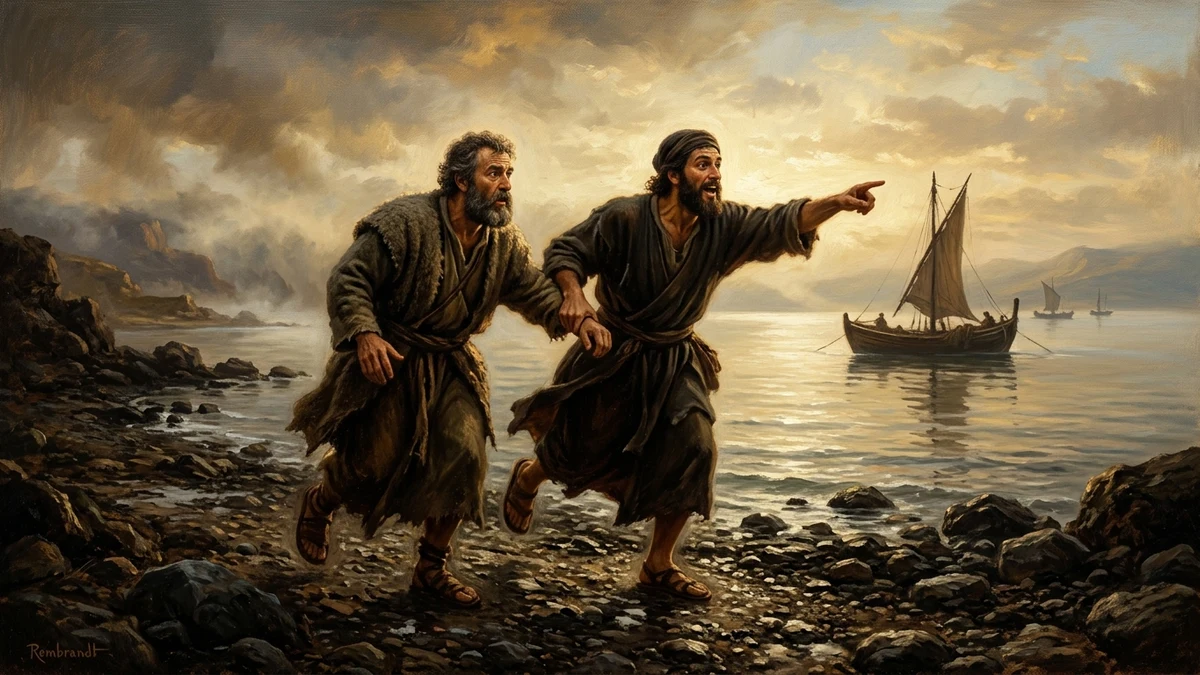
In the gallery of the twelve apostles, some figures command historical attention through sheer dramatic volume: Simon Peter preaching at Pentecost, or John soaring into cosmic apocalypses on Patmos. Yet Scripture presents another portrait of apostolic greatness—one defined not by public thunder, but by quiet, personal fidelity. Andrew, the brother of Simon Peter, stands across Church history as the Protokletos—the First-Called disciple of Jesus Christ. His entire life illustrates a singular, profound spiritual principle: the supreme art of bringing one person at a time into direct, life-altering contact with the Savior.
1. The Waters of Jordan: From the Baptist to the Lamb of God (John 1:35–42)
Andrew's spiritual journey did not commence with a casual lakeside encounter, but through intentional, costly seeking. Leaving behind his fishing boats in Bethsaida, Andrew journeyed sixty miles south into the desolate, heat-scorched Jordan River Valley to sit at the feet of John the Baptist. Andrew was a man of deep messianic conviction, awaiting the consolation of Israel with prayer and fasting.
One afternoon, as the Baptist stood with Andrew and another disciple by the riverbanks, Jesus of Nazareth walked past. Pointing a weathered finger at the quiet Galilean, the Baptist uttered words that changed the course of history:
"Behold the Lamb of God who takes away the sin of the world!" (John 1:29, 36)
Hearing this testimony, Andrew did not hesitate. Without bidding farewell to his former master, Andrew and his companion followed behind Jesus along the dusty road. Sensing footfalls behind Him, Jesus turned and asked the foundational question of human existence: "What do you seek?"
They replied with reverent wonder: "Rabbi (which is to say, when translated, Teacher), where are You staying?" Jesus gave the timeless invitation of discipleship: "Come and see." They accompanied Him to His dwelling place and remained with Him for the remainder of that day (it was about the tenth hour, roughly four in the afternoon). That evening of intimate communion in the presence of Christ forged an unshakable conviction in Andrew's heart.
2. Bringing Simon: The Quiet Catalyst of Church History
What did Andrew do the moment he left the presence of Jesus? He did not write a theological treatise, nor did he seek out the Sanhedrin. He went immediately to find his own brother:
"He first found his own brother Simon, and said to him, 'We have found the Messiah' (which is translated, the Christ). And he brought him to Jesus." (John 1:41–42)
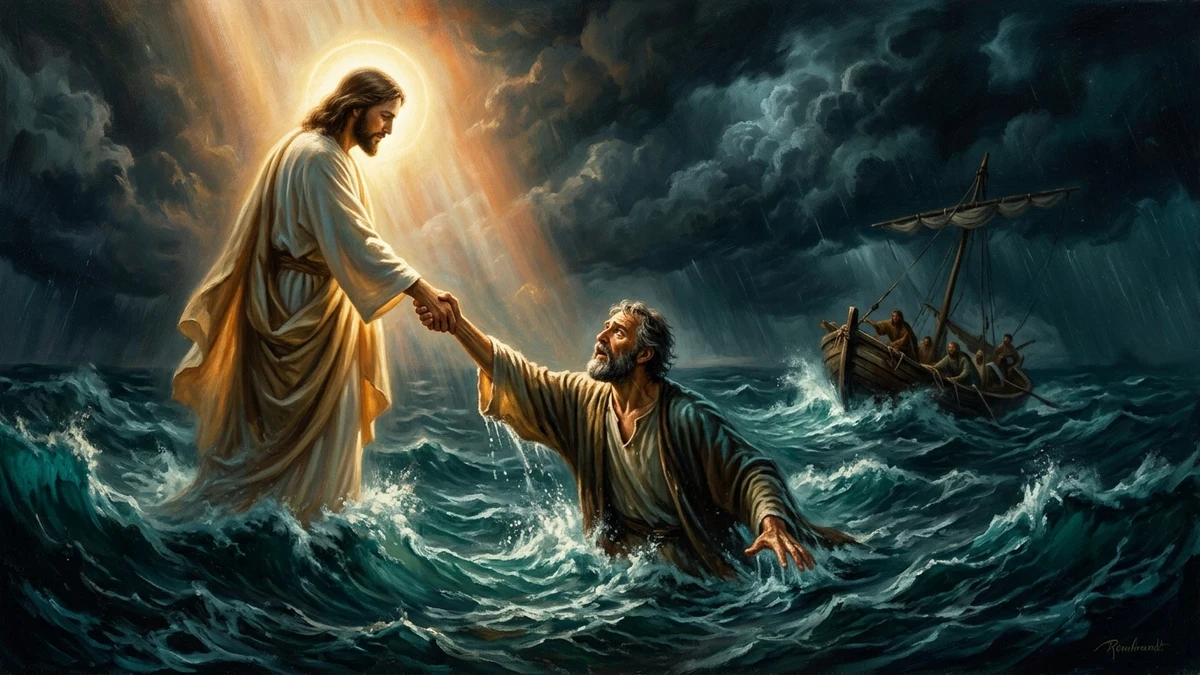
Consider the monumental significance of those seven words: "And he brought him to Jesus." Simon was headstrong, volatile, and dominating; Andrew was gentle, observant, and quiet. Yet Andrew possessed the spiritual authority of first-hand experience. He took his brother by the hand and led him directly to Christ.
Throughout church history, Simon Peter would preach to thousands, write scripture, and lead the early church in Jerusalem. Yet humanly speaking, Peter would never have met Jesus Christ had his brother Andrew not cared enough to seek him out first. Andrew was content to be known simply as "Simon Peter's brother," rejoicing that his brother was used mightily for the Kingdom.
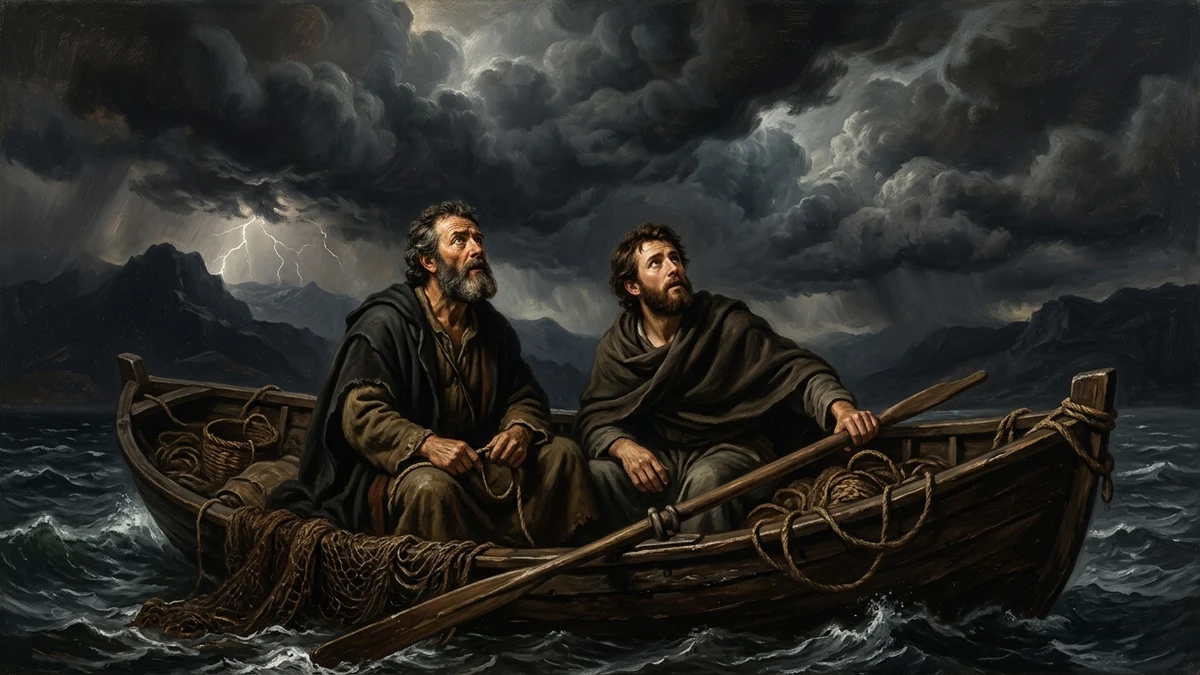
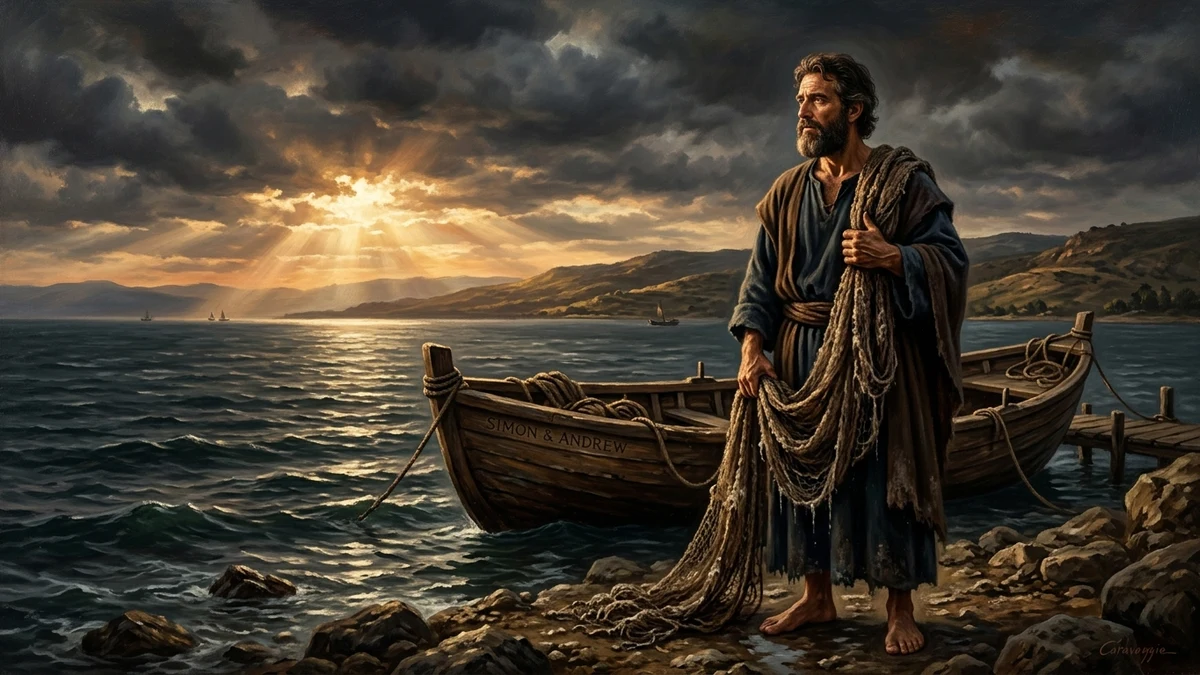 The Faithful Fisher: Apostle Andrew holding weathered nets on the shore of Galilee, looking to the horizon with the steadfast heart of a soul-winner.
3. The Grassy Slopes of Bethsaida: The Boy with Five Loaves (John 6:1–14)
The second major appearance of Andrew in the Gospels occurs upon a grassy hillside near Bethsaida, where a crowd of over five thousand men (besides women and children) sat weary and hungry. When Jesus tested Philip by asking, "Where shall we buy bread, that these may eat?", Philip began calculating mathematical impossibilities: two hundred denarii worth of bread would not provide even a morsel for each person.
While Philip looked at the staggering deficit, Andrew was actively circulating among the crowd, looking for tangible possibilities. He noticed an obscure peasant boy carrying a small lunch basket. Approaching the Master, Andrew said:
"There is a lad here who has five barley loaves and two small fish, but what are they among so many?" (John 6:9)
Notice Andrew's honesty: he recognized the sheer mathematical inadequacy of five barley cakes (the food of the poorest peasants) and two small dried fish (*opsaria*). Yet notice also his faith: instead of dismissing the lunch as ridiculous, he brought it to Jesus.
In the hands of Jesus, that insignificant lunch became a banquet that filled twelve wicker baskets with leftovers. Andrew understood what many theologians miss: God does not demand that we possess infinite resources; He asks only that we place whatever small, imperfect things we have into the hands of Christ.
4. The Bridge to the Nations: Greeks at the Passover (John 12:20–26)
During the final Passion Week in Jerusalem, amidst the swelling crowds arriving for the Passover feast, a group of Greek Gentiles arrived seeking spiritual truth. Having heard reports of Jesus raising Lazarus from the dead, they approached Philip (who bore a Greek name) with an earnest plea: "Sir, we wish to see Jesus."
Philip was perplexed. Jesus' ministry had focused primarily on the lost sheep of the house of Israel; could Gentiles be admitted into His presence during the sacred festival? Philip did not know what to do. Whom did he consult? He went immediately to Andrew.
Scripture records: "Philip came and told Andrew, and in turn Andrew and Philip told Jesus" (John 12:22). Andrew did not erect legalistic barriers; he welcomed the seekers and built a bridge directly to Christ. Hearing of the Gentiles seeking Him, Jesus declared that the hour had arrived for the Son of Man to be glorified, likening His impending crucifixion to a grain of wheat falling into the earth to bear much fruit for the nations.
5. Apostolic Missionary Journeys and the Black Sea Shore
Following the outpouring of the Holy Spirit on Pentecost, the Apostles dispersed across the ancient world according to early historical traditions. The fourth-century historian Eusebius of Caesarea, citing earlier records from Origen, noted that Andrew was assigned the vast northern territory of Scythia, encompassing modern Romania, Ukraine, and the southern plains of Russia.
Carrying the Gospel along the Black Sea coastline, Andrew preached through Cappadocia, Galatia, and Bithynia before journeying along the Dnieper River. According to ancient Slavic chronicles, Andrew stood upon the hills of modern Kiev, planting a cross and prophesying that a great Christian civilization would rise upon those lands.
Returning westward through Thrace, Andrew arrived in the Greek province of Achaia, establishing a vibrant Christian community in the coastal metropolis of Patras.
6. Martyrdom upon the X-Shaped Cross in Patras
In Patras, Andrew's bold proclamation of the Gospel led to the conversion of Maximilla, the wife of the Roman proconsul Aegeas, along with his brother Stratocles. Enraged by the spread of the Christian faith within his own household, Aegeas demanded that Andrew sacrifice to Roman idols or face execution.
Andrew replied with unyielding apostolic conviction: "I sacrifice daily to Almighty God, not the smoke of incense or the flesh of bulls, but the spotless Lamb of God upon the altar of the Cross."
Aegeas condemned Andrew to be scourged and bound to an X-shaped cross (*crux decussata*), ordering the executioners not to pierce his limbs with nails, but to bind him with cords so that hunger, thirst, and exposure would prolong his death over several days.
When Andrew approached the place of execution, early church records report that he looked upon the cross with holy joy, crying out:
"O good Cross, made fair and beautiful by the body of the Lord, long desired and ardently loved, take me from among men and restore me to my Master, that through you He may receive me who through you redeemed me!"
For two full days, suspended upon the X-cross, Andrew refused to curse his tormentors. Instead, he utilized his dying breath to preach the resurrection of Jesus Christ to thousands of weeping citizens who gathered around him. On the third day, encircled by divine light, Apostle Andrew breathed his last, entering the presence of the Master he had first followed by the Jordan River.
Biblical Keywords & Theological Roots
From 'aner' (man); signifies manly, courageous, valiant, or stout-hearted.
The first-called; title bestowed upon Andrew as the initial disciple to confess Jesus as Messiah.
Perfect active indicative of heurisko: 'We have found!'; joyous proclamation of discovering the long-awaited Messiah.
To lead to, bring forward, or introduce into the personal presence of a monarch or authority.
A small dried, salted fish eaten as a relish with bread by poor Galilean peasants.
Ancient Near Eastern & Archaeological Context
Andrew was raised in Bethsaida ('House of Fish'), a bilingual town on the northeastern shore of the Sea of Galilee heavily influenced by Greco-Roman culture under Philip the Tetrarch. The town sat on a vital commercial frontier between Jewish Galilee and Gentile Gaulanitis. Growing up in a bilingual commercial fishing environment, Andrew was fluent in both Galilean Aramaic and Hellenistic Koine Greek. His Greek name suggests a family with international commercial contacts. Yet despite this cosmopolitan backdrop, Andrew possessed an intense spiritual hunger, traveling sixty miles south to the Judean desert to sit under the baptismal preaching of John the Baptist before encountering Jesus of Nazareth.
Practical Discipleship & Spiritual Application
- The Power of the Unsung Intermediary: Andrew lived largely in the shadow of his famous brother Peter, yet without Andrew's quiet personal witness, Peter would never have met Jesus.
- Never Despise the Day of Small Things: While Philip saw only the impossibility of feeding thousands, Andrew brought a boy's meager five loaves and two small fish into the hands of the Master.
- Relational Bridge-Building: When Gentile Greeks sought Jesus, they approached Philip and Andrew, demonstrating that warmth, accessibility, and humility open kingdom doors to seekers.
- Contentment Without the Limelight: Andrew was not among the inner circle of three at the Transfiguration, yet he served with unbroken joy and unwavering fidelity to his martyrdom.
Support Independent Biblical Research
Did this study bless you? Help support our independent bilingual research and interactive visual Bible tools.
⚡ Fast Facts
- The Greek Name: Unlike most apostles who bore traditional Semitic Hebrew names, 'Andrew' is of pure Greek origin (Andreas), meaning 'manly', 'courageous', or 'valiant'.
- Discipleship Under the Baptist: Before following Jesus, Andrew was a devoted disciple of John the Baptist, standing by the Jordan River when John proclaimed: 'Behold the Lamb of God!'
- The Crux Decussata: Christian tradition testifies that Andrew was martyred in Patras, Greece, bound (not nailed) to an X-shaped cross (St. Andrew's Cross) so his agony would be prolonged.
- Patron Saint of Nations: Andrew is venerated as the patron saint of Scotland, Greece, Romania, and Russia, having carried the Gospel around the Black Sea and Scythia.
❓ Frequently Asked Questions (FAQs)
In the Eastern Orthodox and historical patristic tradition, Andrew is titled 'Protokletos' (The First-Called) because he was the very first human being recorded in the Gospels to recognize Jesus of Nazareth as the Messiah and follow Him, immediately departing from John the Baptist after the Jordan revelation (John 1:37–40).
Every single time Andrew appears by name in the Gospels, he is actively introducing someone to Jesus Christ: first, his brother Simon Peter (John 1:41–42); second, the young boy with five barley loaves and two fish (John 6:8–9); and third, the Greek inquirers seeking an audience with Christ during Passion Week (John 12:20–22). He was the quintessential personal evangelist.
According to Church historians Eusebius and Origen, Andrew's missionary territory spanned Asia Minor, Thrace, Scythia (modern-day southern Russia and Ukraine), and Greece. He established Christian assemblies along the Black Sea coast before suffering martyrdom in the Peloponnese city of Patras.