Delivered on the Mount of Olives during Passion Week as part of the Olivet Discourse (Matthew 25:1-13), the Parable of the Ten Virgins is one of Christ's most urgent warnings regarding His Second Coming. Through the vivid imagery of a traditional Jewish wedding torchlight procession, Jesus confronts every generation with the crucial question: when the midnight cry sounds, will you possess the internal oil of the Holy Spirit?
1. The Context of the Ancient Jewish Wedding
In ancient Galilee, a wedding involved three distinct stages: the legal betrothal (erusin), the long interval of preparation, and the festive midnight wedding procession (nissu'in). The bridegroom would leave his home late at night surrounded by singing friends, marching across the village to claim his bride. Ten bridesmaids (virgins) were stationed with small clay oil torches to light the way and join the joyous bridal party into the banquet hall.
2. The Dividing Line: Reserve Oil
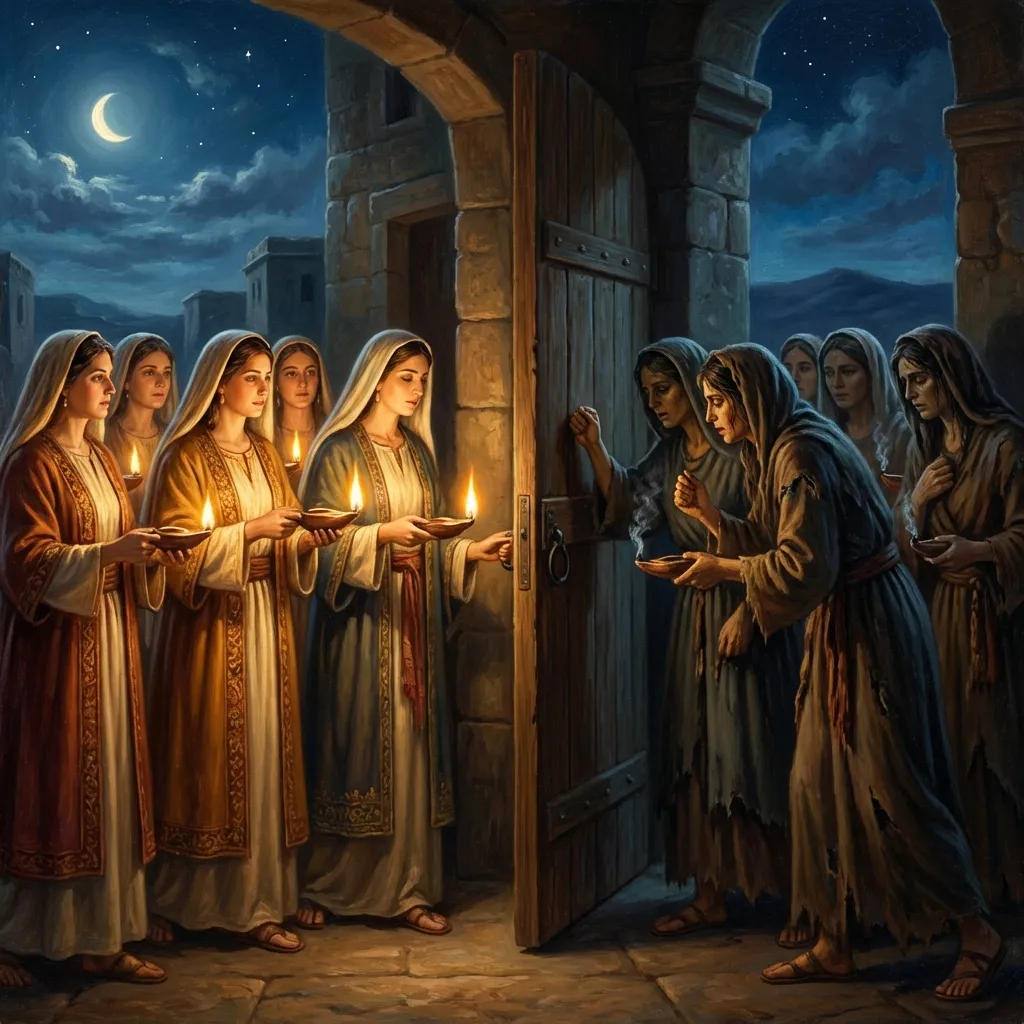
Matthew 25:2-4 draws the decisive line: five were foolish (mōrai) and five were wise (phronimoi). All ten had lamps; all ten wore festive garments; all ten went out to meet the bridegroom. But the foolish took their lamps and took no extra oil with them, whereas the wise took flasks of oil along with their lamps. The foolish virgins possessed outward religious form, but lacked internal spiritual substance.
3. The Great Midnight Delay
The bridegroom was a long time in coming. As the hours dragged toward midnight, all ten bridesmaids grew drowsy and fell fast asleep. The sleep itself was not condemned; both the wise and foolish slept. The crucial difference was that the wise had prepared for a protracted delay. Suddenly at midnight, an electrifying shout echoed through the dark village streets: "Here's the bridegroom! Come out to meet him!"
4. The Panic of Dying Lamps
All ten virgins woke and trimmed their wicks. But the lamps of the foolish sputtered, smoked, and flickered out. Desperate, they pleaded: "Give us some of your oil; our lamps are going out." The wise answered: "No, there may not be enough for both us and you. Instead, go to those who sell oil and buy some for yourselves." Saving faith cannot be borrowed; on the Day of Judgment, no parent can believe for their child, and no spouse can transfer their relationship with God.
5. The Door Was Shut
While the foolish ran into the dark seeking oil merchants, the Bridegroom arrived. Those who were ready accompanied Him into the glowing banquet hall, and the heavy door was bolted shut. When the foolish virgins banged on the door, crying: "Lord, Lord, open the door for us!", the Bridegroom replied with chilling finality: "Truly I tell you, I don't know you." Jesus concluded: "Therefore keep watch, because you do not know the day or the hour."
Biblical Keywords & Theological Roots
Foolish, senseless, thoughtless; the root of 'moron'; representing superficial professors of faith lacking internal spiritual oil.
Wise, prudent, sensible, foresighted; preparing extra oil in jars anticipating the midnight delay of the bridegroom.
'I do not know you!'; the terrifying, irreversible closing of the door by the Bridegroom to those without relational intimacy.
Ancient Near Eastern & Archaeological Context
Ancient Near Eastern wedding customs centered around the festive nocturnal procession bringing the bridegroom to the bride's house. Following months of betrothal negotiations, the bridegroom and his groomsmen set out late in the evening amidst torches, flute music, and singing. Young maiden bridesmaids (*parthenoi*) waited along the village streets with portable torch lamps—earthen cups or rags soaked in olive oil attached to poles. Because negotiations over dowry and bridal gifts between the families frequently extended deep into the midnight hours, delays were standard. When the midnight herald shouted that the groom was arriving, having sufficient flask oil was the sole difference between walking in the luminous royal wedding procession and being locked outside in the pitch-black desert night.
🔑 Key Spiritual Takeaways
- Preparation is Personal and Non-Transferable: The wise virgins could not share their oil; saving faith and the Holy Spirit cannot be borrowed from parents, spouses, or pastors.
- Outward Appearance vs Inward Reality: All ten virgins had lamps, dresses, and looked identical in the dark; only the midnight crisis exposed who possessed oil.
- The Certainty of the Midnight Cry: Christ will return at an unexpected hour; those who live in perpetual spiritual readiness will enter the marriage supper.
- The Tragedy of the Closed Door: When the door of grace shuts, excuses and last-minute panic are completely futile; today is the day of salvation.
Support Independent Biblical Research
Did this study bless you? Help support our independent bilingual research and interactive visual Bible tools.
⚡ Fast Facts
- Jewish Wedding Customs: In first-century Judea, after the betrothal period, the groom would arrive unannounced late at night with a torchlight procession to claim his bride.
- Small Oil Capacity: Ancient clay lamps (lychnoi) held only two to three tablespoons of olive oil, burning for approximately two hours before needing refilling.
- All Slept: Both the five wise and five foolish virgins fell asleep during the long delay; the difference was not in their alertness, but in their reserve oil supply.
- The Shut Door: Once the bridal procession entered the banquet hall, the heavy door was bolted shut for security, admitting no latecomers under any circumstances.
❓ Frequently Asked Questions (FAQs)
What does the 'oil' represent in the Parable of the Ten Virgins?
Throughout biblical theology, oil symbolizes the Holy Spirit and true regenerate life (Zechariah 4:1-6; 1 John 2:20). It represents internal grace, personal relationship with Christ, and authentic spiritual life that cannot be faked or borrowed when the Bridegroom returns.
Why did the wise virgins refuse to share their oil?
Their refusal was not selfishness, but spiritual reality. No human being can impart salvation, character, or the Holy Spirit to another. Each individual must personally buy oil from Christ through faith and repentance (Isaiah 55:1; Revelation 3:18).
Why did the Bridegroom say 'I do not know you' to the foolish virgins?
The Greek word for 'know' (oida/ginōskō) implies intimate, personal, covenantal relationship. Although they carried the outward trappings of bridesmaids, they had never entered into true heart-union with Christ (Matthew 7:21-23).