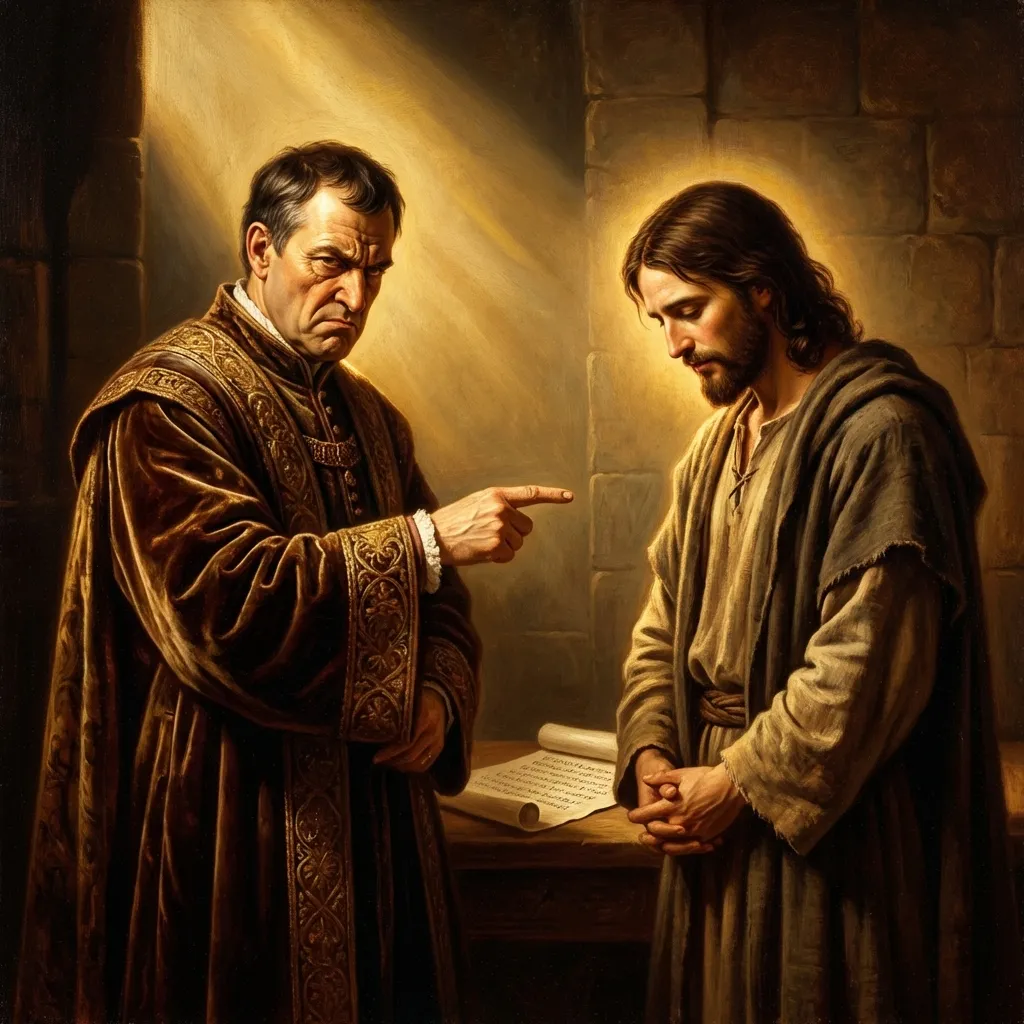
Found in Matthew 7:1-5 and Luke 6:41-42 as an integral movement of the Sermon on the Mount, the Parable of the Speck and the Log is one of Jesus' most memorable comedic satires. Utilizing bold, unforgettable hyperbole drawn from His workshop days as a Galilean carpenter, Christ exposes the lethal absurdity of self-righteous fault-finding, demanding rigorous self-examination before any attempt at fraternal correction.
1. The Prohibition: "Do Not Judge"
Jesus opened with a command that has become one of the most widely quoted yet frequently misunderstood verses in human literature: "Do not judge, or you too will be judged. For in the same way you judge others, you will be judged, and with the measure you use, it will be measured to you" (Matthew 7:1-2). Christ was not forbidding moral discernment, judicial courts, or the identification of false teachers. He was condemning the bitter, arrogant, fault-finding posture of religious pride that delights in picking apart the flaws of others while blind to its own staggering bankruptcy before a holy God.
2. The Hilarious Contrast: Chaff Splinter vs Heavy Roof Beam
To shatter this moral arrogance, Jesus launched into brilliant carpenter's humor: "Why do you look at the speck of sawdust in your brother's eye and pay no attention to the plank in your own eye?" (Matthew 7:3). The contrast is intentionally ludicrous. A karphos is a microscopic fleck of straw, chaff, or sawdust. A dokos, by contrast, is a massive ten-foot timber joist hewn to support the flat roof of a stone house! Imagine a man stumbling down the street with a gigantic wooden telephone pole protruding from his eye socket, bumping into walls, yet passionately offering to perform delicate microsurgery on a friend who has an eyelash in his eye!
3. The Mask of the Hypocrite
Jesus pinned the fault-finder with His sharpest title: "You hypocrite, first take the plank out of your own eye, and then you will see clearly to remove the speck from your brother's eye" (Matthew 7:5). The Greek term hypokritēs refers to a stage actor who holds a tragic or comedic mask before his face. The fault-finder poses as a champion of righteousness, deeply grieved by the imperfections of others. But it is an elaborate theatrical performance. Preoccupation with the sins of others is the ultimate psychological defense mechanism used by the human heart to avoid the painful agony of facing its own guilt.
4. The Inability to See Clearly
Notice the physical reality behind the metaphor: as long as a massive timber beam is wedged in your cornea, you are functionally blind! A person consumed with bitterness, arrogance, and censorious pride possesses distorted moral vision. When they look at a brother, they see only a grotesque caricature. They cannot minister grace, they cannot comfort, and they cannot heal. Their clumsy, self-righteous attempts to 'fix' other people end up gouging out the brother's eye with the timber beam of their own cruelty.
5. True Spiritual Eye Surgery: Gentle Restoration
Jesus does not conclude by telling us to abandon our brother to the pain of his speck. Having a speck in the eye is agonizing, causing tears, irritation, and blurred vision. Christ says: "then you will see clearly to remove the speck from your brother's eye." When a Christian has spent time on their knees, weeping over their own pride, confessing their sins, and experiencing the radical washing of Calvary, the log is removed. What remains is a humble, gentle, compassionate servant who can approach a struggling brother not with a gavel of condemnation, but with the soft, steady hands of a fellow-sinner saved by grace (Galatians 6:1).
Biblical Keywords & Theological Roots
Speck, tiny splinter, speck of chaff or straw; representing a minor personal fault or minor character flaw in a brother.
Log, heavy timber beam, roof-supporting joist; representing colossal, blinding self-righteousness and catastrophic moral failure.
Hypocrite, stage actor wearing a dramatic mask; one who pretends to have moral vision while spiritually blind.
Ancient Near Eastern & Archaeological Context
Growing up in Nazareth, Jesus worked as a *tektōn* (carpenter/builder) alongside Joseph (Mark 6:3). In 1st century Galilee, carpenters rarely made delicate furniture; they hewed timber ceiling joists (*dokoi*), constructed doorframes, carved wooden plows, and shaped threshing sledges. Flat roofs of stone houses were constructed by laying heavy cypress or sycamore logs across stone walls, covered with bundled reeds and packed lime mud. Furthermore, eye inflammation (ophthalmia) caused by desert sand and dust was rampant in ancient Palestine, making the removal of irritating motes (*karphē*) with a corner of a linen cloth a delicate, everyday occurrence.
🔑 Key Spiritual Takeaways
- The Blindness of Critical Pride: A judgmental, fault-finding spirit is itself a massive moral log that blinds us to reality.
- Prior Self-Examination: We are totally disqualified from correcting others until we have ruthlessly judged and repented of our own sins.
- The Mask of the Hypocrite: Projecting a passionate crusade against minor sins in others is often an unconscious psychological deflection from major sins in ourselves.
- Gentle, Restorative Correction: True biblical correction is done with tears, humility, and clear spiritual sight, seeking restoration rather than condemnation.
Support Independent Biblical Research
Did this study bless you? Help support our independent bilingual research and interactive visual Bible tools.
⚡ Fast Facts
- Sermon on the Mount Context: Found in Matthew 7:1-5 and Luke 6:41-42, immediately following Christ's famous prohibition: 'Do not judge, or you too will be judged.'
- Galilean Carpenter Hyperbole: As a trained craftsman (*tektōn*), Jesus utilized vivid, comical hyperbole—a carpenter with a massive 10-foot ceiling beam protruding from his eye attempting delicate eye surgery on a friend.
- Roof-Bearing Joist: A *dokos* was a heavy timber beam used to support the clay-and-rush flat roofs of Palestinian stone homes.
- Restorative Eye Surgery: Jesus did not forbid helping a brother remove a speck; He commanded prior self-examination so that with cleared vision, one can gently restore the brother.
❓ Frequently Asked Questions (FAQs)
Does 'Do not judge' (Matthew 7:1) mean Christians should never confront sin or exercise discernment?
No; throughout Scripture, believers are commanded to test the spirits, discern false prophets, and gently restore sinning brothers (Galatians 6:1; 1 Corinthians 5:12). Matthew 7:1 condemns unloving, self-righteous, hypocritical condemnation, not wise spiritual discernment.
Why did Jesus refer to the fault-finder as a 'hypocrite' (hypokrita)?
A Greek *hypokritēs* was an actor who wore a theatrical mask to play a fictional role. The fault-finder acts like an expert optometrist passionate about holiness, while behind the mask lurks a massive blind beam of unexamined pride, gossip, and rebellion.
What are the practical steps Jesus gives for helping a brother with a speck?
Jesus gives an orderly two-step process: First, perform surgical self-examination to take the log out of your own eye through confession and repentance; Second, with clear, humbled vision, gently and tenderly help your brother remove his speck.