Set within the solemn atmosphere of the Olivet Discourse in Matthew 24:32-35, Mark 13:28-31, and Luke 21:29-33, the Parable of the Budding Fig Tree is Christ's timeless lesson in prophetic discernment. Looking out over the Temple from the Mount of Olives, Jesus uses the delicate, seasonal awakening of an ordinary fruit tree to instruct His disciples in recognizing the unmistakable signs of His return.
1. The Question of the Ages on the Mount of Olives
Sitting privately with His inner circle on the slopes of Olivet, Jesus was asked the defining question of history: "Tell us, when will this happen, and what will be the sign of your coming and of the end of the age?" (Matthew 24:3). Jesus detailed a sweeping panorama of birth pangs: wars, rumors of wars, famines, pestilences, earthquakes, persecutions, false prophets, and the global proclamation of the Gospel. To synthesize these cosmic portents into practical vigilance, Christ pointed to the surrounding orchards.
2. The Living Calendar of the Fig Tree
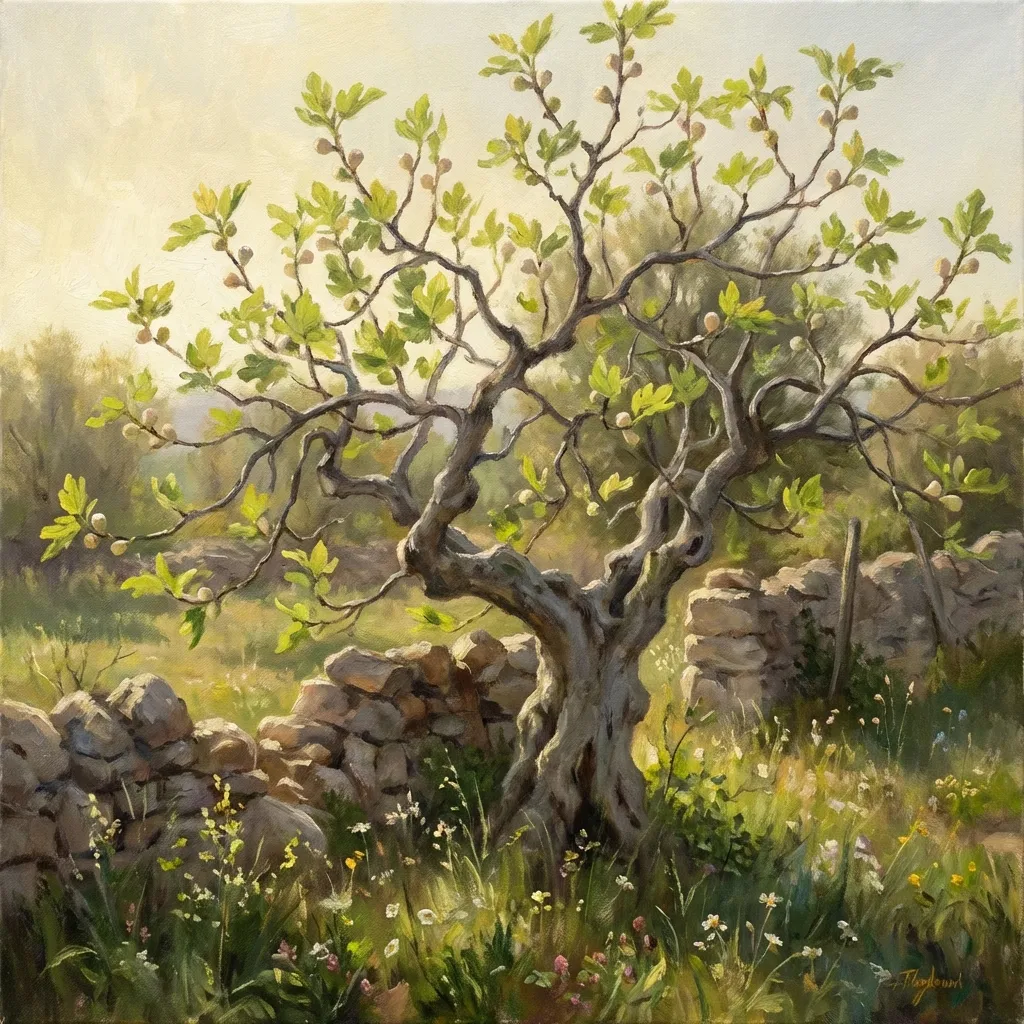
Jesus issued a direct command: "Now learn this lesson from the fig tree: As soon as its twigs get tender and its leaves come out, you know that summer is near" (Matthew 24:32). In the hills surrounding Jerusalem, the fig tree (*Ficus carica*) served as nature's agricultural calendar. While olive and cypress trees retained their dark foliage through the winter, the fig tree stood stark, grey, and bare. But when the winter chills broke and the warm sun climbed the sky, subterranean sap rushed through the wood. The twigs grew tender (hapalos) and green buds burst into leaf. No peasant needed an astronomer or an almanac; the budding branch was an infallible declaration that summer (theros) and harvest were at hand.
3. Discerning the Proximity of the King
Christ made the vital prophetic application: "Even so, when you see all these things, you know that it is near, right at the door" (Matthew 24:33). The fulfillment of prophecy is not an ambiguous riddle meant to baffle the church. When the convergence of biblical signs intensifies across the geopolitical, environmental, moral, and technological landscape, the believer must lift up their head, knowing their redemption draws near (Luke 21:28). Jesus is not distant; His hand is on the latch of the door.
4. The Absolute Immortality of Christ's Words
To anchor our faith amid the terrifying collapse of earthly systems, Jesus delivered one of the most sublime declarations of His divine authority: "Heaven and earth will pass away, but my words will never pass away" (Matthew 24:35). The physical universe—the blazing galaxies, the ancient mountains, the oceans, and the atmosphere—will undergo fiery dissolution and recreation (2 Peter 3:10; Revelation 21:1). Yet not a single syllable, promise, warning, or covenant uttered by the lips of Jesus Christ will ever fail or fade. His Word is the bedrock of eternity.
5. Living in Sober, Watchful Readiness
The parable closes with an urgent call to holy sobriety. In Luke's account, Jesus warned: "Be careful, or your hearts will be weighed down with carousing, drunkenness and the anxieties of life, and that day will close on you suddenly like a trap" (Luke 21:34). Prophecy was never given for armchair debate or sensational speculation; it was given to purify our hearts, loosen our grip on worldly treasures, and inspire relentless evangelism. When the fig tree buds, the wise prepare for the King.
Biblical Keywords & Theological Roots
Branch, tender young shoot; the living limb of the tree that absorbs sap and signals the turning of the seasons.
Tender, soft, succulent; filled with rising sap, pliable and ready to burst forth with new foliage.
Summer, harvest season; the culmination of the agricultural year, symbolizing the near return of the Messiah.
Ancient Near Eastern & Archaeological Context
Sitting on the Mount of Olives facing the gleaming white limestone walls and gold trim of Herod's Temple, Jesus was surrounded by terraced olive and fig groves. In the Levant, winter lasts from December through February, during which fig branches stand bare, grey, and seemingly dead. In late April and May, as temperatures rise, rising sap softens the hardened wood, causing tender green tips and early breba buds to swell. Peasants celebrated this moment because it announced that the cold rains were over, grain harvest was imminent, and the joyful warmth of summer (*theros*) had arrived. Jesus seized upon this natural, annual rhythm to teach that prophetic signposts are plain to those whose spiritual eyes are open.
🔑 Key Spiritual Takeaways
- Spiritual Discernment is Commanded: Believers are not to live in naive ignorance; Christ expects His church to discern the theological signs of the times.
- The Nearness of the King: When prophetic birth pangs accelerate across the earth, disciples must know that Christ's return is 'right at the door.'
- The Absolute Eternity of Scripture: Empires crumble, stars fade, and the physical cosmos will be renewed, but the Word of Jesus Christ stands eternally immutable.
- Watchfulness and Readiness: Prophetic knowledge is not given to satisfy speculative curiosity, but to produce holy living, sober vigilance, and urgent evangelism.
Support Independent Biblical Research
Did this study bless you? Help support our independent bilingual research and interactive visual Bible tools.
⚡ Fast Facts
- Olivet Discourse Setting: Jesus delivered this mini-parable on the slopes of the Mount of Olives overlooking the Temple (Matthew 24:32-35; Mark 13:28-31; Luke 21:29-33).
- Deciduous Botanical Clock: Unlike evergreen olive and palm trees, the Mediterranean fig tree (*Ficus carica*) completely sheds its leaves in winter and is one of the very last trees to bud in late spring, making its green shoots an unmistakable harbinger of summer.
- The Infallible Word: 'Heaven and earth will pass away, but my words will never pass away' (Matthew 24:35)—the universe itself will dissolve before a single promise of Christ fails.
- Eschatological Literacy: Jesus rebuked spiritual illiteracy; disciples must be as skilled at discerning the prophetic signs of the end times as farmers are at reading budding fig twigs.
❓ Frequently Asked Questions (FAQs)
What does 'this generation will not pass away' mean in Matthew 24:34?
The Greek word *genea* has multiple semantic ranges: it can refer to the contemporary generation that witnessed the destruction of Jerusalem in AD 70, the enduring Jewish race/people, or the specific generation that sees the final cluster of end-time signs culminate in Christ's return.
Does the budding fig tree specifically represent the modern rebirth of the nation of Israel?
While many dispensational interpreters connect the fig tree's budding to the 1948 re-establishment of Israel (using the fig tree as a national symbol), Luke 21:29 broadens the imagery: 'Look at the fig tree and all the trees.' Jesus' primary point is botanical and observational: just as any budding tree announces summer, so the totality of prophetic signs announces the immediate return of the King.
Why did Jesus emphasize that His words will outlast heaven and earth?
In Jewish theology, heaven and earth were the most permanent, enduring realities in creation (Psalm 119:89-90). By declaring that His words possessed greater permanence than the cosmos, Jesus made an astounding claim to absolute deity and supreme divine authority.