The euphoria in the camp of Israel at Gilgal was intoxicating. The colossal, impenetrable walls of Jericho had violently collapsed beneath the earth at the blast of the rams' horns and the shout of faith. Israel had watched Yahweh dismantle Canaan's premier citadel without swinging a single battering ram or constructing an assault trench. The fear of Israel's God had paralyzed every king from the Jordan River to the Mediterranean coast. Buoyed by this effortless triumph, Joshua dispatched military scouts fifteen miles westward into the craggy Judean hill country to reconnoiter their next target: a small, highland settlement perched above the desert ascent known as Ai.
The reconnaissance scouts returned with an air of casual, dismissive arrogance. Standing before Joshua, they delivered a self-assured assessment: "Do not let all the people go up, but let about two or three thousand men go up and attack Ai. Do not make all the people weary by journeying there, for the people of Ai are few" (Joshua 7:3). It was a tragic, fatal miscalculation. Israel had begun to view divine miracles as their own military prowess. More critically, neither Joshua nor the elders fell on their faces to inquire of Yahweh before launching the assault. Trusting human intelligence and carnal presumption, Joshua dispatched an expeditionary force of three thousand elite soldiers to storm the mountain fortress.
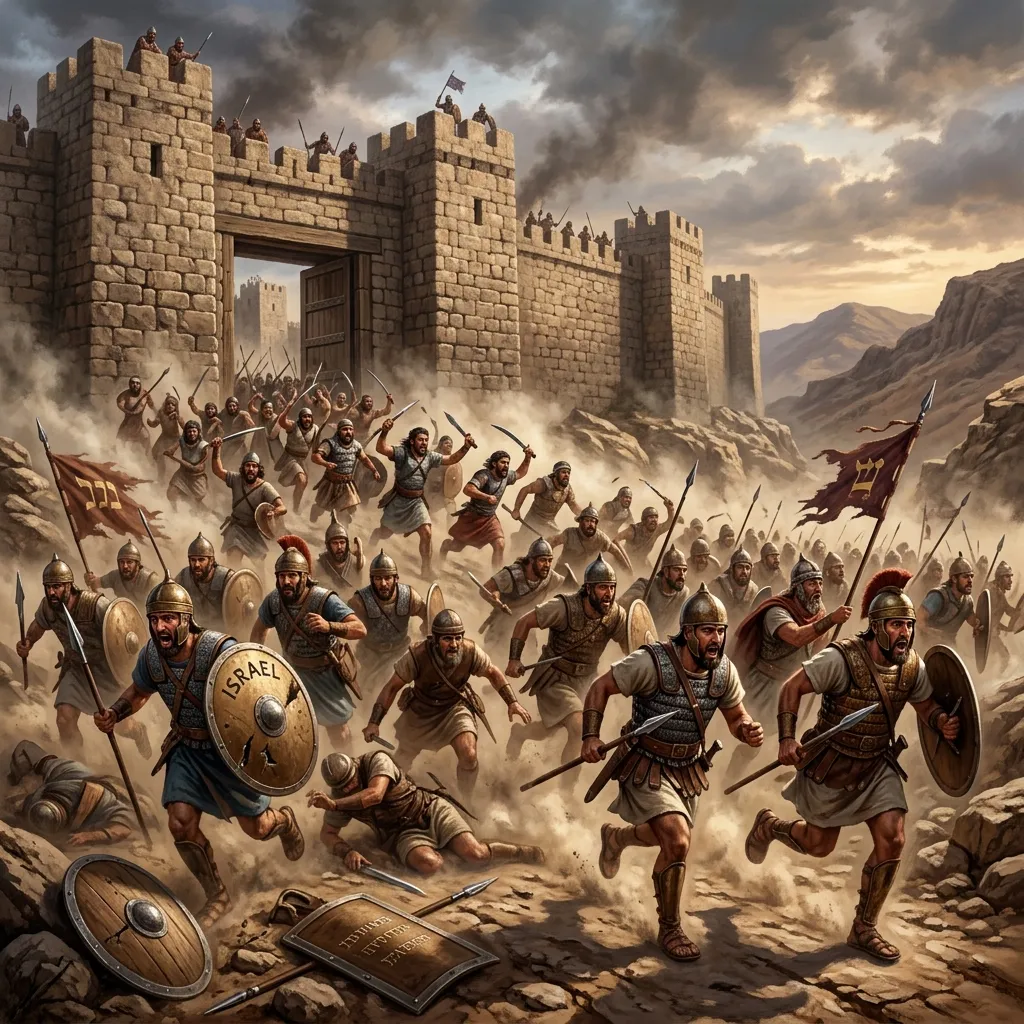
The battle was an instantaneous, horrific catastrophe. As the Hebrew warriors charged up the rocky ravines, the garrison of Ai burst through their gates in a ferocious counter-offensive. Instead of divine panic falling upon the Canaanites, an inexplicable terror seized the hearts of the Israelites. The Hebrew line fractured, buckled, and disintegrated into a chaotic, panicked rout. The men of Ai pursued the fleeing soldiers down the steep, fractured limestone drops known as the *Shebarim* (the quarries), striking down thirty-six Hebrew men and slaughtering them along the crags. When the traumatized survivors stumbled back into Gilgal, the psychological blow was devastating: "Therefore the hearts of the people melted and became like water" (Joshua 7:5).
The invincibility of the covenant nation had evaporated in an afternoon. Joshua was shattered. Tearing his clothes in agony, the great commander and the seventy elders of Israel collapsed face down in the dust before the Ark of the Covenant, remaining prostrated until evening. Joshua cried out in bewildered despair: "Alas, Lord Yahweh, why have You brought this people over the Jordan at all—to deliver us into the hand of the Amorites, to destroy us? What will You do for Your great name?" (Joshua 7:7, 9).
Joshua assumed God had failed His promise. But the response of the Almighty shattered his complaints with holy thunder: "Get up! Why do you lie thus on your face? Israel has sinned, and they have also transgressed My covenant which I commanded them. For they have even taken some of the accursed things (cherem), and have both stolen and deceived; and they have also put it among their own goods. Therefore the children of Israel could not stand before their enemies, but turned their backs before their enemies, because they have become doomed to destruction! Neither will I be with you anymore, unless you destroy the accursed from among you!" (Joshua 7:10–12).
The mystery was unveiled: Israel had not been defeated by the swords of Ai; they had been paralyzed by hidden sacrilege within their own camp. Someone had committed high treason (*ma'al*) against God's holy presence at Jericho. God commanded an immediate, solemn trial by sacred lot (*goral*) before the Tabernacle. Early the next morning, Joshua assembled the millions of Israel by their tribes. With trembling dread, the High Priest cast the sacred lot before the Ark. Tribe by tribe, clan by clan, household by household, the divine spotlight narrowed: the royal tribe of Judah was taken; the clan of the Zerahites was taken; the household of Zabdi was taken; and finally, man by man, the lot fell upon a solitary warrior—Achan, the son of Carmi.
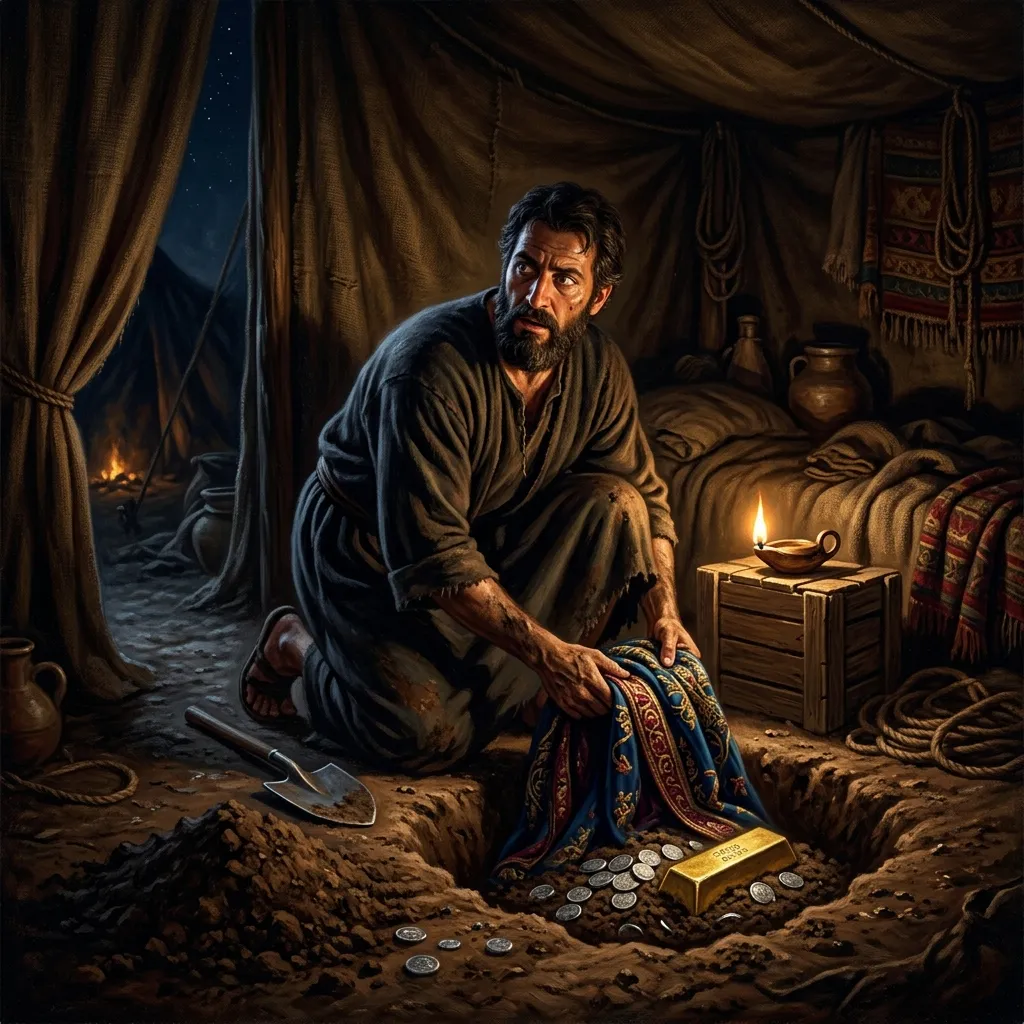
Looking upon the trembling transgressor, Joshua spoke with tender, solemn pastoral gravity: "My son, I beg you, give glory to Yahweh God of Israel, and make confession to Him, and tell me now what you have done; do not hide it from me" (Joshua 7:19). Broken by the penetrating light of divine omniscience, Achan laid bare the catastrophic anatomy of sin: "Indeed I have sinned against Yahweh God of Israel, and this is what I have done: When I saw among the spoils a beautiful Babylonian garment (aderet shin'ar), two hundred shekels of silver, and a wedge of gold weighing fifty shekels, I coveted them and took them. And there they are, hidden in the earth in the midst of my tent, with the silver under it" (Joshua 7:20–21).
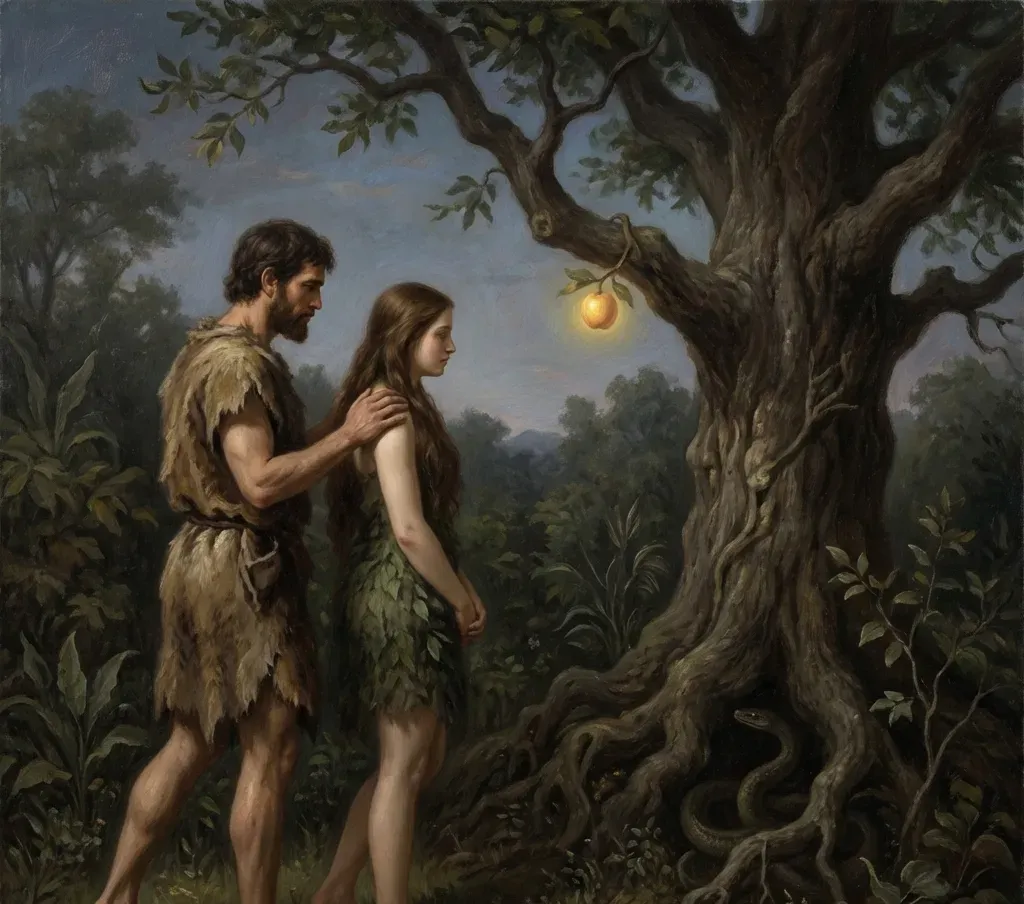
Achan's tragic confession—*I saw, I coveted, I took, I hid*—mirrored the eternal blueprint of the fall of man in Eden. Joshua immediately dispatched runners who sprinted across the camp to Achan's tent. Tearing back the rugs and digging into the earthen floor, they found the luxurious imported Kassite mantle and the glittering hoard of consecrated silver and gold. Bringing the stolen treasure back to the Tabernacle, they poured it out on the ground before Yahweh—a sickening display of the petty dirt for which thirty-six Hebrew men had shed their lifeblood.
The sentence of divine holiness was swift and uncompromising. Joshua, accompanied by all Israel, took Achan, the stolen silver, the Babylonian garment, the gold, along with his complicit sons and daughters, his livestock, and his tent, and led them out of the camp into a barren, rugged ravine north of Jericho. Looking upon the perpetrator who had cost Israel so dearly, Joshua declared: "Why have you troubled us? Yahweh will trouble you this day!" (Joshua 7:25). There, in the gorge named forever as the Valley of Achor (*Emek Akhor*—the Valley of Trouble), Achan and his household were stoned with stones and burned with fire. Over the charred remains, Israel raised an immense heap of stones (*gal-avanim gadol*) that stood as an enduring monument of warning.
With the demonic cancer violently excised from the camp, Scripture records the glorious turning point of grace: "So Yahweh turned from the fierceness of His anger" (Joshua 7:26). Immediately, the presence of God returned with power. God spoke to Joshua: "Do not be afraid, nor be dismayed; take all the people of war with you, and arise, go up to Ai. See, I have given into your hand the king of Ai, his people, his city, and his land" (Joshua 8:1). Executing a brilliant divine strategy of false retreat and a five-thousand-man night ambush in the northern ravine, Israel totally conquered Ai, setting the citadel on fire and taking the land.
Yet the theological significance of the Valley of Achor stretches far beyond the ruins of Ai. Eight centuries later, the prophet Hosea revealed that God would one day take that very gorge of tragedy and curse and transform it into an entrance of redemption: "I will give her... the Valley of Achor as a door of hope (petach tiqvah)" (Hosea 2:15). That prophetic promise was sealed at Calvary! On the cross, Jesus Christ took upon Himself the stolen guilt, the sacrilege, and the curse of humanity, stepping into the ultimate Valley of Achor outside the gates of Jerusalem. Because Christ absorbed the holy wrath of God against sin, our valleys of deepest trouble, defeat, and failure are transformed into open doors of eternal hope and triumph!
Biblical Keywords & Theological Roots
To act unfaithfully, commit high treason, transgress a sacred boundary, or embezzle consecrated property; a deliberate violation of covenant holiness.
Achan means 'Troubler'; derived from *akhar*, to stir up calamity, bring disaster, foul water, or plunge a community into divine judgment.
Mantle of Shinar; an opulent, embroidered royal Babylonian robe representing the allure of worldly prestige, luxury, and carnal indulgence.
Valley of Achor / Trouble; the arid gorge near Jericho where Achan's theft was judged by fire and a stone cairn was erected as an eternal warning.
Door of Hope; the prophetic reversal in Hosea 2:15, where God promises that genuine repentance transforms the Valley of Achor into an entrance of redemption.
Ancient Near Eastern & Archaeological Context
The military catastrophe at Ai took place in the rugged central Judean highlands north of Jerusalem and east of Bethel. While classical 20th-century archaeology often associated biblical Ai with Et-Tell (leading to skeptical claims of an occupational hiatus during the Late Bronze Age), extensive field excavations directed by Dr. Bryant Wood and the Associates for Biblical Research (ABR) have convincingly identified the fortress of Ai with *Khirbet el-Maqatir*, situated roughly one mile west of Et-Tell. Khirbet el-Maqatir perfectly satisfies every geographical and tactical parameter described in Joshua chapters 7 and 8: it is located directly east of Bethel, bordered by a steep northern ravine that provided concealed staging grounds for Joshua's nocturnal ambush force of 5,000 men (Joshua 8:11–13), and features a precipitous eastern descent toward the Jordan Valley historically identified with the *Shebarim* ('quarries' or 'fractured limestone drops,' Joshua 7:5), where retreating Hebrew scouts were slaughtered. Furthermore, Achan's confessed loot included an *Aderet Shin'ar*—a mantle or ceremonial robe imported from Shinar (Babylonia). During the Kassite period (15th–14th centuries BC), Babylonian wool and linen textiles, dyed with precious murex purples and lavishly embroidered with gold threads, were the supreme luxury commodities of the Ancient Near East, traded across international caravan routes into Canaanite city-states. The presence of such elite Mesopotamian artifacts confirms Jericho's integration into high-end international commerce and underscores the intense material temptation that snared Achan. The tribal selection process utilized the sacred lot (*goral*), administered by the High Priest before the Tabernacle, likely employing the Urim and Thummim to narrow guilt systematically from tribe, to clan, to household, to individual.
Practical Discipleship & Spiritual Application
- Secret Sin is Never Private; It Destroys the Body: Achan stole in absolute secrecy, buried his loot in the dark floor beneath his family's tent, and assumed nobody would ever know. Yet his solitary theft brought spiritual paralysis upon two million people and resulted in the violent deaths of thirty-six innocent soldiers at Ai. In the body of Christ, there is no such thing as an isolated private sin; hidden compromise robs the entire church of its spiritual authority and momentum.
- The Fatal Anatomy of Temptation: In Joshua 7:21, Achan confessed: 'When I saw among the spoils a beautiful Babylonian garment... I coveted them and took them; and there they are, hidden in the earth in my tent.' This fourfold progression—*I saw, I coveted, I took, I hid*—is the exact blueprint of spiritual death seen in Eve in Eden (Genesis 3:6) and David with Bathsheba (2 Samuel 11:2–4). We must take captive the wandering eye and mortify lust before it conceives into catastrophic rebellion.
- Prayer Cannot Substitute for Purging Disobedience: When defeat struck at Ai, Joshua fell on his face in bewildered grief, complaining that God had brought Israel across the Jordan to perish. God interrupted him abruptly: 'Get up! Why do you lie thus on your face? Israel has sinned... I will not be with you anymore, unless you destroy the accursed from among you' (Joshua 7:10–12). When we experience spiritual dryness or defeat, intercession must not be used as an excuse to avoid radical repentance and the immediate removal of compromised idols.
- The Valley of Achor Transformed into a Door of Hope: After Achan's sin was radically judged and put away, God said to Joshua, 'Do not be afraid, nor be dismayed; take all the people of war with you, and arise, go up to Ai!' (Joshua 8:1). Hosea 2:15 prophetically proclaims: 'I will give her... the Valley of Achor as a door of hope.' When we face our failures with honest confession and nail our sins to the cross of Jesus Christ, God redeems our worst defeats into monuments of triumph and deeper intimacy.
⚡ Fast Facts
- The initial scouting report arrogantly underestimated Ai, telling Joshua: 'Do not let all the people go up, but let about two or three thousand men go up and attack Ai' (Joshua 7:3).
- Thirty-six Israelite soldiers were killed when the men of Ai chased them from before the city gate as far as the stone quarries (*Shebarim*), causing the people's hearts to melt like water (Joshua 7:5).
- Achan was from the premier tribe of Judah, belonging to the clan of the Zerahites, the son of Carmi, the son of Zabdi (Joshua 7:1, 18).
- A massive heap of stones (*gal-avanim gadol*) was raised over Achan and his family in the Valley of Achor, which stood as a permanent physical landmark of solemn warning (Joshua 7:26).
❓ Frequently Asked Questions (FAQs)
Joshua 7:1 opens with a staggering theological statement: 'But the children of Israel committed a trespass (*ma'al*) regarding the accursed things, for Achan... took of the accursed things; so the anger of Yahweh burned against the children of Israel.' Scripture employs the corporate pronoun: one man sinned, yet *Israel* committed treason! This reveals the biblical doctrine of corporate solidarity and covenant headship. Israel was not merely a loose collection of autonomous individuals; they were a singular, organic covenant body (*khal Yahweh*, the assembly of the Lord) bound together under the blood of the covenant. In a human body, if a single organ develops cancer or gangrene, the entire body is afflicted and paralyzed. When Achan stole from the *cherem* (the sacred ban belonging to God), he introduced spiritual defilement into the camp, rupturing the holiness that allowed God's Shekinah presence to dwell among them. Furthermore, the nation had exhibited carnal self-sufficiency prior to Ai: Joshua and the elders failed to inquire of the Lord before sending troops, acting on the arrogant advice of the spies. Achan's physical greed mirrored the nation's spiritual presumption. Corporate judgment teaches that believers in the body of Christ share mutual responsibility: our private conduct directly affects the spiritual health and victory of the entire congregation (1 Corinthians 5:6; 12:26).
Joshua 7:24–25 records that Joshua and all Israel took Achan, the silver, the garment, the wedge of gold, 'his sons, his daughters, his oxen, his donkeys, his sheep, his tent, and all that he had' to the Valley of Achor, where they were stoned and burned. Critics often object that Deuteronomy 24:16 explicitly forbids punishing children for their parents' sins: 'Fathers shall not be put to death for their children, nor shall children be put to death for their fathers; a person shall be put to death for his own sin.' How do we reconcile this apparent contradiction? The text reveals that Achan buried these bulky, heavy stolen goods—a long Babylonian robe, 200 shekels of silver, and a 50-shekel bar of gold—*inside his family tent, beneath the earthen floor* (Joshua 7:21). In a small, intimate nomadic desert tent where an entire family ate, slept, and lived in close quarters, it was physically impossible to dig a massive subterranean pit, conceal kilograms of gold and silver, and bury an elaborate garment without the active knowledge, compliance, and complicity of his household! Achan's family members were not executed as innocent bystanders for their father's sin; they were active conspirators who aided, abetted, and concealed high sacrilege against Yahweh. The total destruction of his household mirrored the *cherem* judgment of Jericho itself: because Achan took of the devoted thing, his own house became *cherem*, entirely purged so that Israel might live.
The Valley of Achor (*Emek Akhor*) was historically the darkest, most humiliating valley in early Israelite history—a place of defeat, terror, capital judgment, and a massive heap of stones marking the tragedy of sin. Yet eight centuries later, the prophet Hosea penned one of the most breathtaking promises in the Old Testament: speaking to an unfaithful, idolatrous Israel who had played the harlot against Yahweh, God promises that He will allure her into the wilderness, speak tenderly to her heart, and 'give her her vineyards from there, and the Valley of Achor as a door of hope (*petach tiqvah*)' (Hosea 2:14–15). How can a valley of curse and death become a doorway of hope? The answer is found exclusively in the gospel of Jesus Christ! At Calvary, Jesus Christ, our sinless substitute, stepped into the ultimate Valley of Achor. He was taken outside the city walls, laden with the stolen guilt and sacrilege of humanity, and bore the blazing lightning of divine wrath against sin. Because the judgment of God against sin fell fully upon Christ on the cross, the place of our deepest failure, shame, and curse is transformed into an open door of resurrected hope, restoration, and eternal life! When a repentant sinner confesses their secret sins and surrenders them at the cross, God takes their Valley of Trouble and turns it into their doorway of eternal victory.