Recorded in Matthew 25:31-46, the dramatic discourse of the Sheep and the Goats forms the grand, cosmic climax of Jesus' public teaching ministry. Standing at the threshold of His own crucifixion, Christ lifts His eyes to the end of human history, unveiling His glorious return as the King and Judge of the universe who will separate all nations based upon the authentic fruit of sacrificial love.
1. The Throne of Glory and the Cosmic Gathering
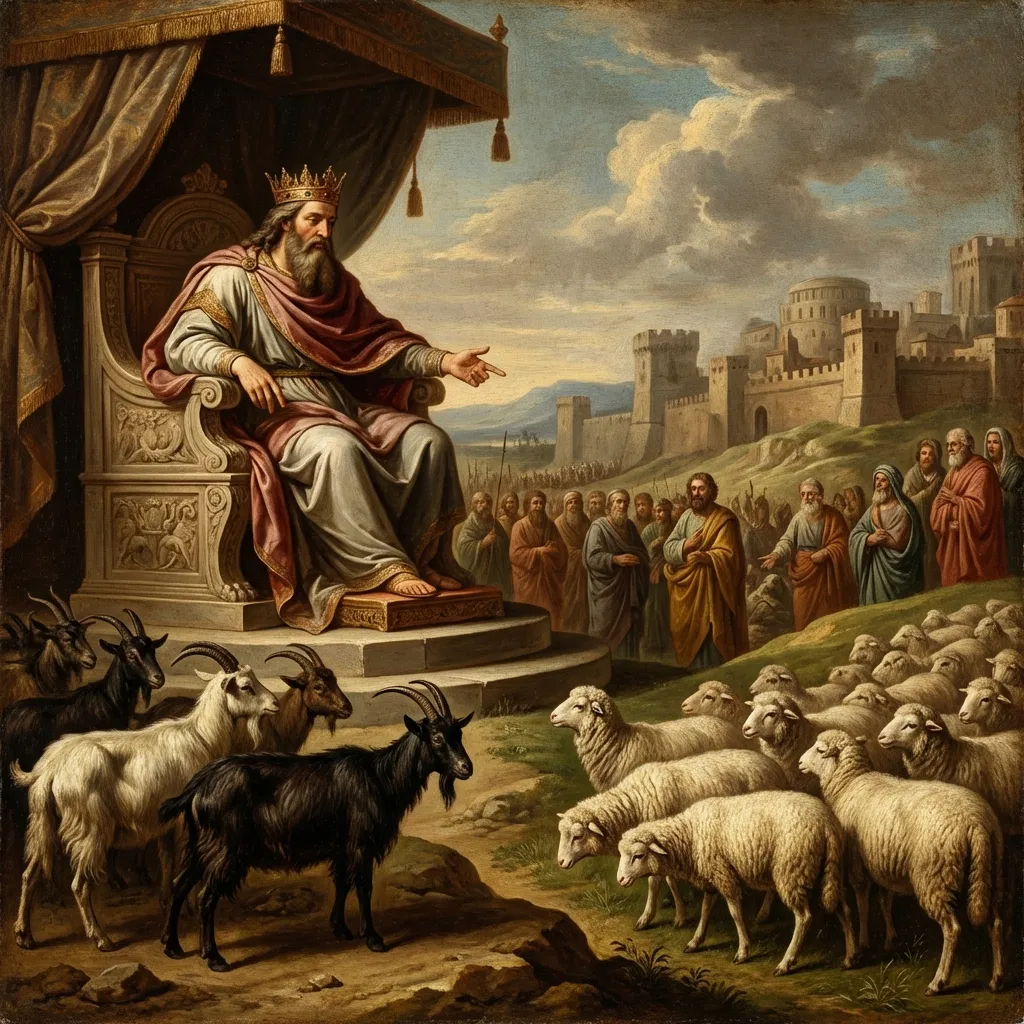
Jesus opened with a vision of breathtaking majesty: "When the Son of Man comes in his glory, and all the angels with him, he will sit on his glorious throne. All the nations will be gathered before him" (Matthew 25:31-32). The lowly teacher from Nazareth, despised and rejected by men, will one day sit as the undisputed Sovereign of all creation. Kings, presidents, philosophers, paupers, and every individual across human history will stand assembled before His blazing tribunal.
2. The Shepherd's Sovereign Separation
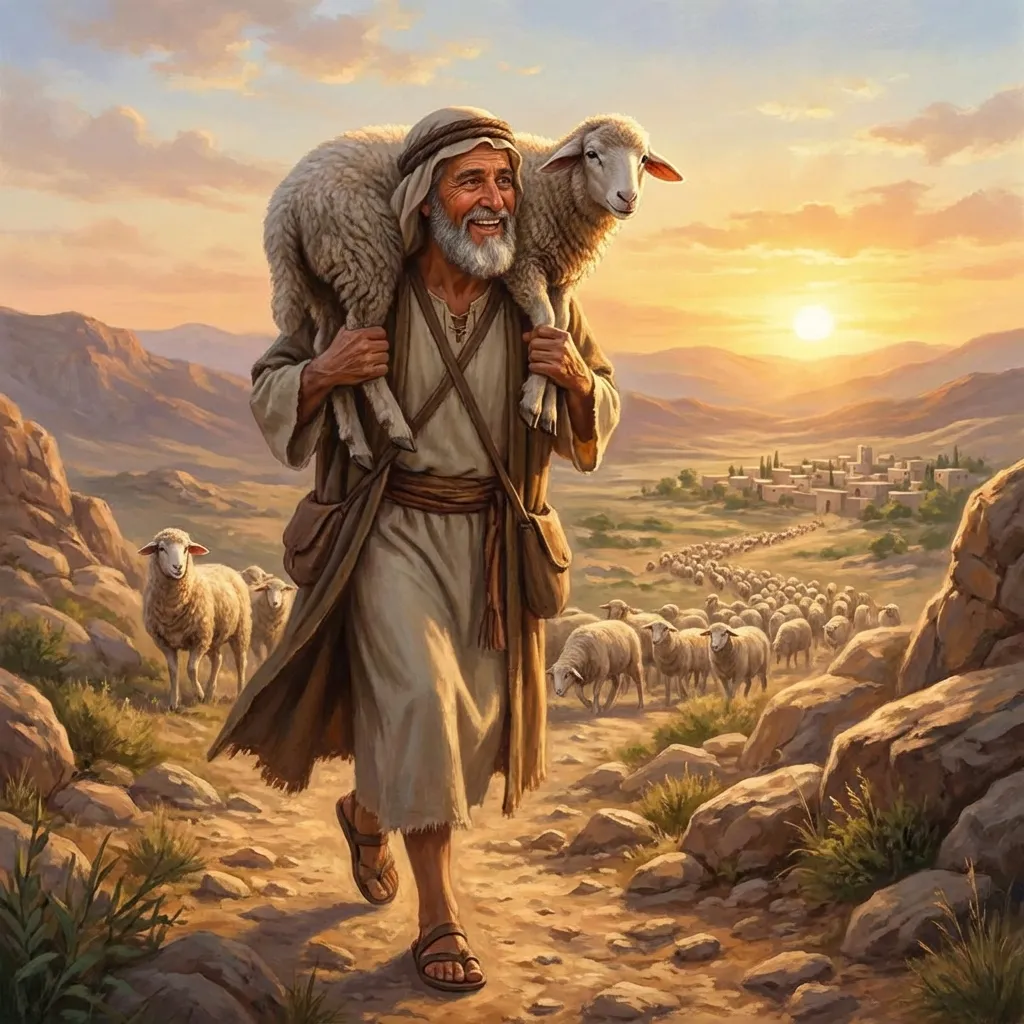
The King will execute an immediate, infallible division: "He will separate the people one from another as a shepherd separates the sheep from the goats. He will put the sheep on his right and the goats on his left" (Matthew 25:32-33). In the ancient Near East, the right hand was the station of covenant favor, honor, and royal blessing, while the left indicated censure. The shepherd possessed the instinctive, effortless discernment to sort the white, woolly sheep from the dark, rough-coated goats. No disguise, political status, or religious hypocrisy will survive that gaze.
3. The Shock of the Righteous: "When Did We See You Hungry?"
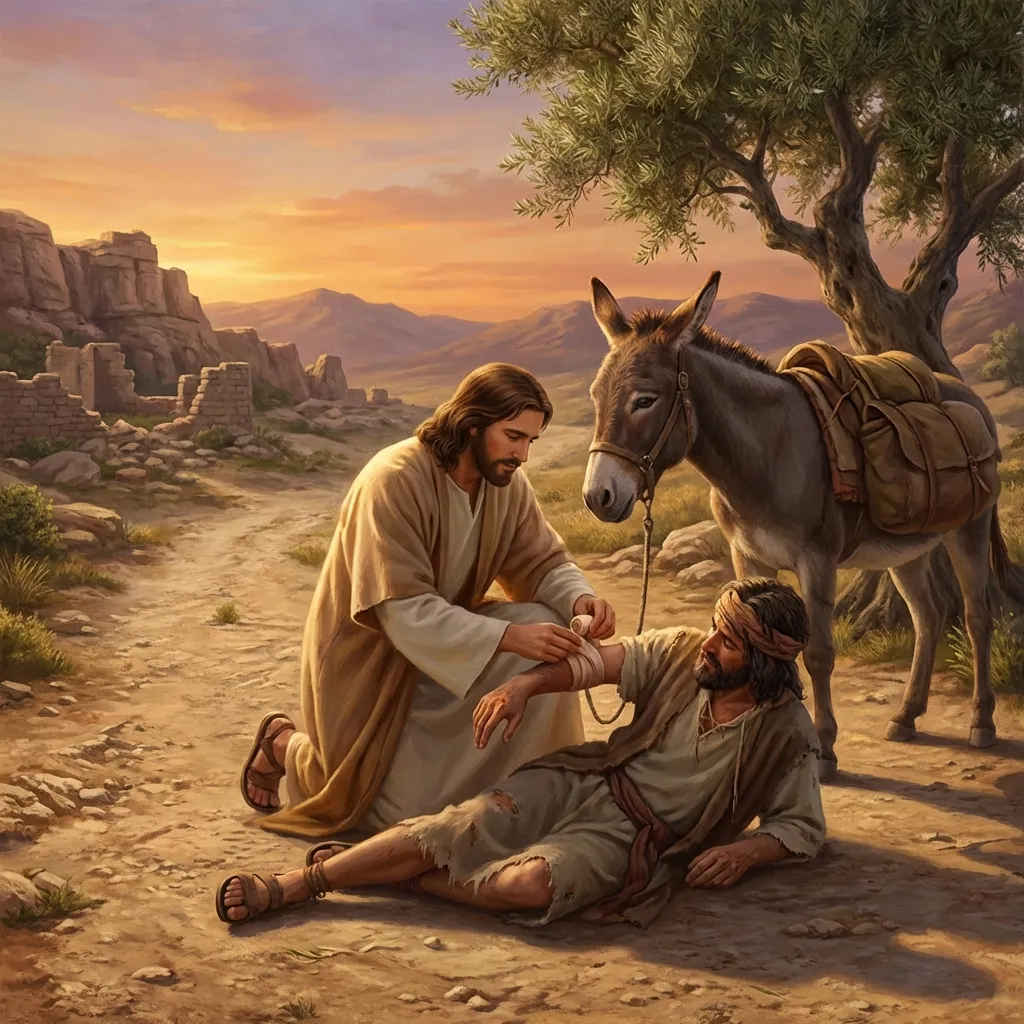
The King addressed those on His right: "Come, you who are blessed by my Father; take your inheritance, the kingdom prepared for you since the creation of the world. For I was hungry and you gave me something to eat, I was thirsty and you gave me something to drink, I was a stranger and you invited me in, I needed clothes and you clothed me, I was sick and you looked after me, I was in prison and you came to visit me" (Matthew 25:34-36). The righteous responded in complete bewilderment: When did we ever do this for You? They had kept no spiritual ledger, blown no self-congratulatory trumpets. Their love was the spontaneous overflow of a heart transformed by grace. The King answered: "Truly I tell you, whatever you did for one of the least of these brothers and sisters of mine, you did for me" (Matthew 25:40).
4. The Indictment of Omission: The Tragedy of Callous Indifference
Turning to those on His left, the King pronounced a terrifying sentence: "Depart from me, you who are cursed, into the eternal fire prepared for the devil and his angels" (Matthew 25:41). Notice the staggering nature of their indictment: they were not accused of adultery, blasphemy, extortion, or murder. They were condemned for passive, callous omission: they walked past the hungry, stepped over the naked, and ignored the prisoner. Unbelief is revealed not merely by aggressive wickedness, but by comfortable, self-satisfied indifference to human suffering. In neglecting the least, they neglected the Lord Himself.
5. The Two Irrevocable Destinies
The discourse closes with absolute, unyielding finality: "Then they will go away to eternal punishment, but the righteous to eternal life" (Matthew 25:46). The Greek word aiōnios applies equally to both the torment of the lost and the ecstasy of the redeemed. There is no middle ground, no purgatorial transition, and no second trial. Christ has identified Himself with the broken and the suffering; how we treat the vulnerable in this brief earthly pilgrimage is the definitive, public testimony of whether we truly know the King.
Biblical Keywords & Theological Roots
Sheep / Goat; representing the two morally distinct groups of humanity separated before the judgment seat of Christ.
To separate, divide completely, segregate; the definitive, infallible sorting executed by the King of Glory.
The least, smallest, most marginalized; the vulnerable brothers with whom Christ intimately and personally identifies.
Ancient Near Eastern & Archaeological Context
In the 1st century hill country of Judea and Galilee, pastoral husbandry was central to village economics. Flocks were typically mixed. White Awassi fat-tailed sheep were docile, grazing on sparse mountain scrub, while black, agile Syrian goats climbed rocky outcrops to browse thornbushes. At sundown, shepherds separated the animals because goats had thin coats and needed warmth, while sheep produced heavy lanolin-rich wool and slept comfortably under the stars. Furthermore, the Roman penal system provided no sustenance to prisoners; incarcerated individuals survived solely through food and clothing brought by visiting friends and family. Neglecting to visit a prisoner was often a literal death sentence.
🔑 Key Spiritual Takeaways
- Faith Proven by Tangible Compassion: Genuine saving faith is not a dead intellectual creed; it invariably bears fruit in sacrificial love toward the destitute.
- Christ Disguised in the Suffering: Jesus does not merely sympathize with the broken; He so intimately inhabits His suffering brothers that ministering to them is ministering directly to Him.
- The Damnation of Passive Omission: The goats were not condemned for blatant murder, theft, or blasphemy, but for callous, passive neglect of suffering humanity.
- Two Irrevocable Destinies: History concludes with an eternal bifurcation: eternal punishment (*kolasin aiōnion*) or eternal life (*zōēn aiōnion*).
Support Independent Biblical Research
Did this study bless you? Help support our independent bilingual research and interactive visual Bible tools.
⚡ Fast Facts
- Olivet Discourse Climax: This dramatic narrative forms the grand finale of Christ's Olivet Discourse in Matthew 25, preceding His arrest and crucifixion.
- Pastoral Shepherding Practice: In ancient Palestine, sheep and goats grazed peacefully together during the day but were separated at nightfall because sheep tolerated chilly open pastures while goats required the warm shelter of stone folds.
- Six Acts of Corporal Mercy: Feeding the hungry, giving drink to the thirsty, sheltering the stranger, clothing the naked, caring for the sick, and visiting the prisoner.
- Dual Amazement: Both the sheep and the goats expressed genuine shock: 'Lord, when did we see you hungry or thirsty...?' Neither group was keeping legalistic score.
❓ Frequently Asked Questions (FAQs)
Does the Parable of the Sheep and Goats teach salvation by good works?
No; Scripture consistently affirms that salvation is by grace through faith alone (Ephesians 2:8-9). The sheep were not saved *by* their good works, but their good works were the undeniable, spontaneous fruit of an already regenerate heart that belonged to the King. The inheritance was prepared for them 'since the creation of the world' (Matthew 25:34).
Who are 'the least of these brothers and sisters of mine' (Matthew 25:40)?
Theologically, this refers primarily to suffering, persecuted disciples and messengers of Christ sent out with the Gospel, and secondarily to the poor, oppressed, and vulnerable everywhere. To receive Christ's messengers in their affliction is to receive Christ Himself.
What does the Greek word 'aiōnios' mean in the final verse regarding eternal punishment?
The Greek adjective *aiōnios* is used symmetrically in Matthew 25:46: 'Then they will go away to eternal punishment (kolasin aiōnion), but the righteous to eternal life (zōēn aiōnion).' The exact same duration applies to both; if heavenly life is everlasting, then hell's retribution is equally everlasting, refuting annihilationism.