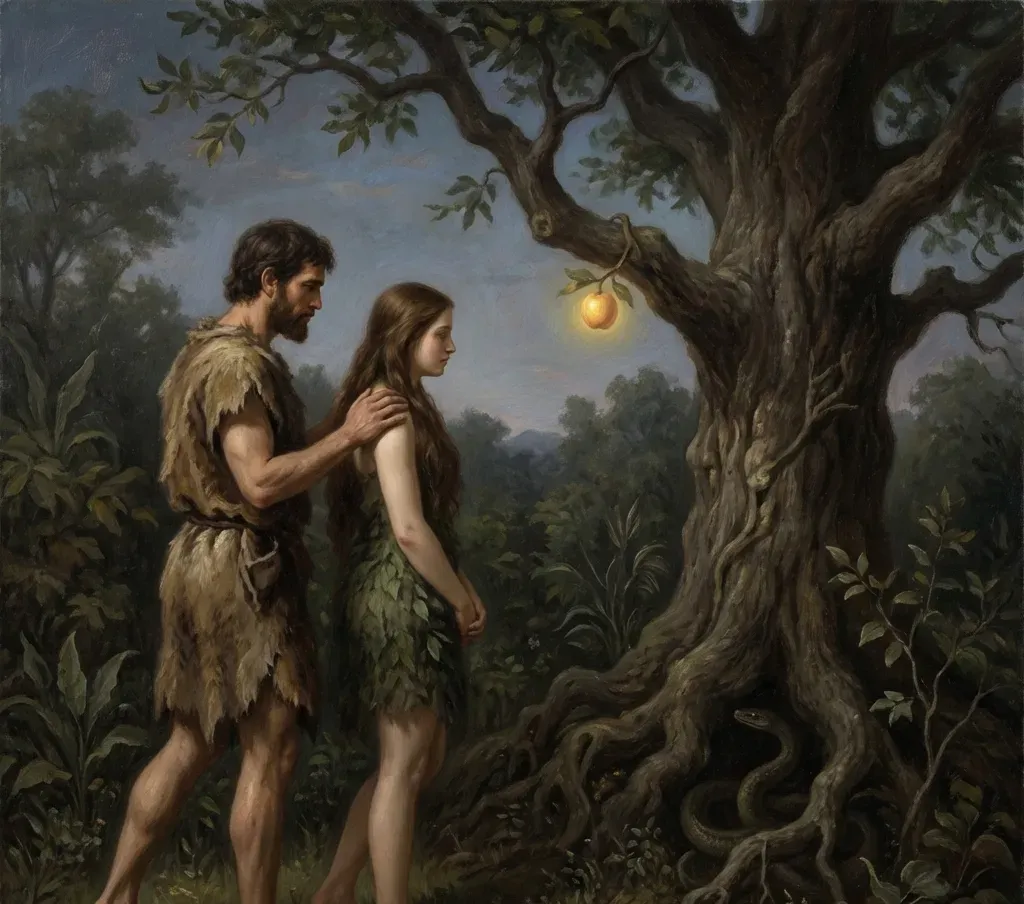
During the declining years of the prophet-judge Samuel, after decades of faithful circuit ministry administering justice from Bethel to Gilgal and Mizpah, a profound leadership crisis confronted the twelve-tribe confederacy. Samuel had appointed his sons, Joel and Abijah, as judges in the southern frontier of Beersheba; however, his sons did not walk in his holy ways. Corrupted by carnal greed, they turned aside after dishonest gain, accepted bribes, and perverted justice (1 Samuel 8:1-3). Sensing vulnerability and weary of spiritual discipline, all the elders of Israel gathered in a formal delegation at Samuel's ancestral home in Ramah. Their demand was blunt, revolutionary, and spiritually devastating: "Look, you are old, and your sons do not walk in your ways. Now make us a king to judge us like all the nations!" (1 Samuel 8:5).
The request grieved Samuel deeply, for he recognized the idolatrous impulse beneath their petition. When Samuel poured out his sorrow in intercession, Yahweh answered with startling clarity: "Heed the voice of the people in all that they say to you; for they have not rejected you, but they have rejected Me, that I should not reign over them!" (1 Samuel 8:7). Ever since the miraculous deliverance from Egypt at the Red Sea, Israel had been constituted as a sacred covenant theocracy—a unique people set apart with the invisible Creator as their sole supreme Monarch. Yet now, cowed by surrounding hostile empires and hungering for worldly prestige, Israel craved secular conformity. Under divine instruction, Samuel delivered a chilling prophetic manifesto detailing the royal prerogative (*Mishpat ha-Melekh*): a human king would draft their young sons to drive his war chariots and run before his horses; he would forcibly conscript their daughters as perfumers, cooks, and bakers; he would confiscate the finest of their olive groves and vineyards to enrich his court favorites; and he would levy heavy tithes upon their flocks until the nation cried out in agony under state tyranny. Yet the people stubbornly refused to listen: "No, but we will have a king over us, that we also may be like all the nations, and that our king may judge us and go out before us and fight our battles!"
God answered their stubborn demand through a masterpiece of hidden providence. In the territory of Benjamin—the smallest and most humbled tribe in Israel—there was a wealthy, influential man named Kish. He had a son named Saul: a tall, remarkably handsome young man in the prime of his youth, standing head and shoulders taller than anyone else in the entire nation (1 Samuel 9:1-2). When the valuable female donkeys of Kish wandered away into the hill country, Kish instructed Saul to take a servant and search for the lost livestock. For days, Saul and his servant trekked through the rugged terrain of Mount Ephraim, the land of Shalisha, the land of Shaalim, and the district of Zuph without finding the beasts. Exhausted and worried that his father would cease caring for the donkeys and begin worrying about them, Saul proposed turning back.
At that precise moment, the servant remembered that a respected man of God resided in the nearby town of Ramah, proposing they inquire of the seer (*ro'eh*) with a quarter-shekel of silver. Every wandering trail, delayed search, and casual conversation had been orchestrated by sovereign heaven. The previous day, Yahweh had whispered into Samuel's ear: "Tomorrow about this time I will send you a man from the land of Benjamin, and you shall anoint him commander over My people Israel, that he may save My people from the hand of the Philistines; for I have looked upon My people, because their cry has come to Me" (1 Samuel 9:16). When Samuel caught sight of the tall young stranger ascending the hill, Yahweh spoke directly to his heart: "There he is, the man of whom I spoke to you. This one shall reign over My people!"
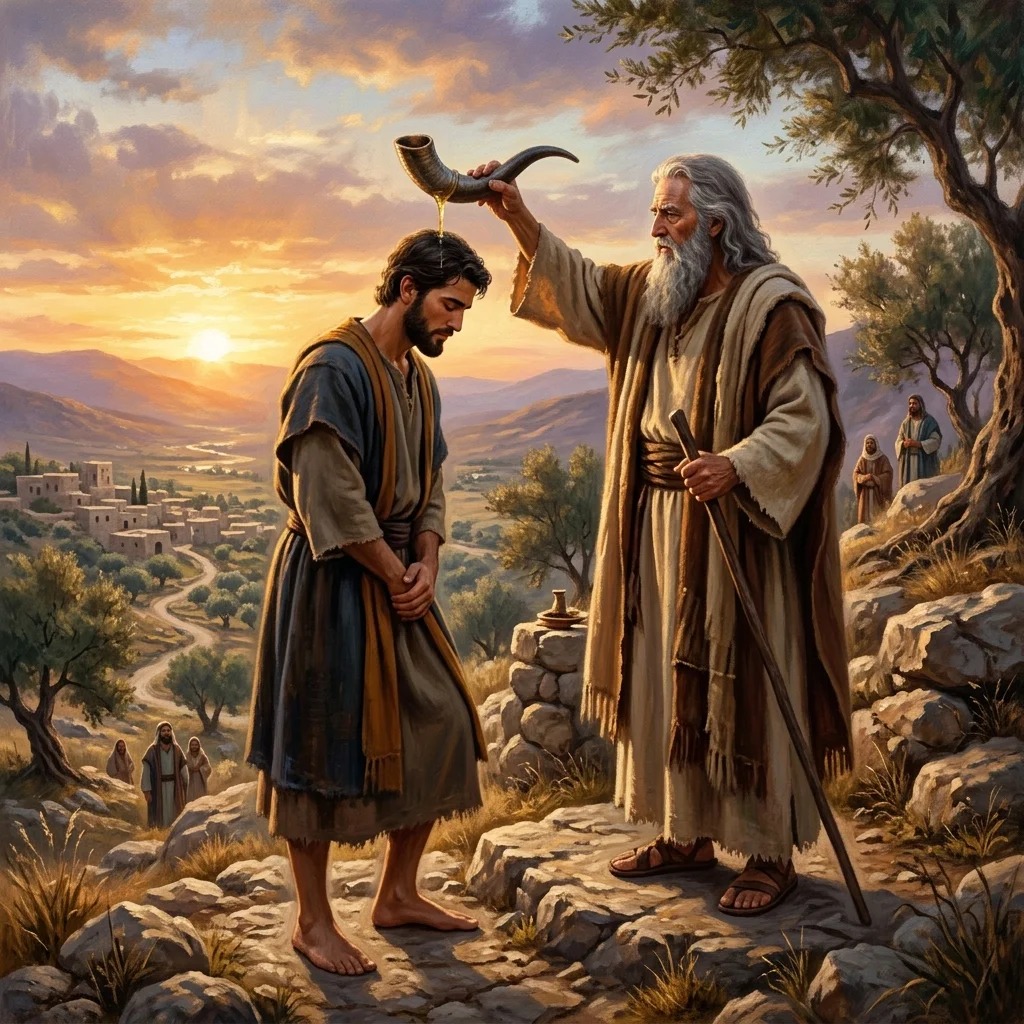
Samuel welcomed the bewildered Saul, informed him that his father's donkeys had already been found, and escorted him to the festival banquet on the high place, seating him at the head of thirty invited dignitaries and presenting him with the consecrated thigh portion reserved for priests and royalty. That evening, Samuel conferred with Saul on the flat rooftop of his home. At dawn, as they walked toward the outskirts of the city, Samuel instructed the servant to pass on ahead so that he might reveal the word of God in private. Taking a small clay flask (*pakh*) of consecrated olive oil, Samuel poured it over Saul's head, kissed him, and solemnly declared: "Is it not because Yahweh has anointed you commander over His inheritance?" (1 Samuel 10:1).
To establish Saul's hesitant faith, Samuel gave him three extraordinary supernatural signs to occur that very day: first, two men by Rachel's tomb in Zelzah would confirm that the donkeys were found and his father was anxious for him; second, three men at the oak of Tabor traveling to Bethel would give him two loaves of bread as a royal offering; and third, upon reaching the hill of God (*Gibeath-ha-Elohim*) where a Philistine military garrison stood, Saul would encounter a band of ecstatic prophets descending with harps, tambourines, flutes, and lyres. "Then the Spirit of Yahweh will come upon you," Samuel prophesied, "and you will prophesy with them and be turned into another man!" Every single sign came to pass with breathtaking accuracy: as Saul turned to leave Samuel, God gave him another heart, the Spirit of God rushed upon him, and he prophesied among the seers, prompting the famous proverb: "Is Saul also among the prophets?"
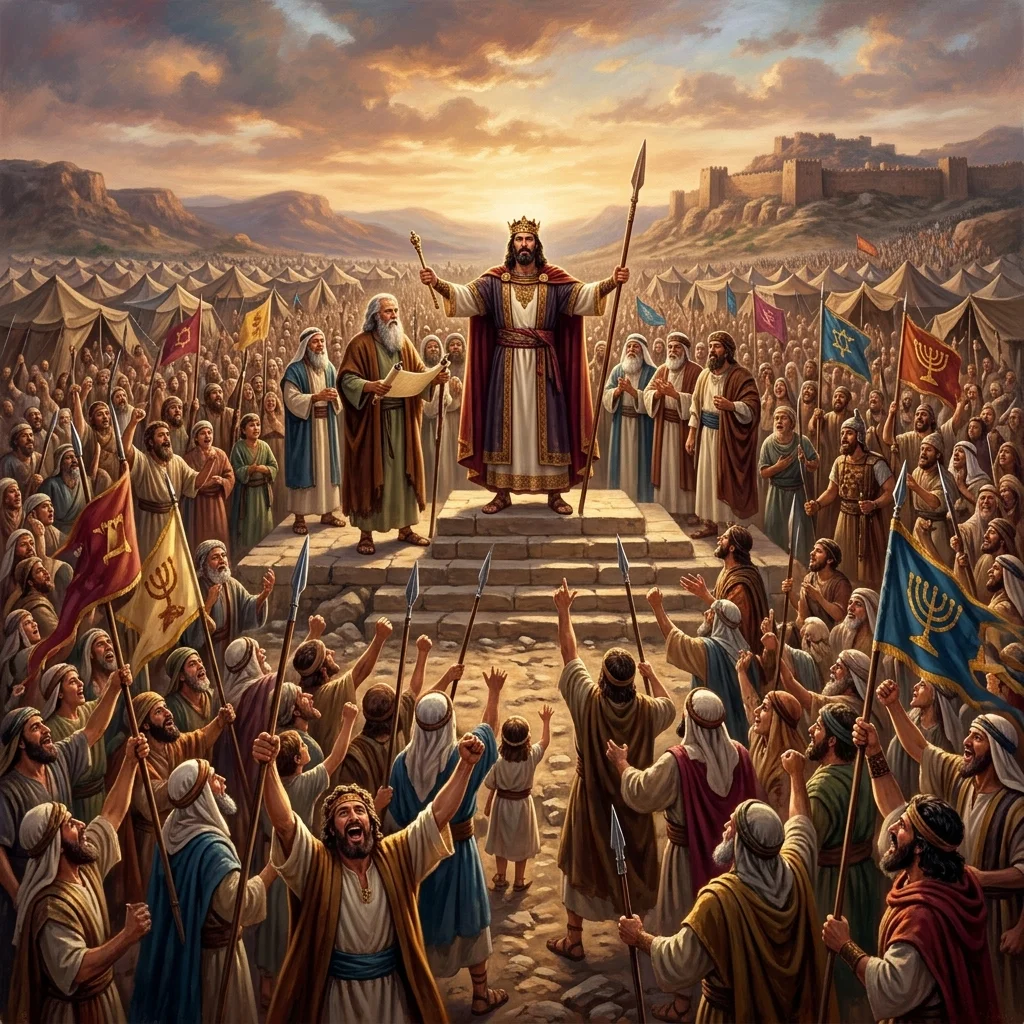
Following this private consecration, Samuel summoned all the tribes of Israel to the historic sanctuary of Mizpah. Addressing the assembled congregation, Samuel reiterated God's indictment: "You have today rejected your God, who Himself saved you from all your adversities and your tribulations; and you have said to Him, 'No, set a king over us!'" (1 Samuel 10:19). The sacred lot was cast: first the tribe of Benjamin was taken; then the clan of Matri was taken; finally, Saul the son of Kish was chosen. But when they looked for the new monarch, he was nowhere to be found! Inquiring further of Yahweh, the Lord revealed his comical hiding place: "There he is, hidden among the baggage!" They ran and brought him out, and as he stood before the vast multitude, he towered head and shoulders above all the people. Samuel declared: "Do you see him whom Yahweh has chosen, that there is no one like him among all the people?" The nation erupted with thunderous acclamation: "Long live the king!"
Yet skepticism lingered. While a valiant band of men whose hearts God had touched escorted Saul home to Gibeah, certain worthless troublemakers (*bene Beliyya'al*) sneered: "How can this fellow save us?" They despised him and brought him no tribute gifts. Demonstrating remarkable maturity and restraint, Saul held his peace, returned quietly to his rural homestead, and resumed plowing his family's fields behind a yoke of oxen.
The crucible of leadership arrived approximately one month later. Nahash, the ruthless warlord-king of the Ammonites, marched across the Jordan and laid siege to Jabesh-Gilead. Terrified of annihilation, the elders of Jabesh offered unconditional surrender: "Make a covenant with us, and we will serve you." But Nahash countered with sadistic cruelty: "On this condition I will make a covenant with you, that I may gouge out all your right eyes, and bring reproach on all Israel!" (1 Samuel 11:2). In ancient warfare, a warrior's shield covered his left eye in combat; without his right eye, he was utterly incapacitated as a soldier and reduced to a humiliated slave. Desperate, the elders requested seven days of respite to send messengers throughout Israel's borders, promising to surrender if no deliverer arose.
When the weeping messengers arrived in Gibeah of Saul, the entire town broke into loud mourning. Saul was coming in from the field behind his oxen when he heard the weeping: "What ails the people, that they weep?" When they recounted the horrific ultimatum of Nahash, the Holy Spirit (*Ruach Elohim*) rushed mightily upon Saul, and his anger burned hot! In a dramatic symbolic act of national mobilization, Saul took a yoke of oxen, hewed them into bloody pieces, and sent them by messengers throughout every tribe with the warning: "Whoever does not go out with Saul and Samuel to battle, so it shall be done to his oxen!" The fear of Yahweh fell upon the people, and they rallied as one man at Bezek: three hundred thousand fighting men of Israel and thirty thousand men of Judah.
Saul sent word back to the besieged city: "Tomorrow, by the time the sun is hot, you shall have help." Dividing his massive army into three strike companies, Saul marched through the night, crossed the Jordan River, and launched a surprise assault upon the Ammonite camp during the early morning watch. The onslaught was absolute: the Ammonites were routed with devastating slaughter until no two enemy soldiers were left standing together! Jabesh-Gilead was gloriously liberated, and the humiliating threat was crushed.
In the euphoria of victory, the people demanded that the cynical troublemakers who had mocked Saul's kingship be executed. But Saul displayed royal mercy: "Not a man shall be put to death this day, for today Yahweh has accomplished salvation in Israel!" (1 Samuel 11:13). Samuel then called the nation together: "Come, let us go to Gilgal and renew the kingdom there." At ancient Gilgal, where Joshua had set up twelve stones and circumcised the generation of the conquest, all the people crowned Saul king before Yahweh, sacrificing peace offerings with overflowing national joy. The era of the monarchy had begun, proving that while human kings are deeply flawed, Yahweh's sovereign grace remains ready to save all who turn to Him in obedient faith!
Biblical Keywords & Theological Roots
King, royal ruler, monarch. In Israel, a king was never to be an autonomous absolute despot, but a humble covenant vassal (*nagid*) under the supreme suzerainty of Yahweh.
To smear, anoint with holy oil, consecrate for sacred office. The linguistic root of 'Mashiach' (Messiah / The Anointed One). Applied by Samuel pouring the flask of oil over Saul.
Saul; meaning 'Asked for' or 'Demanded' (passive participle of 'sha'al' [to ask, demand]). Reflecting both Israel's clamor for a king and his tragic destiny.
Garrison, military outpost, standing station. Specifically the fortified Philistine military detachments stationed in Geba and Michmash to suppress Hebrew autonomy.
The Spirit of God; the divine breath and supernatural wind that rushed upon Saul at Gibeah and later empowered him to mobilize Israel for the rescue of Jabesh-Gilead.
Ancient Near Eastern & Archaeological Context
The historical narrative of 1 Samuel 8–12 records the monumental socio-political transition in ancient Israel from a decentralized tribal confederacy (amphictyony) during the Iron Age I (circa 1200–1050 BC) to a centralized United Monarchy under Saul and David (circa 1050–1010 BC). Archaeological excavations at Tell el-Ful, identified by William F. Albright and later confirmed by subsequent excavations as Gibeah of Saul, uncovered a modest two-story rustic fortress with massive cyclopean stone masonry and corner towers dating precisely to the late 11th century BC, reflecting Saul's austere rustic capital rather than an opulent imperial palace. Geopolitically, Israel was caught in a lethal vise: Philistine garrisons (*netsivim*) controlled the central hill country and maintained a severe iron metallurgy monopoly (1 Samuel 13:19-20), disarming the Hebrews, while Transjordanian kingdoms like Ammon expanded across Gilead under ruthless warrior-kings such as Nahash. The demand for a king 'like all the nations' reflected Israel's acute geopolitical insecurity and desire to mimic Canaanite and Aegean centralized command structures, trading the spiritual safety of covenant theocracy for human military centralization.
Practical Discipleship & Spiritual Application
- Beware of Demanding Worldly Standards for Spiritual Living: When culture pressures you to fit in, do not compromise your distinct holy calling. Chasing worldly models of success, leadership, or romance will only bring spiritual entanglement and heartache. Rest content under the sovereign kingship of Christ.
- Recognize God's Guidance in Life's Frustrations: Saul set out to find lost livestock and found a royal destiny. When your plans are delayed, detours occur, or routine tasks become burdensome, trust that Yahweh is quietly ordering your steps toward a divine appointment.
- Step Out from Behind the Baggage: When chosen at Mizpah, Saul hid among the equipment out of fear and insecurity. Do not allow feelings of inadequacy or the fear of man to paralyze you when God calls you to serve. He who calls you also equips you by His Holy Spirit.
- Channel Righteous Outrage into Sacrificial Action: When Saul heard of Nahash threatening to mutilate his brothers, he did not post complaining words; the Spirit of God stirred him to action. When you witness injustice, oppression, or spiritual apathy, let godly passion move you to defend and serve the vulnerable.
⚡ Fast Facts
- Saul was from the tribe of Benjamin—the smallest tribe of Israel—and was taller than all the people from his shoulders upward (1 Samuel 9:1-2, 21).
- Samuel poured a small clay flask (*pakh*) of olive oil on Saul's head, whereas David was later anointed with a massive animal horn (*qeren*) of oil, symbolizing duration and strength (1 Samuel 10:1; 16:13).
- Nahash the Ammonite demanded that every man of Jabesh-Gilead gouge out his right eye as a condition of covenant surrender, bringing reproach on all Israel (1 Samuel 11:2).
- Saul assembled 300,000 men of Israel and 30,000 men of Judah at Bezek, completely routing the Ammonites in the morning watch before noon (1 Samuel 11:8-11).
❓ Frequently Asked Questions (FAQs)
In 1 Samuel 8:7, Yahweh explicitly revealed to Samuel: 'They have not rejected you, but they have rejected Me, that I should not reign over them.' Ever since the Exodus and the covenant at Sinai, Israel's unique glory was that she was a theocracy—a holy kingdom ruled directly by the living Creator without need of human dynasties or despotic monarchs. When the elders demanded a king 'like all the nations' (1 Samuel 8:5), they betrayed their sacred identity. They wanted a visible, martial commander with horses and chariots to fight their battles, exchanging faith in the invisible, omnipotent Yahweh for the fragile security of human military centralization. Samuel gave them the prophetic charter of kingship (*Mishpat ha-Melekh*), warning that a human king would draft their sons into endless wars, confiscate their prime vineyards, and reduce them to state serfdom.
After secretly anointing Saul at Ramah (1 Samuel 10:1-7), Samuel provided three precise supernatural signs to validate his calling and cultivate faith: First, at Rachel's tomb near Zelzah, two men would announce that his father's lost donkeys were found, liberating Saul from domestic anxieties. Second, at the oak of Tabor, three men traveling to Bethel with three goats, three loaves of bread, and a skin of wine would greet him and give him two loaves of bread—a symbolic priestly tithe acknowledging his royal provision. Third, at the hill of God (*Gibeath-ha-Elohim*) where a Philistine garrison was stationed, Saul would meet a procession of musical prophets coming down from the high place; the Spirit of Yahweh would rush upon Saul, and he would prophesy and be 'turned into another man.' These three signs proved that God controlled the domestic, the economic, and the spiritual realms, equipping the hesitant young farmer to lead a nation.
Nahash's gruesome demand (1 Samuel 11:2) was both a calculated military neutralization and a humiliating psychological terror tactic. In ancient Near Eastern warfare, a Hebrew hoplite warrior held a large wooden-and-leather shield in his left hand, which protected the entire left side of his body and shielded his left eye during hand-to-hand combat. The soldier relied almost entirely upon his uncovered right eye to aim spears, thrust swords, and monitor enemy movements over the top of the shield. Gouging out the right eye would render the men of Jabesh-Gilead militarily useless as fighters, effectively castrating their defensive capabilities while leaving them able to perform manual labor as terrified, subjugated tribute-slaves. Furthermore, Nahash declared his objective was to 'bring a reproach on all Israel,' demonstrating that the decentralized Hebrew tribes were powerless to defend their Transjordanian brothers.