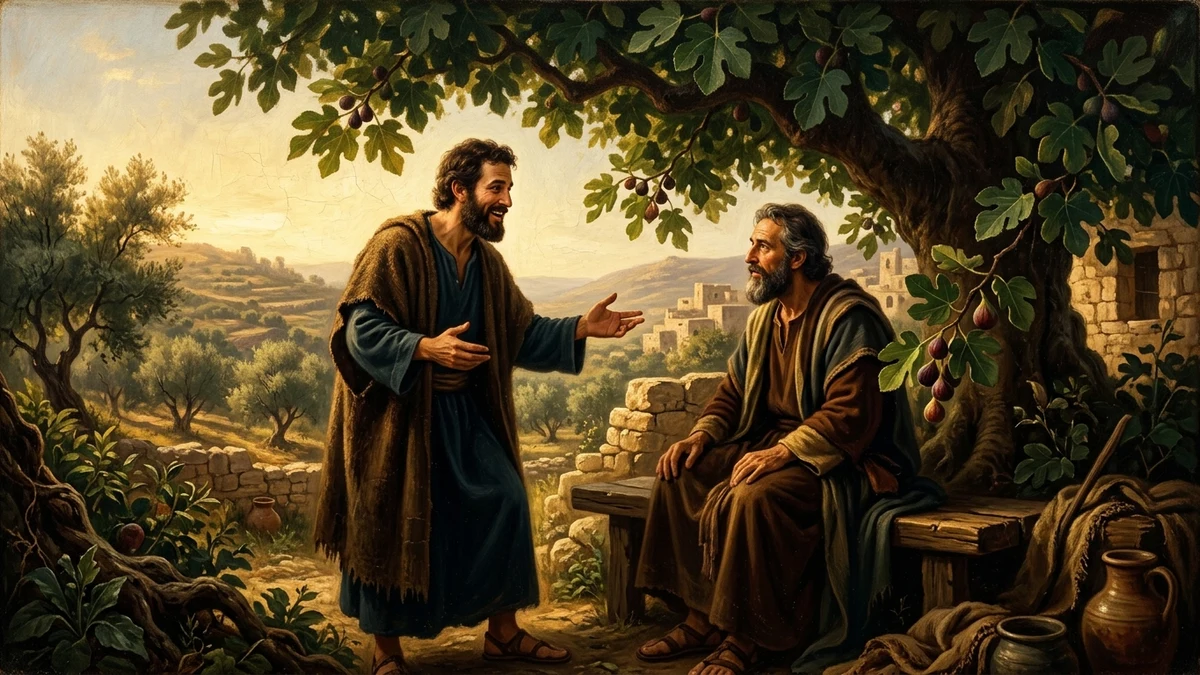
In every community of disciples, diverse temperaments converge to reflect the multifaceted wisdom of God. Where Peter was impulsive and John contemplative, Apostle Philip was methodical, inquisitive, and deeply observant. Hailing from the bilingual lakeside city of Bethsaida, Philip combined a rigorous knowledge of the Old Testament scriptures with an analytical, questioning intellect. Yet when confronted with the reality of Jesus of Nazareth, Philip became the premier bridge-builder of the early church—a man who mastered the art of introducing skeptical minds to the living Messiah through the simplest and most disarming invitation in world history: "Come and see."
1. The Direct Divine Summons in Galilee (John 1:43–45)
While Andrew and John sought out Jesus after hearing John the Baptist, Scripture records a unique sovereign initiative in Philip's calling:
"The following day Jesus wanted to go to Galilee, and He found Philip and said to him, 'Follow Me.' Now Philip was from Bethsaida, the city of Andrew and Peter." (John 1:43–44)
Jesus actively "found" Philip. In the Greek text, the verb *heuriskei* indicates an intentional search. The Good Shepherd sought out this thoughtful Bethsaidan seafarer.
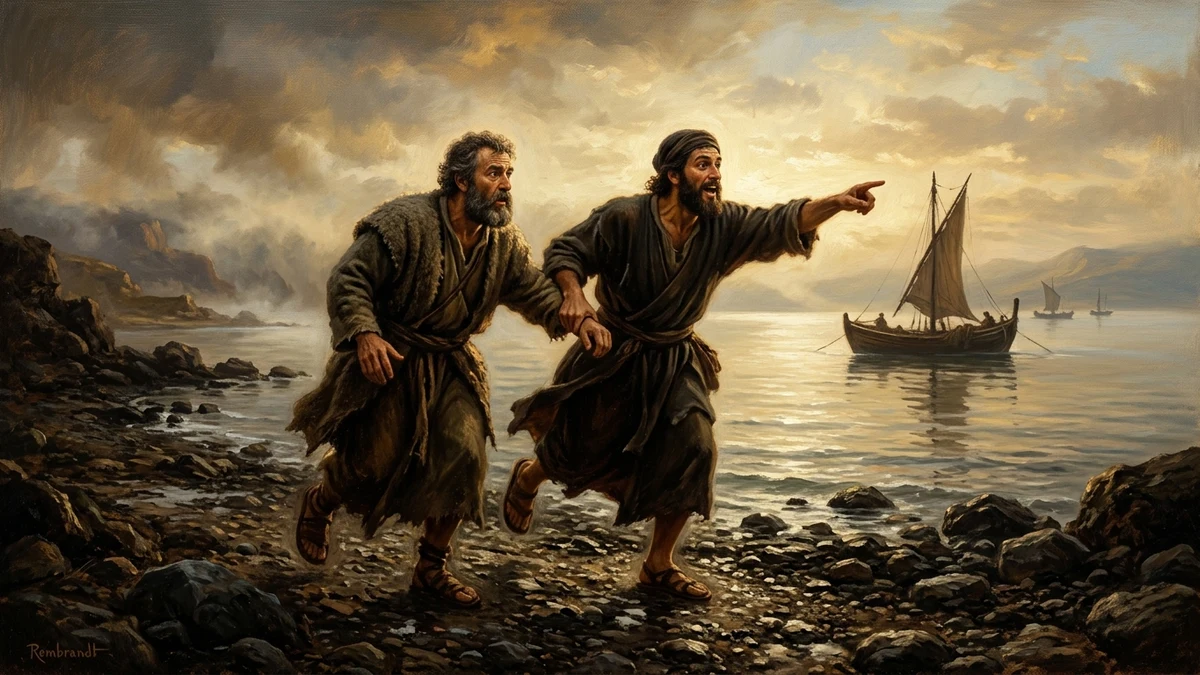
Philip's immediate response demonstrated that his intellect had long been steeped in messianic study. Running straightway to his close friend Nathanael, Philip proclaimed:
"We have found Him of whom Moses in the law, and also the prophets, wrote—Jesus of Nazareth, the son of Joseph." (John 1:45)
Notice Philip's theological depth: he did not merely announce a charismatic wonder-worker; he identified Jesus as the exact culmination of the entire Pentateuch (*Torah*) and the prophetic canon (*Nevi'im*).
2. "Come and See": Overcoming Cynicism with Encounter (John 1:46)
When Philip shared his discovery, Nathanael responded with stinging regional cynicism: "Can anything good come out of Nazareth?" Nazareth was an obscure, impoverished village bypassed by trade highways, carrying zero prophetic prestige compared to Bethlehem or Jerusalem.
How did Philip respond? He did not engage in an angry theological argument, nor did he lecture Nathanael on Galilean geography. Philip uttered the golden rule of Christian evangelism:
"Philip said to him, 'Come and see.'" (John 1:46)
Philip recognized that intellectual prejudice cannot be argued out of a man; it must be melted by personal encounter with Jesus Christ. Nathanael came, met the omniscient gaze of Christ beneath the fig tree, and fell upon his knees confessing: "Rabbi, You are the Son of God! You are the King of Israel!"
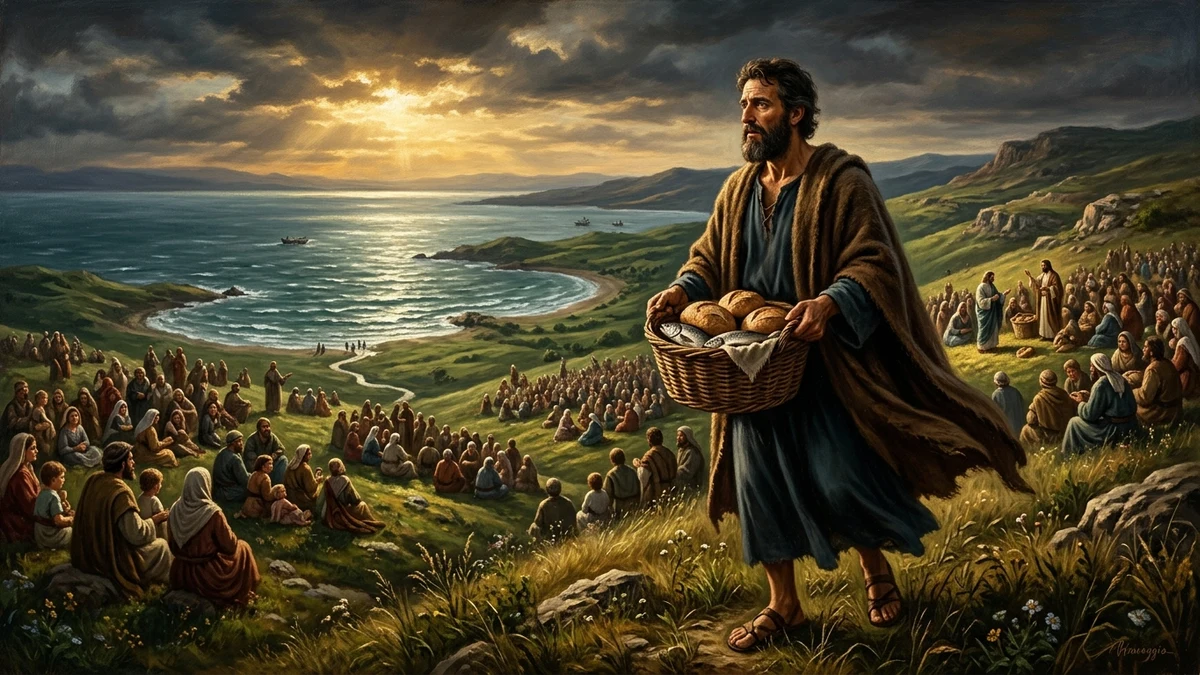 The Lesson of Provision: Apostle Philip distributing the multiplied loaves and fish on the grassy slopes of Bethsaida, learning that divine grace transcends human mathematics.
3. The Test on the Hillside: The Arithmetic of Faith (John 6:1–7)
Philip's analytical mind was put to the ultimate test when a crowd of more than five thousand hungry men followed Jesus into the wilderness near Bethsaida. Turning directly to Philip, Jesus asked: "Where shall we buy bread, that these may eat?"
The Gospel of John notes Jesus' intention: "But this He said to test him, for He Himself knew what He would do." Philip immediately began crunching numbers:
"Philip answered Him, 'Two hundred denarii worth of bread is not sufficient for them, that every one of them may have a little.'" (John 6:7)
A denarius was a full day's wage for an agricultural laborer. Two hundred denarii represented over eight months of wages—a staggering fortune for itinerant preachers. Philip's calculations were flawless, but his formula left out the primary variable: the presence of the Creator in human flesh. Philip had to learn that in the economy of the Kingdom of God, divine resources are not bound by human arithmetic.
4. The Inquirer's Bridge: Greeks Seeking Jesus (John 12:20–22)
During the Passover festival in Jerusalem, a delegation of Greek proselytes desired an audience with Jesus. Feeling intimidated by Jewish temple boundaries, whom did they approach? They sought out Philip:
"Then they came to Philip, who was from Bethsaida of Galilee, and asked him, saying, 'Sir, we wish to see Jesus.' Philip came and told Andrew, and in turn Andrew and Philip told Jesus." (John 12:21–22)
Why Philip? His Greek name, his Bethsaidan cultural background, and his approachable, gracious demeanor made him the natural ambassador for Gentile seekers. Philip did not reject them as unclean dogs; he consulted Andrew and brought them straight into the presence of Christ.
5. "Show Us the Father": The Ultimate Revelation (John 14:8–11)
In the Upper Room, while Jesus spoke of departing to His Father's house, Philip gave voice to the deepest philosophical cry of human history:
"Philip said to Him, 'Lord, show us the Father, and it is sufficient for us.'" (John 14:8)
Philip did not want parables or metaphors; he yearned for a glorious, visible theophany of Almighty God. Jesus looked at Philip with profound tenderness:
"Jesus said to him, 'Have I been with you so long, and yet you have not known Me, Philip? He who has seen Me has seen the Father; so how can you say, "Show us the Father"? Do you not believe that I am in the Father, and the Father in Me?'" (John 14:9–10)
In that moment, Philip learned the pinnacle of Christian theology: God is not an impersonal cosmic force or a hidden deity residing in distant galaxies. The invisible Father has made Himself perfectly, exhaustively, and radiantly visible in the face of Jesus Christ.
6. Missionary Labors in Phrygia and Martyrdom at Hierapolis
Following Pentecost, historical accounts recorded by early Church Fathers Papias (bishop of Hierapolis, c. AD 120), Polycrates of Ephesus, and Clement of Alexandria testify that Philip traveled through Asia Minor, preaching throughout Galatia and Phrygia.
Accompanied by his married daughters who were recognized prophetesses in the early church (Acts 21:8–9), Philip established the Christian assembly in Hierapolis (modern Pamukkale, Turkey), an affluent Roman thermal spa city renowned for its Plutonium sanctuary and occult serpent cults.
Philip's powerful preaching caused thousands of citizens to renounce snake idolatry and turn to Christ, including the wife of the Roman proconsul. Enraged by the loss of temple revenues, the pagan authorities arrested Philip, scourged him severely, and hung him upside down from a wooden pillar or cross in the city center around AD 80.
Even while hanging suspended in agonizing pain, Philip continued praying for the salvation of his persecutors until he breathed his last. In 2011, archaeological excavations led by Professor Francesco D'Andria uncovered the octagonal martyrium and verified first-century tomb of Apostle Philip among the ruins of Hierapolis, standing as physical confirmation of the faithful witness who once cried: "Come and see!"
Biblical Keywords & Theological Roots
From 'philos' (lover/friend) and 'hippos' (horse); lover of horses, noble, regal.
Come and see!; the ultimate non-combative invitation to personal spiritual verification of Christ.
To reason, calculate, deliberate, or analyze with human mathematical logic.
Show, make manifest, unveil, bring to clear sight.
It is enough, it suffices, it satisfies completely every inner desire.
Ancient Near Eastern & Archaeological Context
Philip was a native of Bethsaida-Julias, a prominent city rebuilt and renamed by Tetrarch Herod Philip in honor of Julia, daughter of Caesar Augustus. Situated at the mouth of the Jordan River where it enters the Sea of Galilee, the city was heavily Hellenized, populated by Greek merchants, Syrian traders, and Roman officials alongside traditional Jewish fishing families. This multicultural setting produced bilingual citizens capable of mediating between Jewish piety and Gentile culture. Philip's analytical temperament reflected the Greco-Roman education prevalent in regional academies, yet his heart remained anchored in the Hebrew Scriptures, Moses, and the Prophets.
Practical Discipleship & Spiritual Application
- The Power of 'Come and See': When faced with intellectual skepticism, avoid angry debates; simply invite people to encounter Jesus personally. Personal encounter shatters prejudice.
- Overcoming Mathematical Despair: Human logic looks at resources and declares impossibility; divine faith looks at the Savior and discovers supernatural abundance.
- Accessibility to Seekers: Because Philip was warm and culturally approachable, outsiders felt safe approaching him to find Jesus. Be a safe bridge for seekers.
- Seeing the Father in the Son: You will never find God through abstract philosophy; gaze upon Jesus Christ—His mercy, His cross, His words—and you behold the eternal Father.
Support Independent Biblical Research
Did this study bless you? Help support our independent bilingual research and interactive visual Bible tools.
⚡ Fast Facts
- Pure Greek Name: 'Philip' (Philippos) is an authentic Greek royal name meaning 'lover of horses', reflecting the cosmopolitan Hellenistic character of his hometown Bethsaida.
- The Direct Summons: While other disciples heard about Jesus through intermediaries, Philip was one of the few whom Jesus personally sought out, commanding: 'Follow Me' (John 1:43).
- Martyred in Hierapolis: According to the early second-century testimony of Papias and Polycrates of Ephesus, Philip labored in Phrygia and was crucified upside-down on a pillar in Hierapolis.
- The Tomb of Philip: In 2011, Italian archaeologist Francesco D'Andria discovered the first-century martyrion and tomb of Apostle Philip at Hierapolis (modern Pamukkale, Turkey).
❓ Frequently Asked Questions (FAQs)
The feeding of the five thousand occurred near Bethsaida (Luke 9:10), Philip's native home. Jesus deliberately tested Philip as a local expert who knew the regional markets, bakeries, and logistics. Philip's analytical mind immediately calculated costs (two hundred denarii would be insufficient), exposing the limits of human calculation and preparing him to witness supernatural divine provision.
In the Upper Room, Philip voiced the ancient yearning of humanity to behold the invisible God, echoing Moses on Sinai ('Please, show me Your glory'). Jesus replied with one of the most staggering Christological declarations in Scripture: 'Have I been with you so long, and yet you have not known Me, Philip? He who has seen Me has seen the Father' (John 14:9), revealing that Jesus is the perfect, complete visible embodiment of God.
No. The New Testament distinguishes between Philip the Apostle (one of the original Twelve chosen in Galilee) and Philip the Evangelist (one of the seven deacons ordained in Jerusalem in Acts 6, who ministered in Samaria and baptized the Ethiopian eunuch in Acts 8). However, both men demonstrated extraordinary zeal for personal evangelism.