Among the followers of Jesus of Nazareth, skepticism was rarely greeted with condemnation when it sprang from an honest heart. While some rejected Christ out of arrogant self-righteousness, Nathanael of Cana (historically identified across the Synoptic Gospels by his patronymic Bartholomew, son of Tolmai) approached the Nazarene with intellectual hesitation. Yet beneath a quiet Galilean fig tree, an encounter with the divine omniscience of Jesus melted his cynicism into one of the earliest and most soaring confessions of faith in the New Testament. Transforming into a fearless apostle, Bartholomew carried the Gospel to the remote frontiers of Armenia and ancient India, sealing his testimony through an extraordinary martyrdom.
1. The Cynic of Cana: "Can Anything Good Come from Nazareth?" (John 1:45–46)
Nathanael was a student of the Scriptures living in Cana of Galilee, a quiet village located just five miles over the northern hills from Nazareth. Having grown up in close proximity to Nazareth, Nathanael knew the town well. It was an insignificant agricultural hamlet with a single freshwater spring, possessing no rabbinic academy, no military importance, and carrying zero mention in the Hebrew prophets.
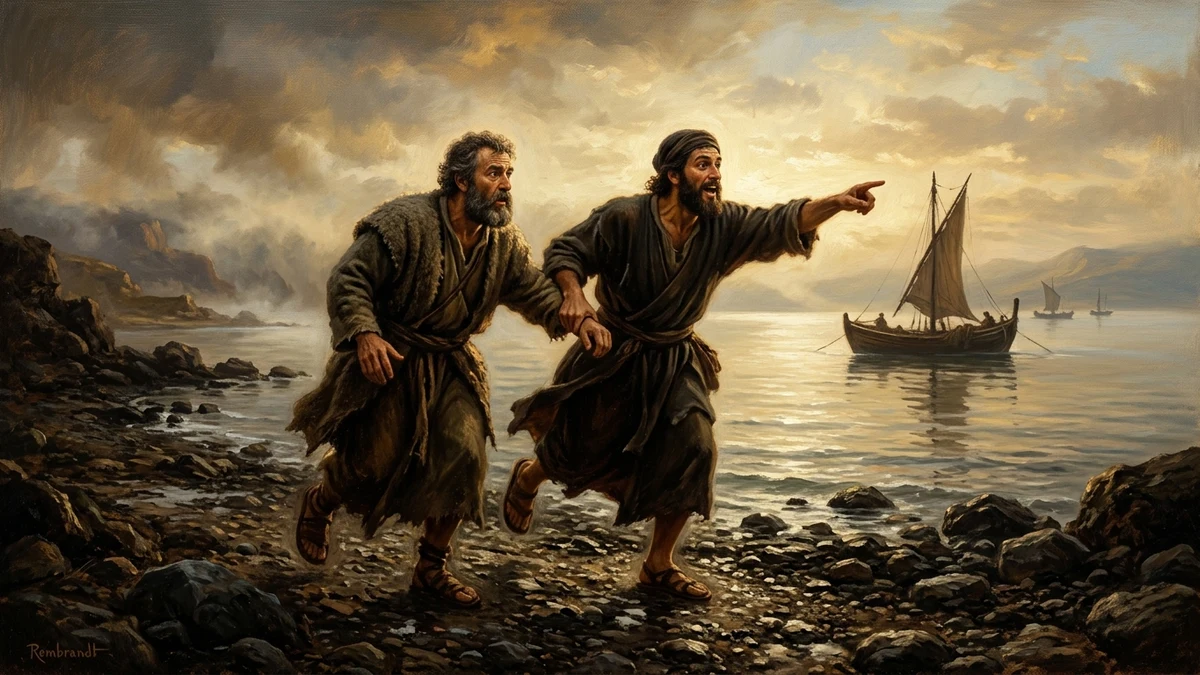
When his close friend Philip rushed to him breathless with excitement, announcing: "We have found Him of whom Moses in the law, and also the prophets, wrote—Jesus of Nazareth, the son of Joseph," Nathanael's theological radar flashed with immediate skepticism:
"And Nathanael said to him, 'Can anything good come out of Nazareth?'" (John 1:46)
Nathanael was not being malicious; he was being biblically literate. The prophets had foretold Bethlehem-Ephrathah as the royal birthplace of the Davidic King (Micah 5:2). How could the glorious Messiah emerge from an obscure Galilean backwater like Nazareth?
Philip wisely refused to enter an academic debate. He issued the masterstroke invitation: "Come and see." True faith does not fear examination. Nathanael rose from his seat and walked with Philip toward Jesus.
2. The Gaze Beneath the Fig Tree: Sovereign Omniscience (John 1:47–49)
As Nathanael approached, Jesus spoke aloud for all the bystanders to hear:
"Behold, an Israelite indeed, in whom is no deceit!" (John 1:47)
The Greek word for deceit (*dolos*) means bait, guile, or hypocrisy. Jesus made a direct theological play on the name of the patriarch Jacob, whose name originally meant 'heel-catcher' or 'deceiver'—the man who utilized skins of goats to deceive his blind father Isaac. Jesus declared: Here stands a true descendant of Israel who has no Jacob-like deceit in him.
Startled that a complete stranger could appraise his inner character, Nathanael asked with blunt honesty: "How do You know me?"
Jesus answered with a quiet revelation that pierced Nathanael's soul to its deepest core:
"Before Philip called you, when you were under the fig tree, I saw you." (John 1:48)
In first-century Jewish practice, "sitting under the fig tree" (*tachat te'enah*) was a revered idiom for private prayer, fasting, and deep meditation on the Torah away from public view. Whatever Nathanael had been doing beneath that leafy bower in Cana—pouring out his tears, wrestling with Scripture, or praying for the redemption of Israel—no human eye had witnessed.
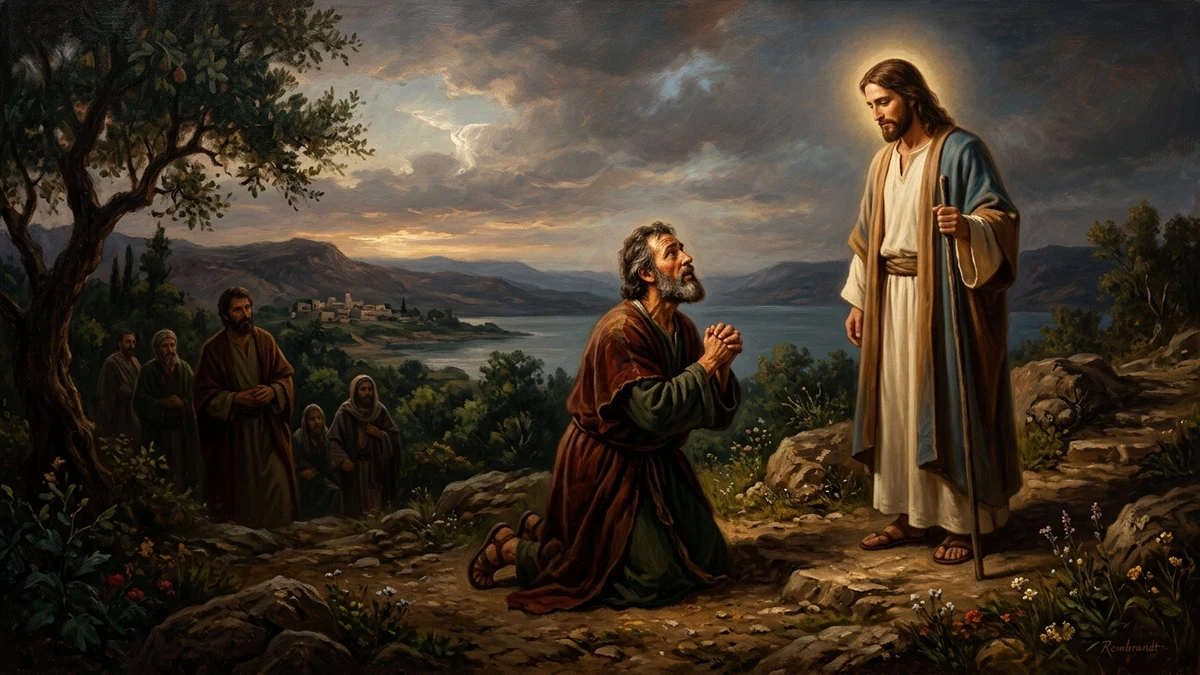
Instantly, the wall of skepticism shattered. The obscure carpenter from Nazareth had seen him in secret, peering through space and time with the eyes of Almighty God. Overwhelmed with reverent awe, Nathanael cried out:
"Rabbi, You are the Son of God! You are the King of Israel!" (John 1:49)
 The Apostle of the Caucasus: An ancient carved stone Armenian Khachkar cross and an open Gospel manuscript in a mountain monastery chapel, commemorating Bartholomew's missionary legacy.
3. Greater Things: The True Jacob's Ladder (John 1:50–51)
Jesus smiled at Nathanael's rapid confession: "Because I said to you, 'I saw you under the fig tree,' do you believe? You will see greater things than these."
Then, turning to all the disciples, Jesus proclaimed the cosmic culmination of Old Testament typology:
"Most assuredly, I say to you, hereafter you shall see heaven open, and the angels of God ascending and descending upon the Son of Man." (John 1:51)
Every Jew knew the story of Jacob at Bethel in Genesis 28, where the fleeing patriarch dreamt of a great staircase resting on earth with its top reaching into heaven, and the angels of God ascending and descending upon it.
Jesus unveiled the mystery: He Himself is the Ladder. Christ is the divine-human bridge connecting heaven and earth. Through His incarnation, atoning death, and resurrection, the cosmic rift between a holy God and fallen humanity is bridged forever. Nathanael, the guileless son of Jacob, was invited to behold the true Bethel in human flesh.
4. The Apostolic Mission: Armenia, the Caucasus, and Ancient India
Following the Day of Pentecost, historical records preserved by early Church historians trace Bartholomew's extensive apostolic missionary journeys to the eastern frontiers of the ancient world.
The Apostle to Greater Armenia: Alongside Apostle Thaddaeus (Jude), Bartholomew journeyed into the mountainous kingdom of Greater Armenia around AD 60. Preaching throughout the Caucasus, he converted thousands of pagan Zoroastrians, founded Christian communities, and ordained bishops. Because of their pioneering labors, Bartholomew and Thaddaeus are venerated to this day as the patron saints and founding fathers of the Armenian Apostolic Church—the first nation on earth to declare Christianity its official state religion (AD 301).
The Indian Trail: Church Father Eusebius of Caesarea, in his *Ecclesiastical History* (Book V, Chapter 10), records that around AD 180–190, the renowned Christian philosopher **Pantaenus**, director of the Catechetical School of Alexandria, traveled as a missionary to India. There, Pantaenus discovered an established community of believers who possessed a Hebrew copy of the Gospel of Matthew, which had been delivered to them in person by Apostle Bartholomew during his apostolic journeys along the Arabian and Indian trade routes.
5. The Final Trial: Martyrdom at Albanopolis
Bartholomew's fruitful ministry in Armenia eventually led to a lethal collision with pagan political power. At the royal court in Albanopolis (identified historically with modern Derbend or Baku on the Caspian Sea), Bartholomew preached the Gospel to King Polymius, leading to the miraculous healing and baptism of the king, his queen, and twelve major regional cities.
However, the king's brother, Prince Astyages, was fiercely devoted to the pagan priesthood of the idol Baldad. Fearing the total collapse of the ancestral religion and loss of temple revenues, Astyages orchestrated Bartholomew's secret arrest.
Brought before the tribunal, the aged apostle was commanded to offer sacrifice to pagan gods. When Bartholomew steadfastly refused, Astyages ordered an execution of horrific cruelty: according to ancient Syrian and Armenian martyrologies, Bartholomew was subjected to flaying—having his skin peeled from his flesh while alive—after which he was nailed or bound upside-down to a cross until he died.
Through all the unspeakable agony, early witnesses recorded that Bartholomew continued praising God and exhorting the weeping believers who gathered at his feet to remain steadfast in the faith. Nathanael, who had once sat quietly beneath the shade of a Galilean fig tree, entered the celestial presence of the King of Israel whom he had so faithfully loved, clothed in the radiant robe of apostolic martyrdom.
Biblical Keywords & Theological Roots
Hebrew 'Netan-el': God has given, the gift of God.
Aramaic patronymic 'Bar-Talmai': son of Talmai (plowman, furrow-maker, or warlike).
Bait, snare, craft, deceit, duplicity, or guile; pretense concealing true motives.
A fig tree; symbol of peace, messianic prosperity, and scholarly Torah meditation.
Truly, surely, authentically, genuinely, without pretense.
Ancient Near Eastern & Archaeological Context
Nathanael was a native of Cana in Galilee (John 21:2), an agricultural town situated in the fertile Netofa Valley just five miles northeast of Nazareth. Being an educated Torah student, Nathanael shared the widespread contemporary Galilean skepticism regarding the tiny hill village of Nazareth, which was not mentioned anywhere in the Hebrew Scriptures, the Talmud, or Josephus. Nathanael's initial skepticism was not born of malice, but of theological scrutiny: Micah 5:2 specified Bethlehem as the birthplace of the Messiah, while Isaiah pointed to Galilee of the Gentiles, but no text predicted a prophet from Nazareth. His conversion exemplifies the honest skeptic whose intellectual objections are instantly dissolved by the omniscience and majesty of Christ.
Practical Discipleship & Spiritual Application
- The Eye of God Beneath Secret Fig Trees: God sees your private tears, your hidden prayers, and your quiet wrestling when no human eye is watching. You are never invisible to Christ.
- God Honors Transparent Honesty: Jesus did not condemn Nathanael for his honest doubt; He commended him for his sincerity. Bring your honest questions to Christ without hypocrisy.
- Jesus is the True Jacob's Ladder: In Christ, the barrier between a holy God and sinful humanity is torn away. Through Him, the grace of heaven descends to earth, and our prayers ascend to God.
- The Call to Integrity: In a world of deceit, spin, and superficial masks, God still seeks disciples in whom there is no guile—men and women of pure, uncompromised integrity.
Support Independent Biblical Research
Did this study bless you? Help support our independent bilingual research and interactive visual Bible tools.
⚡ Fast Facts
- Dual Identification: Synoptic Gospels pair 'Philip and Bartholomew', while John's Gospel pairs 'Philip and Nathanael'; 'Bartholomew' is an Aramaic patronymic (Bar-Tolmai, 'son of Tolmai'), while 'Nathanael' (Hebrew: 'God has given') was his personal name.
- Apostle of Armenia: Bartholomew and Thaddaeus are venerated as the patron saints and founders of the Armenian Apostolic Church, establishing Christianity in the Caucasus region.
- Mission to India: Early Church Father Eusebius recorded that Pantaenus, dean of the Alexandrian Catechetical School (c. AD 190), traveled to India and discovered a Hebrew copy of the Gospel of Matthew left behind by Apostle Bartholomew.
- Flayed Alive for Christ: According to ancient historical tradition, Bartholomew suffered horrific martyrdom in Albanopolis (modern Baku, Azerbaijan or Derbend), flayed alive of his skin and then crucified for converting the Armenian royal household.
❓ Frequently Asked Questions (FAQs)
The Hebrew word for deceit is 'mirmah' or Greek 'dolos', directly recalling the patriarch Jacob, whose name originally meant 'supplanter' or 'deceiver' before his encounter with God at Peniel. Jesus was noting that unlike ancestral Jacob who practiced trickery to obtain the birthright, Nathanael was thoroughly honest, sincere, and pure-hearted, displaying transparent integrity without spiritual hypocrisy.
In ancient Jewish culture, 'sitting under one's vine and fig tree' (Micah 4:4; Zechariah 3:10) was a traditional idiom for peaceful meditation, prayer, and deep study of the Torah. Rabbis frequently taught beneath leafy fig trees. Nathanael was privately praying and meditating on Messianic prophecies beneath that tree. When Jesus revealed His supernatural knowledge of that secret moment, Nathanael immediately recognized His omniscience: 'Rabbi, You are the Son of God!'
Jesus drew directly upon Jacob's dream at Bethel (Genesis 28:12), where Jacob saw a ladder connecting heaven and earth with angels ascending and descending. Jesus declared that He Himself is the true Bethel—the living, personal ladder bridging holy heaven and fallen earth, the sole mediator between God and man.