In Matthew 13:45-46, Jesus shares the exquisite two-verse Parable of the Pearl of Great Price. Delivered as part of the Kingdom discourses, this brief narrative encapsulates the incomparable, dazzling glory of Christ and His Kingdom, demonstrating that possessing eternal life is worth the joyous relinquishment of every competing earthly prize.
1. The Connoisseur's Lifelong Search
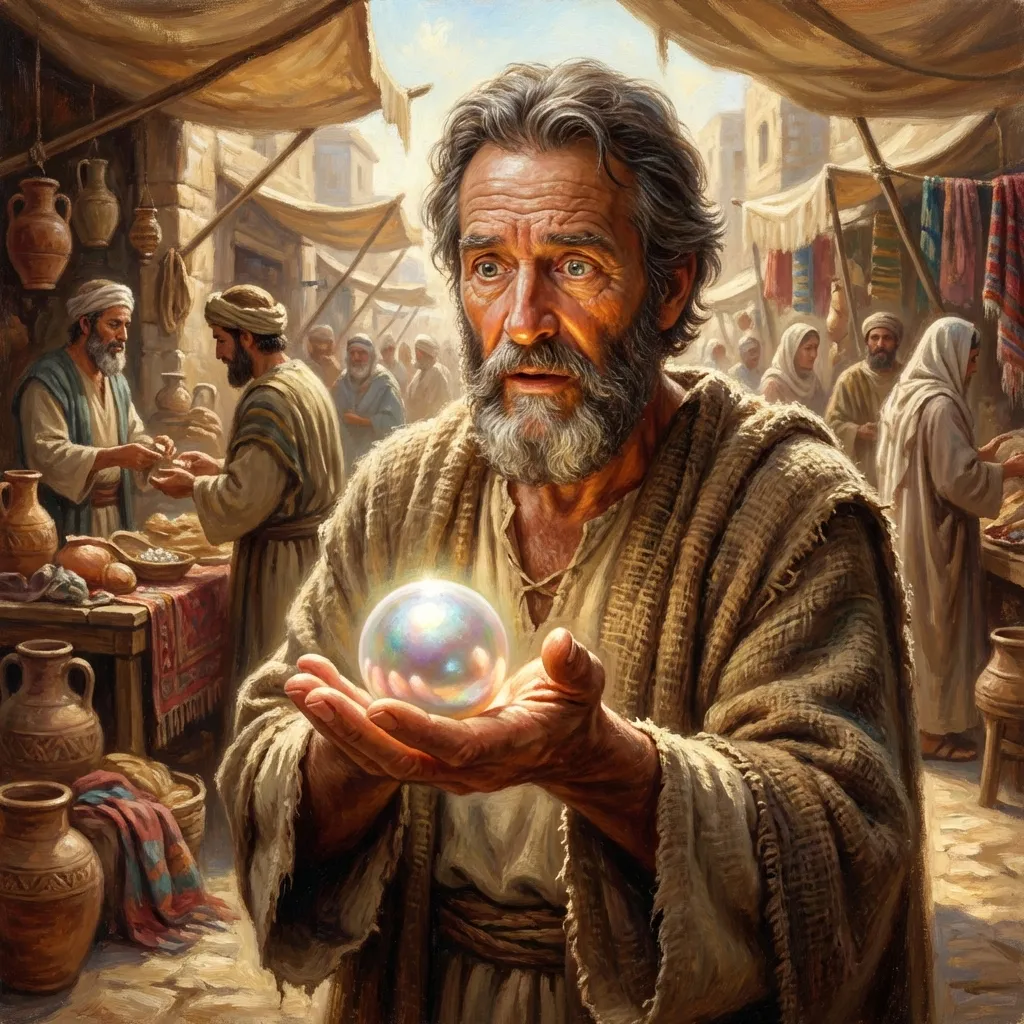
Jesus declared: "Again, the kingdom of heaven is like a merchant looking for fine pearls" (Matthew 13:45). The protagonist is not an impoverished day laborer, but an emporos—a wholesale gem merchant and seasoned connoisseur. He has traveled maritime routes, examined thousands of specimens, and dedicated his life to evaluating luster, weight, and perfection. He represents those who are not satisfied with superficial answers or empty religious rituals, but actively seek absolute truth, beauty, and ultimate meaning.
2. The Encounter with the Singular Masterpiece
During his travels, providence brings him face-to-face with the unthinkable: "When he found one of great value (hena polytimon margaritēn), he went away and sold everything he had and bought it" (Matthew 13:46). In a single instant, all the other gems in his leather satchel lost their luster. He had discovered a pearl of such flawless symmetry, opalescence, and radiant splendor that it eclipsed everything he had ever beheld in the markets of the ancient world. The singular beauty of Jesus Christ and His Kingdom renders all earthly accolades utterly secondary.
3. The Joyful Liquidation of All Assets
The merchant did not hesitate, haggle, or lament his decision. He immediately organized a total liquidation: selling his property, his existing inventory of fine gems, and his earthly collateral. This was not a grudging sacrifice; it was a triumphant transaction driven by supreme economic logic. He gladly parted with perishable, fragmented goods to secure a singular, permanent masterpiece. The Apostle Paul echoed this exact sentiment in Philippians 3:8: "I consider everything a loss because of the surpassing worth of knowing Christ Jesus my Lord, for whose sake I have lost all things."
4. The Call to Radical Discipleship
Christ makes it clear that the Kingdom cannot be treated as an add-on accessory to a self-centered life. We cannot hold onto our sin, our self-righteousness, and our worldly idols while attempting to pocket the pearl. Salvation is entirely free, paid for by the blood of the Lamb, yet receiving it requires the absolute surrender of our sovereignty. Discipleship requires us to crown Jesus as the undisputed Lord of our lives, recognizing that holding Him is infinitely greater than possessing the entire world.
5. The Divine Merchant of Calvary
In the grand tapestry of redemptive history, the parable carries a breathtaking dual perspective. Jesus Christ is Himself the supreme Merchant of Heaven. Looking down upon fallen, ruined humanity scattered across the dark ocean bed of sin, He saw His redeemed bride as a pearl of infinite worth. To purchase her, Christ emptied Himself of His heavenly splendor, descended into our suffering, and gave His very life upon the cross to make us His cherished possession forever.
Biblical Keywords & Theological Roots
Pearl; in antiquity, the quintessential, non-reproducible gem representing transcendent beauty, purity, and matchless worth.
Extremely precious, of surpassing value, priceless; demanding the highest possible valuation.
Wholesale merchant, traveling seafaring trader; a connoisseur who actively journeys and searches for authentic, elite gems.
Ancient Near Eastern & Archaeological Context
In the 1st century Roman Empire, pearls (*margaritai*) were the ultimate status symbol, celebrated by Pliny the Elder as 'the very first and highest rank among all things of price.' Roman aristocrats, senators, and emperors flaunted pearls in jewelry, hairnets, and even woven into royal sandals. Because cultured pearls did not exist, divers had to plunge to depths of up to 100 feet with heavy stones tied to their feet in the Persian Gulf and Indian Ocean, risking drowning and shark attacks. A wholesale gem merchant (*emporos*) possessed the trained eye to distinguish genuine luster, symmetry, and orient from flawed specimens.
🔑 Key Spiritual Takeaways
- The Supreme Value of Christ: The Kingdom of God possesses such infinite glory that all earthly honors, wealth, and achievements pale into insignificance beside it.
- Wholehearted Commitment: True discipleship is not a half-hearted hobby; it demands the willing, joyful surrender of everything competing with Christ.
- Active Seeking Rewarded: Those who diligently seek spiritual truth will be led by divine providence to the ultimate treasure of the Gospel.
- The Inverted Metaphor: In theological exegesis, Christ is also the divine Merchant who surrendered His very life and heavenly glory to redeem the church as His costly pearl.
Support Independent Biblical Research
Did this study bless you? Help support our independent bilingual research and interactive visual Bible tools.
⚡ Fast Facts
- Supreme Ancient Luxury: In the Roman Empire, pearls held the absolute pinnacle of luxury commodities, far exceeding diamonds, emeralds, or gold in monetary value.
- Dangerous Sourcing: Natural pearls were harvested through perilous freediving in the shark-infested waters of the Persian Gulf, Red Sea, and the Gulf of Mannar.
- Active Discernment: Unlike the plowman who stumbled upon the hidden treasure unexpectedly, the merchant in this parable spent his life actively searching (*zēteō*) for the ultimate gem.
- Total Liquidation: Upon identifying the singular pearl of surpassing worth, the merchant immediately sold absolutely everything he owned to possess it.
❓ Frequently Asked Questions (FAQs)
What is the difference between the Hidden Treasure and the Pearl of Great Price?
While both parables emphasize the supreme value of the Kingdom and the joy of selling all to obtain it, the Hidden Treasure depicts someone discovering grace unexpectedly while going about daily labor, whereas the Pearl depicts a thoughtful, persistent seeker who actively searches for truth and finds its ultimate fulfillment in Christ.
Does selling everything mean we can 'buy' our salvation?
No; salvation is an unearnable gift of grace (Ephesians 2:8-9). The act of 'selling all' is a vivid metaphor for radical repentance—relinquishing self-righteousness, sinful attachments, and worldly idols so our empty hands may receive the matchless gift of Christ.
How do historical theologians view Christ as the Merchant?
Many early church fathers (including Augustine and Chrysostom) noted that Christ is the ultimate Heavenly Merchant: He saw fallen humanity in the mud of sin, recognized their redemption as a 'pearl of great price,' and willingly sold all His heavenly glory and poured out His blood at Calvary to purchase us for Himself.