Concluding the majestic parabolic discourse of Matthew 13, verses 47-50 record the Parable of the Net. Drawing from the salty, labor-intensive world of Galilean commercial fishing, Jesus delivers an urgent warning regarding the consummation of the age, reminding His hearers that while the Gospel net is cast broadly to all, an inescapable divine sorting awaits every soul at the eternal shoreline.
1. The Cast of the Great Dragnet
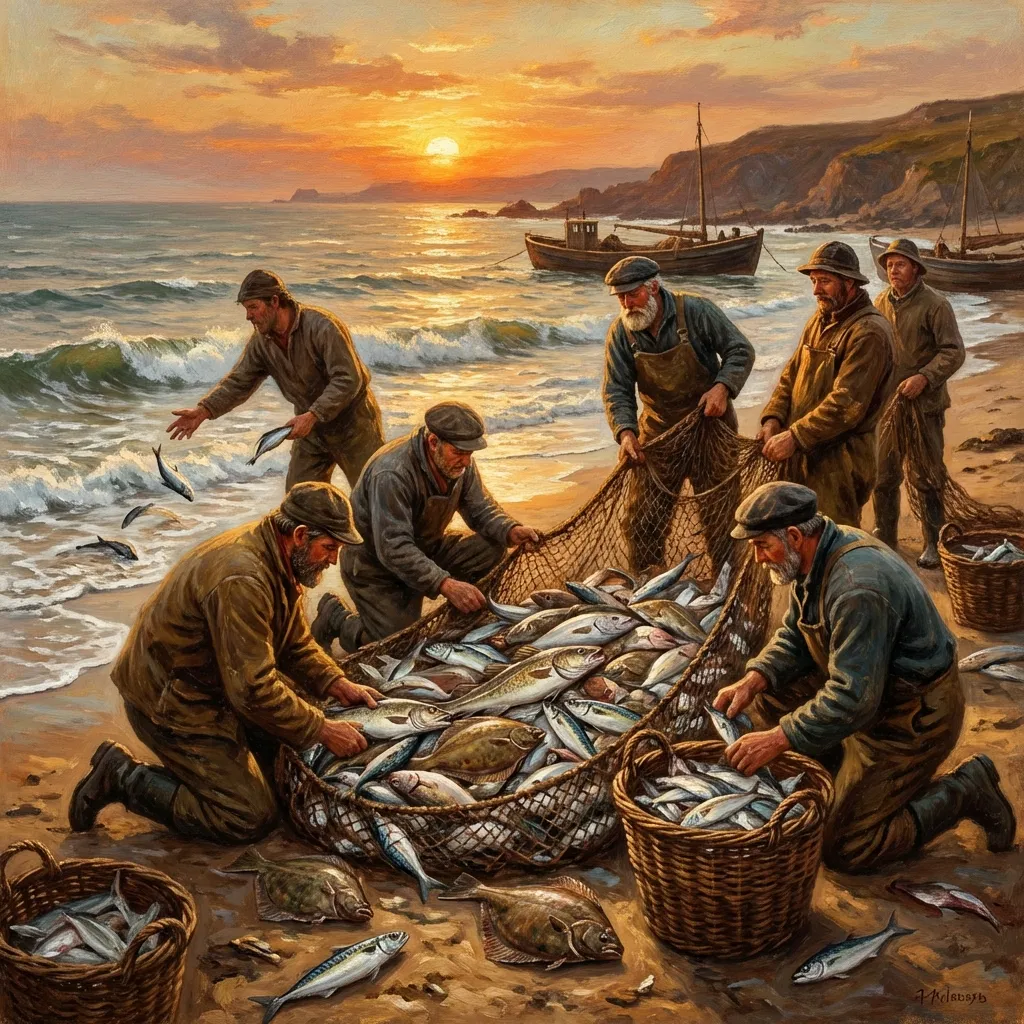
Jesus spoke to seasoned Galilean fishermen in their own native vernacular: "Once again, the kingdom of heaven is like a net that was let down into the lake and caught all kinds of fish" (Matthew 13:47). The Greek word used is sagēnē, the ancient seine or dragnet. This was not a modest hand-thrown cast net; it was a massive aquatic sweep hundreds of feet long, weighted with lead at the bottom and buoyant with cork at the top. Sweeping across the murky depths of the Sea of Galilee, it created an impenetrable underwater wall that trapped everything in its path.
2. The Indiscriminate Haul of All Marine Kinds
As the dragnet advanced, it scooped up a vast, chaotic biodiversity: gleaming carp, prized tilapia, slimy catfish, eels, sea turtles, water snakes, weeds, and driftwood. The net made no moral or culinary distinctions underwater; its function was simply to gather. In the same way, the historic preaching of the Gospel sweeps across the ocean of fallen humanity, drawing kings and paupers, saints and hypocrites, sincere disciples and opportunistic impostors into the outward visible communion of the church.
3. The Seashore Sorting: Vessels vs Refuse
The decisive movement occurred when the net was full: "When it was full, the fishermen pulled it up on the shore. Then they sat down and collected the good fish in baskets, but threw the bad away" (Matthew 13:48). The fishermen sat down—indicating unhurried, meticulous, judicial evaluation. Under Mosaic dietary law (Leviticus 11:9-12), aquatic creatures lacking fins and scales were ceremonially unclean (tame). Silvery tilapia were carefully placed into clay vessels and damp baskets for transport to market; scaleless catfish (*sapra*) were flung aside onto the rocks to perish.
4. The Infallible Angelic Separation
Jesus personally interpreted the parabolic climax: "This is how it will be at the end of the age. The angels will come and separate the wicked from the righteous and throw them into the blazing furnace, where there will be weeping and gnashing of teeth" (Matthew 13:49-50). The sorting will not be conducted by human pastors, theologians, or church councils, who are easily deceived by pious appearances. The Son of Man will dispatch His holy angels, armed with infallible divine discernment, to surgically extract the wicked from among the righteous.
5. The Finality of the Furnace
The parable closes with the most sobering reality in the Gospels: the fiery furnace (kaminon tou pyros). Hell is not a medieval myth, but a reality affirmed by the loving lips of Jesus Christ. Those who swim in the waters of Christian privilege, hearing sermons, taking sacraments, and singing hymns, yet remain unregenerate in heart, will find no shelter on that final beach. The net is being drawn even now; the shore is fast approaching. The imperative of the hour is to ensure that through genuine faith in Christ, we are counted among the good who are preserved for the Master's eternal kingdom.
Biblical Keywords & Theological Roots
Dragnet, seine net; a massive, weighted commercial fishing net sweeping the bottom of the sea to gather every species indiscriminately.
Rotten, corrupt, worthless, unclean; specifically fish lacking fins and scales disqualified under Levitical law.
Seashore, beach; the solid, immovable strand representing the final eschatological terminus where all catch is sorted.
Ancient Near Eastern & Archaeological Context
The Sea of Galilee supported a flourishing fishing industry in the 1st century, with major processing centers at Magdala (Taricheae, 'the place of salted fish'). Fishermen used three primary types of nets: the cast-net (*amphiblēstron*), the trammel net (*diktyon*), and the massive dragnet (*sagēnē*). The dragnet swept the entire water column from surface to lakebed, indiscriminately scooping up tilapia (St. Peter's fish), barbel, and the abundant scaleless catfish (*Clarias gariepinus*). Because Mosaic Law strictly prohibited eating water creatures without fins and scales, Jewish crews sat down on the sandy beach to meticulously sort the catch, throwing unclean catfish back into the shallows or onto the gravel to rot.
🔑 Key Spiritual Takeaways
- The Broad Reach of the Gospel: The dragnet of the Kingdom gathers a vast, mixed multitude of all backgrounds into the visible church community.
- Coexistence Before Separation: In the present age, true converts and false professors swim together within the net of the visible church.
- The Inevitable Seashore Sorting: Physical membership in the church does not guarantee eternal salvation; an infallible divine sorting awaits every soul at the shore.
- The Solemn Reality of Hell: Christ explicitly warned of the fiery furnace where there will be weeping and gnashing of teeth for the wicked.
Support Independent Biblical Research
Did this study bless you? Help support our independent bilingual research and interactive visual Bible tools.
⚡ Fast Facts
- Massive Scale of Dragnet: A Galilean *sagēnē* could measure hundreds of feet in length and tens of feet deep, weighted with lead sinkers at the base and cork floats along the top line.
- Team Fishing Enterprise: Hauling a full dragnet required coordinated labor between two fishing boats rowing in a crescent arc, or dozens of men hauling ropes from the shoreline.
- Levitical Sorting Criteria: Jewish fishermen strictly obeyed Leviticus 11:9-12—fish with fins and scales (carp, tilapia) were gathered into vessels; catfish, eels, and crustaceans were cast away as unclean.
- Conclusion of Matthew 13: This parable forms the grand climax of the seven Kingdom parables of Matthew 13, echoing the Parable of the Tares with an explicit warning of eternal judgment.
❓ Frequently Asked Questions (FAQs)
What does the dragnet (sagēnē) represent in Christ's teaching?
The dragnet represents the outward proclamation of the Gospel through the Church across history, gathering an indiscriminate mixture of true believers, cultural adherents, and hypocrites into the visible Christian community.
How does the sorting of fish relate to the separation of wheat and weeds?
Both parables in Matthew 13 address the mixed state of the Kingdom. The Wheat and Weeds emphasizes patient coexistence in the world without premature vigilantism; the Net emphasizes the absolute certainty, thoroughness, and finality of angelic separation on the day of judgment.
Who performs the separation at the end of the age?
Matthew 13:49 explicitly states: 'The angels will come and separate the wicked from the righteous.' Human beings lack the omniscience to execute final judgment; holy angels commanded by Christ will carry out the infallible separation.