Found in Matthew 13:33 and Luke 13:20-21, the Parable of the Leaven is one of Jesus' most compact yet revolutionary kingdom illustrations. Paired directly with the Parable of the Mustard Seed, this single-verse narrative unveils the hidden, quiet, and unstoppable power of God's grace to permeate, redeem, and transform the totality of human life from the inside out.
1. The Domestic Work of a Galilean Woman
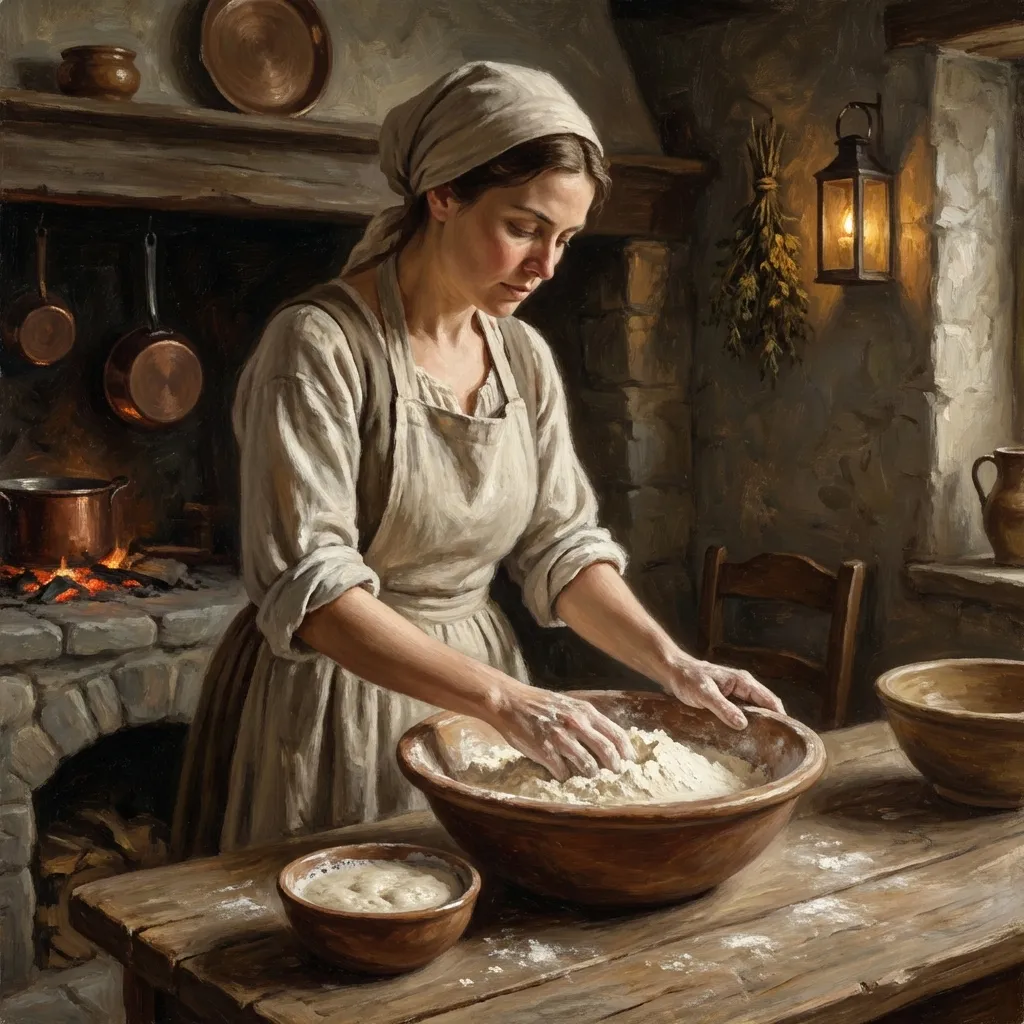
Jesus painted an intimate domestic portrait: "The kingdom of heaven is like yeast that a woman took and mixed into about sixty pounds of flour until it worked all through the dough" (Matthew 13:33). While the preceding parable featured a man working in an agricultural field, this parable honors the daily domestic labor of women. Kneading bread was a strenuous, hands-on task requiring muscle, patience, and skill. Into a massive wooden trough filled with flour, the woman buried a small lump of live fermented sourdough starter.
2. The Staggering Measure: Bread for an Entire Village
The text specifies tria sata—three seahs, equivalent to an ephah or roughly 50 to 60 pounds of flour! This was not a modest family meal; it was an enormous mountain of flour capable of producing over one hundred loaves of bread, enough to nourish an entire village. This exact measure echoes Genesis 18:6, where Sarah baked three seahs of fine meal for the three divine visitors at Mamre. The Kingdom of God is not an insular, private club; it provides a lavish, inexhaustible banquet for hungry humanity.
3. The Hidden, Microscopic Ferment
The verb Jesus used for mixing the yeast is enkryptō—literally, 'she hid it inside.' Once buried in the flour, the leaven was completely invisible. If a spectator peered into the trough, they would see only dry, inert white dust. Yet microscopic cells were actively reproducing, breaking down carbohydrates, and releasing life. The Kingdom of God does not advance through theatrical political rallies or military crusades. It enters the world quietly—in the humility of the manger, the whisper of the Spirit, the testimony of a persecuted believer, and the quiet prayer of faith.
4. The Inversion of a Symbol: Divine Contagion
In Jewish ritual law, leaven was frequently associated with moral corruption and excluded from Passover sacrifices (Exodus 12:15; 1 Corinthians 5:6-8). Jesus daringly inverted this symbol. He demonstrated that the power of divine redemption is far more infectious, pervasive, and transformative than the rot of sin. Where sin abounds, grace superabounds (Romans 5:20). The holy influence of the Gospel is an unstoppable contagion that penetrates corrupted hearts and sanctifies them for eternity.
5. Pervasive Transformation: Until the Whole is Leavened
The climax of the parable rests on four decisive words: "until it worked all through the dough" (heōs hou ezymōthē holon). The leaven does not leave a single particle of flour untouched. When Jesus Christ enters a human heart, He does not merely redecorate the exterior; He permeates the intellect, the emotions, the will, the relationships, and the finances until the entire person is transformed into His image. On a global scale, the Gospel continues its relentless advance across every continent, tribe, and tongue, guaranteeing the ultimate victory of the Kingdom of God.
Biblical Keywords & Theological Roots
Leaven, yeast, sourdough culture; fermenting dough that invisibly and inexorably permeates and transforms the whole lump.
To hide in, knead secretively into; embedding the active kingdom principle deep inside the mundane structures of humanity.
Seah, Hebrew dry measure (approx. 13 liters); three seahs equaled an Ephah (nearly 40-50 pounds of flour), a massive feast quantity.
Ancient Near Eastern & Archaeological Context
In ancient Near Eastern domestic life, commercial yeast packets did not exist. Women preserved a fist-sized lump of fermented sourdough dough (*se'or*) from the previous week's baking, keeping it moist in an earthen crock. When preparing fresh bread, this fermented starter was kneaded deep into fresh flour and water. The living microscopic organisms (Saccharomyces cerevisiae) reproduced silently, releasing carbon dioxide that caused the heavy, inert flour paste to expand into light, aerated loaves. Three seahs (*tria sata*)—an ephah—was an enormous quantity of flour, typically prepared for village feasts, weddings, or covenant banquets.
🔑 Key Spiritual Takeaways
- Internal, Invisible Power: The Gospel operates quietly within human hearts, altering desires, worldviews, and affections long before outward fruit appears.
- The Pervasive Scope of the Kingdom: The leaven does not stop until 'the whole lump is leavened'—Christ's redemption will permeate every sphere of human existence.
- Patience with Slow Growth: Spiritual transformation requires time; microscopic beginnings must not be despised or prematurely judged.
- Holistic Transformation: True regeneration does not merely improve exterior conduct; it radically transforms the entire nature of the person.
Support Independent Biblical Research
Did this study bless you? Help support our independent bilingual research and interactive visual Bible tools.
⚡ Fast Facts
- Massive Culinary Quantity: Three measures (*tria sata*) of flour yielded roughly 50 pounds of dough—capable of baking bread for over 100 to 150 people.
- Echo of Abraham and Sarah: This exact measure of three seahs of fine flour was prepared by Sarah for the divine visitors at Mamre in Genesis 18:6.
- Inversion of Metaphor: While leaven usually symbolized sin or hypocrisy in Jewish thought, Jesus revolutionary inverted it to illustrate the unstoppable pervasive power of God's Kingdom.
- Silent, Organic Transformation: Unlike military empires that conquer from the outside with violence, the Kingdom of God transforms cultures and hearts invisibly from the inside out.
❓ Frequently Asked Questions (FAQs)
Why did Jesus use leaven as a positive symbol when it usually represents sin in Scripture?
In the Old Testament and Paul's epistles (1 Corinthians 5:6-8), leaven often symbolizes pervasive sin or hypocrisy. However, Jesus deliberately used this shocking culinary image to demonstrate that the Kingdom of God possesses a contagious, penetrating, unstoppable vitality that is infinitely stronger than the corruption of sin.
What does the phrase 'until it worked all through the dough' signify?
The Greek phrase *heōs hou ezymōthē holon* denotes total, unreserved permeation. The Kingdom of God will not cease its redemptive work until Christ has reconciled all things to Himself, transforming individuals, languages, tribes, and cultures.
How does the Parable of the Leaven complement the Parable of the Mustard Seed?
Both parables appear as a twin pair in Matthew 13 and Luke 13. The Mustard Seed emphasizes the external, visible expansion of the Kingdom from a tiny seed into a great tree; the Leaven emphasizes the internal, invisible, qualitative transformation working within the dough.