The story of Naboth's vineyard is a vivid illustration of royal greed, political corruption, and cold-blooded judicial murder. Yet, it also serves as an enduring testimony that God sees the plight of the oppressed, and that no earthly king or queen stands above Yahweh's divine court of justice.
1. Naboth's Refusal to Sell His Ancestral Inheritance
 Naboth said to Ahab: 'The Lord forbid that I should give you the inheritance of my ancestors.'
Some time later there was an incident involving a vineyard belonging to Naboth the Jezreelite. The vineyard was in Jezreel, close to the palace of Ahab king of Samaria.
Ahab said to Naboth, "Let me have your vineyard to use for a vegetable garden, since it is close to my palace. In exchange I will give you a better vineyard, or if you prefer, I will pay you whatever it is worth."
But Naboth replied to Ahab: "The Lord forbid that I should give you the inheritance of my ancestors."
Under the Law of Moses (Leviticus 25:23, Numbers 36:7), ancestral land in Israel was a sacred covenant trust from Yahweh that could not be permanently sold away. Naboth was standing firm in covenant obedience to God.
2. Ahab's Childish Sulking and Jezebel's Scheme
So Ahab went home, sullen and angry because Naboth the Jezreelite had said, "I will not give you the inheritance of my ancestors." He lay on his bed moping and refused to eat.
His wife Jezebel came in and asked him, "Why are you so sullen? Why won't you eat?"
He answered her, "Because I said to Naboth the Jezreelite, 'Sell me your vineyard; or if you prefer, I will give you another vineyard in its place.' But he said, 'I will not give you my vineyard.'"
Jezebel his wife said, "Is this how you act as king over Israel? Get up and eat! Cheer up. I'll get you the vineyard of Naboth the Jezreelite."
3. The Judicial Murder of Naboth
So she wrote letters in Ahab's name, placed his seal on them, and sent them to the elders and nobles who lived in Naboth's city with him.
In those letters she wrote: "Proclaim a day of fasting and seat Naboth in a prominent place among the people. But seat two scoundrels (sons of Belial) opposite him and have them testify that he has cursed both God and the king. Then take him out and stone him to death."
So the elders and nobles who lived in Naboth's city did as Jezebel directed them in the letters she had written to them. They proclaimed a fast and seated Naboth in a prominent place among the people. Then two scoundrels came in and sat opposite him and brought false charges against Naboth before the people, saying, "Naboth has cursed both God and the king."
So they took him outside the city and stoned him to death. Then they sent word to Jezebel: "Naboth has been stoned to death."
4. Elijah Confronts Ahab in the Stolen Vineyard
As soon as Jezebel heard that Naboth had been stoned to death, she said to Ahab, "Get up and take possession of the vineyard of Naboth the Jezreelite that he refused to sell you. He is no longer alive, but dead." When Ahab heard that Naboth was dead, he got up and went down to take possession of Naboth's vineyard.
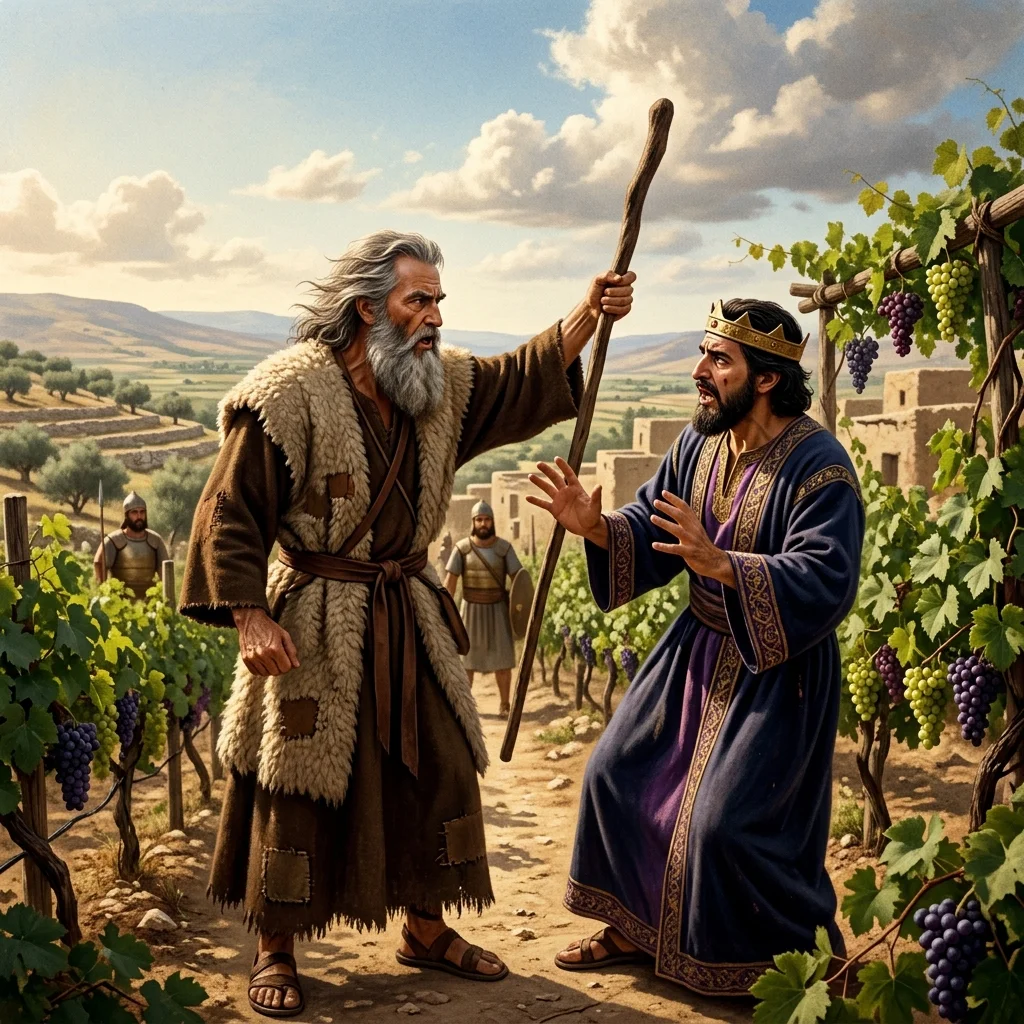
Then the word of the Lord came to Elijah the Tishbite: "Go down to meet Ahab king of Israel, who rules in Samaria. He is now at Naboth's vineyard, where he has gone to take possession of it. Say to him, 'This is what the Lord says: Have you not murdered a man and seized his property?' Then say to him, 'This is what the Lord says: In the place where dogs licked up Naboth's blood, dogs will lick up your blood—yes, yours!'"
Ahab said to Elijah, "So you have found me, my enemy!"
"I have found you," Elijah answered, "because you have sold yourself to do evil in the eyes of the Lord. I am going to bring disaster on you... Dogs will devour Jezebel by the wall of Jezreel."
5. Ahab's Temporary Humiliation and Deferred Judgment
When Ahab heard these words, he tore his clothes, put on sackcloth and fasted. He lay in sackcloth and went around meekly.
Then the word of the Lord came to Elijah the Tishbite: "Have you noticed how Ahab has humbled himself before me? Because he has humbled himself, I will not bring this disaster in his day, but I will bring it on his house in the days of his son."
Reflections on the Story:
- Integrity Over Profit: Naboth stood firm in God's covenant law even when pressured by royal tyranny. Faithful believers must value God's truth above worldly gain.
- God Hates Injustice: Jezebel thought a corrupt legal system could hide her murder. God sees all injustice and holds corrupt leaders accountable.
- Mercy to the Humiliated: Even wicked Ahab received a deferral of judgment when he humbled himself in sackcloth, showing God's readiness to respond to humility.
⚡ Fast Facts
- Covenant Integrity: Naboth refused to sell his ancestral land because God prohibited permanent sale.
- Jezebel's Conspiracy: Forged Ahab's seal and arranged a sham trial using two false witnesses.
- Elijah's Judgment: Confronted Ahab in the stolen vineyard, prophesying dogs would lick Ahab's blood.
- Deferred Punishment: Ahab fasted in sackcloth, so God deferred the dynasty's destruction to his son's day.
❓ Frequently Asked Questions (FAQs)
Under the Mosaic Law (Leviticus 25:23), land was God's gift to families and could not be permanently alienated. Naboth chose obedience to God over pleasing the king.
She used King Ahab's royal seal to command local elders to declare a fast, seat Naboth prominently, hire two false witnesses to accuse him of blasphemy, and stone him.
God is abundantly merciful. Even when a wicked ruler like Ahab displayed temporary, outward humility, God acknowledged it and deferred the full disaster.