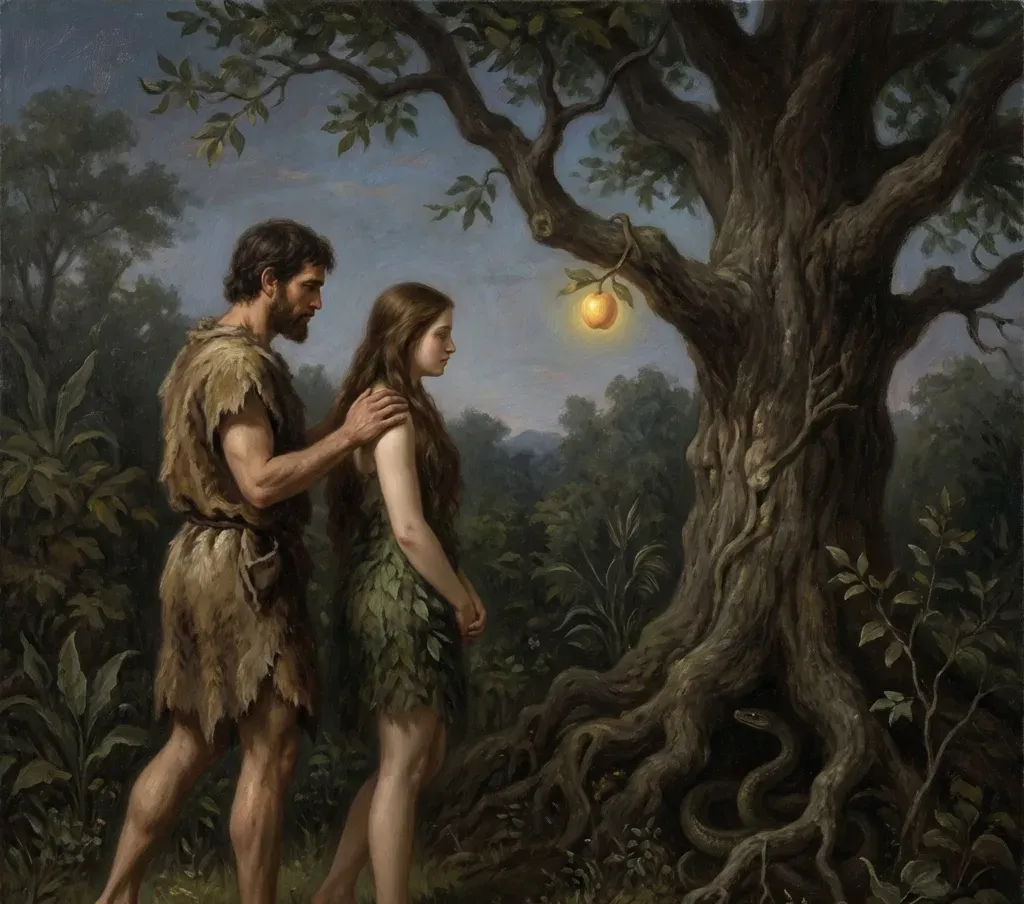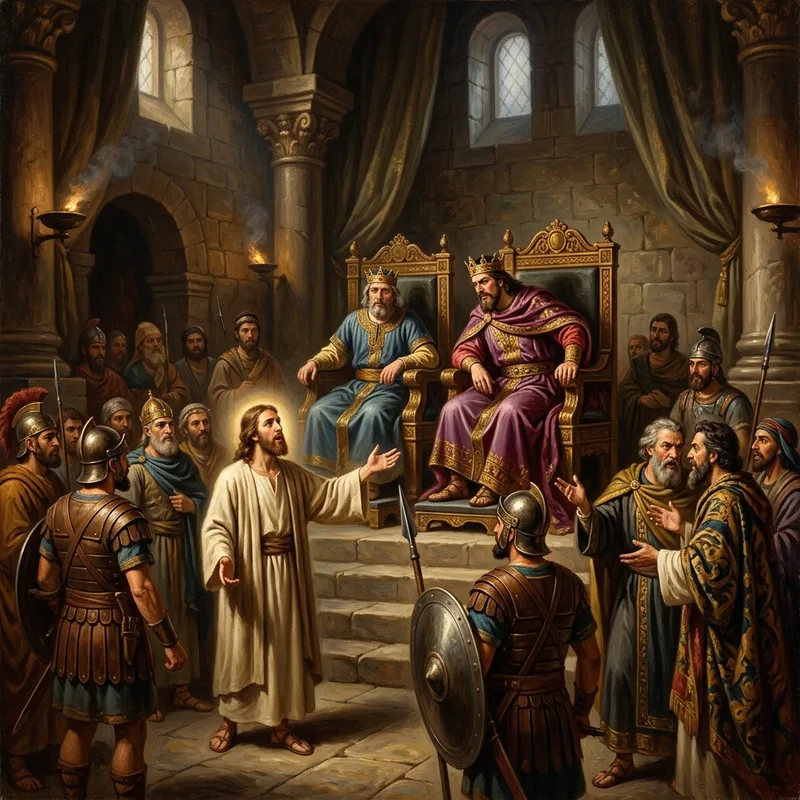
For three uneasy years, an armed truce had prevailed between the Syrian empire of Damascus and the Northern Kingdom of Israel. Following King Ahab's miraculous military victories at Samaria and Aphek, King Ben-Hadad II of Syria had promised to restore all captured Israelite frontier cities. Yet as the immediate Syrian danger faded, the Aramean monarch reneged on his covenant pledge, continuing to occupy the strategic, heavily fortified trans-Jordanian fortress of Ramoth-Gilead.
During this period of fragile peace, King Jehoshaphat of Judah traveled north to Samaria for a lavish state visit. The two Hebrew kingdoms, divided by tragic civil strife since the days of Rehoboam and Jeroboam, had recently concluded a high-level military and marital treaty: Jehoshaphat's eldest son and crown prince, Jehoram, had taken as his wife Princess Athaliah, the daughter of Ahab and Jezebel. Welcoming his southern ally with grand banquets and slaughtering thousands of sheep and oxen, Ahab saw an irresistible geopolitical opportunity.
The Royal Proposal and the Court Prophets
Turning to his royal guest, Ahab pressed his advantage: "Do you know that Ramoth-Gilead belongs to us, and we keep quiet and do not take it out of the hand of the king of Syria? Will you go with me to battle at Ramoth-Gilead?"
Jehoshaphat, swept up in the intoxicating atmosphere of royal brotherhood, pledged his unconditional support: "I am as you are, my people as your people, my horses as your horses." Yet Jehoshaphat was a man who genuinely feared Yahweh. Before committing his legions to the field, the king of Judah added an essential covenant condition: "Inquire first for the word of Yahweh."
Ahab immediately summoned his official religious apparatus: four hundred court-funded prophets gathered before the palace gates. These men were state employees, whose livelihood depended entirely upon royal patronage. Ahab put the question: "Shall I go up against Ramoth-Gilead to battle, or shall I refrain?"
With rehearsed, sycophantic harmony, the four hundred erupted in unanimous euphoria: "Go up, for the Lord will give it into the hand of the king!" To heighten the theatrical propaganda, one prominent court prophet, Zedekiah son of Chenaanah, had forged massive iron horns (קַרְנֵי בַרְזֶל - Karnei Varzel). Strutting before the two seated monarchs, Zedekiah charged like a wild bull, bellowing: "Thus says Yahweh: 'With these you shall push the Syrians until they are destroyed!'"
The Search for a Solitary Voice
Jehoshaphat watched the theatrical display with deep spiritual unease. The frantic flattery and uniform consensus lacked the sober ring of divine authenticity. Looking past the dancing court prophets, the king of Judah asked a penetrating question: "Is there not still a prophet of Yahweh here, that we may inquire of him?"
Ahab scowled in profound irritation: "There is yet one man by whom we may inquire of Yahweh, Micaiah the son of Imlah, but I hate him, for he never prophesies good concerning me, but evil!" Jehoshaphat politely rebuked his host: "Let not the king say so."
Reluctantly, Ahab dispatched a royal eunuch to the state prison to fetch Micaiah. As they hurried through the streets of Samaria, the officer urged Micaiah to be pragmatic: "Behold, the words of the prophets with one accord are favorable to the king. Let your word be like the word of one of them, and speak favorably!"
Micaiah stopped in his tracks, his eyes blazing with incorruptible prophetic resolve: חַי־יְהוָה כִּי אֶת־אֲשֶׁר יֹאמַר יְהוָה אֵלַי אֹתוֹ אֲדַבֵּר—"As Yahweh lives, what Yahweh says to me, that will I speak!"
The Heavenly Council and the Lying Spirit
The two kings sat upon their elevated thrones at the threshing floor near the gate of Samaria, dressed in full royal regalia, surrounded by bodyguards and four hundred cheering prophets. Micaiah was brought before them. Ahab looked down and asked: "Micaiah, shall we go to Ramoth-Gilead to battle, or shall we refrain?"
Micaiah replied in an exaggerated, sarcastic sing-song, mimicking the court sycophants: "Go up and triumph; Yahweh will give it into the hand of the king!" The mockery was biting. Ahab recognized the sarcasm instantly: "How many times must I make you swear that you speak to me nothing but the truth in the name of Yahweh?"
Dropping his tone, Micaiah gazed past the thrones into the spiritual realm and declared his first terrifying vision:
"I saw all Israel scattered on the mountains, as sheep that have no shepherd. And Yahweh said, 'These have no master; let each return to his home in peace!'"
Ahab turned to Jehoshaphat in bitter vindication: "Did I not tell you that he would not prophesy good concerning me, but evil?" But Micaiah was not finished. Stepping closer to the thrones, he pulled back the cosmic curtain on the eternal courtroom of heaven:
"Hear the word of Yahweh: I saw Yahweh sitting on His throne, and all the host of heaven standing beside Him on His right hand and on His left. And Yahweh said, 'Who will entice Ahab, that he may go up and fall at Ramoth-Gilead?' And one said one thing, and another said another. Then a spirit came forward and stood before Yahweh, saying, 'I will entice him.' And Yahweh said to him, 'By what means?' And he said, 'I will go out, and will be a lying spirit (רוּחַ שֶׁקֶר - Ruach Sheqer) in the mouth of all his prophets.' And He said, 'You are to entice him, and you shall succeed; go out and do so.' Now therefore behold, Yahweh has put a lying spirit in the mouth of all these your prophets; Yahweh has declared disaster for you!"
Enraged by the exposure of his deception, Zedekiah son of Chenaanah strode across the floor and struck Micaiah violently across the cheek with his open fist, sneering: "How did the Spirit of Yahweh go from me to speak to you?"
Micaiah looked at the false prophet with chilling composure: "Behold, you shall see on that day when you go into an inner chamber to hide yourself!"
Ahab barked a furious command to the guards: "Seize Micaiah and take him back to Amon the governor of the city and to Joash the king's son, and say, 'Thus says the king: Put this fellow in prison and feed him with meager rations of bread and water (לֶחֶם לַחַץ - Lechem Lachatz), until I return in peace!'"
As the chains were locked around his wrists, Micaiah cast his final, unforgettable challenge to the monarch and the multitude: "If you return in peace, Yahweh has not spoken by me! Hear, all you peoples!"
The Disguise and the Diverted Attack
Despite Micaiah's solemn warning, Ahab's stubborn pride drove him forward. The allied armies marched across the Jordan Valley and ascended the hills of Gilead to assault the fortress of Ramoth-Gilead. Yet deep within his soul, Ahab was haunted by Micaiah's words. Attempting to outwit the prophecy through cowardly tactical deceit, Ahab proposed an unusual battlefield arrangement to Jehoshaphat: "I will disguise myself and go into battle, but you wear your royal robes."
Naively trusting his ally, Jehoshaphat mounted his chariot in full kingly splendor, while Ahab slipped into the ranks disguised as a common Israelite foot soldier. Meanwhile, King Ben-Hadad of Syria had issued a single, explicit directive to his thirty-two elite chariot commanders: "Fight with neither small nor great, but only with the king of Israel!"
As the battle erupted across the plains of Gilead, the Syrian commanders scanned the melee for the royal chariot. Seeing Jehoshaphat in his dazzling crown and royal vestments, they yelled, "Surely it is the king of Israel!" The Syrian chariots wheeled around and converged upon Jehoshaphat like a pack of wolves, cornering the isolated monarch. In sheer terror, Jehoshaphat cried out to Yahweh. The Lord heard his desperate plea; God miraculously moved the Syrian commanders to realize that he was not the king of Israel, and they turned away from pursuing him.
The Arrow Drawn at Random
Ahab stood in the thick of the battle, congratulating himself on his cunning. His disguise had worked. The Syrian elite had chased Jehoshaphat; the prophet's curse had failed; the monarch was safe among the anonymous infantry.
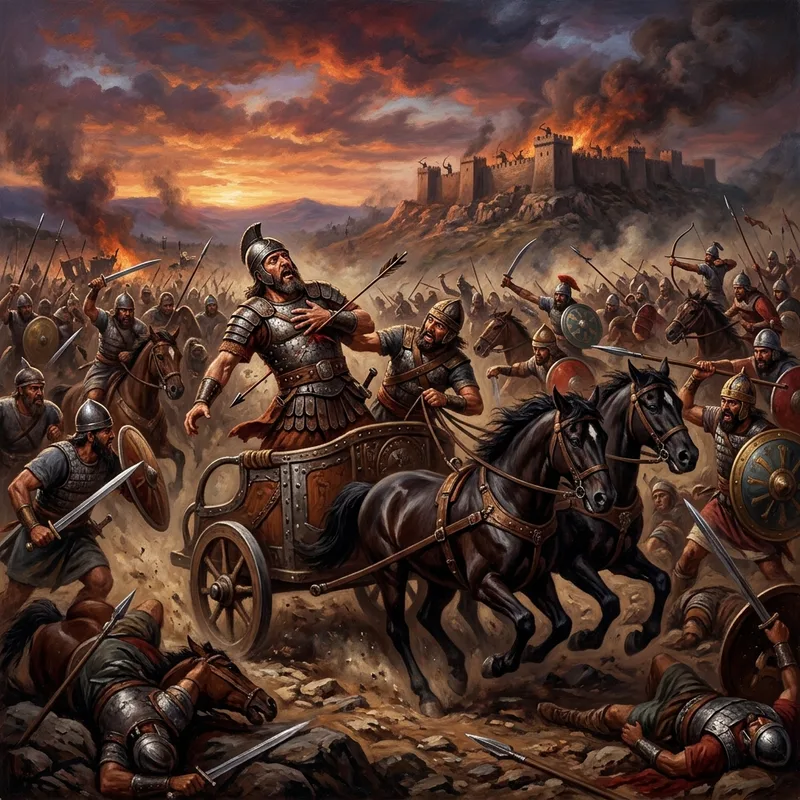
Then, across the dust-choked battlefield, an unnamed Syrian foot soldier notched an arrow to his bowstring. The soldier had no target in mind; he saw only a blurred wall of opposing troops. Drawing the bow with full strength, he loosed the shaft לְתֻמּוֹ (Le-Tummo)—'at random,' in his simple ignorance.
The aimless arrow arced through the smoke and descended through the air. Guided by the sovereign hand of the Almighty God, the iron tip struck Ahab directly between the scale joints of his heavy bronze corslet and the breastplate—a microscopic gap less than an inch wide. The barbed arrow penetrated deep into the king's lungs and chest cavity.
Gasping for breath, blood bubbling from his lips, Ahab whispered to his chariot driver: "Turn around and carry me out of the battle, for I am severely wounded!"
The Setting Sun and the Pool of Samaria
Because the Syrian pressure intensified, Ahab realized that if his troops saw their king retreating, the Israelite army would collapse into immediate rout. In a remarkable demonstration of physical endurance, Ahab ordered his driver to prop his bleeding body upright in the chariot facing the battle. For hours, as the sun climbed across the sky and began its descent, the dying king stood upright, his blood pooling in the bottom of the chariot box.
At sunset, as the shadows lengthened over Mount Gilead, King Ahab collapsed dead into his own blood. Instantly, a mournful cry went up through the ranks, echoing Micaiah's vision to the exact letter: "Every man to his city, and every man to his country!" The army dispersed into the dusk.
They carried the body of the dead king back across the Jordan to Samaria and buried him in the royal tombs. Then, servants took Ahab's gore-soaked chariot to the public reservoir on the outskirts of Samaria to wash away the clotted blood. As the water ran red into the pool where the harlots of the city bathed, wild scavenger dogs gathered around the chariot wheels and licked up the blood of Ahab—fulfilling with terrifying, mathematical precision the prophetic decree spoken by Elijah in the vineyard of Naboth: "In the place where dogs licked the blood of Naboth shall dogs lick your blood, even yours!"
Biblical Keywords & Theological Roots
A 'lying spirit / spirit of deception'; an agent permitted by divine sovereignty to entice, test, and judicially harden the unrepentant who have willfully despised the truth.
Horns of iron; physical props crafted by false prophet Zedekiah son of Chenaanah to provide theatrical, manipulative legitimacy for Ahab's disastrous military campaign.
Literally 'in his innocence / at random / without specific aim'; denoting human aimlessness that is simultaneously governed by the precise, sovereign decree of Almighty God.
The word of Yahweh is truth; the unshakeable foundation of biblical prophecy that remains immutable regardless of political persecution, public mockery, or royal rage.
The 'bread of affliction / oppression'; starvation rations fed to prisoners of conscience to break their physical stamina and force them to retract uncomfortable prophetic truths.
Ancient Near Eastern & Archaeological Context
The battle of Ramoth-Gilead (circa 853 BC) occurred immediately following the monumental geopolitical crisis recorded in the Assyrian royal annals of King Shalmaneser III (the Kurkh Monolith). In that inscription, 'Ahab the Israelite' (*A-ha-ab-bu mat Sir-'i-la-a-a*) is documented as a key confederate of the anti-Assyrian coalition at the Battle of Qarqar (853 BC), contributing an astonishing 2,000 chariots and 10,000 infantry alongside King Hadadezer (Ben-Hadad II) of Damascus. Once the immediate Assyrian threat receded, the volatile Levantine alliance dissolved, and Ahab sought to exploit the peace to reclaim Ramoth-Gilead (modern Tell er-Rumeith in northern Jordan). Ramoth-Gilead was a heavily fortified frontier city commanding the King's Highway and the lucrative Transjordanian caravan routes, which Ben-Hadad had earlier promised to restore to Israel (1 Kings 20:34) but had failed to surrender. King Jehoshaphat of Judah had cemented a strategic alliance with Ahab through the marriage of his crown prince Jehoram to Ahab and Jezebel's daughter Athaliah (2 Chronicles 18:1; 2 Kings 8:18). Prophetic guilds in the ancient Near East (exemplified by the 400 royal prophets) were frequently state-salaried civil servants whose primary political function was to provide religious legitimacy, positive propaganda, and auspicious omens for royal military campaigns, utilizing symbolic street theater such as forged iron horns (*karnei varzel*). In contrast, true biblical prophets like Micaiah and Elijah operated entirely outside state patronage, holding divine revelation above nationalistic expedience.
Practical Discipleship & Spiritual Application
- Value Painful Truth Over Soothing Lies: Ahab surrounded himself with four hundred positive flatterers who led him to his grave. Seek out godly friends, mentors, and pastors who will speak uncomfortable biblical truth into your life rather than telling you only what you want to hear.
- Stand Firm When Consensus Opposes God's Word: Micaiah stood as a minority of one against an entire political and religious establishment. Never compromise your biblical convictions to gain cultural acceptance or avoid social censure.
- Beware of Unequal Yokes in Life and Leadership: Jehoshaphat's alliance with Ahab nearly destroyed him. Exercise extreme prayer and discernment before entering into business partnerships, marital unions, or deep alliances with those who do not share your allegiance to Christ.
- Rest in the Unfailing Sovereignty of God: You cannot hide from God, nor can you be harmed apart from His sovereign permission. Ahab disguised himself and died; Jehoshaphat cried out and was delivered. Trust your life entirely into the sovereign hands of your Heavenly Father.
Support Independent Biblical Research
Did this study bless you? Help support our independent bilingual research and interactive visual Bible tools.
⚡ Fast Facts
- The Battle of Qarqar in 853 BC, recorded on Assyria's Kurkh Monolith, shows Ahab fielded 2,000 chariots—more than any other king in the anti-Assyrian western coalition.
- Zedekiah's forged iron horns were an intentional distortion of Moses' blessing upon Joseph in Deuteronomy 33:17: 'His horns are like the horns of the wild ox; with them he shall push the peoples to the ends of the earth.'
- Micaiah son of Imlah is traditionally identified by Jewish historians as the anonymous prophet who previously rebuked Ahab for sparing Ben-Hadad in 1 Kings 20:35–43, explaining why Ahab already had him imprisoned.
- The arrow that killed Ahab was loosed 'at random' (le-tummo), yet struck the tiny gap between the scale armor and the breastplate—a target area measuring less than one square inch.
❓ Frequently Asked Questions (FAQs)
Why did God allow a 'lying spirit' to deceive Ahab's four hundred prophets?
God did not force innocent men to lie; rather, in judicial sovereignty, He gave Ahab over to the deception that the king already desperately craved. Ahab had spent his entire reign suppressing Yahweh's true prophets and cultivating yes-men who rubber-stamped his desires. Because Ahab willfully rejected the truth, God permitted a deceiving spirit to work through Ahab's own corrupt prophetic network. Furthermore, God was entirely fair: He sent Micaiah to publicly reveal the deception and warn Ahab of the trap before he marched to battle, leaving the king without excuse.
Why did Jehoshaphat, a godly king, agree to wear royal robes while Ahab disguised himself?
Jehoshaphat's decision reveals the dangerous gullibility that often accompanies godly believers who enter into compromising alliances with worldly manipulators. Ahab framed the request as an honor, allowing Jehoshaphat to appear as the supreme commander of the allied armies, while cowardly seeking to deflect Syrian assassination attempts onto his ally. Jehoshaphat's uncritical trust nearly cost him his life, serving as an enduring biblical warning against naive entanglements with ungodly partners.
How does the death of Ahab prove the absolute inspiration and authority of Scripture?
Ahab's death represents an astonishing convergence of multiple independent prophetic predictions fulfilled to the exact letter: First, Elijah prophesied that in the place where dogs licked Naboth's blood, dogs would lick Ahab's blood (1 Kings 21:19). Second, an anonymous prophet declared that Ahab's life would pay for Ben-Hadad's life (1 Kings 20:42). Third, Micaiah foretold that Ahab would never return alive from Ramoth-Gilead (1 Kings 22:28). Despite Ahab's armor, royal disguise, military precautions, and the archer's aimless shot, every single prophetic decree was flawlessly executed.