Immediately following His instruction of the Disciples' Prayer, Jesus delivers the Parable of the Friend at Midnight in Luke 11:5-8. Through this earthy village narrative, Christ shatters passive, half-hearted approaches to intercession, revealing that holy boldness, relentless importunity, and faith-filled audacity delight the heart of God.
1. The Midnight Emergency and the Empty Larder
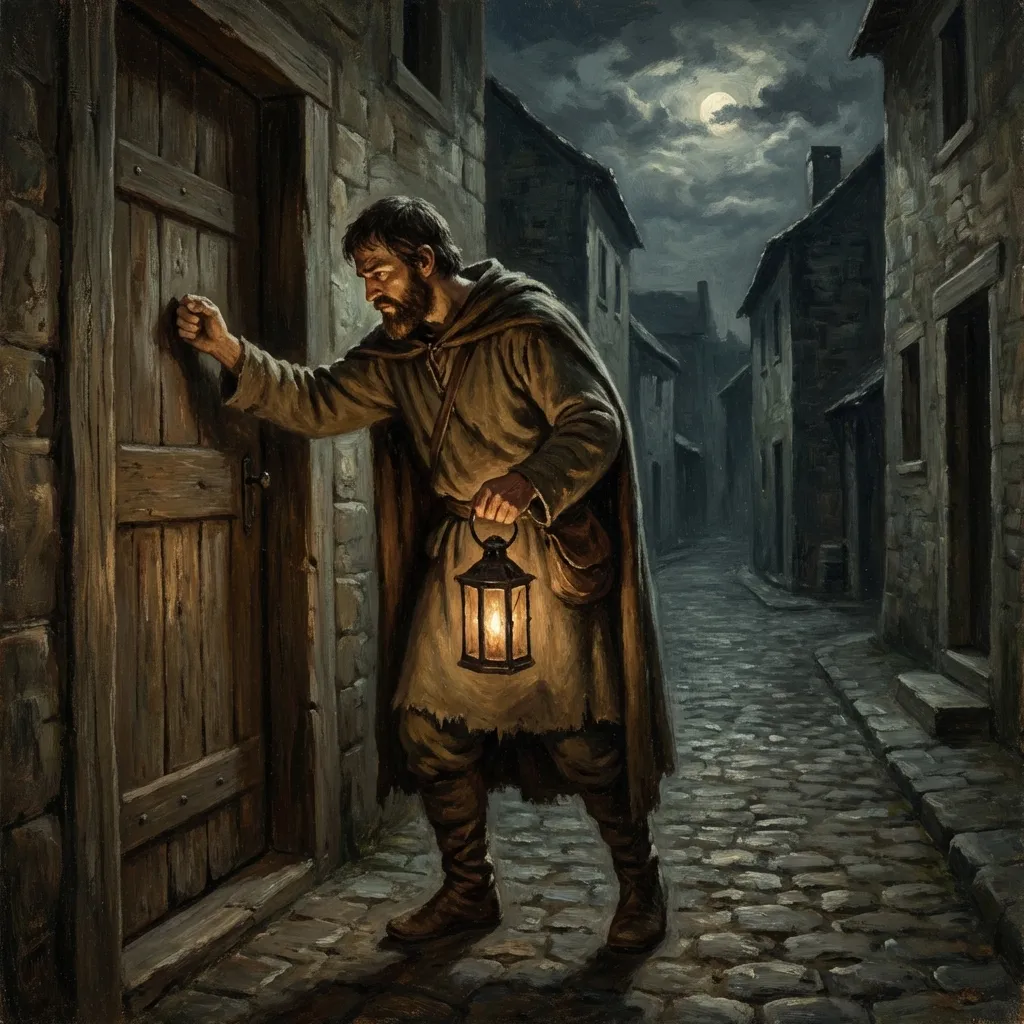
Jesus set up a vivid scenario familiar to every Galilean villager: "Suppose one of you has a friend, and goes to him at midnight and says, 'Friend, lend me three loaves of bread; a friend of mine on a journey has come to me, and I have no food to offer him'" (Luke 11:5-6). To avoid the blistering heat of the Judean sun, travelers frequently made their way by the cool light of the moon, arriving unpredictably. In Near Eastern culture, hospitality was sacred; sending a weary traveler to sleep on an empty stomach brought unbearable social reproach upon the entire community. The host was in crisis: his larder was empty.
2. The Locked Door and the Reluctant Neighbor
Desperate, the host hurried through the dark alleyways and pounded on the heavy timber door of a neighbor's house. From deep inside the darkened dwelling, a drowsy, irritated voice grumbled: "Don't bother me. The door is already locked, and my children and I are in bed. I can't get up and give you anything" (Luke 11:7). Peasant families slept together on a single elevated platform. To climb down, light an olive oil lamp, unbar the noisy wooden bolt, and disturb the sleeping infants and penned animals was a massive domestic upheaval. Friendship alone was insufficient to move the sleeping neighbor.
3. Anaideia: The Power of Holy Audacity
Yet the man outside did not retreat into the night with an apology. Knowing that the honor of his household and the nourishment of his guest hung in the balance, he continued to bang relentlessly on the door. Jesus revealed the turning point: "I tell you, even though he will not get up and give you the bread because of friendship, yet because of your shameless audacity (anaideia) he will surely get up and give you as much as you need" (Luke 11:8). The Greek word anaideia denotes an utter absence of shame—a refusal to quit until the petition is granted.
4. The Contrast: Our Generous, Unsumbering Father
Jesus was not teaching that God is an irritable, slumbering landlord who must be badgered into reluctant benevolence. Rather, He was presenting a powerful argument from the lesser to the greater. If an annoyed, selfish human being can be moved to grant aid through shameless pounding, how much more will the God of Israel—who neither slumbers nor sleeps (Psalm 121:4)—speedily open the windows of heaven to His beloved children! God does not begrudge our persistence; He invites it as a demonstration of authentic faith.
5. Ask, Seek, Knock: The Law of Kingdom Supply
Christ immediately tethered the parable to an unshakeable threefold promise: "So I say to you: Ask and it will be given to you; seek and you will find; knock and the door will be opened to you. For everyone who asks receives; the one who seeks finds; and to the one who knocks, the door will be opened" (Luke 11:9-10). In the original Greek, these verbs are present active imperatives signifying ongoing, continuous action: 'Keep on asking, keep on seeking, keep on knocking.' The door of divine mercy stands ready to swing wide to those who refuse to let go until heaven responds.
Biblical Keywords & Theological Roots
Shameless persistence, brazen audacity, refusal to be discouraged by embarrassment; holy boldness in prayer.
Midnight; the darkest and most inconvenient hour of the night, highlighting utter human helplessness.
Lend to me, supply my urgent lack; a direct plea grounded in communal hospitality and urgent necessity.
Ancient Near Eastern & Archaeological Context
In the 1st century hill country of Judea and Galilee, village hospitality was an ironclad covenant obligation (*hakhnasat orchim*). A host was morally required to set fresh bread before any traveler. Because grain was ground daily on stone handmills by women and baked into round flat loaves for that day's consumption, families rarely kept surplus bread overnight. Peasant houses consisted of a single large square room with a raised platform where the family slept and a lower flagstone level where sheep and chickens were brought inside at night for warmth and security. Bolting the door involved sliding a massive wooden beam through iron staples, a process creating immense racket.
🔑 Key Spiritual Takeaways
- Shameless Audacity in Prayer: God does not rebuke bold, urgent persistence; He invites His children to storm heaven with unyielding intercession.
- Praying for Others: The man knocked at midnight not for his own hunger, but to provide bread for a weary traveler who had no other recourse.
- How Much More God Gives: If a cranky, sleeping neighbor will eventually rise and give bread because of shameless audacity, how much more will our loving Father generously provide!
- The Progressive Promise: Jesus grounds the parable in the unstoppable triad: Ask and it will be given, Seek and you will find, Knock and the door will be opened.
Support Independent Biblical Research
Did this study bless you? Help support our independent bilingual research and interactive visual Bible tools.
⚡ Fast Facts
- Nocturnal Travel Necessity: In the scorching desert heat of Judea, travelers routinely journeyed after sunset to avoid sunstroke, often arriving at remote villages past midnight.
- Sacred Village Hospitality: In ancient Near Eastern honor culture, failing to feed a weary guest brought intense communal shame (*kallam*) upon the entire village, not merely the host.
- One-Room Peasant Architecture: Peasant families slept together on a single raised sleeping mat (*bayit*) with their children, while domestic livestock were penned inside the lower threshold; unbolting the heavy timber door woke the entire household.
- Three Loaves of Bread: The request was for three loaves—one for the guest, one for the host to eat alongside him, and one left over as a sign of abundant hospitality.
❓ Frequently Asked Questions (FAQs)
What does the Greek word 'anaideia' really mean in Luke 11:8?
The Greek term *anaideia* literally translates to 'shamelessness' or 'lack of modest restraint.' It describes someone so consumed by urgency and concern for his guest that he disregards conventional etiquette, social embarrassment, and the risk of irritating his neighbor, knocking until the door opens.
Does this parable imply that God is reluctant like the sleeping neighbor?
Not at all; this is an *a fortiori* argument (arguing from the lesser to the greater). Jesus is contrasting the reluctant, grumbling neighbor with our willing, sleepless Heavenly Father. If even an irritable human responds to shameless importunity, how infinitely more eager is God to bless His praying children!
What is the ultimate gift promised in the context of persistent prayer in Luke 11?
In Luke 11:13, Jesus concludes this discourse with the ultimate climax: 'If you then, though you are evil, know how to give good gifts to your children, how much more will your Father in heaven give the Holy Spirit to those who ask him!' The supreme answer to persistent prayer is God giving Himself through His Holy Spirit.