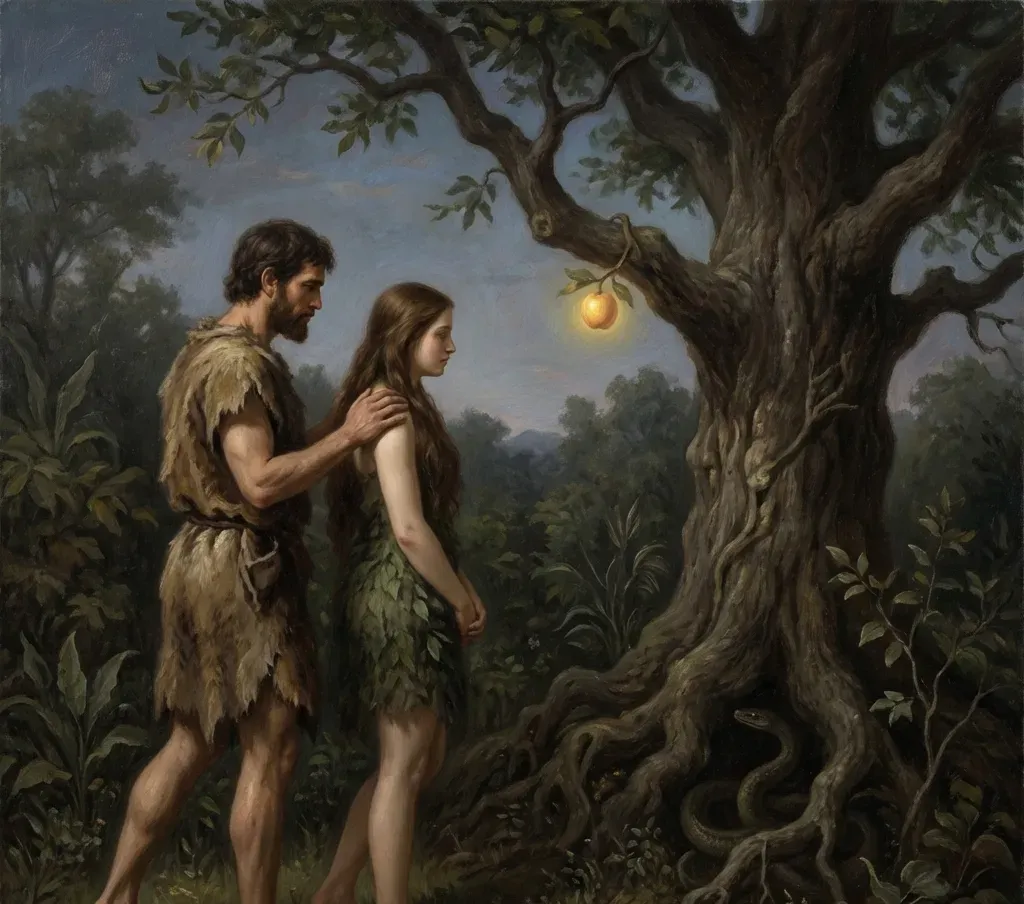
The gentle morning breezes sweeping across the oak groves of Hebron carried the fragrant scents of cedar and ripe grapes. Jacob, now an aging patriarch bearing the permanent holy limp of Peniel, pitched his tents in the land where his father Isaac and grandfather Abraham had lived as sojourners. Surrounding him were the vast flocks and herds that testified to Yahweh's covenant blessing. Yet within the domestic heart of this patriarchal family, a silent, volatile storm was brewing—a tempest fueled by blinding favoritism, prophetic visions, and murderous fraternal envy that would plunge the house of Israel into twenty-two years of heartbreak.
1. The Beloved Son and the Ceremonial Tunic
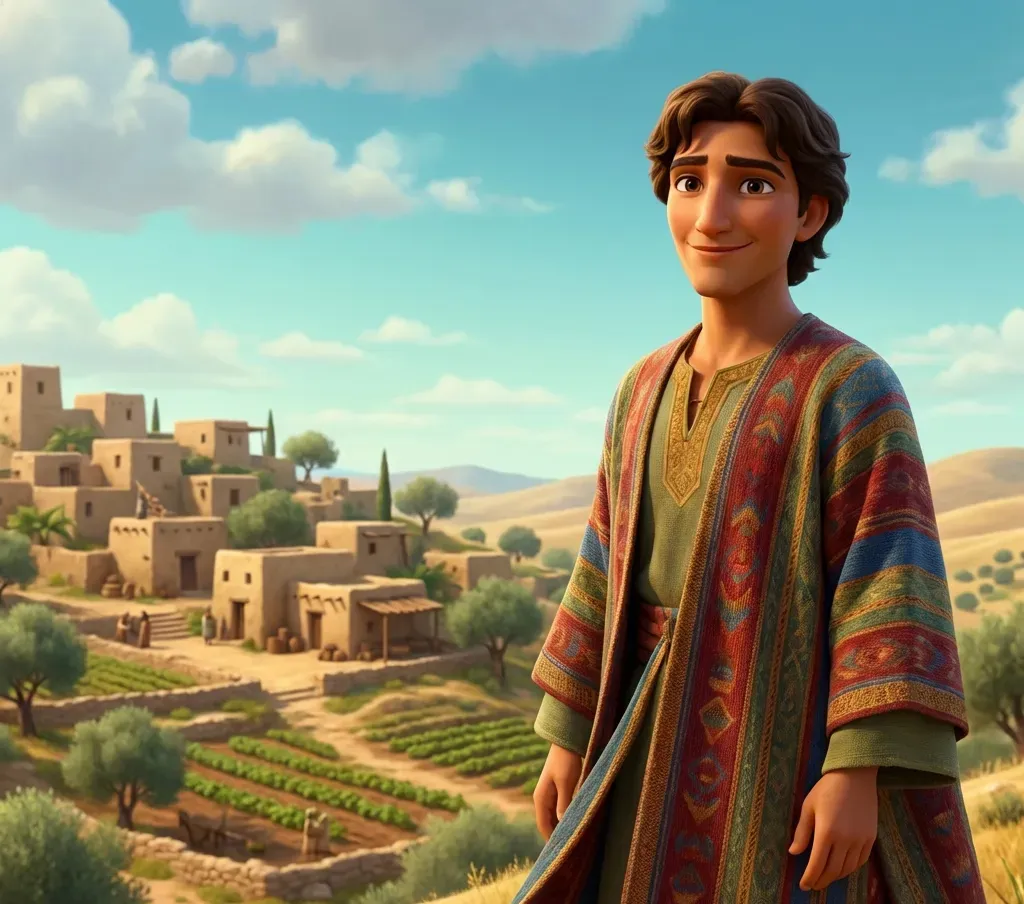
Among the twelve sons of Jacob, one held an undisputed, supreme monopoly over his father's affection: seventeen-year-old Joseph. Joseph was the firstborn of Rachel, the beloved wife for whom Jacob had labored fourteen grueling years in Padan-Aram. In Joseph's handsome features and upright character, Jacob saw the living reflection of his departed bride.
Scripture states with devastating candidness: "Now Israel loved Joseph more than all his children, because he was the son of his old age" (Genesis 37:3). But Jacob did not conceal his preference; he weaponized it into a public spectacle. He commissioned for Joseph a magnificent, royal garment—the Ketonet Passim.
In the Bronze Age Near East, common pastoral shepherds wore short, sleeveless tunics of rough undyed wool that reached only to the knees, designed for rugged manual labor in the mud and thorns. But the Ketonet Passim was a luxurious, ornamented robe with long sleeves extending to the wrists and flowing hemline cascading down to the ankles, richly dyed with expensive pigments. This was the ceremonial attire of royalty, nobles, and appointed heirs. By draping this garment over seventeen-year-old Joseph, Jacob publicly stripped his elder sons—especially the firstborn Reuben, Simeon, and Levi—of their hereditary supremacy, signaling that the spoiled youth was the chosen patriarchal prince.
The consequence within the camp was instant and toxic: "But when his brothers saw that their father loved him more than all his brothers, they hated him and could not speak peaceably to him" (Genesis 37:4). Every greeting, every communal meal was poisoned with sullen silence and clenched fists.
2. The Sheaves and the Stars: Prophetic Dreams
Into this simmering cauldron of familial resentment, young Joseph dropped a lit match. One morning at breakfast, glowing with enthusiasm, he exclaimed to his elder brothers: "Hear this dream which I have dreamed!"
He recounted a vivid agricultural vision: they were all binding sheaves of wheat in the open harvest field, when suddenly Joseph's sheaf arose and stood upright, while the ten sheaves of his brothers gathered around and bowed down in reverent prostration to his sheaf. The elder brothers, already seething over his robe, exploded in fury: "Shall you indeed reign over us? Or shall you indeed have dominion over us?" Moses records that "they hated him even more for his dreams and for his words."
Undeterred by their murderous scowls, Joseph soon experienced a second, even more audacious celestial vision: this time, the sun, the moon, and eleven stars bowed down before him. When he recounted it in the presence of his father and brothers, even Jacob felt compelled to rebuke him: "What is this dream that you have dreamed? Shall your mother and I and your brothers indeed come to bow down to the earth before you?"
Yet while his brothers' hearts burned with consuming envy (*Qana*), Jacob kept the matter in mind, remembering the Bethel stairway and sensing that the sovereign hand of God was hovering over this youth.
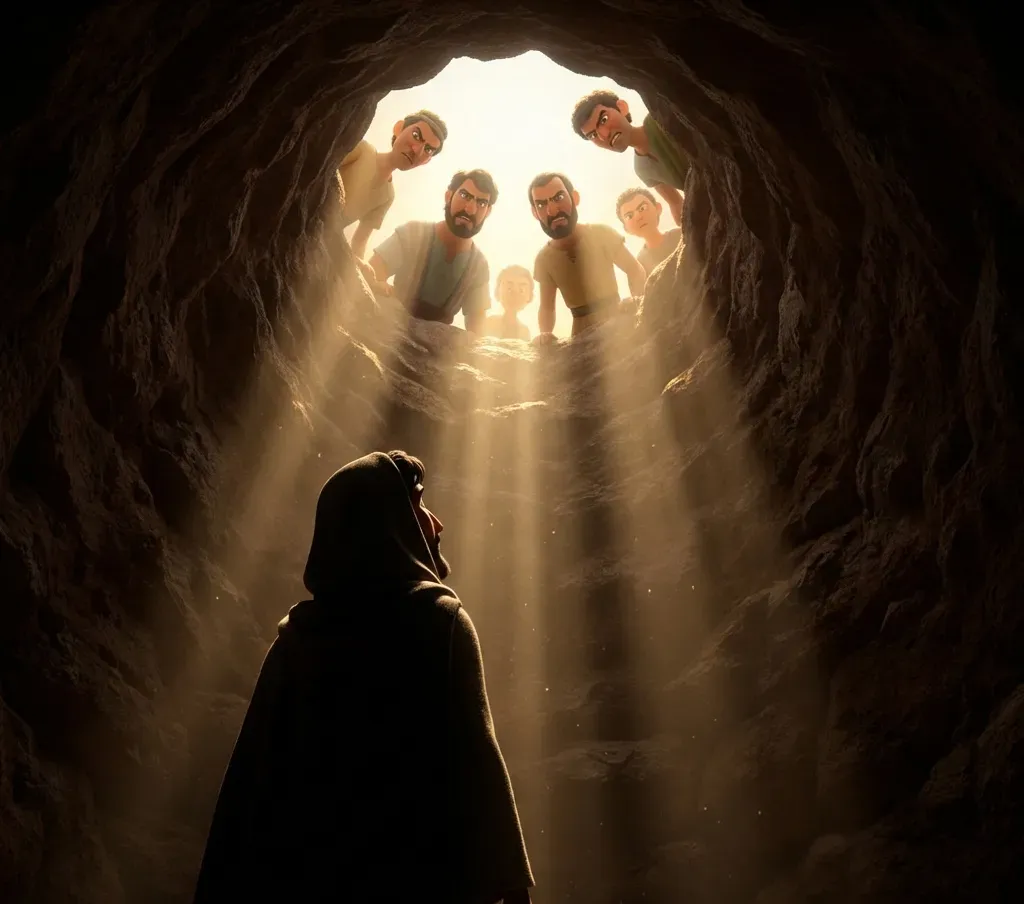
The Pit of Betrayal: Stripped of his ceremonial tunic, seventeen-year-old Joseph looks up from the suffocating depths of the dry cistern at Dothan.
3. The Mission to Shechem and the Stalking at Dothan
Weeks later, the ten elder brothers drove their vast flocks fifty miles northward to Shechem, seeking fresh pasturage. Because Shechem was the volatile city where Simeon and Levi had previously slaughtered the male inhabitants (Genesis 34), Jacob grew deeply anxious for their welfare.
Turning to Joseph, the patriarch commanded: "Go and see please whether it is well with your brothers and well with the flocks, and bring word back to me." Without hesitation, dressed in his ceremonial tunic, Joseph answered, "Here I am," and departed alone on foot through the dangerous hills of central Canaan.
Arriving at Shechem, Joseph found the pastures abandoned. A stranger wandering the fields asked, "What are you seeking?" Joseph replied, "I am seeking my brothers. Tell me, please, where they are feeding their flocks." The man said, "They have departed here, for I heard them say, 'Let us go to Dothan.'"
Joseph pressed on another fifteen miles northwest to Dothan. As he crested the rolling green ridge, his colorful, flowing robe shimmered brightly against the sun-bleached landscape. Miles away in the valley below, the brothers spotted that hated garment. Twenty years of accumulated bitterness ignited into homicidal rage:
"Look, this dreamer is coming! Come therefore, let us now kill him and cast him into some pit; and we shall say, 'Some wild beast has devoured him.' We shall see what will become of his dreams!" (Genesis 37:19-20)
4. The Pit of Death: Reuben's Desperate Intervention
Murder was premeditated in cold blood. But Reuben, the eldest, was seized with horror. As the firstborn, he was legally responsible to Jacob for the safety of his younger siblings. Reuben intervened: "Let us not kill him... Shed no blood, but cast him into this pit which is in the wilderness, and do not lay a hand on him." Reuben planned to slip away later, haul Joseph out with a rope, and return him safely to their father.
The moment Joseph arrived, greeting his brothers with breathless joy, they swarmed him like wild predators. Hands clawed at his chest; they ripped the beloved Ketonet Passim from his shoulders, tearing the embroidered seams, and dragged the screaming seventeen-year-old boy toward a nearby cistern (*Bor*).
This was a bottle-shaped subterranean water reservoir carved twenty feet into the solid limestone. The text notes with chilling clinical detachment: "And the pit was empty; there was no water in it" (Genesis 37:24). They cast Joseph headlong into the darkness. Bruised, trapped in the cold mud at the bottom, unable to scale the sheer limestone walls, Joseph wept and pleaded for mercy.
Years later in Egypt, the brothers confessed the haunting memory of that hour: "We saw the anguish of his soul when he pleaded with us, and we would not hear" (Genesis 42:21). Yet as the boy's muffled screams echoed up from the subterranean abyss, the ten brothers sat down calmly on the rim of the cistern to eat a meal of bread.
5. Sold for Twenty Pieces of Silver
As they ate, the rhythmic clatter of camel hooves and brass bells drifted across the Dothan plain. Looking toward the northern pass of the Via Maris, they saw a wealthy commercial caravan of Ishmaelite and Midianite traders traveling southward from Gilead, their camels heavily laden with aromatic spices—tragacanth gum, balm, and myrrh—bound for the embalming workshops and temples of Egypt.
Judah, displaying his shrewd, pragmatic leadership, saw an opportunity to eradicate Joseph permanently while making a handsome financial profit:
"What profit is there if we kill our brother and conceal his blood? Come and let us sell him to the Ishmaelites, and let not our hand be upon him, for he is our brother and our flesh." (Genesis 37:26-27)
The brothers eagerly consented. Hauling the weeping teenager out of the dark cistern, they negotiated his sale. The Midianite merchants weighed out twenty shekels of silver—the exact legal market price for an adolescent male slave in the Middle Bronze Age. Joseph was bound in chains, attached to the baggage train of the caravan, and dragged south toward the auction blocks of Egypt.
When Reuben returned to the pit and found it empty, he tore his clothes in paroxysms of grief: "The boy is not there! And I, where shall I go?"
6. The Goat's Blood and Jacob's Broken Heart
To cover their monstrous crime, the brothers devised a sinister deception. They slaughtered a young male goat, plunged Joseph's ornate princely robe into the warm, scarlet blood, and sent the blood-soaked, shredded garment to their father in Hebron with a callous, insolent message:
"We have found this. Do you know whether it is your son's tunic or not?" (Genesis 37:32)
Jacob recognized the garment instantly. A cry of agony ripped from the old patriarch's throat: "It is my son's tunic. A wild beast has devoured him. Without doubt Joseph is torn to pieces!"
Jacob tore his garments, tied rough sackcloth around his waist, and plunged into inconsolable mourning. For weeks, months, and years, all his sons and daughters arose to comfort him, but he stubbornly refused their words, weeping: "I shall go down into the grave to my son in mourning." The master deceiver who had used a goat's skin to steal a blessing was now broken by the blood of a goat.
Yet Scripture closes this dark chapter not with tragedy, but with a magnificent note of divine providence: "Now the Midianites had sold him in Egypt to Potiphar, an officer of Pharaoh and captain of the guard" (Genesis 37:36). The pit was not the end; it was the unseen portal through which God would preserve the covenant family and save the known world.
Biblical Keywords & Theological Roots
A long, ornamented tunic reaching the wrists and ankles, embroidered with fine craftsmanship; designating royalty, noble status, or the appointed patriarchal heir.
To dream, experience prophetic nocturnal visions, or receive divine revelations directly from God concerning the future of redemptive history.
To burn with intense envy, consuming jealousy, or possessive rage; describing the murderous hatred harbored by Joseph's brothers against him.
A pit, deep subterranean cistern, or dry limestone water reservoir; used metaphorically in Scripture for dungeons, graves, and the abyss of death.
To sell, alienate, or surrender into bonded servitude or commercial slavery; describing the transaction of Joseph for twenty pieces of silver.
Ancient Near Eastern & Archaeological Context
Geographically, Genesis 37 unfolds across three critical crossroads of Bronze Age Canaan: the Valley of Hebron (in the Judean highlands where Jacob camped), Shechem (fifty miles north in the strategic mountain pass between Mount Ebal and Mount Gerizim), and Dothan (fifteen miles northwest of Shechem, sitting upon the major international trade corridor).
Dothan occupied a vital strategic choke-point along a northern branch of the Via Maris ('The Way of the Sea'), the primary international commercial and military highway connecting Mesopotamia, Syria, and Phoenicia with the Nile Delta of Egypt. The fertile plains surrounding Dothan were renowned for lush pastures, attracting pastoral clans like the sons of Jacob during dry seasons. When caravans traveled south along this route, they were laden with luxury commodities. Genesis 37:25 specifically records an Ishmaelite/Midianite caravan carrying 'gum, balm, and ladanum' from Gilead down to Egypt. Egyptian historical inscriptions, such as the contemporary Story of Sinuhe and the tomb paintings of Beni Hasan (circa 1890 BC), depict Semitic caravaneers dressed in multi-colored robes bringing cosmetics, galena, and aromatic resins into Egypt.
Furthermore, ancient Near Eastern cisterns (*borot*) excavated throughout Palestine were bottle-shaped subterranean reservoirs carved directly into limestone bedrock, with narrow necks at ground level opening into wide bulbous chambers below, often fifteen to thirty feet deep. If dry, it was physically impossible for a trapped human being to scale the slick limestone walls without a rope or ladder, turning the cistern into an inescapable underground prison and suffocating tomb.
Practical Discipleship & Spiritual Application
- The Poison of Parental Favoritism and Domestic Comparison: Jacob repeated the tragic error of his own parents by openly flaunting his favoritism toward Joseph with the ceremonial tunic. Unfair parental favoritism fractures families, breeds bitter resentment among siblings, and invites devastating domestic crises. Parents must love, value, and nurture each child uniquely according to God's individual calling.
- Cultivating Spiritual Humility and Relational Wisdom: Receiving divine vision does not exempt us from the need for sanctified humility, relational tact, and gracious timing. While Joseph's dreams were genuine revelations from God, sharing them without sensitivity exacerbated his brothers' envy. We must hold God's callings with holy discretion, allowing God Himself to open doors of leadership rather than prematurely parading our destiny.
- Faithful Obedience in the Face of Danger: When his father asked him to travel fifty hazardous miles through Shechem and Dothan to check upon his hostile brothers, Joseph did not hesitate or offer excuses. He immediately answered, 'Here I am,' walking in cheerful, sacrificial obedience. God often leads His servants through paths of vulnerability and testing before exalting them.
- Trusting God's Unseen Hand in the Dry Pits of Life: Stripped of his robe, betrayed by his own flesh and blood, and trapped in a dark limestone pit without water, Joseph appeared utterly abandoned. Yet that pit was not his tomb—it was the sovereign divine stepping-stone to the throne of Egypt. When you find yourself in the dark pits of betrayal or injustice, remember that God's providence is orchestrating a greater resurrection purpose.
⚡ Fast Facts
- The Robe of Heirship (Ketonet Passim): Far more than a colorful coat, this long-sleeved, ornamented tunic reached to the wrists and ankles—the garment worn by ancient Near Eastern royalty and exempting the wearer from hard manual field labor, signaling that Jacob chose Joseph over the firstborn Reuben as chief heir.
- The Exact Price of a Boy Slave: Joseph was sold for twenty shekels of silver (Genesis 37:28), which perfectly matches the historical Hammurabi Code and ancient Near Eastern slave-market price for an adolescent male under twenty years of age.
- The Spices of Embalming: The Ishmaelite caravan carried tragacanth gum, balm of Gilead, and ladanum (Genesis 37:25)—high-value aromatic resins imported into Egypt specifically for mummification and religious incense rituals.
- A Living Type of Jesus Christ: Joseph was the beloved son sent by his father to his brothers, hated without cause, stripped of his robe, cast into a pit of death, sold for silver by Judah, and presumed dead—yet appointed by God to save the world.
❓ Frequently Asked Questions (FAQs)
At seventeen years old, Joseph certainly lacked tact and relational wisdom in sharing dreams where his older brothers and parents bowed before him. However, Scripture presents Joseph's dreams not as youthful fantasies, but as genuine, sovereign revelations from God. His fault lay in naive timing and presentation, yet God used the brothers' sinful, envious reaction to propel Joseph into Egypt to fulfill the divine plan.
Reuben, as the eldest son, was legally and spiritually responsible to their father Jacob for the welfare of the brothers; moreover, having previously disgraced his father's concubine Bilhah (Genesis 35:22), Reuben desperately sought to redeem his lost status by secretly returning Joseph to Jacob. Judah, possessing natural leadership over the remaining nine brothers, pragmatically proposed selling Joseph to avoid the blood-guilt of fratricide while simultaneously making a profit.
Decades earlier, Jacob had deceived his blind father Isaac by slaughtering a goat and putting its skins upon his hands to simulate Esau (Genesis 27). Now, in exact poetic justice, Jacob's ten sons slaughtered a young goat, dipped Joseph's princely tunic in its blood, brought it to Jacob, and asked him to identify it (Genesis 37:31-32). Jacob was thoroughly deceived by the blood of a goat, mourning for twenty-two years for the son he believed was torn by wild beasts.