The account of Jeremiah in the miry cistern stands as one of the most agonizing trials of faith and one of the most beautiful portraits of unexpected courage in the Old Testament. As the iron fist of Babylon tightened its siege around the starving walls of Jerusalem, the political rulers of Judah sought to silence the voice of God by burying His prophet alive in a subterranean pit of suffocating mud. Yet from the darkest dungeon, God orchestrated a miraculous rescue through an Ethiopian court official named Ebed-Melech, proving that when the righteous sink into the mire, God's redeeming hand is never too short to save.
1. Treason Accusations and the Weakness of King Zedekiah
During the final, desperate siege of Jerusalem by Nebuchadnezzar's forces, Jeremiah continued to proclaim the uncompromised Word of the Lord: "Thus says the Lord: 'He who remains in this city shall die by the sword, by famine, and by pestilence; but he who goes out and surrenders to the Chaldeans shall live; his life shall be as a prize to him, and he shall live.'" (Jeremiah 38:2).
Four powerful princes—Shephatiah son of Mattan, Gedaliah son of Pashhur, Jucal son of Shelemiah, and Pashhur son of Malchiah—stormed into the palace of King Zedekiah in a fury. They accused Jeremiah of treason, desertion, and psychological sabotage, arguing: "Please, let this man be put to death, for he weakens the hands of the men of war who remain in this city and the hands of all the people, by speaking such words to them. For this man does not seek the welfare of this people, but their harm!"
King Zedekiah was a weak, vacillating monarch, paralyzed by fear of his own nobles and terrified of the invading Babylonians. Abdicating his royal responsibility and moral duty, Zedekiah conceded weakly: "Behold, he is in your hand. For the king can do nothing against you."
2. Lowered into the Dark, Suffocating Mud
Eager to execute Jeremiah without shedding royal blood with a sword, the princes seized the prophet and dragged him to the courtyard of the guard. There lay the cistern of Malchiah the king’s son, a deep underground reservoir carved out of bedrock beneath the palace foundations to store winter rainwater.
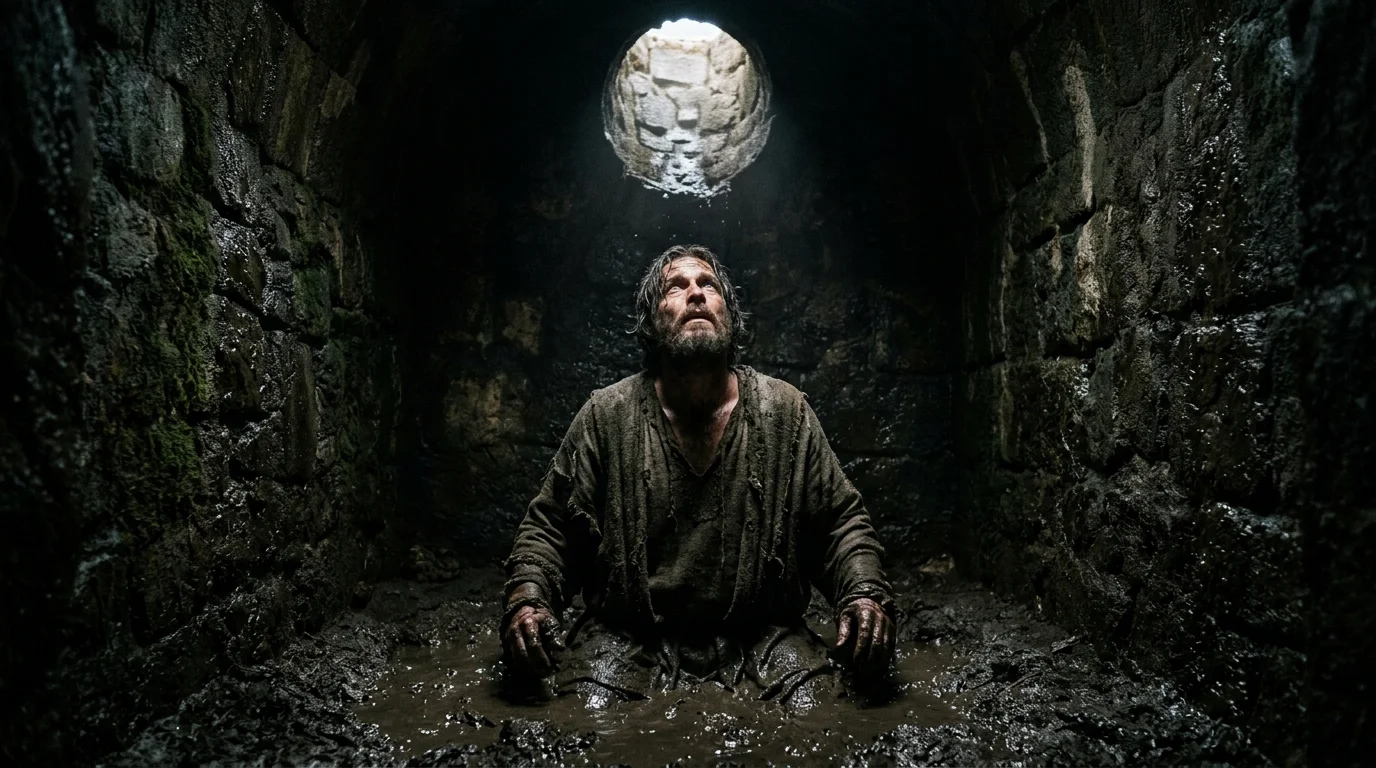
Because of the severe drought and siege conditions, there was no water in the cistern—only thick, stagnant, suffocating mud accumulated over decades. The princes tied ropes under Jeremiah's arms and lowered him down into the pitch-black abyss. As Jeremiah's feet touched the bottom, he sank deep into the cold, foul mire up to his armpits. Trapped in darkness, unable to sit or lie down, with no food, fresh air, or water, Jeremiah was left to die a slow, agonizing death of starvation, exposure, and hypothermia.
3. The Bold Intervention of Ebed-Melech the Cushite
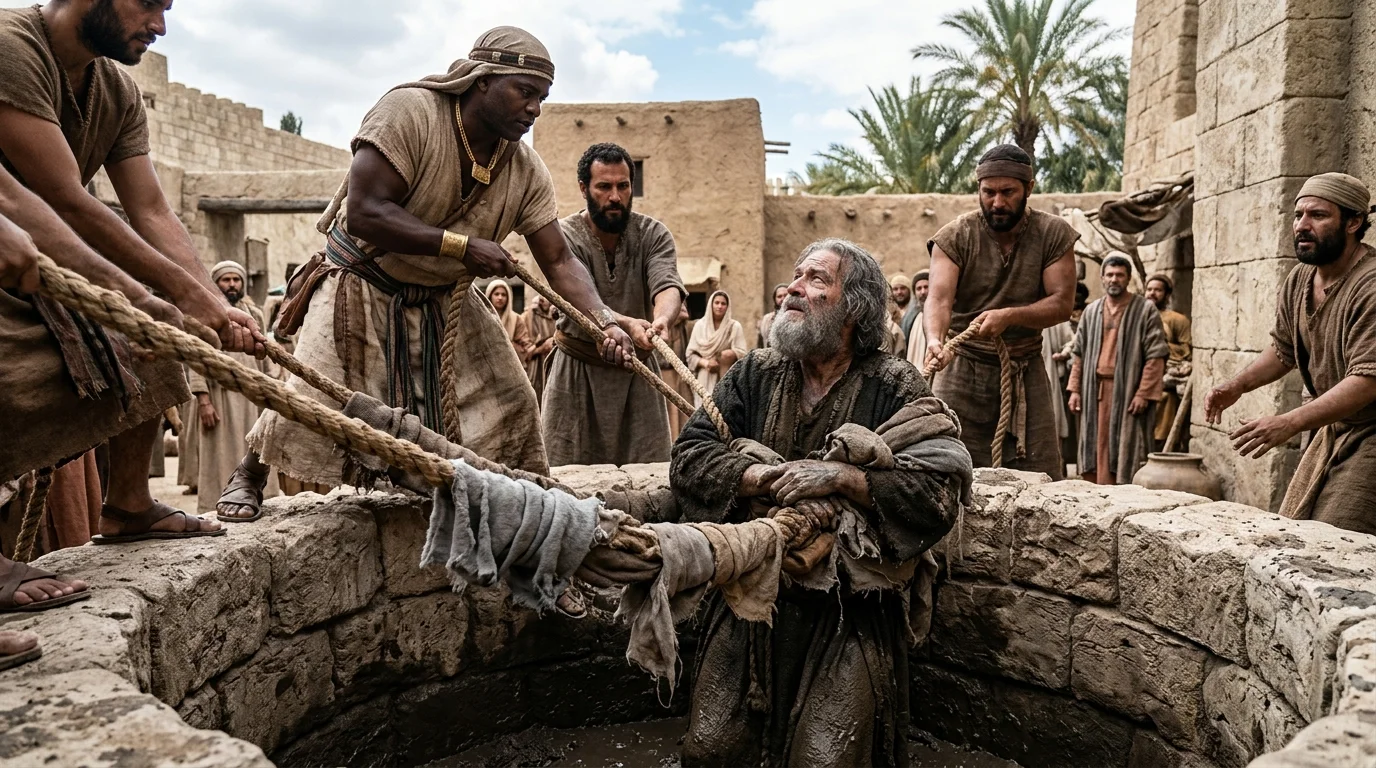 With tender compassion, Ebed-Melech and his men lowered soft linen rags and ropes into the dungeon, gently pulling Jeremiah out of the suffocating mire.
While the Hebrew religious elite and royal princes plotted murder, an outsider demonstrated true godliness. Ebed-Melech the Cushite (an Ethiopian eunuch and official in the royal palace) heard of the atrocity. He did not remain silent or look the other way. Risking treason charges and execution by the powerful princes, Ebed-Melech marched directly to the Benjamin Gate where King Zedekiah was holding public court.
Standing boldly before the king, Ebed-Melech declared: "My lord the king, these men have done evil in all that they have done to Jeremiah the prophet, whom they have cast into the cistern; and he is likely to die from hunger in the place where he is, for there is no more bread in the city!" (Jeremiah 38:9).
Stirred by this righteous plea, King Zedekiah commanded Ebed-Melech: "Take thirty men from here with you, and pull Jeremiah the prophet up out of the cistern before he dies."
4. Tender Compassion & The Divine Reward
Ebed-Melech ran to the palace storeroom beneath the treasury and gathered worn-out garments and old soft linen rags. Lowering them by ropes into the dark cistern, Ebed-Melech called down gently: "Please put these old clothes and rags under your armpits, under the ropes." Jeremiah did so. The thirty men pulled on the ropes with all their strength, hoisting the mud-caked prophet out of the pit into the sunlight. Jeremiah remained in the court of the prison until the day Jerusalem fell.
God did not forget Ebed-Melech's heroic compassion. In Jeremiah 39:16-18, the Lord sent a special prophetic message to Ebed-Melech: "I will deliver you in that day, and you shall not be given into the hand of the men of whom you are afraid... your life shall be as a prize to you, because you have put your trust in Me, declares the Lord." When Babylon destroyed Jerusalem, the cowardly princes perished, but the faithful Ethiopian who saved God's prophet was supernaturally delivered.
5. Historical and Archaeological Background of Malchiah's Cistern
Ancient Jerusalem relied heavily on underground water cisterns carved out of the limestone bedrock (*meleke* stone) to survive the dry summer months and enemy sieges. Cisterns were typically pear-shaped, with a narrow opening at the top widening out into a spacious bell-shaped chamber below, coated with waterproof lime plaster.
When neglected or drained during a long siege, the bottom of these cisterns accumulated several feet of dense, toxic silt, organic decay, and mud. Being cast into such a pit was a terrifying form of execution—leaving the victim in freezing subterranean darkness, enveloped in foul mire, to slowly starve without shedding blood. Ebed-Melech's courageous rescue of Jeremiah from this death trap demonstrated not only heroic faith, but also profound tactical wisdom in using thirty men and cushioned ropes to extract the prophet safely.
6. The Ethiopian Eunuch & The Global Heart of God
Ebed-Melech stands as a glorious Old Testament foreshadowing of the global reach of the Gospel. While the descendants of Abraham hardened their hearts and plotted against God's prophet, an African believer from Cush exhibited pure, saving faith. This beautiful portrait points forward to Acts 8:26-39, where another Ethiopian court official heard the Gospel of Jesus Christ from Philip, believed with all his heart, and was baptized, carrying the light of salvation back to Africa. God looks not at external ethnicity, nationality, or social status, but at a heart that trusts in Him.
Spiritual Reflections & Practical Life Application:
- God Hears the Cry from the Pit: Even when you feel you are sinking into a dark, inescapable pit of despair, depression, or betrayal, God's eye is upon you. You are never beyond the reach of His mercy.
- Speak Up for the Vulnerable: Ebed-Melech showed that true faith acts with moral courage against injustice. We are called to be a voice for the voiceless (Proverbs 31:8-9).
- Tenderness in Service: Ebed-Melech did not just throw abrasive ropes to Jeremiah; he provided soft rags to protect his bruised flesh. True Christian ministry pairs bold courage with gentle kindness.
- God Never Forgets Kindness to His Servants: "Whoever gives one of these little ones only a cup of cold water in the name of a disciple, assuredly, I say to you, he shall by no means lose his reward." (Matthew 10:42).
⚡ Fast Facts
- The cistern of Malchiah contained no water, only deep suffocating mud
- Ebed-Melech was a Cushite (Ethiopian) royal court official in Zedekiah's palace
- Used old linen rags under Jeremiah's armpits to prevent rope burns during the rescue
- God rewarded Ebed-Melech with a promise of supernatural protection during the fall of Jerusalem
❓ Frequently Asked Questions (FAQs)
Jeremiah faithfully prophesied that Jerusalem would fall to Babylon and that anyone who surrendered would live, while those remaining would die by sword, famine, and plague. The princes accused him of demoralizing the soldiers and committing treason.
Ebed-Melech risked his own life by confronting King Zedekiah at the Benjamin Gate, boldly declaring that the princes had acted evilly. He then showed gentle compassion by cushioning Jeremiah's armpits with rags so the ropes would not tear his flesh.
In Jeremiah 39:15-18, God sent a personal promise to Ebed-Melech that when Babylon sacked Jerusalem, he would not fall by the sword and his life would be preserved as a prize of war because he trusted in the Lord.