While physical reconstruction restores stone walls and cedar beams, spiritual reconstruction restores the human heart to the living God. Eight decades after Zerubbabel led the first wave of exiles back to Jerusalem in 538 BC, the initial spiritual fervor of the remnant had decayed into chilling moral compromise, spiritual apathy, and widespread syncretism with pagan neighbors. To cure this spiritual cancer, God raised up a man whose entire life was consecrated to Scripture: Ezra the scribe. His journey across bandit-infested deserts without a single bodyguard stands as an immortal monument to unshakeable faith, while his tearful, garment-tearing intercession outside the Temple sparked one of the greatest national repentance revivals in the history of Israel.
1. The Man Who Prepared His Heart: Ezra 7:10
Ezra was a direct lineal descendant of Aaron the high priest, Zadok, and Hilkiah (who had found the Book of the Law under King Josiah). But above his noble pedigree, Scripture reveals the inward secret that made Ezra a towering instrument in the hand of the Almighty:
"For Ezra had prepared his heart to seek the Law of the Lord, and to do it, and to teach statutes and ordinances in Israel." (Ezra 7:10).
This threefold commitment is the biblical paradigm for all spiritual leadership:
- To Seek (Study): Diligent, rigorous immersion in the Word of God.
- To Do (Practice): Personal, uncompromising obedience before preaching to others.
- To Teach (Proclaim): Faithfully imparting divine truth to transform an entire generation.
King Artaxerxes I (Longimanus) of Persia recognized Ezra’s supernatural wisdom. In 458 BC, the emperor granted Ezra an extraordinary royal decree, providing gold and silver from the royal treasury, authorizing him to appoint judges, and granting tax-exempt status to all priests, Levites, and Temple workers.
2. The Fast at the River Ahava: Trusting God Without Soldiers
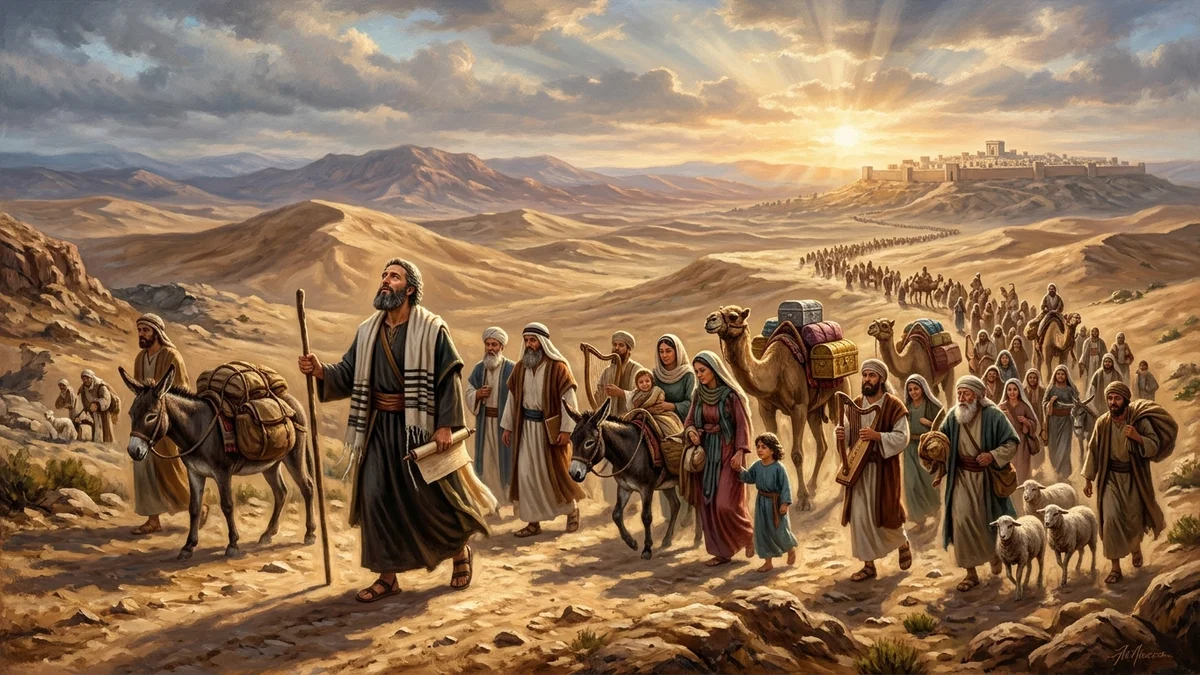 Carrying vast treasures of silver and gold across 900 miles of dangerous desert, Ezra refused a Persian cavalry escort, trusting entirely in the hand of Almighty God.
Ezra gathered approximately 1,500 men (along with their wives and children, numbering around 5,000 people) at the **River of Ahava** in Babylonia. As he reviewed the people, he realized with dismay that not a single Levite had volunteered! Ezra sent urgent envoys to Casiphia and recruited thirty-eight consecrated Levites and 220 Temple servants.
Before them lay a perilous, four-month desert trek through regions infested with ruthless Bedouin raiders and ambush bandits. The caravan carried immense wealth: over **25 tons of silver** and **3.75 tons of gold** vessels. Human prudence dictated asking King Artaxerxes for a detachment of cavalry and armed infantry. But Ezra made a courageous, faith-filled refusal:
"For I was ashamed to request of the king an escort of soldiers and horsemen to help us against the enemy on the road, because we had spoken to the king, saying, 'The hand of our God is upon all those for good who seek Him, but His power and His wrath are against all those who forsake Him.' So we fasted and entreated our God for this, and He answered our prayer." (Ezra 8:22-23).
For four grueling months across scorching sands, the caravan marched under the invisible canopy of the Almighty. Not a single bandit attacked them, not a single child was lost, and not a single shekel of gold went missing! On the first day of the fifth month (August 458 BC), Ezra’s caravan walked triumphantly through the gates of Jerusalem, safely weighing every ounce of gold and silver into the Temple treasury.
3. The Shocking Compromise of the Remnant
Ezra had come to teach God's Word, expecting to find a holy community. Instead, four months after his arrival, the Judean leaders approached him with a devastating report:
"The people of Israel and the priests and the Levites have not separated themselves from the peoples of the lands, with respect to the abominations of the Canaanites, the Hittites, the Perizzites, the Jebusites, the Ammonites, the Moabites, the Egyptians, and the Amorites. For they have taken some of their daughters as wives for themselves and their sons, so that the holy seed is mixed with the peoples of those lands. Indeed, the hand of the leaders and rulers has been foremost in this trespass!" (Ezra 9:1-2).
The very sin that had caused the destruction of Jerusalem and the seventy-year exile—unholy intermarriage leading directly to pagan idolatry—was flourishing once again! Worst of all, the spiritual leaders, priests, and civic magistrates were the primary offenders.
4. Ezra’s Weeping Intercession in the Rain
When Ezra heard this catastrophic news, he did not lash out in carnal fury. Instead, he was overwhelmed with holy horror:
"So when I heard this thing, I tore my garment and my robe, and plucked out some of the hair of my head and beard, and sat down astonished." (Ezra 9:3).
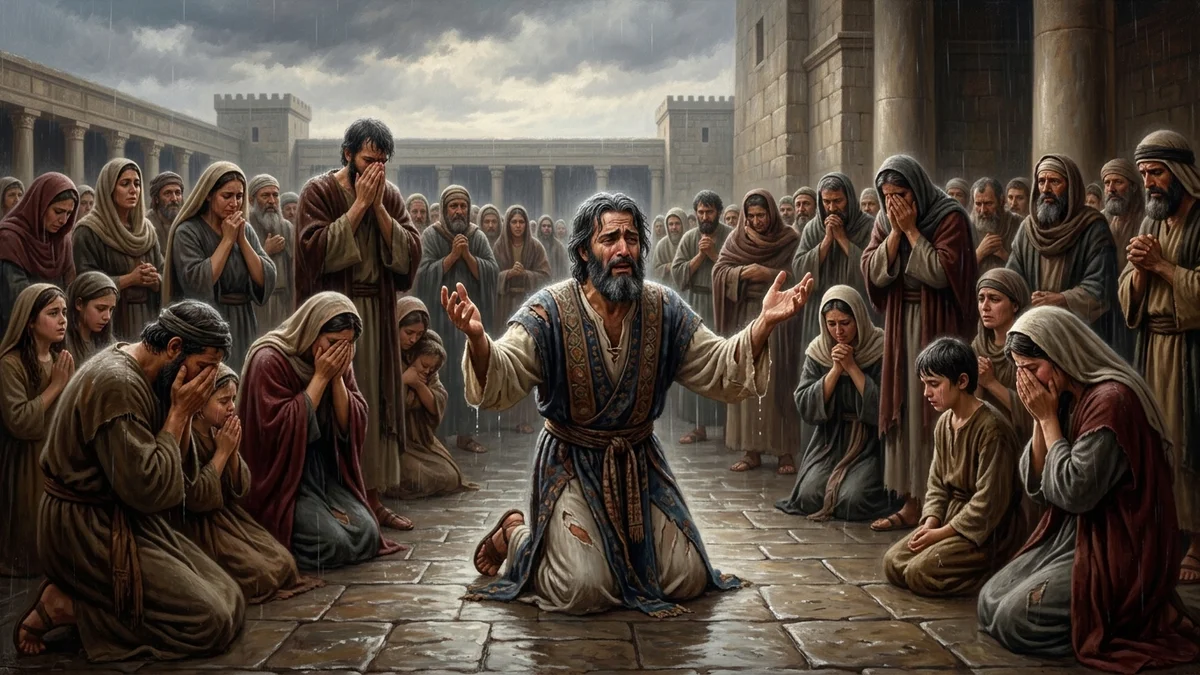
For hours until the evening sacrifice, Ezra sat frozen in stunned silence. Then, at the hour of the evening oblation, Ezra arose, and with torn clothes, he fell on his knees in the Temple courtyard, spread out his hands to the Lord, and prayed one of the most agonizing, broken prayers in the Bible:
"O my God: I am too ashamed and humiliated to lift up my face to You, my God; for our iniquities have risen higher than our heads, and our guilt has grown up to the heavens. Since the days of our fathers to this day we have been very guilty... And now, for a little while, grace has been shown from the Lord our God, to leave us a remnant to escape... And now, O our God, what shall we say after this? For we have forsaken Your commandments!" (Ezra 9:6-10).
Notice Ezra’s heart: he had not committed this sin himself, yet he prayed using the word "we" and "our iniquities." True spiritual intercessors identify with the sins of their people.
5. The National Assembly and Radical Reformation
As Ezra prayed, wept, and cast himself down before the house of God, a very large assembly of men, women, and children gathered around him out of Israel, weeping bitterly.
Shechaniah son of Jehiel stepped forward and confessed: "We have trespassed against our God, and have taken pagan wives... yet now there is hope in Israel in spite of this. Now therefore, let us make a covenant with our God to put away all these wives... Arise, for this matter belongs to you. We also will be with you. Be of good courage, and do it!" (Ezra 10:2-4).
Ezra arose and made the leading priests, Levites, and all Israel swear an oath. Proclamations were sent throughout Judah ordering all returned captives to assemble in Jerusalem within three days under penalty of confiscation of property and excommunication.
On the twentieth day of the ninth month (December), the entire population sat trembling in the open square before the house of God, "both because of this matter and because of the heavy rain." (Ezra 10:9). Shivering in the winter downpour, the nation confessed their guilt and submitted to a three-month judicial investigation that dissolved the unholy alliances, cleansing the community and preserving the pure messianic line through which the Savior would be born.
6. Historical & Canonical Significance: The Scribe of Scribes
Ezra’s ministry marked a monumental turning point in Jewish history. According to the Talmud and early church fathers, Ezra:
- Established the **Great Synagogue** (*Knesset HaGedolah*), which standardized the Hebrew Old Testament canon.
- Transitioned the Hebrew script from paleo-Hebrew to the square Aramaic block script used to this day.
- Shifted Jewish religious life from exclusive reliance on animal sacrifices to the systematic public reading and study of Scripture in local synagogues.
Spiritual Reflections & Practical Life Application:
- Prepare Your Heart for the Word: Ezra 7:10 is God’s blueprint. Never teach what you have not personally practiced. Seek the Word, obey the Word, and then teach the Word.
- Live Your Faith Before the World: Ezra refused an armed guard because he had boasted of God’s power to the pagan king. Does your life demonstrate the faith you profess with your lips?
- Holy Grief Over Sin: When was the last time you wept over the spiritual compromise in your church, family, or nation? Brokenness before God precedes every true revival.
- Repentance Requires Action: Conviction and tears are not enough; true biblical repentance demands radical surgery—putting away the unholy compromises that separate you from God!
⚡ Fast Facts
- Ezra arrived in Jerusalem in 458 BC during the reign of Persian King Artaxerxes I (Longimanus)
- Ezra's life mission: 'To seek the Law of the Lord, and to do it, and to teach statutes in Israel' (Ezra 7:10)
- The journey from Babylon to Jerusalem took exactly four months (from the 1st day of the 1st month to the 1st day of the 5th month)
- Ezra refused royal soldiers because he had testified to the king that God alone protects His people
❓ Frequently Asked Questions (FAQs)
In Jewish tradition, Ezra is revered second only to Moses. He was not merely a copyist, but a scholar-priest descended from Aaron who masterfully understood, interpreted, preserved, and compiled the Old Testament canon and established synagogues as centers of Torah teaching.
Ezra had testified boldly to King Artaxerxes: 'The hand of our God is upon all those for good who seek Him, but His power and His wrath are against all those who forsake Him.' To then ask for armed soldiers would appear as hypocrisy and lack of faith in Yahweh's protection (Ezra 8:22).
The returned leaders, priests, and people had intermarried with pagan Canaanites, Hittites, and Moabites, adopting idolatrous abominations. When Ezra heard this, he tore his tunic and robe, plucked hair from his head and beard, fell on his knees in the rain, and poured out broken, weeping confession before God.