In the Northern Kingdom of Israel, King Ahab son of Omri did more evil in the eyes of the Lord than any of those before him. He married Jezebel daughter of Ethbaal king of the Sidonians, and began to serve Baal and worship him, building a temple for Baal in Samaria. Into this dark era of widespread apostasy stepped one of the greatest prophets of all time: Elijah the Tishbite.
1. Elijah's Sudden Declaration of Drought
 Elijah the Tishbite declared to King Ahab: 'As the Lord lives, there will be neither dew nor rain except at my word.'
Now Elijah the Tishbite, from Tishbe in Gilead, said to Ahab: "As the Lord, the God of Israel, lives, whom I serve, there will be neither dew nor rain in the next few years except at my word."
Baal was worshiped by the Canaanites as the storm god who controlled rain, thunder, and fertility. By stopping the rain through Yahweh's authority, Elijah directly struck at the core false claim of Baal worship.
2. Fed by Ravens at the Brook Cherith
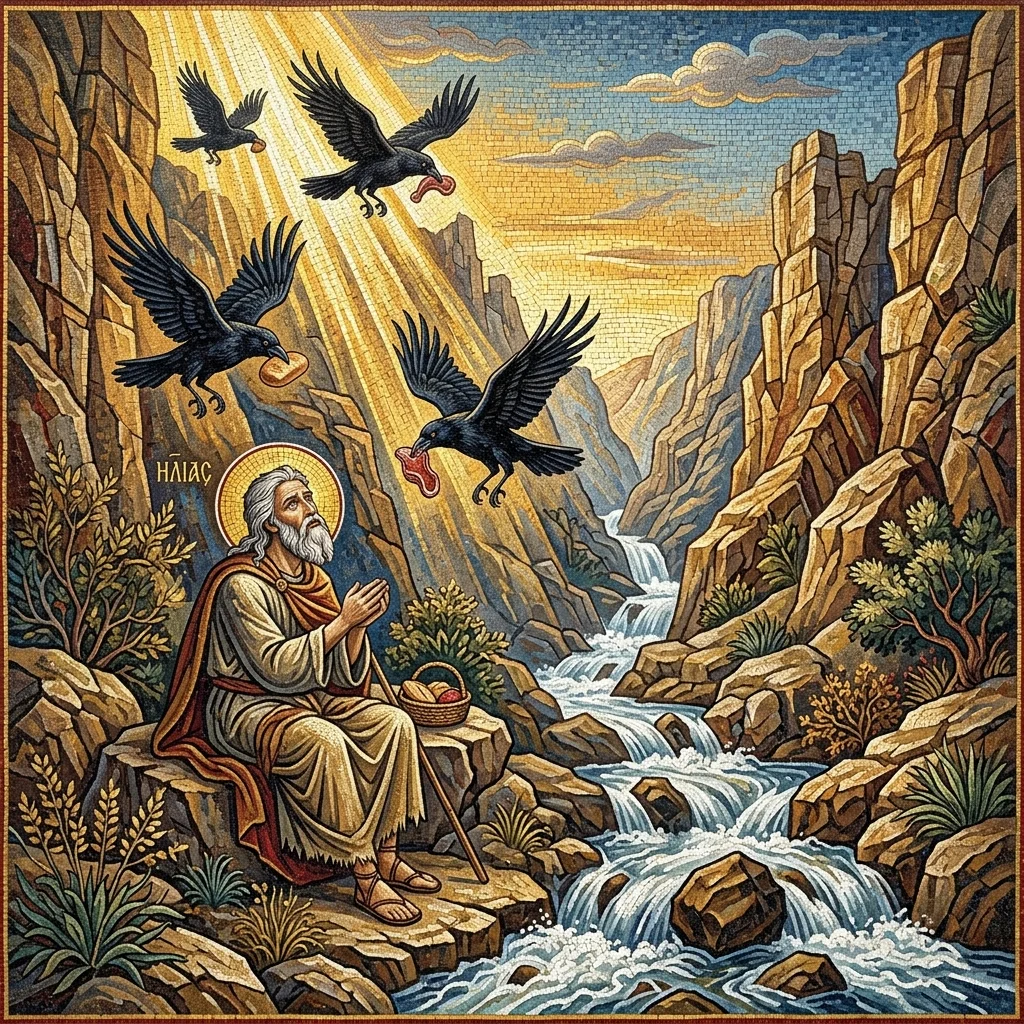
Then the word of the Lord came to Elijah: "Leave here, turn eastward and hide in the Kerith Ravine, east of the Jordan. You will drink from the brook, and I have directed the ravens to supply you with food there."
So Elijah did what the Lord had told him. He went to the Kerith Ravine, east of the Jordan, and stayed there. The ravens brought him bread and meat in the morning and bread and meat in the evening, and he drank from the brook.
Ravens were natural scavengers that would normally hoard food for themselves, yet by God's supernatural command, they faithfully fed the prophet twice a day.
Some time later the brook dried up because there was no rain in the land.
3. Sent to the Widow at Zarephath
Then the word of the Lord came to Elijah: "Go at once to Zarephath in the region of Sidon and stay there. I have directed a widow there to supply you with food."
Zarephath was located in the heartland of Baal worship—the home territory of Queen Jezebel. God was sending Elijah to enemy territory to demonstrate His sovereign care over a humble gentile widow.
So Elijah went to Zarephath. When he came to the town gate, a widow was there gathering sticks. He called to her and said, "Would you bring me a little water in a jar so I may have a drink?" As she was going to get it, he called, "And bring me, please, a piece of bread."
"As surely as the Lord your God lives," she replied, "I don't have any bread—only a handful of flour in a jar and a little olive oil in a jug. I am gathering a few sticks to take home and make a meal for myself and my son, that we may eat it—and die."
4. The Miraculous Jar of Flour and Jug of Oil
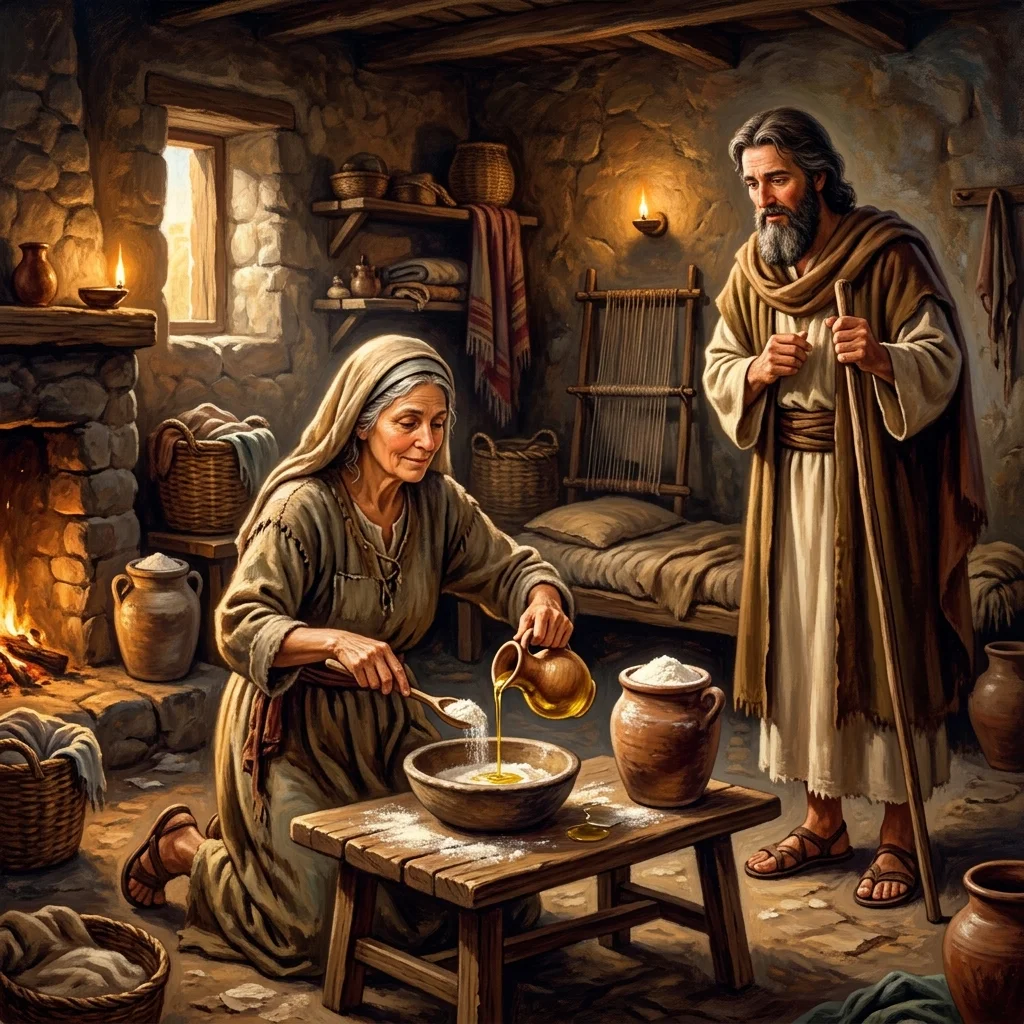
Elijah said to her: "Don't be afraid. Go home and do as you have said. But first make a small loaf of bread for me from what you have and bring it to me, and then make something for yourself and your son. For this is what the Lord, the God of Israel, says: 'The jar of flour will not be used up and the jug of oil will not run dry until the day the Lord sends rain on the land.'"
The widow exercised extraordinary faith, putting God's prophet first before her own survival. She went away and did as Elijah had told her.
So there was food every day for Elijah and for the woman and her family. For the jar of flour was not used up and the jug of oil did not run dry, in keeping with the word of the Lord spoken by Elijah.
5. Resurrection of the Widow's Son
Some time later the son of the woman who owned the house became ill. He grew worse and worse, and finally stopped breathing. She said to Elijah, "What do you have against me, man of God? Did you come to remind me of my sin and kill my son?"
"Give me your son," Elijah replied. He took him from her arms, carried him to the upper room where he was staying, and laid him on his bed.
Then Elijah cried out to the Lord: "Lord my God, have you brought tragedy even on this widow I am staying with, by causing her son to die?" Then he stretched himself out on the boy three times and cried out to the Lord: "Lord my God, let this boy's life return to him!"
The Lord heard Elijah's cry, and the boy's life returned to him, and he lived. Elijah picked up the child and carried him down from the room into the house. He gave him to his mother and said, "Look, your son is alive!"
Then the woman said to Elijah, "Now I know that you are a man of God and that the word of the Lord from your mouth is the truth." (Jesus later referenced this widow in Luke 4:25-26 to show God's grace to Gentiles).
Reflections on the Story:
- God Uses Unlikely Instruments: God used unclean ravens and a destitute Gentile widow to sustain His prophet, proving His absolute control over creation.
- Faith Before Sight: The widow had to bake bread for Elijah first from her last handful of flour. Generous faith precedes supernatural multiplication.
- The Power of Intercessory Prayer: Elijah's fervent prayer brought the first recorded resurrection in Scripture, demonstrating that God is the Lord of life and death.
⚡ Fast Facts
- Drought Declaration: Elijah declared a multi-year drought over Israel to challenge Baal worship.
- Cherith Provision: Fed twice daily with bread and meat by ravens at the Brook Cherith.
- Zarephath Miracle: The widow's jar of flour and jug of oil never ran dry during the drought.
- First Resurrection: Elijah raised the widow's dead son back to life through fervent prayer.
❓ Frequently Asked Questions (FAQs)
Ravens were scavengers that would naturally hoard food. God used them supernaturally to show that all creation obeys Yahweh's divine command.
Zarephath was in Jezebel's homeland. Jesus noted in Luke 4:25-26 that God passed over many widows in Israel to show grace to a faithful Gentile widow.
Elijah carried the boy to his upper room, stretched himself over the boy three times, and prayed fervently to Yahweh to return the boy's soul.