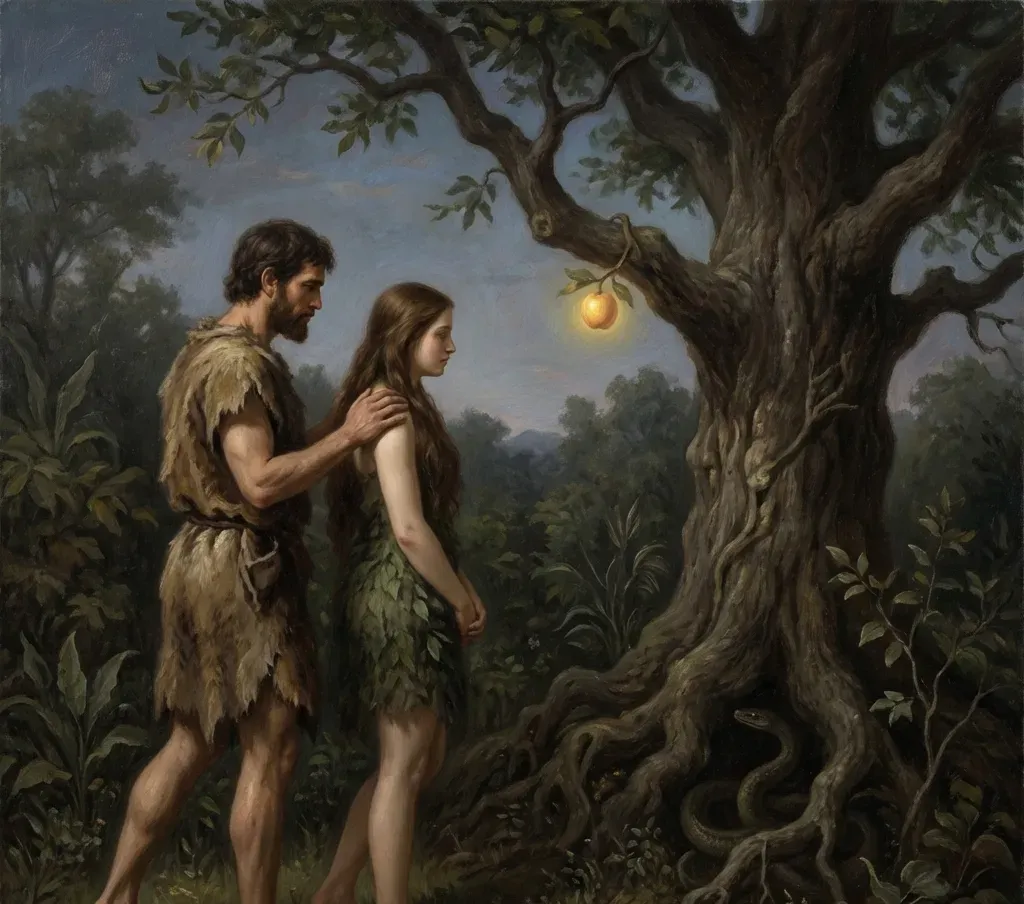
The glorious Golden Age of the United Kingdom under David and Solomon came to a sudden, tragic end. In his old age, Solomon's heart was turned away after foreign gods by his foreign wives, provoking the Lord's anger. Though God preserved a remnant for David's sake, judgment was declared: the kingdom would be torn apart.
1. Solomon's Decline and Ahijah's Prophecy
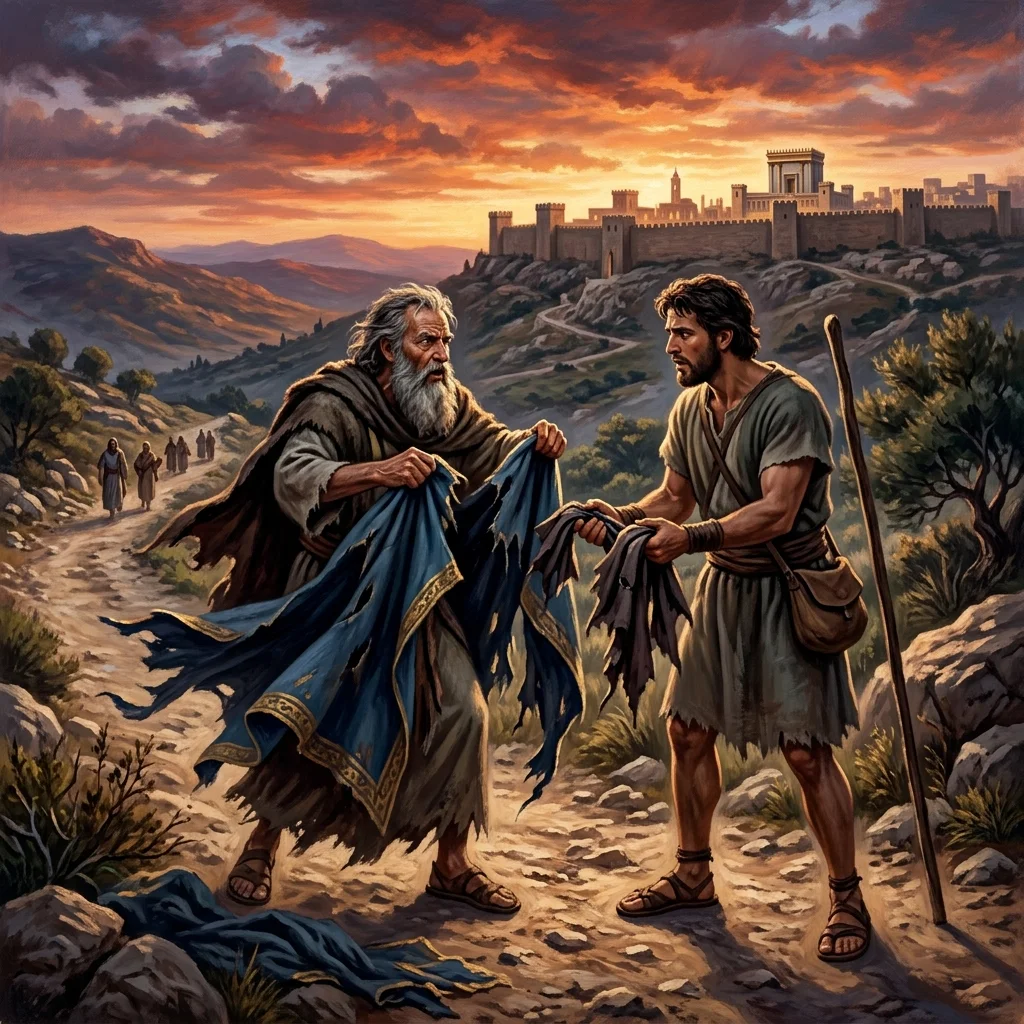
 Ahijah the prophet tore his new cloak into twelve pieces, giving ten pieces to Jeroboam as a sign of the ten northern tribes.
As Solomon grew old, his wives turned his heart after other gods, such as Ashtoreth goddess of the Sidonians and Molek the detestable god of the Ammonites. Solomon built high places for these idols on the hill east of Jerusalem. So the Lord said to Solomon: "Since this is your attitude and you have not kept my covenant, I will most certainly tear the kingdom away from you and give it to one of your subordinates. Nevertheless, for the sake of David your father, I will not do it during your lifetime. I will tear it out of the hand of your son."
Around this time, Jeroboam son of Nebat, an Ephraimite officer in charge of Solomon's labor force, went out of Jerusalem. The prophet Ahijah of Shiloh met him on the road, wearing a new cloak. Ahijah took hold of the new cloak he was wearing and tore it into twelve pieces.
Then he said to Jeroboam: "Take ten pieces for yourself, for this is what the Lord, the God of Israel, says: 'See, I am about to tear the kingdom out of Solomon's hand and give you ten tribes... If you do whatever I command you and walk in obedience to me, I will be with you and build you a dynasty as enduring as the one I built for David.'"
2. The Assembly at Shechem and the Tax Demands
Solomon died after reigning forty years in Jerusalem, and his son Rehoboam succeeded him as king. Rehoboam went to Shechem, for all Israel had gone there to make him king.
When Jeroboam heard of Solomon's death, he returned from Egypt, where he had fled. Jeroboam and the whole assembly of Israel came to Rehoboam and said: "Your father put a heavy yoke on us, but now lighten the harsh labor and the heavy yoke he put on us, and we will serve you."
Rehoboam answered, "Go away for three days and then come back to me." So the people departed.
3. The Counsel of the Elders vs. The Arrogance of the Young Men
Then King Rehoboam consulted the elders who had served his father Solomon during his lifetime. "How would you advise me to answer these people?" he asked.
They replied: "If today you will be a servant to these people and serve them and give them a favorable answer, they will always be your servants."
But Rehoboam rejected the advice the elders gave him and consulted the young men who had grown up with him and were serving him. He asked them, "What is your advice?"
The young men who had grown up with him replied arrogantly: "These people have said to you, 'Your father put a heavy yoke on us, but make our yoke lighter.' Tell them, 'My little finger is thicker than my father's waist. My father laid on you a heavy yoke; I will make it even heavier. My father scourged you with whips; I will scourge you with scorpions.'"
4. "To Your Tents, O Israel!": The Kingdom Split
Three days later Jeroboam and all the people returned to Rehoboam, as the king had set. The king answered the people harshly. Rejecting the advice given him by the elders, he followed the advice of the young men and spoke as they directed.
When all Israel saw that the king refused to listen to them, the people answered the king:
"What share do we have in David, what part in Jesse's son? To your tents, Israel! Look after your own house, David!"
So the Israelites went home. But as for the Israelites who were living in the towns of Judah, Rehoboam still ruled over them. When King Rehoboam sent out Adoniram, who was in charge of forced labor, all Israel stoned him to death. King Rehoboam, however, managed to get into his chariot and escape to Jerusalem.
So Israel has been in rebellion against the house of David to this day. Ten northern tribes crowned Jeroboam as king over the Northern Kingdom of Israel (capital later at Samaria), while Judah and Benjamin remained loyal to Rehoboam in the Southern Kingdom of Judah (capital at Jerusalem).
5. Jeroboam's Golden Calves at Dan and Bethel
When Jeroboam established his kingdom, he feared that if the people continued going up to offer sacrifices at the Temple of Yahweh in Jerusalem, their allegiance would return to King Rehoboam.
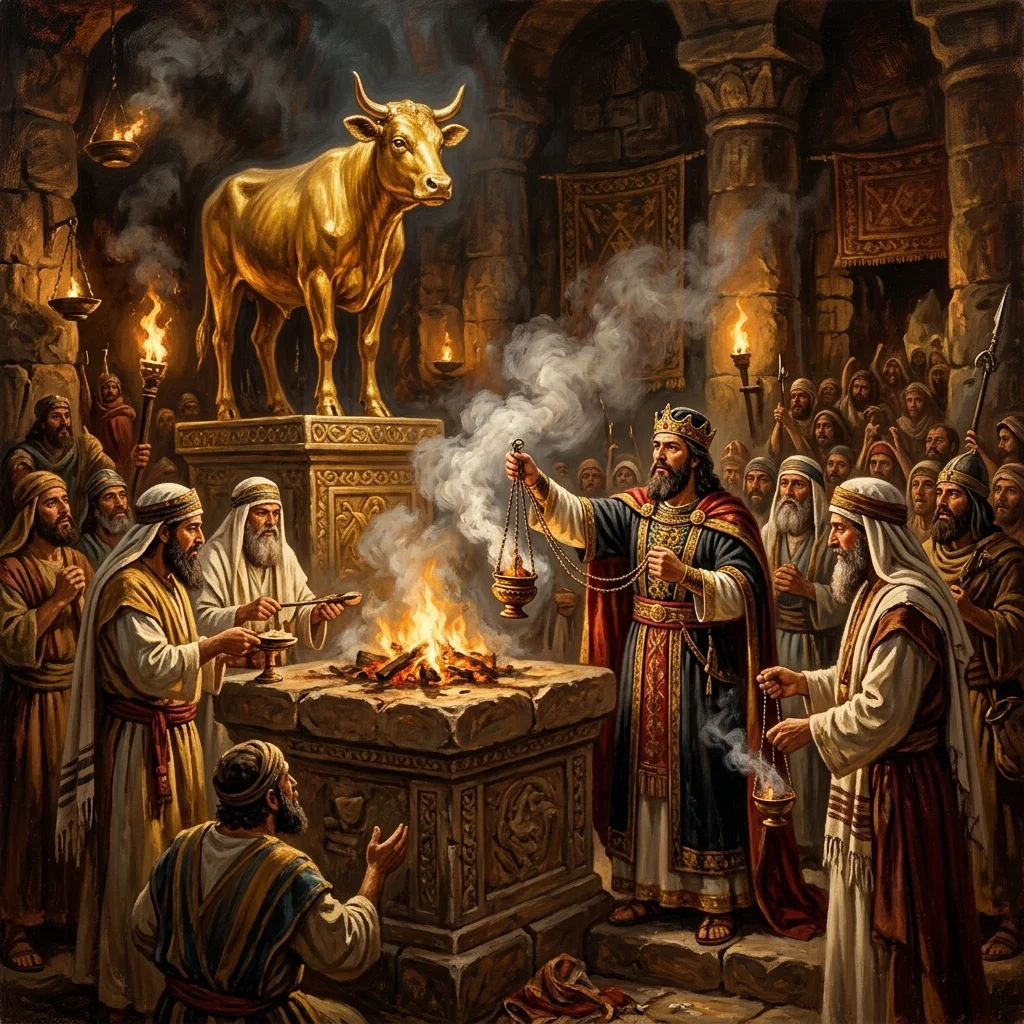
After seeking advice, Jeroboam made two golden calves. He said to the people, "It is too much for you to go up to Jerusalem. Here are your gods, Israel, who brought you up out of Egypt." He set up one in Bethel and the other in Dan.
Jeroboam built shrines on high places and appointed priests from all sorts of people, even though they were not Levites. This idolatrous sin of Jeroboam became the permanent curse of the Northern Kingdom, leading to its eventual downfall.
Reflections on the Story:
- The Danger of Pride and Bad Counsel: Rehoboam's arrogance and refusal to listen to mature, seasoned leaders destroyed the unity of his kingdom in a single day.
- Servant Leadership: The elders advised Rehoboam that true royalty is serving the people. Leaders who oppress their people invite rebellion.
- Compromise Leads to Apostasy: Jeroboam instituted counterfeit religion out of political fear, leading ten tribes into centuries of destructive idolatry.
⚡ Fast Facts
- Prophecy of Ahijah: Tore a new cloak into 12 pieces, giving 10 to Jeroboam for the 10 northern tribes.
- Rehoboam's Arrogance: Rejected elders' advice and listened to young men, threatening scorpions instead of whips.
- Northern Kingdom: 10 tribes seceded under Jeroboam (Israel), leaving Judah and Benjamin with Rehoboam (Judah).
- Golden Calves: Jeroboam set up golden calves at Dan and Bethel to stop people from worshiping at Jerusalem.
❓ Frequently Asked Questions (FAQs)
Rehoboam was proud, foolish, and surrounded by flatterers. He sought to prove his strength through harshness rather than serving his people.
Out of political fear. He worried that if his subjects traveled to Jerusalem for religious feasts, their hearts would reunite with Judah.
It refers to Jeroboam's state-sponsored idolatry (the golden calves), which every subsequent king of northern Israel perpetuated until their exile.