Along the sunlit Mediterranean coastline in the ancient maritime port city of Joppa lived a woman whose quiet needles, threads, and compassionate hands wove a tapestry of Christ's unconditional love: Dorcas (also known by her Aramaic name, Tabitha). Recognized uniquely in the New Testament as a beloved "disciple," Dorcas lived a life abounding in tangible good deeds, clothing impoverished widows and lifting the downtrodden. When sudden illness took her life, the weeping community's grief moved the Apostle Peter to kneel in resurrection prayer, unleashing a miracle that ignited spiritual revival across the entire coastal plain of Sharon.
1. A Life Full of Good Works and Charitable Deeds (Acts 9:36)
Joppa (modern-day Jaffa, Israel) was a bustling coastal harbor bustling with international merchants, Roman sailors, shipbuilders, fishers, and steep social inequalities. Amidst this maritime trade center, Dorcas shone as a radiant pillar of Christ-like compassion:
"At Joppa there was a certain disciple named Tabitha, which is translated Dorcas. This woman was full of good works and charitable deeds which she did." (Acts 9:36)
The Greek text uses the feminine noun mathētria ("female disciple")—the only time this specific term appears in the entire Greek New Testament. Her names in both Aramaic (*Tabitha*) and Greek (*Dorcas*) mean "Gazelle," a biblical symbol of grace, beauty, elegance, and swift gentleness.
In the first century, destitute widows without adult sons faced catastrophic poverty, lacking state pensions, social welfare, or legal protection. They were among the most vulnerable members of society, frequently reduced to begging, debt slavery, or starvation. Dorcas did not offer distant patronizing pity or empty theological platitudes; she walked into their damp rooms, measured their shivering bodies, and lovingly tailored tunics (*chitonas*) and cloaks (*himatia*) to keep them warm, protect them from coastal winds, and restore their human dignity.
Her life was an active, daily embodiment of pure and undefiled religion before God the Father, as described in James 1:27: "to visit orphans and widows in their trouble, and to keep oneself unspotted from the world." She saw every piece of cloth as an altar of worship and every stitch as a prayer for the poor.
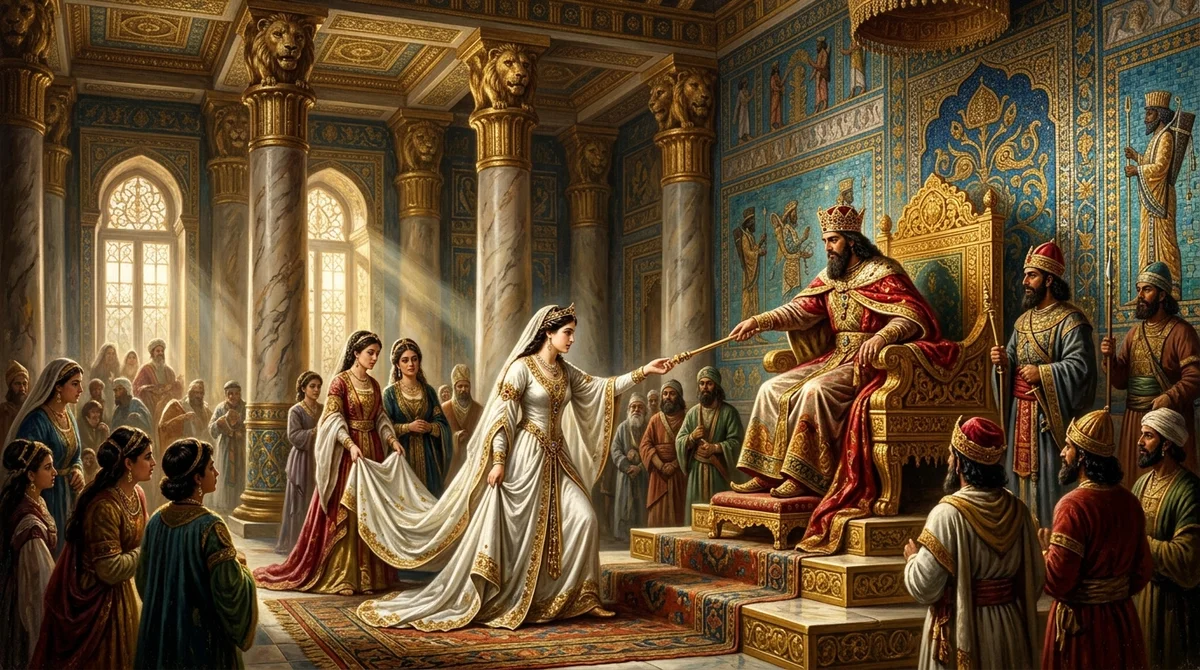
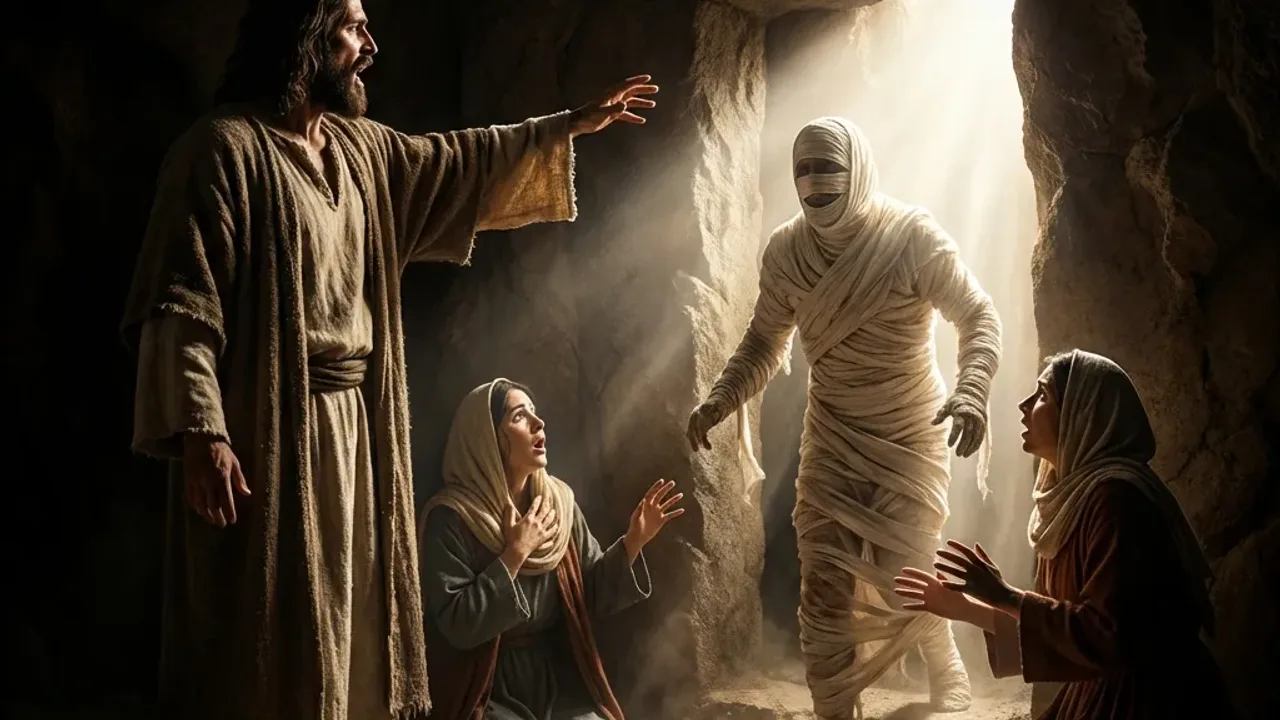 The Resurrection at Joppa: The Apostle Peter presenting Dorcas alive to the rejoicing widows and saints in the upper room.
2. Sickness, Death, and the Weeping Upper Room (Acts 9:37–39)
Tragedy struck the Joppa Christian fellowship when Dorcas fell gravely ill and died. Following ancient Jewish Christian custom, the believers washed her body with reverence and laid her in an upper room.
Hearing that the Apostle Peter was in nearby Lydda (about eleven miles away, having just healed the bedridden paralytic Aeneas in the name of Jesus), the disciples sent two men pleading urgently: "Please come to us without delay!"
When Peter arrived in Joppa and was led up to the upper room, he was met by an unforgettable, emotionally overwhelming scene of pure grief:
"All the widows stood by him weeping, showing the tunics and garments which Dorcas had made while she was with them." (Acts 9:39)
The weeping widows did not present Peter with formal theological arguments, political grievances, or petitions; they held up the stitched garments, crying as they pointed to the seams sewn by Dorcas’ loving fingers. Her legacy was not carved in cold stone monuments, but woven into the warm fabric protecting the poor.
Every tunic was a physical witness to her sacrificial love, every seam a testimony of hours spent sacrificing her own comfort so that the poorest women of Joppa would have clothes to wear and know the warmth of Christ's embrace.
3. "Tabitha, Arise!": The Miracle of Resurrection (Acts 9:40–43)
Deeply moved with pastoral compassion, Peter followed the pattern of Jesus when raising Jairus’ daughter (*Talitha cumi* in Mark 5:40–41). Peter sent everyone out of the room, fell on his knees before God, and poured out his heart in fervent resurrection prayer.
Turning toward the lifeless body, Peter spoke with apostolic authority:
"Peter put them all out, and knelt down and prayed. And turning to the body he said, 'Tabitha, arise.' And she opened her eyes, and when she saw Peter she sat up. Then he gave her his hand and lifted her up; and when he had called the saints and widows, he presented her alive." (Acts 9:40–41)
Opening her eyes, Tabitha saw Peter, sat up, and took his outstretched hand. Peter called the weeping widows and believers back into the room, presenting their beloved sister alive!
The news of this stupendous resurrection raced through the streets, markets, and harbors of Joppa, sparking a widespread revival where "many believed on the Lord" (Acts 9:42). Peter remained in Joppa for many days at the house of Simon the Tanner, where God gave him the historic vision of the clean and unclean animals, opening the door of salvation to the Gentiles (Acts 10).
4. Five Transformative Spiritual Lessons from Dorcas
- Faith Expressed in Practical Love: As James 2:17 proclaims, "Faith without works is dead." Dorcas demonstrated that genuine discipleship is measured by tangible acts of mercy—clothing the naked, feeding the hungry, and uplifting the broken.
- The Eternal Ministry of Ordinary Tools: God does not require a king's scepter or a general's sword; a simple needle and thread consecrated to Christ can touch hearts, comfort souls, and impact generations.
- A Lasting Legacy of Love: When Dorcas died, the poor wept not for her wealth, but for her selflessness. The only legacy that outlives us is the love we pour into others in the name of Jesus.
- God Celebrates Mercy Ministries: God valued Dorcas’ hands-on service so highly in His Kingdom that He performed a resurrection miracle to restore her to her community, using her life to bring an entire city to faith in Christ.
- The Power of Community Intercession: The tears and love of the poor widows moved heaven to touch earth, reminding us that God honors the prayers of those who care for the fatherless and the widow.
Through her quiet devotion, Dorcas showed that kingdom greatness is found in humble servant leadership, sacrificial generosity, and tireless love for the most vulnerable among us.
⚡ Fast Facts
- Only Woman in the New Testament Called a 'Disciple': In Acts 9:36, Dorcas is the only woman in the entire Greek New Testament designated with the specific female noun for disciple (**mathētria**).
- Meaning of 'Tabitha' and 'Dorcas': Tabitha is Aramaic and Dorcas is Greek; both names mean **'Gazelle'**, symbolizing grace, elegance, and swift beauty.
- The Exhibit of Tunics and Cloaks: When Peter entered the upper room where Dorcas lay dead, all the weeping widows stood by him, tearfully holding up the coats and tunics (*chitonas kai himatia*) she had made while with them (Acts 9:39).
- Catalyst for Revival in Joppa: Her resurrection caused a massive spiritual awakening: 'And it became known throughout all Joppa, and many believed on the Lord' (Acts 9:42), paving the way for Peter’s historic stay at Simon the Tanner’s house where he received the vision to preach to the Gentiles.
❓ Frequently Asked Questions (FAQs)
Dorcas did not merely give financial handouts; she invested her personal time and needlework to handcraft garments for impoverished widows, directly restoring their dignity, warmth, and protection in an ancient society that neglected widows.
Peter sent everyone out of the upper room, knelt down in solitary communion with God, prayed, and then turned to the body saying: 'Tabitha, arise!' She opened her eyes, saw Peter, and sat up (Acts 9:40)—mirroring Jesus raising Jairus' daughter (*Talitha cumi*).
Her resurrection demonstrated that God values tangible mercy ministries just as much as preaching, and it led directly to Peter remaining in Joppa, where God gave him the rooftop vision to open the Kingdom to the Gentiles (Cornelius).