The story of David and Bathsheba is one of the most sobering warnings in holy Scripture. It proves that no degree of past spiritual maturity or divine favor makes a human immune to temptation. Yet, it also reveals the incomparable depth of God's forgiving mercy when a broken sinner genuinely repents.
1. The Springtime Rooftop Stare in Jerusalem
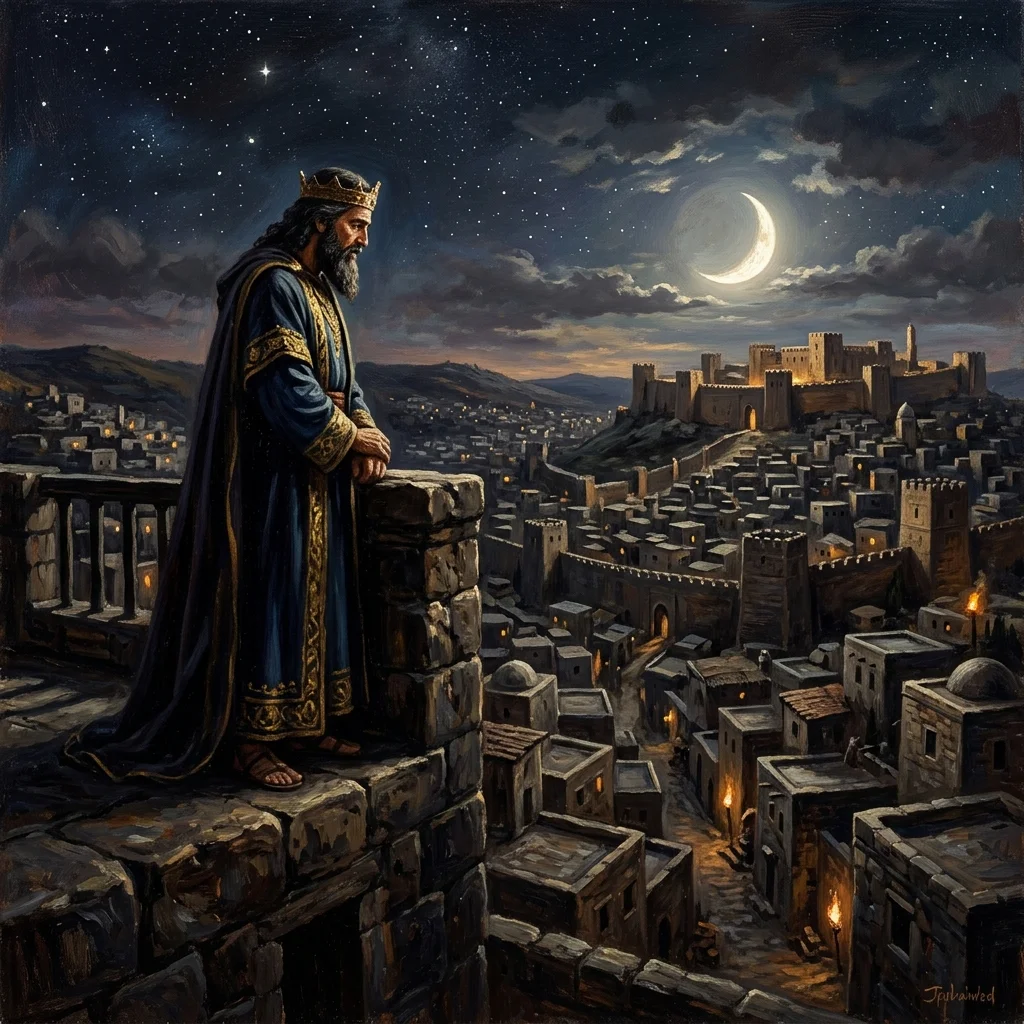
 In the spring, when kings go off to war, David remained in Jerusalem, walking on the roof of his palace.
In the spring, at the time when kings go off to war, David sent Joab out with the king's men and the whole Israelite army. They destroyed the Ammonites and besieged Rabbah. But David remained in Jerusalem.
One evening David got up from his bed and walked around on the roof of the palace. From the roof he saw a woman bathing. The woman was very beautiful, and David sent someone to find out about her.
The man said, "She is Bathsheba, the daughter of Eliam and the wife of Uriah the Hittite." Then David sent messengers to get her. She came to him, and he slept with her. Then she returned home. The woman conceived and sent word to David, saying, "I am pregnant."
2. Uriah's Integrity and the Failed Cover-Up
So David sent this word to Joab: "Send me Uriah the Hittite." Uriah was one of David's thirty elite warriors (2 Samuel 23:39).
When Uriah came to him, David asked him how Joab was, how the soldiers were, and how the war was going. Then David said to Uriah, "Go down to your house and wash your feet."
Uriah left the palace, and a gift from the king was sent after him. But Uriah slept at the entrance to the palace with all his master's servants and did not go down to his house.
David was told, "Uriah did not go home." So he asked Uriah, "Haven't you just come from a military journey? Why didn't you go home?"
Uriah said to David: "The Ark and Israel and Judah are staying in tents, and my commander Joab and my lord's men are camped in the open fields. How could I go to my house to eat and drink and lie with my wife? As surely as you live, I will not do such a thing!" Uriah's soldierly honor exposed David's hidden deceit.
The next day David invited Uriah to eat and drink, and he made him drunk. But in the evening Uriah went out to sleep on his mat among his master's servants; he still did not go home.
3. The Murder in Battle by Joab's Command
In the morning David wrote a letter to Joab and sent it by the hand of Uriah himself—carrying his own execution order!
In the letter he wrote: "Put Uriah out in front where the fighting is fiercest. Then withdraw from him so he will be struck down and die."
So while Joab had the city under siege, he put Uriah at a place where he knew the strongest enemy defenders were. When the men of the city came out and fought against Joab, some of the men in David's army fell; moreover, Uriah the Hittite died.
Joab sent a messenger to David with a full report of the battle. When Bathsheba heard that her husband Uriah was dead, she mourned for him. After the time of mourning was over, David had her brought to his house, and she became his wife and bore him a son. But the thing David had done displeased the Lord.
4. Nathan's Parable: "You Are the Man!"
The Lord sent Nathan the prophet to David. When he came to him, he said:
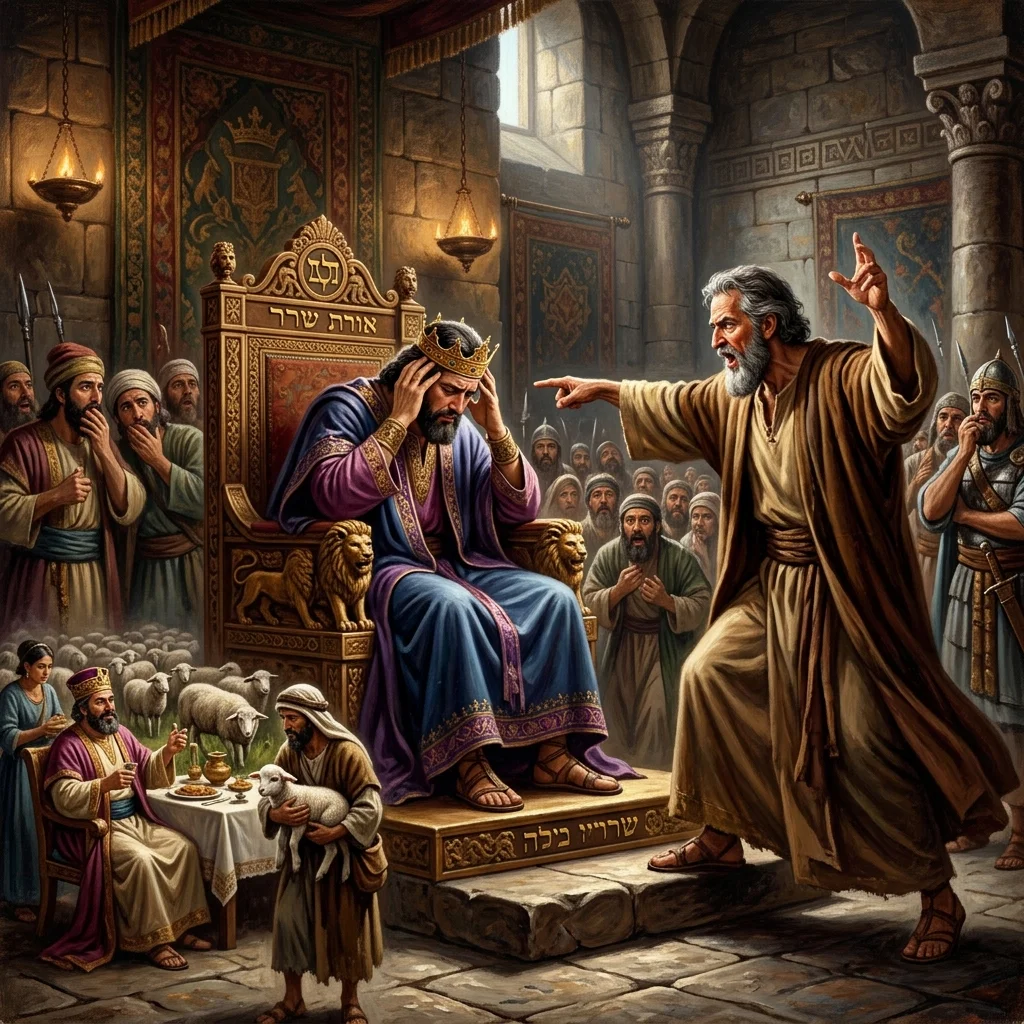
"There were two men in a certain town, one rich and the other poor. The rich man had a very large number of sheep and cattle, but the poor man had nothing except one little ewe lamb he had bought. He raised it, and it grew up with him and his children. It ate from his plate, drank from his cup and even slept in his arms. It was like a daughter to him. Now a traveler came to the rich man, but the rich man refrained from taking one of his own sheep or cattle to prepare a meal for the traveler. Instead, he took the ewe lamb that belonged to the poor man and prepared it for the one who had come to him."
David burned with righteous anger against the man and said to Nathan, "As surely as the Lord lives, the man who did this must die! He must pay four times over for that lamb, because he did such a thing and had no pity."
Then Nathan said to David: "YOU ARE THE MAN!"
Nathan declared: "This is what the Lord, the God of Israel, says: 'I anointed you king over Israel, and I delivered you from the hand of Saul... Why did you despise the word of the Lord by doing what is evil in his eyes? You struck down Uriah the Hittite with the sword and took his wife to be your own... Now, therefore, the sword will never depart from your house!'"
5. Broken Repentance in Psalm 51 and the Grace of Solomon
Then David said to Nathan, "I have sinned against the Lord."
Nathan replied, "The Lord has taken away your sin. You are not going to die. But because by doing this you have shown utter contempt for the Lord, the son born to you will die."
In his deep sorrow, David wrote Psalm 51: "Have mercy on me, O God, according to your unfailing love... Cleanse me with hyssop, and I will be clean; wash me, and I will be whiter than snow... Create in me a pure heart, O God, and renew a steadfast spirit within me. Do not cast me from your presence or take your Holy Spirit from me."
The infant son born to Bathsheba became ill and died on the seventh day. David accepted God's righteous discipline. Afterward, David comforted his wife Bathsheba, and she gave birth to a son, and they named him Solomon. The Lord loved him, and sent word through Nathan the prophet to name him Jedidiah ("Loved by the Lord"). Out of the ashes of sin and genuine repentance, God raised up Solomon to be Israel's next king.
Reflections on the Story:
- Beware of Idleness: David's fall began when he stayed behind in Jerusalem instead of fulfilling his royal duty on the battlefield. Idleness opens the door to temptation.
- Sin Cannot Be Hidden: David tried to cover his sin with deceit and murder, but God sees all things and exposed his sin through Nathan.
- Forgiveness and Consequences: God completely forgave David's sin upon genuine repentance (Psalm 51), yet temporal earthly consequences remained. Sin is forgiven, but choices have lasting impact.
⚡ Fast Facts
- Root of Temptation: David stayed in Jerusalem during springtime war instead of leading his army.
- Uriah's Integrity: Refused to go to his house while the Ark and army were in open fields.
- Nathan's Parable: Used the poor man's ewe lamb parable to deliver 'You are the man!'
- Psalm of Repentance: Psalm 51 was written by David after Nathan confronted him.
❓ Frequently Asked Questions (FAQs)
As king, David had grown complacent with success. Staying behind in luxury exposed him to idleness, which opened the door to lust and temptation.
David had fiercely condemned the rich man in Nathan's parable. Nathan revealed that David was the selfish abuser who stole Uriah's only wife.
Forgiveness restores our relationship with God, but sin still carries temporal, earthly consequences. David's family experienced severe turmoil as a result.