The book of Daniel opens not on a battlefield of clashing swords, but on the quiet, resolute battlefield of human conscience. In 605 BC, following Nebuchadnezzar’s victory at Carchemish and the initial raid on Jerusalem, the finest young nobility of Judah were deported hundreds of miles across the desert to Babylon. Stripped of their homeland, their families, and their holy temple, these Hebrew teenagers faced an intense, seductive program of imperial assimilation designed to erase their identity and covenant faith. Yet in the lavish royal dining halls of the world’s greatest superpower, young Daniel made a quiet decision that would alter the course of empires.
1. The Babylonian Indoctrination Program
King Nebuchadnezzar commanded Ashpenaz, the master of his palace eunuchs, to select royal youths from the nobility of Judah. The criteria were rigorous: "young men in whom there was no blemish, but good-looking, gifted in all wisdom, possessing knowledge and quick to understand, who had ability to serve in the king's palace, and whom they might teach the language and literature of the Chaldeans." (Daniel 1:4).
The three-year imperial curriculum was a comprehensive masterclass in Babylonian culture: astronomy, mathematics, cuneiform epics, and religious occult arts. Furthermore, the chief official systematically renamed the four standout Hebrew youths to brainwash them away from Yahweh toward the gods of Babylon:
- Daniel ("God is my Judge") became Belteshazzar ("May Bel protect his life").
- Hananiah ("Yahweh is gracious") became Shadrach ("Command of Aku", the moon deity).
- Mishael ("Who is like God?") became Meshach ("Who is like Aku?").
- Azariah ("Yahweh has helped") became Abednego ("Servant of Nego", the god of wisdom).
2. The Holy Resolution of Daniel's Heart
While the young men could not prevent the imperial court from changing their language, their geographic home, or their secular names, there was one sacred boundary they refused to surrender: their inward covenant devotion to Almighty God.
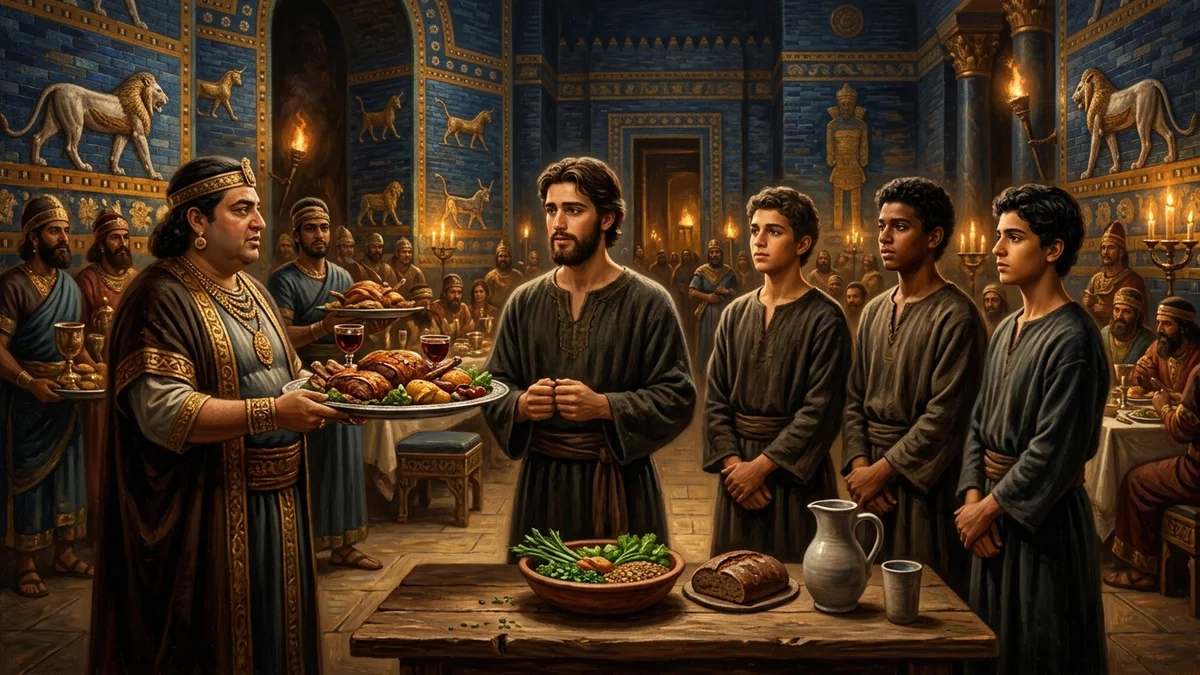
"But Daniel purposed in his heart that he would not defile himself with the portion of the king's delicacies, nor with the wine which he drank; therefore he requested of the chief of the eunuchs that he might not defile himself." (Daniel 1:8).
The royal diet posed two catastrophic spiritual dangers. First, the meats were ritually sacrificed and consecrated to Babylonian pagan deities before arriving at the table. Second, the food violated Mosaic dietary laws regarding pork, unbled carcasses, and unclean animals (Leviticus 11). To feast at the royal table was to enter into table fellowship with demons and declare allegiance to Nebuchadnezzar above Yahweh.
3. The Ten-Day Test of Pulse and Water
 After ten days on pulse and water, the countenances of Daniel and his three friends appeared healthier and better nourished than all who ate the royal delicacies.
God brought Daniel into favor and goodwill with the chief official. However, Ashpenaz feared the king's wrath: "I fear my lord the king... for why should he see your faces looking more haggard than the young men who are your peers? Then you would endanger my head before the king!"
Daniel approached the steward (Melzar) assigned over them with a wise, diplomatic proposal: "Please test your servants for ten days, and let them give us vegetables (pulse) to eat and water to drink. Then let our appearance be examined before you... and as you see fit, so deal with your servants." (Daniel 1:12-13).
For ten days, while the other captives gorged themselves on rich royal meats, spiced pastries, and heavy wine, Daniel, Hananiah, Mishael, and Azariah prayed and ate simple, pure seed-bearing vegetables and fresh water. At the end of ten days, their skin was glowing, their eyes were bright, and their physical vitality far surpassed every youth who had consumed the royal feast!
4. Ten Times Wiser Than the Magicians of Babylon
God rewarded their uncompromising obedience with supernatural blessing: "As for these four young men, God gave them knowledge and skill in all literature and wisdom; and Daniel had understanding in all visions and dreams." (Daniel 1:17).
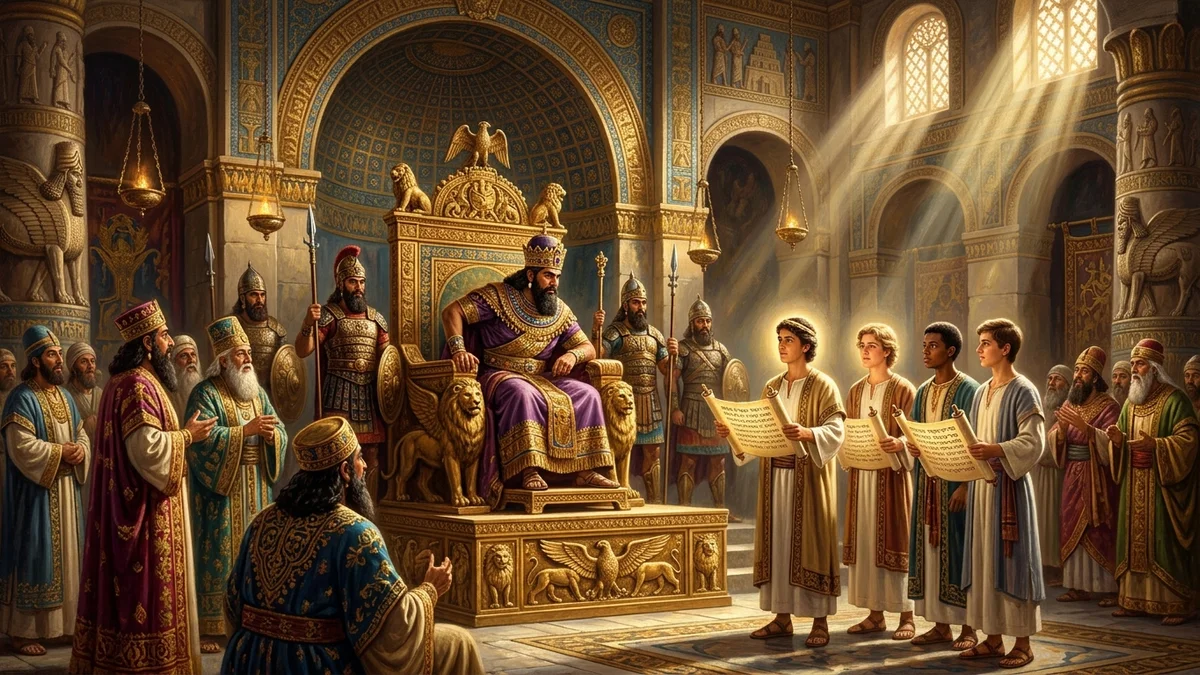
At the end of three years, the youths stood before King Nebuchadnezzar for their oral imperial examinations. The mighty emperor personally interviewed each candidate. Scripture records that among all the scholars of the ancient Near East, none was found like Daniel, Hananiah, Mishael, and Azariah. In every matter of wisdom and understanding about which the king examined them, he found them ten times better than all the magicians, astrologers, and enchanters in his entire empire!
5. Archaeological Insights: The Royal Babylonian Table
Excavations at Babylon's South Palace by German archaeologist Robert Koldewey unearthed the famous **Babylonian Ration Tablets** dating to the reign of Nebuchadnezzar II. These cuneiform clay tablets record exact daily rations of sesame oil, fine barley, dates, and royal wine distributed to royal captives and princes living in the palace quarters—including specific provisions for "Yaukin, King of the land of Yahud (Judah)" and his sons.
These ancient clay records prove that high-ranking Judean captives were indeed maintained on specific royal rations in the palace complex, precisely matching the historical setting described in Daniel 1.
6. Christological Connections: The Purity of the True King
Daniel’s resolute purity points forward to Jesus Christ:
- Resisting Temptation in the Wilderness: When Satan offered Jesus earthly bread and the kingdoms of this world in the wilderness, Jesus refused to compromise, declaring: "Man shall not live by bread alone, but by every word that proceeds from the mouth of God." (Matthew 4:4).
- Living Uncontaminated in a Corrupt World: Jesus lived in the midst of a crooked and sinful generation, yet remained holy, harmless, undefiled, and separate from sinners (Hebrews 7:26).
- The Bread of Life: Jesus is the true Bread of Life coming down from heaven, satisfying the soul far beyond any earthly feast (John 6:35).
Spiritual Reflections & Practical Life Application:
- Purpose in Your Heart Before the Trial Comes: Daniel did not wait until the banquet was served to decide his morals; he purposed in his heart beforehand. Pre-decide your loyalty to God before temptation arrives.
- Stand Firm with Grace and Wisdom: Daniel was not arrogant or belligerent; he was polite, diplomatic, and respectful while remaining 100% uncompromising.
- God Honors Those Who Honor Him: When you choose holiness over worldly advancement, God provides supernatural promotion, divine wisdom, and eternal reward.
- Courage in Culture: You can live in Babylon without letting Babylon live in you. Protect your spiritual appetite and walk in purity today!
⚡ Fast Facts
- Daniel (God is my Judge) was renamed Belteshazzar by the chief of eunuchs
- Hananiah, Mishael, and Azariah were renamed Shadrach, Meshach, and Abednego
- The 10-day test of pulse (vegetables) and water proved God's supernatural nourishment
- At graduation, the king found them 10 times better than all magicians in his entire realm
❓ Frequently Asked Questions (FAQs)
The royal food in Babylon violated Levitical dietary laws (unclean meats, improper slaughter) and was ritually dedicated to Babylonian deities like Marduk and Bel. Eating it would signify covenant compromise and pagan worship.
The Hebrew word 'zero'im' refers to foods derived from seeds—vegetables, beans, lentils, grains, and herbs—accompanied by pure water, avoiding all meat and intoxicating drinks.
God gave them supernatural knowledge, intellectual skill in all literature and wisdom, and granted Daniel unique understanding in all prophetic visions and dreams (Daniel 1:17).