Found in Luke 13:6-9, the Parable of the Barren Fig Tree is a solemn warning against spiritual fruitlessness. Nested immediately after Christ's urgent summons to personal repentance following tragic local catastrophes, the parable reveals the heart of God: a holy tension between sovereign justice demanding righteous fruit and lavish mercy granting gracious extensions of time.
1. The Context of National Tragedy and Personal Guilt
The historical backdrop of this parable is charged with tension. Listeners approached Jesus reporting that Pontius Pilate had slaughtered Galilean pilgrims in the temple courtyard, mingling their blood with their sacrifices. Simultaneously, eighteen citizens had been crushed when the municipal engineering project at the Tower of Siloam collapsed. Popular theology viewed tragedy as proportional divine vengeance. Jesus shattered this error: "Do you think that these Galileans were worse sinners than all the other Galileans because they suffered this way? I tell you, no! But unless you repent, you too will all perish" (Luke 13:2-3). To enforce this universal imperative, Jesus launched into the parable of the fig tree.
2. Planted in the Vineyard: The Privilege of Cultivation
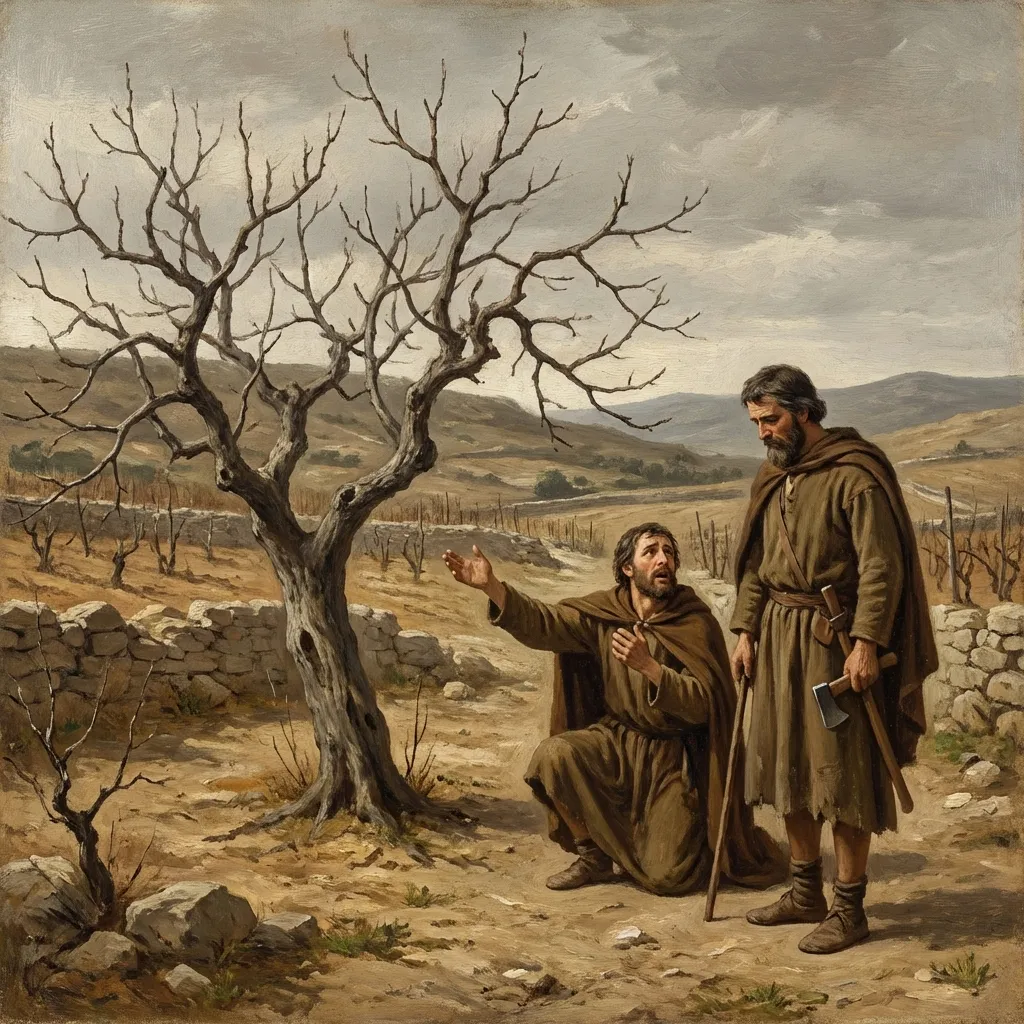
Jesus began: "A man had a fig tree growing in his vineyard, and he went to look for fruit on it but did not find any" (Luke 13:6). Planting a fig tree inside a vineyard was an act of deliberate favor; the soil of a vineyard was terraced, stones were removed, trenches channeled winter rains, and protective walls kept out predatory beasts. Israel—and by extension, anyone who has heard the Word of God—stood in a position of supreme spiritual privilege. God planted them in the fertile garden of covenant grace, naturally expecting a harvest of justice, mercy, and worship.
3. Three Years of Expectation and the Sentence of the Ax
The landowner's patience had been exhaustive: "So he said to the man who took care of the vineyard, 'For three years now I've been coming to look for fruit on this fig tree and haven't found any. Cut it down! Why should it use up the ground?'" (Luke 13:7). Three years was more than enough time to test a mature tree's vitality. The verb for 'use up' is katargeō—meaning to render useless, idle, or sterilizing. The tree was a parasite; it drank precious irrigation water, sucked up nitrogen, and cast a deadening shade over productive grapevines. In God's kingdom economy, a life that produces zero spiritual fruit is not merely neutral—it actively hinders the work of God.
4. The Interceding Vinedresser: Digging and Dunging
The vinedresser stepped forward to mediate: "'Sir,' the man replied, 'leave it alone for one more year, and I'll dig around it and fertilize it. If it bears fruit next year, fine! If not, then cut it down'" (Luke 13:8-9). This is a moving portrait of the Lord Jesus Christ as our Great High Priest. When divine holiness demands our just condemnation, Christ intercedes: 'Leave them alone, Father. I will pour out more grace, apply more spiritual pruning, and cultivate their hearts.' The digging aerated the compacted soil, and the application of manure (*kopria*) provided intense nourishment. Trials, convictions, and sermons are the divine gardening tools Christ uses to stir our slumbering souls.
5. The Finality of the Deadline
Notice the sobering condition in the gardener's petition: "If not, then cut it down." The vinedresser does not plead for endless postponements. He recognizes that a tree incapable of responding to extended mercy and deliberate cultivation has sealed its own doom. Grace is infinitely free, but it cannot be trifled with. The extra year is not a license for complacency, but an urgent window for repentance. Every sunrise is an act of divine forbearance, calling us to examine our branches: Are we bearing the fragrant fruit of the Spirit, or merely occupying space in the vineyard?
Biblical Keywords & Theological Roots
Fig tree; in Old Testament prophetic literature, a primary national symbol representing Israel's spiritual health and covenant relationship with God.
Fruit, spiritual harvest; authentic deeds of repentance, righteousness, and worship demanded by the Creator.
To render useless, cumber, exhaust the ground; taking up valuable soil and nutrients while producing zero fruit.
Ancient Near Eastern & Archaeological Context
In ancient Israel, fig trees (*Ficus carica*) were highly prized fruit producers alongside grapevines. Cultivators frequently planted fig trees directly in the fertile, terraced soil of vineyards to optimize arable acreage and take advantage of irrigation trenches. A mature fig tree can produce two to three crops of sweet figs per year (early breba figs in spring followed by main autumn crops). However, a barren fig tree cast heavy shade, consumed precious groundwater, and leeched mineral nitrogen from surrounding grapevines. Cultivators practiced trenching around root balls and packing them with decomposed sheep manure (*kopria*) to force dormant sap to stimulate leaf and bud generation.
🔑 Key Spiritual Takeaways
- Privilege Demands Fruitfulness: Being planted in the fertile soil of God's covenant increases moral accountability rather than excusing spiritual barrenness.
- The Restraint of Divine Patience: God does not immediately sever barren trees; His longsuffering grants gracious windows of opportunity for genuine repentance.
- Christ's Persistent Cultivation: The Lord digs around our hardened roots through trials, instruction, and the fertilizing grace of His Holy Spirit.
- Grace Has a Final Deadline: Mercy delays judgment to invite repentance, but a tree that remains chronically unfruitful will ultimately face the ax.
Support Independent Biblical Research
Did this study bless you? Help support our independent bilingual research and interactive visual Bible tools.
⚡ Fast Facts
- Historical Context of Tragedy: Jesus told this parable immediately after discussing Pilate's slaughter of Galileans and the collapse of the Tower of Siloam, warning: 'Unless you repent, you too will all perish' (Luke 13:1-5).
- Three-Year Wait: The owner visited the tree seeking fruit for three consecutive years, mirroring Jesus' three-year public earthly ministry among Israel.
- Mosaic Fruit Tree Laws: Leviticus 19:23-25 stipulated that fruit of newly planted trees was forbidden for three years, dedicated to God in the fourth, and harvested in the fifth.
- The Vinedresser's Intercession: The gardener pleaded for one more year of intensive cultivation, aeration, and fertilization, symbolizing Christ's high-priestly intercession for sinners.
❓ Frequently Asked Questions (FAQs)
What does the fig tree represent in biblical prophecy?
In the Old Testament prophets (Hosea 9:10; Jeremiah 8:13; Joel 1:7), the fig tree is a direct emblem of the nation of Israel and its covenant leaders. Jesus applies it here to the generation of Second Temple Judaism that enjoyed the direct presence of the Messiah yet produced no spiritual fruit of faith and repentance.
Why did the owner say 'Why should it use up the ground?' (katargeō)?
The Greek verb *katargeō* means to render idle, sterilize, or deplete of productive capacity. A barren tree did not merely fail to produce fruit; it actively robbed neighboring vines of soil moisture and nutrients while occupying land that could support fruitful plants.
How does the vinedresser reflect Jesus Christ's intercessory role?
The vinedresser steps between the decree of the owner and the condemned tree, pleading: 'Sir, leave it alone for one more year' (Luke 13:8). This mirrors Christ as our High Priest who intercedes for guilty humanity, staying the stroke of judgment with His own sacrifice while actively cultivating our hearts.