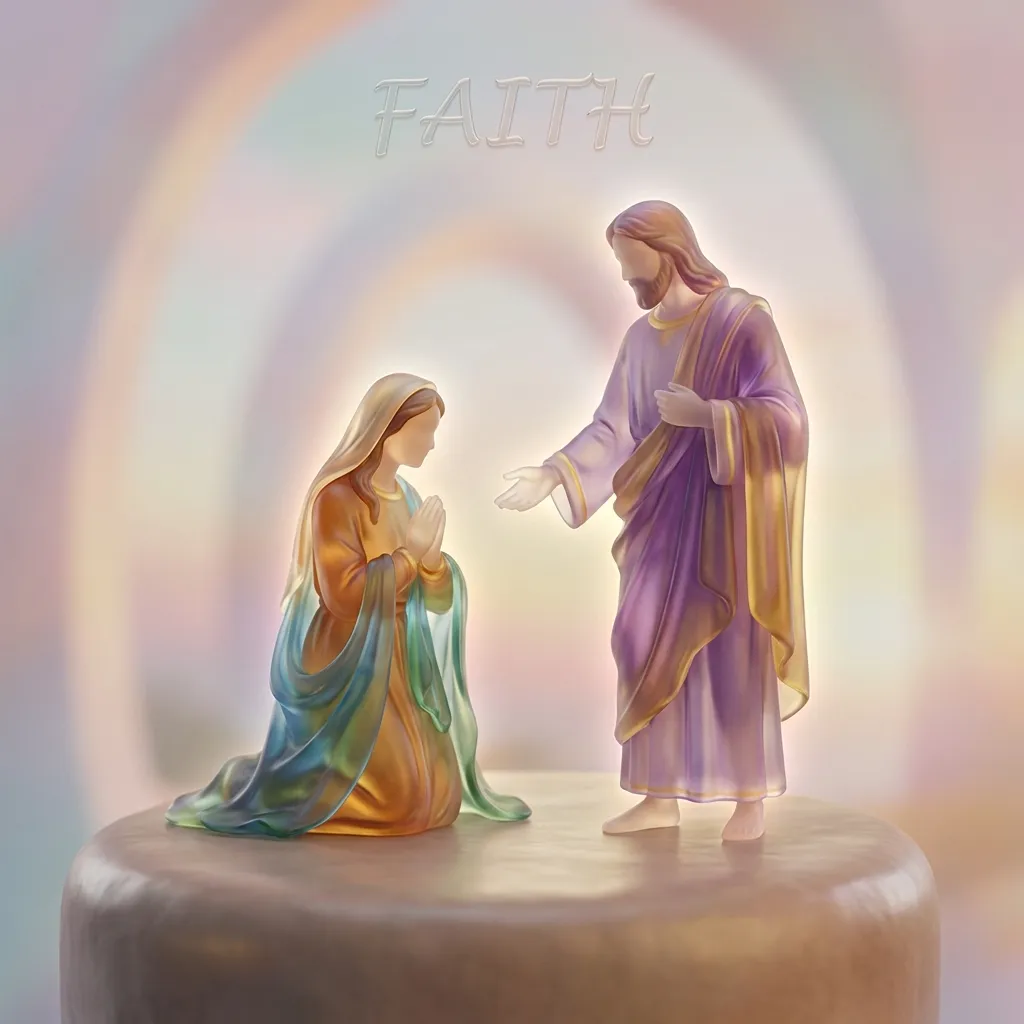
Seeking seclusion from the hostile scribes of Jerusalem, Jesus traveled fifty miles north to the coastal Mediterranean region of Tyre and Sidon in modern Lebanon. In Matthew 15:21-28 and Mark 7:24-30, this encounter with a desperate Syrophoenician mother reveals one of the most stunning triumphs of bold, humble faith recorded in human history.
1. A Cry from Ancient Enemy Territory
The woman who approached Jesus was a triple outsider: she was a Greek-speaking Gentile, born in Syrian Phoenicia, and a descendant of the ancient Canaanites—the historic enemies of Israel. Her little daughter was demon-possessed and suffering terribly. Desperate motherly love overcame ethnic hostility, religious estrangement, and gender boundaries. Falling at His feet, she cried: "Lord, Son of David, have mercy on me!"
2. The Agony of Divine Silence
Matthew 15:23 records an agonizing reality: "Jesus did not answer a word." Heaven seemed deaf. Annoyed by her relentless shouting, the disciples urged Jesus: "Send her away, for she keeps crying out after us." How easily do religious insiders dismiss the desperate cries of outsiders! Jesus then told her: "I was sent only to the lost sheep of Israel." Yet she refused to leave. She knelt before Him and pleaded simply: "Lord, help me!"
3. The Test of the Children's Bread
Jesus then posed a difficult cultural test: "It is not right to take the children's bread and toss it to the dogs." In the ancient world, Jews called Gentiles 'dogs.' But Jesus did not use the offensive word for wild street mongrels (kyon); He used the tender diminutive kynarion—the family puppy resting under the household table. He was outlining the redemptive priority: the bread of the Messiah must be offered first to the covenant children of Israel before being distributed to the nations.
4. Turning Parables into Faith
Lesser pride would have taken offense, shouted an insult, and stormed away. But this mother had a faith that could not be offended. With breathtaking spiritual brilliance, she accepted the metaphor and used it to claim grace: "Yes, it is, Lord, even the dogs eat the crumbs that fall from their master's table" (Matthew 15:27). She was saying: 'Lord, I am not asking for the loaf; I know I am an outsider. But Your power is so limitless that just one crumb falling from Your overflowing table is enough to destroy the demon!'
5. Great is Your Faith!
Jesus was thrilled. In all the Gospels, Jesus declared only two people to have 'great faith'—both Gentiles! He exclaimed: "Woman, you have great faith! Your request is granted" (Matthew 15:28). Across fifty miles, without Jesus moving an inch or speaking to the demon, the spirit fled. The woman returned home and found her child lying peacefully in bed, fully restored. Humble, persistent faith always unlocks the boundless heart of God.
Biblical Keywords & Theological Roots
Little dog, household pet dog, puppy; not the wild scavenger dogs of the street (kyōn), but a cherished household pet in the family home.
Crumb, small morsel falling from the table; she declared that even a single crumb of Christ's grace is enough to shatter a demon.
'Great is your faith!'; Christ's superlative commendation—one of only two people in the Gospels whose faith Jesus declared 'great'.
🔑 Key Spiritual Takeaways
- A Mother's Relentless Love: True intercession does not take offense; she absorbed testing and silence because her daughter's life hung in the balance.
- Faith that Agrees with God: When Jesus tested her with the metaphor of bread and household dogs, she did not get angry; she agreed and turned it into an argument of faith.
- A Crumb from Jesus Outweighs the Devil: She knew that one crumb of Christ's supernatural bread possessed far more power than all the legions of hell.
- Breaking Ancient Prejudices: Christ opened the door of grace to the Gentile world, proving that faith, not ethnicity, determines access to God's mercy.
Support Independent Biblical Research
Did this study bless you? Help support our independent bilingual research and interactive visual Bible tools.
⚡ Fast Facts
- Pagan Territory: Jesus journeyed to the region of Tyre and Sidon (modern Lebanon), fifty miles north of Galilee, into historically hostile Gentile territory.
- Triple Outsider: She was a woman, a Gentile, and a Canaanite—descended from the ancient biblical enemies of Israel whom Israel was commanded to drive out.
- Demon Expelled at a Distance: Jesus never saw the daughter or went to her home; the demonic spirit was cast out instantaneously by spoken decree across miles.
- Only Woman with 'Great Faith': Jesus praised only two individuals for 'great faith' in the Gospels: the Roman centurion and this Syrophoenician mother.
- Gentile Decapolis: The miracle occurred along the border where Jewish and Samaritan outcasts were united by shared misery.
❓ Frequently Asked Questions (FAQs)
Why did Jesus compare her to a dog in Matthew 15:26?
In Greek, Jesus used the diminutive 'kynarion' (little pet dog/puppy living under the table), not the derogatory 'kyōn' (scavenger street dog). Jesus was using a parable to test her humility and perseverance, reflecting the biblical order of redemption: the Gospel goes first to the covenant children of Israel, then to the Gentiles (Romans 1:16).
Why did Jesus initially remain silent to her desperate cries?
Matthew 15:23 notes: 'Jesus did not answer a word.' Silence was not rejection, but a divine test designed to deepen her faith and display a magnificent model of Gentile perseverance to His prejudiced Jewish disciples.
How did her answer demonstrate 'great faith'?
She did not protest or claim rights; she accepted her lowly status as a household puppy and deduced that if puppies eat the crumbs, there is more than enough surplus in Christ's infinite supply to heal her child without robbing the children.