Found in Matthew 13:51-52 as the capstone of the Kingdom Parables, the Parable of the Householder is a profound charter for Christian teaching and biblical theology. Following His unveiling of the mysteries of the Kingdom through seeds, weeds, pearls, and nets, Jesus commissions His disciples as royal scribes entrusted with dispensing the inexhaustible treasures of divine revelation.
1. The Examination of the Disciples: "Have You Understood?"
Having delivered seven sweeping parables illustrating the nature, growth, conflict, and consummation of the Kingdom, Jesus paused and looked into the eyes of His disciples: "'Have you understood all these things?' Jesus asked. 'Yes,' they replied" (Matthew 13:51). Throughout the Gospels, the crowds were perplexed, and the religious leaders were hardened. But by divine grace, the minds of these Galilean fishermen and common laborers had been opened to perceive the mysteries of heaven. Christ never intended truth to remain sterile data; understanding demands stewardship.
2. The Redeemed Scribe of the Kingdom
Jesus declared: "Therefore every teacher of the law who has become a disciple in the kingdom of heaven is like the owner of a house who brings out of his storeroom new treasures as well as old" (Matthew 13:52). In 1st century Israel, the scribe (grammateus) was the intellectual elite—the scholar, lawyer, and custodian of tradition. Tragically, scribal teaching had devolved into arid academic legalism, debating microscopic traditions while missing the heart of God. Jesus redeemed this calling: He envisioned a new generation of Kingdom Scribes who would search the Scriptures with eyes illuminated by the Holy Spirit.
3. The Householder's Storeroom: A Treasury of Riches
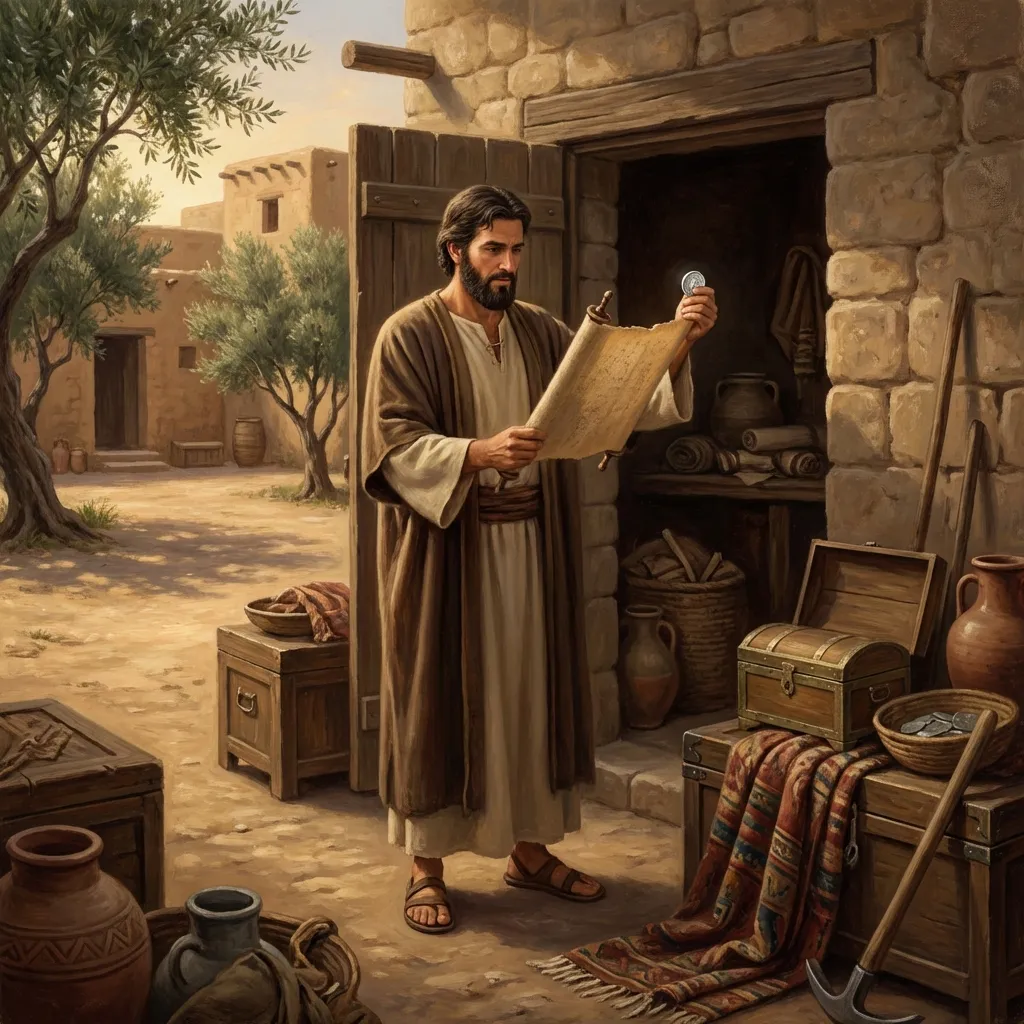
The imagery is drawn from a prosperous estate. The master of the house (oikodespotēs) oversees a rich domestic treasury (thēsauros). When guests and family assemble at his table, he does not offer stale crumbs or empty platters. He opens his storeroom and generously dispenses treasures suited for every need. The Christian teacher, pastor, and disciple is not an originator of truth, but a steward of divine surplus, called to feast upon the Word of God and feed hungry souls from its inexhaustible reserves.
4. Harmonizing the New and the Old
The core theological genius of the parable lies in the phrase kaina kai palaia—treasures new as well as old. The 'old' represents the ancient Hebrew Scriptures: the covenants of Abraham, the moral majesty of the Law, the tabernacle types, the Davidic promises, and the fiery visions of the prophets. The 'new' represents the radiant dawn of the Gospel: the Incarnation, the cross of Calvary, the empty tomb, the indwelling Holy Spirit, and the New Covenant in Christ's blood. The Kingdom scribe does not discard the Old Testament as an obsolete relic, nor does he dilute the revolutionary freshness of the New. He reveals how the Old is the New concealed, and the New is the Old revealed.
5. The Calling of Every Faithful Teacher
This parable stands as a timeless challenge to everyone who opens the Word of God to instruct others. We must never fall into the ditch of narrow novelty, chasing theological fads while abandoning our historical heritage. Nor must we fall into cold, dead traditionalism that idolizes the past while quenching the living fire of the Holy Spirit. Centered upon Jesus Christ—the eternal Lord of both the Old and New—we bring forth rich, life-giving truth that nourishes the Church and glorifies the Father.
Biblical Keywords & Theological Roots
Scribe, biblical scholar, teacher of the Law; discipled in the Kingdom of Heaven to rightly handle divine revelation.
Householder, master of the house; the custodian of a domestic estate who oversees and dispenses food and treasures.
New / Old; the harmonious integration of the ancient Old Covenant types and the radiant New Covenant fulfillment in Christ.
Ancient Near Eastern & Archaeological Context
In Second Temple Judaism, the scribe (*grammateus* or *sofer*) occupied a revered intellectual position. They were the legal scholars, copyists, and official interpreters of the Torah and oral traditions. However, scribal instruction had devolved into tedious scholastic debates, endless quibbles over rabbinic precedents, and burdensome legalistic fence-building (*gezerot*). When Jesus asked His Galilean fishermen and tax collectors if they understood His parables, and they answered 'Yes,' He consecrated them as the new Scribes of the Kingdom. Like an ancient householder (*oikodespotēs*) who managed a domestic storehouse containing both aged grain/vintage wine and newly harvested figs, Christian teachers skillfully demonstrate how the ancient Hebrew Scriptures find their climax in Jesus Christ.
🔑 Key Spiritual Takeaways
- Rightly Handling the Word of God: Christian teachers are custodians of divine treasure, called to feed the household of faith with balanced biblical truth.
- The Old Testament Points to Christ: The Old Covenant Scriptures are not dead history; they are filled with shadows, prophecies, and covenants fulfilled in Jesus.
- The Freshness of the New Covenant: The Gospel of grace brings radiant newness, forgiveness, and the indwelling Holy Spirit into human experience.
- The Treasure is for Sharing: True biblical understanding is not meant for intellectual hoarding; it must be brought out to nourish and enrich the Church.
Support Independent Biblical Research
Did this study bless you? Help support our independent bilingual research and interactive visual Bible tools.
⚡ Fast Facts
- Climax of Matthew 13: This brief, powerful single-verse parable (Matthew 13:51-52) immediately follows Jesus asking His disciples: 'Have you understood all these things?'
- The Transformed Scribe: In 1st century Judaism, scribes (*soferim*) were rigid legalists; Jesus envisions a revolutionary new class of Kingdom Scribes who understand the Gospel.
- The Rich Storeroom: A wealthy Palestinian householder maintained a storeroom (*thēsauros*) containing seasoned, aged vintage wines (the Old) alongside fresh, fragrant harvest fruits (the New).
- Harmonious Biblical Theology: The Kingdom teacher does not throw away the Old Testament as obsolete nor reject the New Covenant as novel; he displays their unified glory in Christ.
❓ Frequently Asked Questions (FAQs)
What are the 'treasures new and old' (kaina kai palaia)?
The 'old' represents the Old Testament Scriptures, its covenants, prophecies, moral law, and historical types. The 'new' represents the revelation of Jesus Christ, the Gospel of grace, the New Covenant in His blood, and the gift of the Holy Spirit. Christian teachers present them together as one unified redemptive story.
How does this parable summarize the entire parabolic discourse of Matthew 13?
Matthew 13 contains seven kingdom parables revealing the mysteries of the Kingdom. In verse 52, Jesus shows the goal of this teaching: to produce discipled scribes who understand divine mysteries and are equipped to faithfully instruct others.
What makes a 'scribe discipled in the kingdom of heaven' different from an ordinary scribe?
An ordinary 1st-century scribe possessed encyclopedic knowledge of the letter of the Law but was blind to the Messiah. A Kingdom scribe sees the living Christ on every page of the Old Testament and lives under the illuminating power of the Holy Spirit.